Cottbus: A Station of Remembrance Makes Nazi History Visible
Date and Time
Location
Price
About this Event
Mood
Venue Type
A Station Becomes a Powerful Place of Remembrance
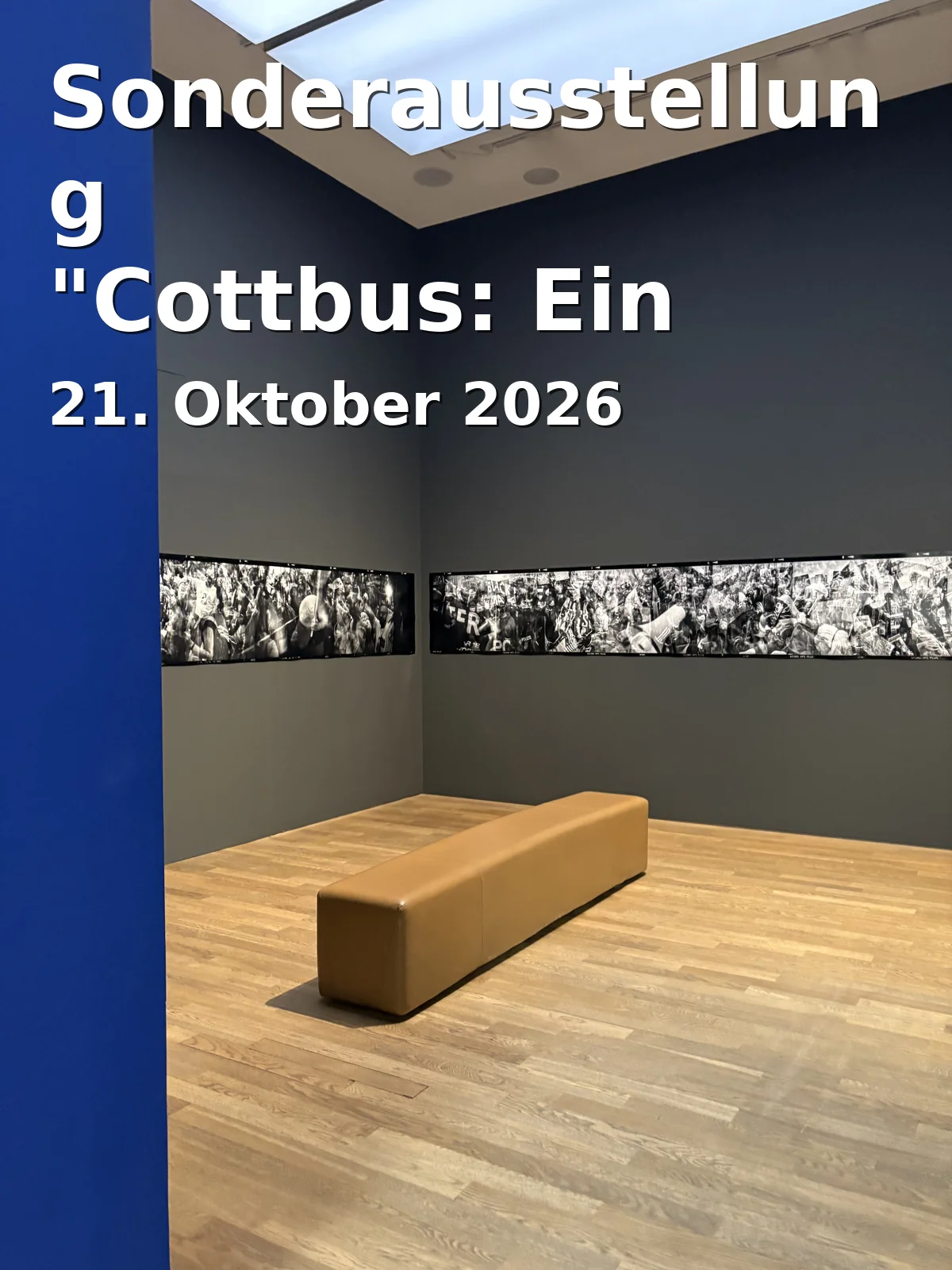
The special exhibition Cottbus: A Station of Remembrance. Deportations and Forced Labor in National Socialism focuses on a historical transportation hub where exclusion, deportation, political imprisonment, and forced labor intensified during the Nazi era. At the Cottbus Human Rights Center, local city history merges with European persecution history, historical research, and cultural education.
Tracks that Tell Stories of Persecution
The Cottbus station was far more than a typical transportation location during the Nazi regime. In 1938, Polish Jewish people were expelled from Cottbus and the surrounding region to Poland. During World War II, the Deutsche Reichsbahn transported Jews to ghettos in occupied Poland and to Theresienstadt. Deportation trains from western and southern German cities and occupied Western European countries also passed through the Cottbus tracks.
Four Themes of the Exhibition
The curated presentation connects four intertwined themes: the exclusion and disenfranchisement of the Jewish population, the deportation trains via Cottbus, the women's prison as a site of political imprisonment, and the daily life of forced labor in the city's businesses and institutions.
The exhibition broadens the perspective on the transports of prisoners to and from the women's prison in Cottbus. Historical documents, names, local references, and digital educational offerings provide insight into the living conditions of people who were forcibly taken from numerous European countries to Cottbus for forced labor.
Media Installation and Focused Exhibition Atmosphere
A media installation recalls, inspired by historical departure boards, the fates of those affected and lists names and deportation locations. Writing, light, movement, and proximity to the memorial create a focused exhibition atmosphere. The focus is not on decorative painting or classical sculpture, but rather on installation, documentation, and historical places as bearers of testimony.
The aesthetic experience arises from the combination of spatial impact, documentary clarity, and quiet reflection. Viewing the works here gains an expanded significance: maps, photographs, biographical traces, and source materials make abstract historical processes concrete and open access for different generations.
Historical Education and Responsibility
The project arose as part of the MemoRails program – Stop! Here we remember Nazi history. Involved are the Cottbus Human Rights Center e. V., exhibeo e. V., the Cottbus Stolpersteine working group, and the Cottbus Municipal Collections. The exhibition aims not only to remember the victims but also to contribute to the engagement with the current threats to democracy, the rule of law, and human rights.
Conclusion: Experience Remembrance Directly
Visitors can expect an informationally precise and emotionally concentrated art experience about deportations, prisoner transports, and forced labor in Cottbus. Those who want to connect city history, culture of remembrance, and political education will experience a sustainable aesthetic experience here. A visit to the Cottbus Human Rights Center makes historical responsibility immediately tangible and enriches the perspective on the city.
Official Channels of the Cottbus Human Rights Center:
- Instagram: no official profile found
- Facebook: no official profile found
- YouTube: no official profile found
- Website: no official profile found