Unrestricted Self-Movements at the Diesel Power Plant Cottbus: Experience GDR Art Anew
Date and Time
Location
Price
About this Event
Mood
Venue Type
Photography as a Space of Freedom in the Diesel Power Plant Cottbus
The exhibition Unrestricted Self-Movements. Art with Photography in the GDR focuses on an experimental image culture of the 1980s. At the Brandenburg State Museum of Modern Art, photography is not understood as neutral documentation, but as material for self-assertion, self-expansion, and artistic boundary crossing.
An Alternative Photography of the GDR
In the tightly regulated society of the GDR, artists developed distinctive forms of alternative photography and grassroots photography. The presented positions detach from the journalistic-documentary understanding of images and make the medium itself the subject of the artwork's observation.
Staging, estrangement, montage, and serial orders open up new image realities. The works reflect their own conditions and define themselves less through a uniform external form than through idea, process, and attitude.
Body, Action, and Performative Image Space
The exhibition connects photography with performance, installation, intervention, body art, and conceptual methods. Body, space, and action enter a tense dialogue. Photographic image surfaces transform into performative action spaces, where personal freedom, societal confinement, and the desire for artistic autonomy intersect.
Included are works by Claus Bach, Tina Bara, Micha Brendel, Kurt Buchwald, Klaus Elle, Thomas Florschuetz, Else Gabriel, Cornelia Schleime, Erasmus Schröter, and Gabriele Stötzer, among others. The approximately thirty artistic positions showcase the diversity of an underestimated avant-garde of the late GDR.
Art Historical Context and Curating
The exhibition concept was developed by Christoph Tannert as an external curator. His perspective reveals a previously fragmentarily narrated chapter of East German art history: the development of a non-state-supporting art that eluded established categories and understood the photographic image space as an open space for thought and action.
The experimental photography of the late GDR represents a radical break with the state-shaped, documentary-affirmative understanding of images. Privately produced photo portfolios and semi-legal magazines created their own public spheres. Actions, interventions, serial image sequences, and consciously anti-aesthetic design processes expanded the possibilities of the medium.
Aesthetic Experience in the Former Diesel Power Plant
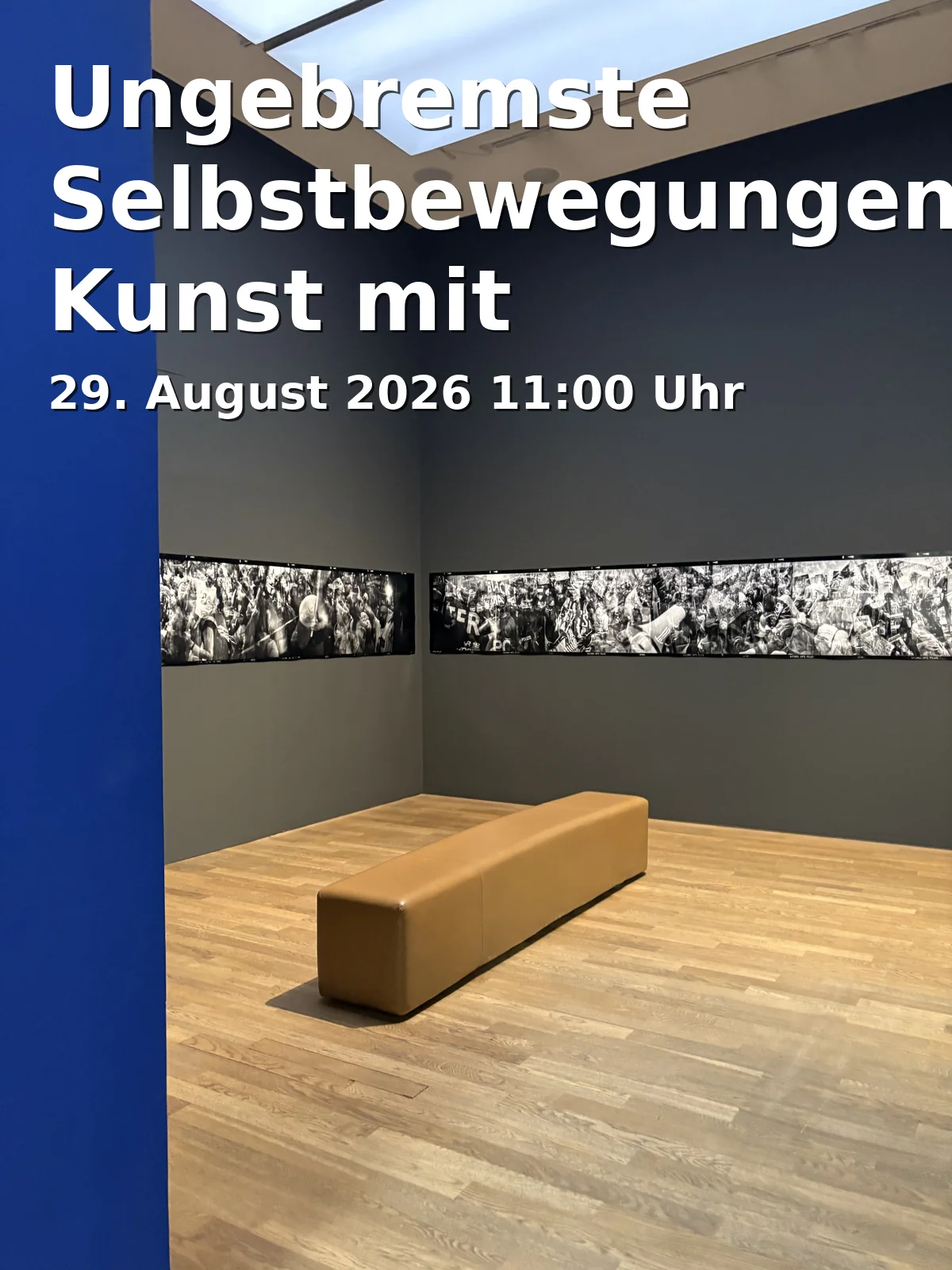
The industrial architecture of the diesel power plant enhances the exhibition atmosphere. Visible materials, clear spatial axes, and concentrated museum lighting create a resonant framework for photographic image surfaces, tableaux, and cross-media works. The consideration of the artworks leads from poetic counter-worlds to body-related actions and from serial orders to open, unpredictable image processes.
This creates an intense art experience for all those interested in GDR art, experimental photography, performance, and cultural education. The exhibition shows how a seemingly limited medium can become a space of freedom.
Conclusion: Experience an Important Exhibition Live
Unrestricted Self-Movements offers a visually striking access to a resistant and still relevant art direction. Visitors can expect a precisely curated engagement with freedom, body, public, and media truth. Those who want to experience the aesthetic experience of these photographic boundary crossings firsthand should definitely visit the exhibition at the diesel power plant Cottbus on-site.
Official Channels of Brandenburg State Museum of Modern Art:
- Instagram: no official profile found
- Facebook: no official profile found
- YouTube: no official profile found
- Website: no official profile found