Education through Work at the Cottbus Human Rights Center: GDR Injustice Made Visible
Date and Time
Location
Price
About this Event
Mood
Venue Type
When a state label determined an entire life
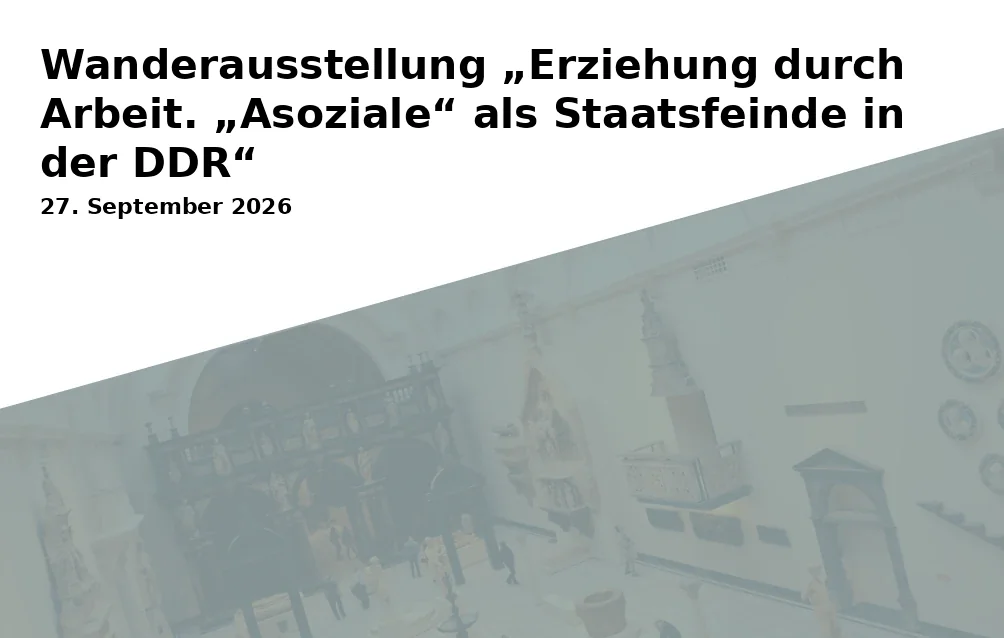
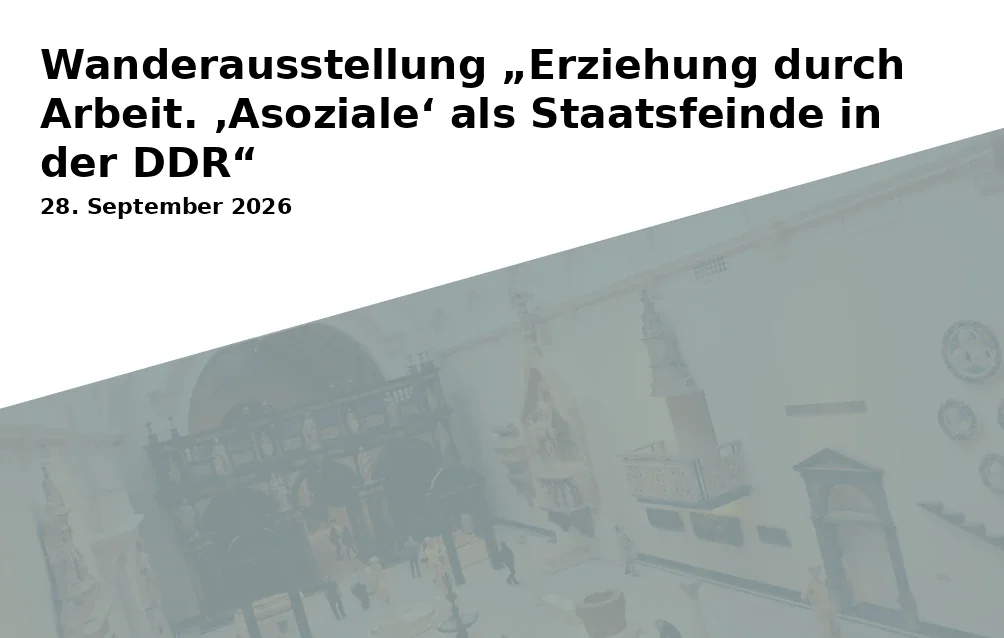
The traveling exhibition “Education through Work. ‘Asocials’ as State Enemies in the GDR” brings to light a long-suppressed chapter of GDR history at the Cottbus Human Rights Center. The focus is on people who were marginalized, disciplined, and criminalized under Section 249 of the GDR Penal Code as so-called “asocials”.
Fourteen biographies against forgetting
Through fourteen selected life stories, the exhibition illustrates the individual consequences of state stigmatization. The portraits tell of people without regular employment, non-conforming youths, punks, prostitutes, applicants for exit permits, and political dissidents. Photographs, historical documents, film footage, and interviews with eyewitnesses and experts give the affected individuals their story and their dignity back.
Section 249 as an instrument of state repression
The exhibition examines the so-called asocial paragraph 249, whose broadly defined wording allowed for politically and ideologically motivated persecution. Those who did not conform to the ideal image of the socialist person could be considered a threat to the state. The presentation shows how media, authorities, and justice shaped the image of so-called asocial elements, leading to concrete repression.
Historical documents and personal testimonies
The artwork focuses not on classic painting or sculpture, but on a documentary installation comprising photographs, written sources, film sequences, and biographical material. This curatorial form combines historical research with cultural education. It makes administrative actions, paths of detention, youth workhouses, homes, and the consequences of exclusion comprehensible as human experience.
Culture of remembrance at the historical site
At the Cottbus Human Rights Center and in the vicinity of the Cottbus prison memorial, the exhibition gains a unique spatial effect. The exhibition atmosphere combines factual information with a compelling aesthetic experience of remembrance. An artistic experience in the broader sense emerges between documents, images, and voices: a concentrated examination of historical evidence that invites engagement with power, normalization, and human dignity.
Critically categorizing GDR history
The exhibition goes beyond the specific paragraph. It addresses historical precursors of exclusion in the Empire, under National Socialism, and in the early GDR, as well as comparable ideas in Czechoslovakia and the Soviet Union. This creates an art-historically and socio-politically relevant categorization of propaganda, state education, and the construction of societal enemy images.
Conclusion: An important place for political education
Visitors can expect a factually precise, emotionally compelling, and educationally relevant exhibition on exclusion, repression, and the lasting power of individual life stories. The Cottbus Human Rights Center opens a space for historical insight, empathy, and democratic responsibility. Those who want to understand GDR history and engage with the consequences of state stigmatization should definitely visit this exhibition live.
Official channels of the Cottbus Human Rights Center e.V.:
- Instagram: no official profile found
- Facebook: no official profile found
- YouTube: no official profile found
- Website: https://www.menschenrechtszentrum-cottbus.de/