Education through Work in Cottbus: GDR Injustices and Forgotten Life Paths Made Visible
Date and Time
Location
Price
About this Event
Mood
Venue Type
When a label determined a life: GDR injustices in Cottbus
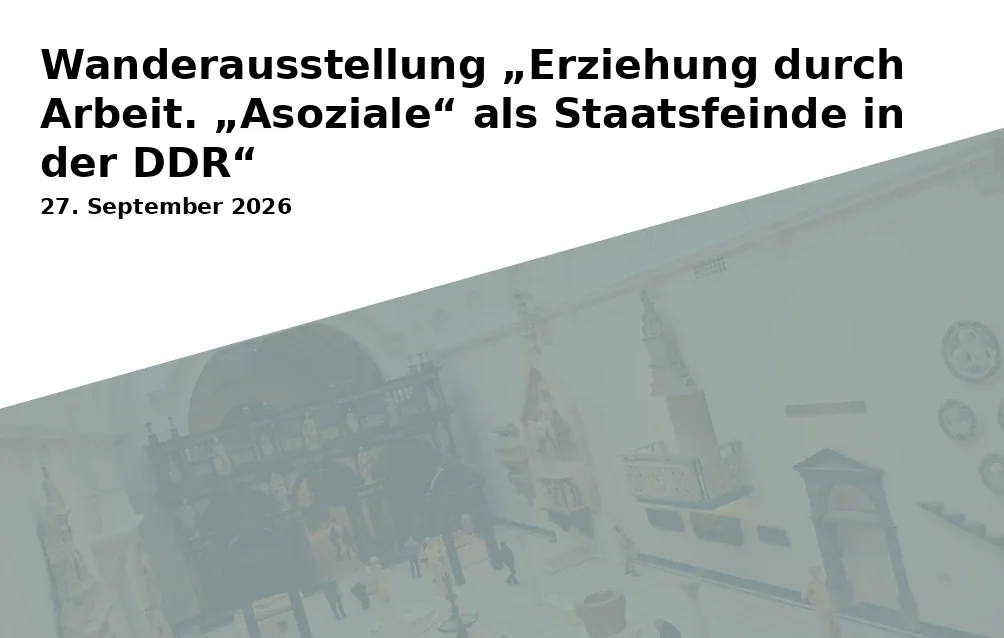
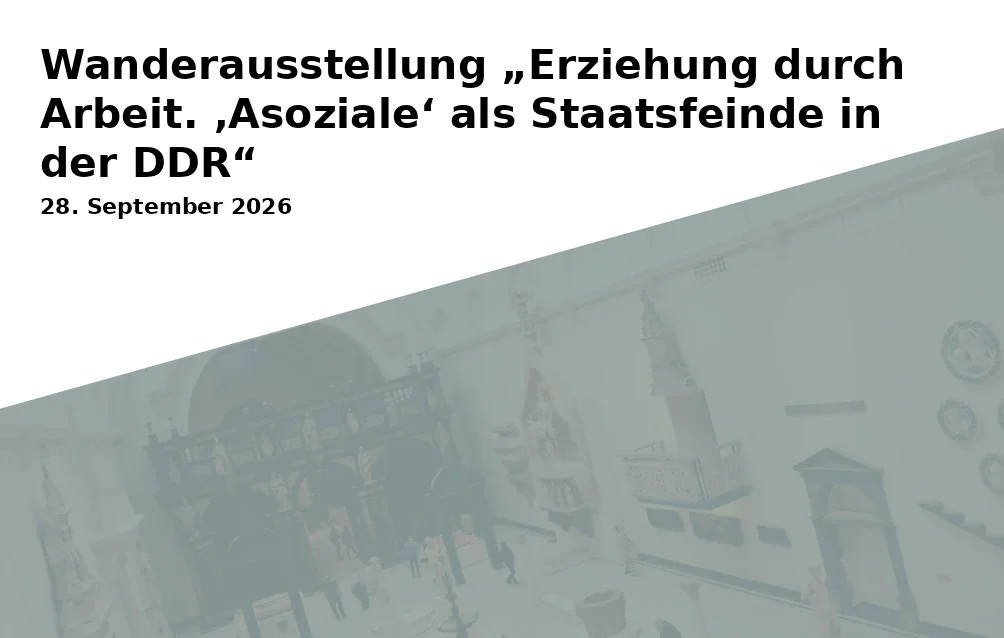
The traveling exhibition Education through Work: 'Asocials' as Enemies of the State in the GDR addresses a long-suppressed chapter of GDR history. At the Human Rights Center Cottbus, the former memorial of the Cottbus prison, it becomes clear how state institutions marginalized, disciplined, and criminalized people who did not conform to the propagated ideal of the socialist individual.
Fourteen biographies against forgetting
The focus is on fourteen portraits of women and men who could be persecuted under Section 249 of the GDR Criminal Code as so-called 'asocials'. Presumed work-shyness, a non-conformist lifestyle, prostitution, a political stance, or an exit request were enough to stigmatize individuals state-wise. The exhibition shows how a derogatory term became an instrument of social control and criminal prosecution.
Photographs, documents, and moving contemporary history
Photographs, historical documents, filmic eyewitness and expert interviews, and supplementary film material come together to form an urgent curatorial narrative. Documents become traces of personal fates, images become testimonies of institutional power, and the voices of those affected create an important counter-archive of GDR history. The exhibition atmosphere fosters focused contemplation of the works and an aesthetic experience that is not decorative, but politically effective.
Section 249 in historical context
The presentation contextualizes the so-called asocial paragraph within larger historical frameworks. It addresses precursors in the Empire, in National Socialism, and in early GDR as well as ideological references in Czechoslovakia and the Soviet Union. Thus, the exhibition opens an art-historical and culturally grounded perspective on political imagery, bureaucratic practices, media, and societal standardization.
Place of remembrance and political education
The connection with the memorial of the Cottbus prison enhances the impact of the exhibition. The historical site spatially makes the consequences of state repression tangible and links cultural education with historical enlightenment. Visitors encounter individual life paths, prison conditions, and the long-term effects of stigmatization beyond the end of imprisonment.
Conclusion: “Education through Work” offers a factually precise and emotionally intense artistic experience of GDR injustices, human dignity, and the power of state attributions. The exhibition invites visitors to read historical documents attentively, to retrace biographies, and to critically question the mechanisms of exclusion. A visit to the Cottbus memorial enriches both the aesthetic experience as well as political and cultural education.
Official channels of Human Rights Center Cottbus:
- Instagram: no official profile found
- Facebook: no official profile found
- YouTube: no official profile found
- Website: https://www.menschenrechtszentrum-cottbus.de/