Education through Work at Cottbus Prison: Making GDR Injustice Visible
Date and Time
Location
Price
About this Event
Mood
Venue Type
When a State Label Determined a Life
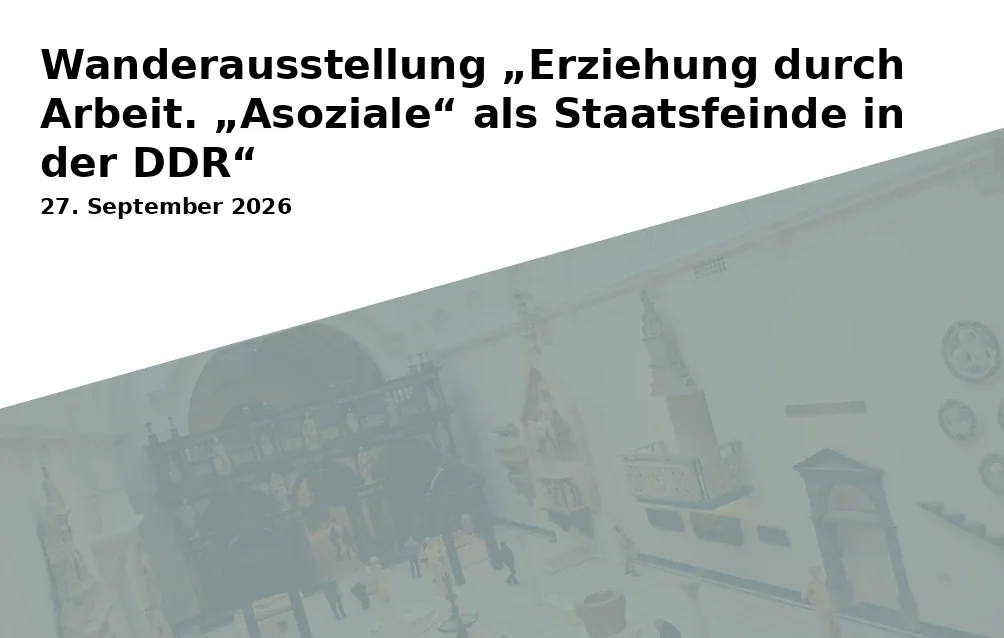
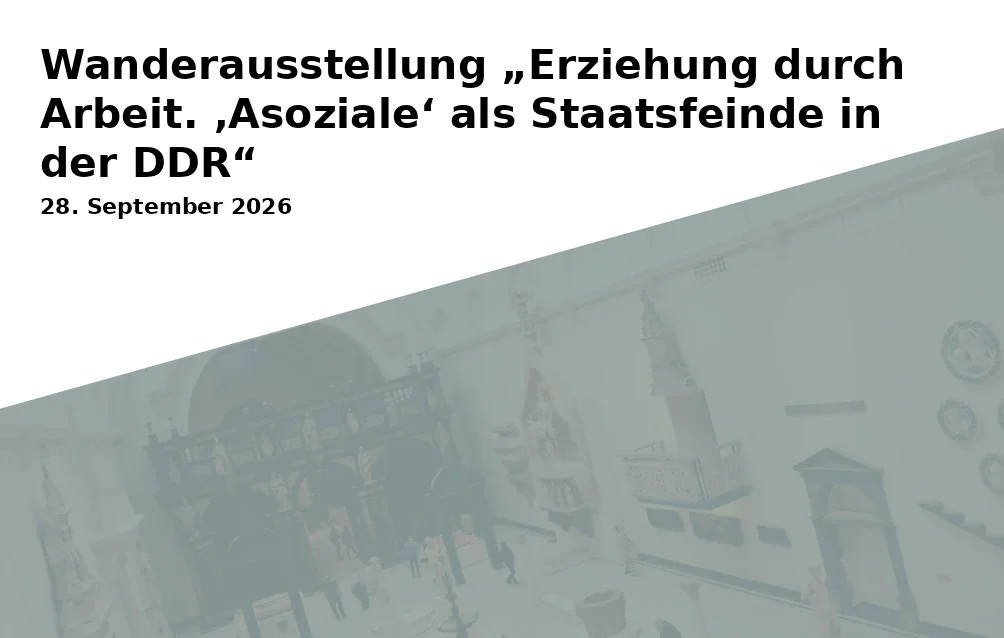
The traveling exhibition "Education through Work: 'Asocial' as Enemies of the State in the GDR" makes a long-suppressed chapter of GDR history visible at the Memorial Site of the Cottbus Prison. The focus is on individuals who were marginalized, disciplined, and criminalized because of alleged reluctance to work, an unconventional lifestyle, or their political stance.
Fourteen Life Paths Against Forgetting
Fourteen portraits open a compelling examination of individual fates and state attributions. Photographs, documents, film interviews with witnesses and experts, as well as historical footage illustrate how the so-called 'Asocial Paragraph' 249 of the GDR Penal Code interfered in the lives of those affected. The exhibition combines historical research with political education and places the perspectives of the persecuted at its center.
Exclusion as a State System
The presentation investigates the interplay of media, authorities, and justice. The precursors of Paragraph 249 become visible in the German Empire, during National Socialism, and in the early GDR, as well as international points of reference in Czechoslovakia and the Soviet Union. Propaganda, prison paths, prison conditions, and life after release are also part of the historical context.
Documents, Images, and Voices of Those Affected
The exhibition atmosphere of the former prison intensifies the impact of the exhibits. Written materials appear as traces of institutional power, photographs as evidence of social stigmatization, and film statements as an important counter-archive. The art experience does not arise from decorative aesthetics, but from the concentrated encounter with biographies, memory, and responsibility.
Cultural Education at a Historical Memorial Site
The exhibition was realized by exhibeo e.V., in cooperation with the Union of Victim Associations of Communist Oppression e.V. and with the support of the Federal Commissioner for the Victims of the SED Dictatorship at the German Bundestag. The presentation in Cottbus is funded by the Commissioner of the State of Brandenburg for dealing with the consequences of the communist dictatorship. Thus, the curation connects scientific processing, human rights education, and an immediately tangible culture of memory.
Conclusion: Experience History in an Authentic Space
Visitors can expect an informative and emotionally touching exhibition on state exclusion and the consequences of political stigmatization. The aesthetic experience lies in the quiet intensity of images, documents, and voices. Anyone wishing to experience GDR history, human rights, and cultural education up close should definitely visit this exhibition at the Memorial Site of the Cottbus Prison.
Official Channels of the Human Rights Center Cottbus e.V.:
- Instagram: no official profile found
- Facebook: no official profile found
- YouTube: no official profile found
- Website: https://www.menschenrechtszentrum-cottbus.de/