Cottbus: A Train Station of Remembrance at the Human Rights Center
Date and Time
Location
Price
About this Event
Mood
Venue Type
Cottbus as a Place of Remembrance: An Exhibition of Great Historical Impact
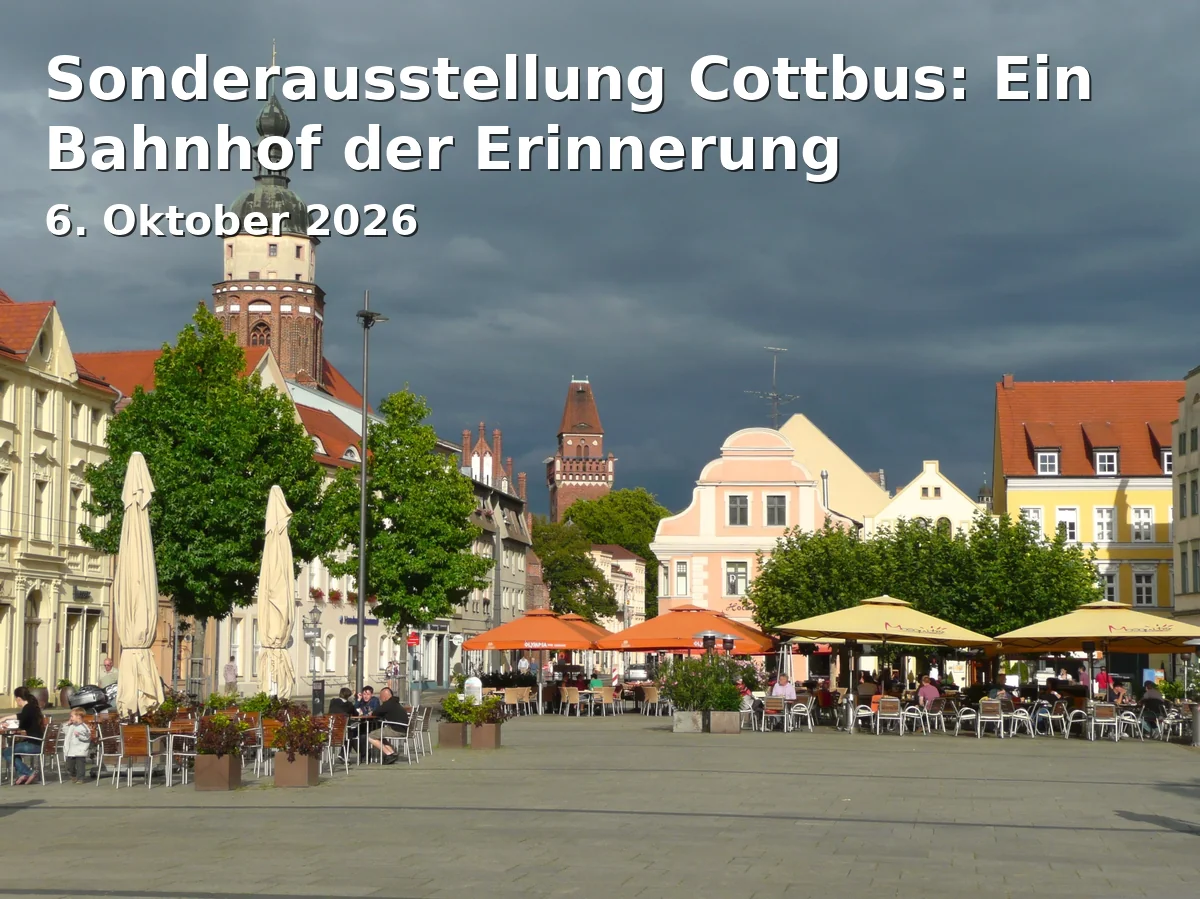
The special exhibition Cottbus: A Train Station of Remembrance. Deportations and Forced Labor in National Socialism focuses on a historical site where the violence of the Nazi regime concentrated in particular intensity. At Cottbus Station, transport history became a history of persecution. The exhibition combines historical research with a temporary presentation, a supporting program, and a media installation that recalls historical departure boards and makes names, routes, and fates visible.
A Train Station that Tells More than Arrival and Departure
The Cottbus Station does not appear as neutral infrastructure here, but as a site of disenfranchisement, deportation, and forced labor. The exhibition shows how Jewish people from Cottbus and the region were expelled, later deported to ghettos, concentration, and extermination camps, and how prisoner transports as well as transports of forced laborers also ran along the same tracks. This examination of the historical site opens an urgent perspective on remembrance culture and historical responsibility.
Four Narratives, a Clear Curatorial Concept
The exhibition is divided into four interconnected themes: the persecution of the Jewish population, the station as a transit point for deportation trains, the women's penitentiary as a site of political detention, and forced labor in the daily life of Cottbus businesses and institutions. It is precisely this polyphony that shapes the exhibition's atmosphere. It condenses archival knowledge, regional history, and political education into an art experience that works less with distance than with precise engagement.
Aesthetic Experience between Media Station and Historical Trace
The presentation relies on a reduced but intense spatial effect. The media installation follows the logic of historical display boards and transforms data, names, and destinations into a visual form of remembrance. This creates a quiet, focused exhibition experience where information and empathy come together. The museum's mediation sharpens the view for the mechanisms of exclusion, violence, and bureaucratic organization of injustice.
Historical Education with a Connection to the Present
The exhibition is part of the program MemoRails - Stop! Here we remember NS history of the Foundation Remembrance, Responsibility, and Future. It aims not only to remember but also to encourage discussions about democracy, the rule of law, and human rights. Thus, the exhibition is aimed at visitors who seek historical depth, cultural education, and a precise look at regional memory history.
Conclusion
Visitors to this exhibition do not experience a smooth museum tour but a carefully curated encounter with a place where history continues to resonate to this day. Cottbus: A Train Station of Remembrance makes visible what has long been hidden and invites an intense, thoughtful, and highly recommended live visit.
Official Channels of the Human Rights Center Cottbus e.V.:
- Instagram: no official profile found
- Facebook: no official profile found
- YouTube: no official profile found
- Website: https://www.menschenrechtszentrum-cottbus.de