Cottbus: A Station of Remembrance – Experience Nazi History Intensively
Date and Time
Location
Price
About this Event
Mood
Venue Type
A Station Becomes a Place of Remembrance
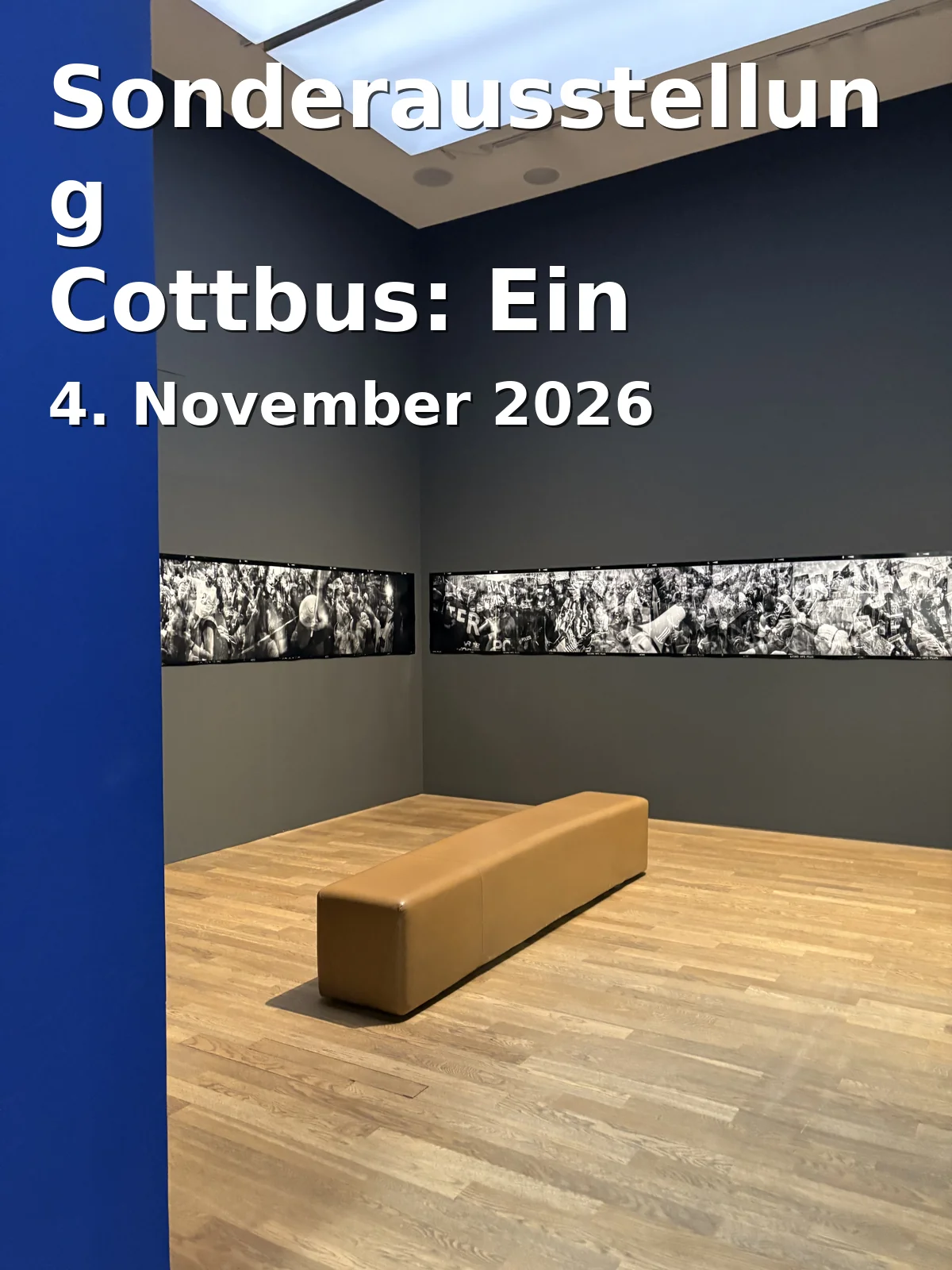
The special exhibition Cottbus: A Station of Remembrance. Deportations and Forced Labor in National Socialism brings to light a long-suppressed part of Cottbus’ city history. The focus is on the station as a historical site of exclusion, deportation, prisoner transports, and forced labor during the Nazi era.
Historical Traces Between Tracks and Memorial Site
In 1938, Jewish people with Polish citizenship were expelled from Cottbus and the region to Poland. During World War II, deportation trains ran over the Cottbus tracks to ghettos in occupied Poland and to Theresienstadt. Transport from western and southern German cities as well as from occupied Western European countries also passed through the station.
The exhibition also commemorates prisoner transports to and from the women's penal institution in Cottbus. At the same time, it documents how thousands of forced laborers were employed in industrial companies, the Reichsbahn, municipal facilities, and on farms.
Four Perspectives on Nazi Persecution and Forced Labor
The curatorial structure connects the history of the Jewish community, the deportation trains over Cottbus, the women's penal institution as a place of political detention, and the everyday lives of forced laborers. Historical research meets a temporary presentation, individual life stories, and the question of how responsibility remains visible at a specific site.
Media Installation and Cultural Education
A digital media installation reflects the aesthetics of historical departure boards. Names, former addresses, deportation routes, and destination stations make the dimensions of the crimes comprehensible. The examination of works leads not to aesthetic distance but to an urgent engagement with biographies, loss, and remembrance.
The intergenerational education concept includes a supporting program as well as peer-to-peer tours developed by students. Thus, the exhibition connects historical expertise, cultural education, and democratic memorial work. It was created within the MemoRails program of the Foundation for Remembrance, Responsibility, and the Future and is supported by the Federal Government Commissioner for Culture and the Media.
An Artistic Experience of a Special Kind
The exhibition atmosphere arises from the tension between the everyday character of a station and the gravity of its historical function. Typography, names, distances, and media imagery transform the transit location into a space of concentration. The colors, shapes, and materials of the presentation serve not for decoration but for precise historical representation.
The Human Rights Center Cottbus realizes the project in cooperation with exhibeo e. V., the AG Stolpersteine Cottbus, the Municipal Collections Cottbus, and other partners. At the center are the victims of the Nazi crimes and the contemporary significance of the rule of law, human rights, and societal cohesion.
Conclusion: Remembrance Needs a Place
This exhibition offers an urgent artistic experience between historical documentation, media installation, and memorial culture. Visitors encounter concrete biographies and recognize how a familiar traffic hub became a scene of disenfranchisement and violence. Anyone interested in contemporary history, memorial culture, and cultural education should visit the exhibition live and engage in a concentrated aesthetic experience.