
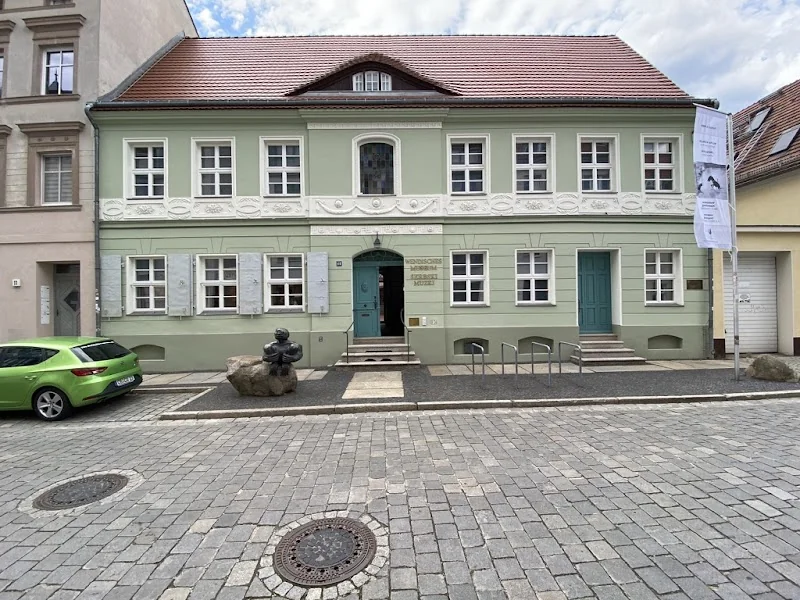
Cottbus
Mühlenstraße 12, 03046 Cottbus, Deutschland
Wendish Museum Cottbus | Opening Hours & Admission Prices
The Wendish Museum Cottbus is one of the most important addresses for anyone interested in the cultural history of the Sorbs and Wends in Lower Lusatia. It is located at Mühlenstraße 12 near the Altmarkt in the center of Cottbus/Chóśebuz and combines historical substance with a modern permanent exhibition that was newly designed in autumn 2020. Visitors to the house not only experience a collection with regional depth but also a place where language, customs, identity, and memory are consciously cultivated. The museum is part of the Municipal Collections Cottbus/Chóśebuz, supported by the city and the Foundation for the Sorbian People, and sees itself as a competent center for Sorbian/Wendish cultural history. This blend of scientific ambition, lively communication, and strong regional reference is what makes the house particularly appealing. It is a worthwhile stop for culture enthusiasts as well as families, school classes, and day visitors, as it offers a precise insight into a minority culture that continues to shape Lusatia to this day. ([wendisches-museum.de](https://wendisches-museum.de/museum/preise-oeffnungszeiten/))
Opening Hours, Admission Prices, and Directions to the Wendish Museum Cottbus
For planning a visit, the opening hours are particularly important, as the museum operates on a seasonal schedule. From May to September, it is open Tuesday to Friday from 10:00 AM to 6:00 PM. On Saturdays, Sundays, and public holidays, visitor hours start at 1:00 PM and run until 6:00 PM. During the cooler months from October to April, the hours are slightly shortened: Tuesday to Friday the house opens from 10:00 AM to 5:00 PM, on weekends and public holidays from 1:00 PM to 5:00 PM. On December 24th and 31st, the museum is closed. Therefore, anyone planning a day trip to Cottbus should keep this seasonal structure in mind to avoid ending up at a closed door. Additionally, the museum publishes contact details on its website, making it easy to make a phone inquiry for special questions or group requests. This clear time structure is particularly helpful for travelers who want to plan their route through the city center flexibly. ([wendisches-museum.de](https://wendisches-museum.de/museum/preise-oeffnungszeiten/))
The Wendish Museum also shows itself to be very visitor-friendly when it comes to admission prices. Children and teenagers up to the age of 18 have free admission. Adults pay 5.00 euros, and the reduced price is 4.00 euros. For groups of ten or more, the price is also 4.00 euros per person. Those who wish to combine a visit to the Wendish Museum with the City Museum can use a combination ticket for 8.00 euros; the annual pass for both houses costs 25.00 euros. For guided tours, an additional fee of 2.00 euros per person is charged, with a minimum total of 50.00 euros required, except for public tours. This pricing structure is not only transparent but also practical for families, clubs, and travel groups who want to calculate their visit in advance. The address at Mühlenstraße 12, near the Altmarkt, is centrally located; the official website also offers a route plan. This allows the museum visit to be easily combined with a tour of the city center. ([wendisches-museum.de](https://wendisches-museum.de/museum/preise-oeffnungszeiten/))
The History of the House at Mühlenstraße 12
The building of the current Wendish Museum has a long prehistory that extends far beyond the founding of the museum. The property at Mühlenstraße 12 is first mentioned in writing in 1544. At that time, it belonged to the linen weaver Matthias Reutter. The area even extended from Mühlenstraße to Altmarkt 24 until the 18th century and was initially used exclusively for residential purposes, mainly for a family of pharmacists. It was not until the early 19th century that shop spaces were created there. In 1877, the leather dealer Adolf Emil Liersch purchased the house, which then remained in the possession of this Cottbus family for more than a century. This development shows how closely the address is connected to the city's history: the current museum is therefore not located in any arbitrary purpose-built structure, but in a house with deep roots in local urban development. Those who see the facade do not only see museum architecture but also a historical address that tells of living, trading, and urban change. ([wendisches-museum.de](https://wendisches-museum.de/museum/gebauede/))
The actual museum phase begins much later. In 1986, the city of Cottbus/Chóśebuz acquired the building for museum purposes. From 1991, it was renovated and converted for museum use with the support of the state of Brandenburg, the Foundation for the Sorbian People, and the city. On June 3, 1994, the Wendish Museum was ceremonially opened; for the first time, the cultural history of the Sorbs/Wends in Lower Lusatia was presented in a comprehensive permanent exhibition. As early as 1996, the exhibition in the basement was expanded to include an exhibition on prehistory. By the end of 2015, the museum recorded around 98,000 visitors, more than 90 special exhibitions, as well as numerous concerts, readings, and lectures. After extensive renovation and reconstruction measures since 2016, the house has presented a new, modern permanent exhibition since autumn 2020. The historic building has thus become a profile location for regional identity, which does not conserve the past but conveys it in a contemporary form. ([wendisches-museum.de](https://wendisches-museum.de/museum/einleitung/))
Permanent Exhibition on Sorbian/Wendish History and Culture
The permanent exhibition is the heart of the museum and forms the most important anchor for all those searching for the Wendish Museum Cottbus. Since autumn 2020, it has been telling the cultural history of the Sorbs/Wends in Lower Lusatia in a clearly structured, atmospheric, and scientifically grounded manner. The guiding motif emphasizes the continuity of Sorbian culture and thus makes a conscious statement for cultural continuity. At the beginning, a timeline guides visitors through the most important stages of history; maps locate the former and current settlement areas. This introduction makes it clear that it is not just about individual objects, but about a long historical context. The exhibition connects origins, language, faith, ways of life, and societal upheavals into a narrative tour that brings together life yesterday and today. Originals, replicas, and media stations ensure that the tour does not feel dry but creates lively access points. This blend of scientific precision and vivid communication is one of the reasons why the Wendish Museum is perceived as a competence center. ([wendisches-museum.de](https://wendisches-museum.de/ausstellungen/dauerausstellung/))
Particularly impressive are the individual themed rooms that structure the tour. The faith room is dedicated to pre-Christian beliefs, Christianization, the Reformation, and the development of the Lower Sorbian written language, but also to its limitations and discrimination. Among other things, a model of the Wendish Church in Cottbus and parts of the original seating of this church can be seen; film sequences provide insights into contemporary Sorbian-Wendish church life. This is followed by the portrait gallery, which honors significant supporters of the Lower Sorbian language and culture and also shows parts of the Jordan Library, one of the largest private Sorbian book collections in Lower Lusatia. These rooms make visible how closely religious practice, education, book culture, and cultural self-assertion are interconnected. They also provide material for in-depth discussions about how minority cultures assert their voices and pass them on through generations. ([wendisches-museum.de](https://wendisches-museum.de/ausstellungen/dauerausstellung/))
Another focus is on language and literature. In the language room, Lower Sorbian linguistic monuments are presented, including a facsimile of a marginal note from 1510, which is considered the oldest known written evidence of Sorbian/Wendish. The exhibition honors individuals who have made significant contributions to the Maśica Serbska, the Wendish book association founded in Cottbus/Chóśebuz in 1880. It also addresses the development of Lower Sorbian literature between the world wars, the Nazi prohibition policies, the inadequate support in the GDR, and the hope for renewal after the political turnaround. Additionally, the exhibition addresses central areas of life: customs throughout the year, living and lifestyle forms, changes due to industrialization and upheaval, music and performing arts, as well as the experience of threat, loss of home, and identity. For visitors, this creates a tour that makes Sorbian-Wendish culture visible not just as a historical footnote but as a vibrant, multilayered present. ([wendisches-museum.de](https://wendisches-museum.de/ausstellungen/dauerausstellung/))
Events, Tours, and Family Offers
The Wendish Museum thrives not only on exhibitions but also on an active event calendar. The official website currently lists a public tour every first Tuesday of the month, Easter customs to try out in the courtyard, a discussion group in the Sorbian language, and a courtyard festival at the museum. Such formats show that the house does not function as a silent showcase but as a place of encounter, discussion, and cultural practice. Particularly attractive is that some offers are directly linked to seasons and customs knowledge. This creates a direct connection to the culture presented in the museum. Therefore, those searching for Wendish Museum Cottbus events will not find an abstract event list but a program that translates the contents of the house into lively communication. This is particularly interesting for returning visitors, as the museum visit feels different each time. At the same time, the regularity of public tours signals that even spontaneous or short-notice visits remain worthwhile. ([wendisches-museum.de](https://wendisches-museum.de/veranstaltungen/))
The museum also has specific offers for families and children. The children's audio guide with Nikola the Nyks playfully guides young visitors through the world of the Sorbs/Wends and introduces figures, animals, and contexts in a child-friendly manner. The museum explorer suitcase complements the tour with puzzles, tasks, a treasure chest, and a weaving frame that can be tried out. On the family page, the museum also points out that the offers are continuously being developed, and special requests can be directed to the museum educator. This creates a good mix of free exploration and structured communication for children and parents. Families planning a visit can thus use the museum as a place of learning and experience without the tour becoming too lengthy. Particularly in combination with the central location, moderate admission prices, and clear opening hours, this is a strong argument for a joint museum afternoon. ([wendisches-museum.de](https://wendisches-museum.de/vermittlung/familienangebote/))
Additionally, there are further educational offers that make the visit interesting for an international audience. The museum is working on room handouts in English, Polish, and Czech. There is also a creative area and the announcement of painting and crafting templates on Sorbian-Wendish themes. These components show that the house not only conserves but actively translates: into language, into didactic forms, and into offers for different age groups. For visitors looking for photos of the Wendish Museum Cottbus, the website is also helpful, as it shows plenty of images of the museum, permanent exhibition, building, and family offers; additionally, a video tour provides a visual impression. Thus, even before the first step into the house, a realistic picture of the atmosphere, themes, and design is created. The digital presence is therefore not only informative but also a good introduction to the real museum world. ([wendisches-museum.de](https://wendisches-museum.de/vermittlung/weitere-angebote/))
Collection, Language, and Special Insights
For those who want to dive deeper, the Wendish Museum should not only be seen as an exhibition site but as a cultural-historical workplace. The house explicitly emphasizes that it wants to keep the critically endangered Lower Sorbian or Wendish language alive. This goal is reflected not only in the exhibitions but also in publications, releases, and in the consistent Lower Sorbian-German bilingualism. Additionally, there is the event series Serbske blido, which offers native speakers and learners a platform for active language use. The museum thus positions itself as a place where language is not only documented but spoken and nurtured. This is of particular value for the region, as the Lusatian Sorbs/Wends, as the smallest part of the Slavic community, have preserved their identity over centuries under often adverse conditions. Those who know this background better understand why the museum in Cottbus has a supra-regional significance. ([wendisches-museum.de](https://wendisches-museum.de/museum/einleitung/))
The collection itself also tells a lot about the profile of the house. Not only literature and writings are collected, but also traditional costumes, fine arts, folk art, and exhibits on everyday culture, as well as objects from music, numismatics, and postal history. In the art collection, works by Lower Sorbian, Wendish, and Upper Sorbian painters with themes from Lower Lusatia play an important role; additionally, works that were taken from Wendish exhibitions of the former city museum are included. This creates a multifaceted picture of a culture that cannot be reduced to traditional costumes or customs but also includes fine arts, everyday objects, and historical testimonies. This diversity makes the collection exciting for various visitor groups: for cultural historians, for families, for schools, and for all those approaching a minority museum for the first time. Therefore, those searching will find not only photos and opening hours but also a house with a clear content signature and considerable scientific depth. ([wendisches-museum.de](https://wendisches-museum.de/museum/geschichte/?utm_source=openai))
In the end, the impression remains of a museum that consciously fulfills its task. It not only preserves things but also conveys connections: between past and present, between language and identity, between city history and regional memory. The location at Mühlenstraße 12, the long history of the house, the modern permanent exhibition, the family offers, and the regular events together create a profile that goes far beyond a simple museum visit. Those who are in Cottbus and wonder what makes the Wendish Museum special receive a clear answer: Here, the culture of the Sorbs/Wends is not shown on the periphery but told at the center. And that is why a visit is worthwhile for all those who want to not just consume regional history but truly understand it. ([wendisches-museum.de](https://wendisches-museum.de/museum/preise-oeffnungszeiten/))
Sources:
Show moreShow less
Wendish Museum Cottbus | Opening Hours & Admission Prices
The Wendish Museum Cottbus is one of the most important addresses for anyone interested in the cultural history of the Sorbs and Wends in Lower Lusatia. It is located at Mühlenstraße 12 near the Altmarkt in the center of Cottbus/Chóśebuz and combines historical substance with a modern permanent exhibition that was newly designed in autumn 2020. Visitors to the house not only experience a collection with regional depth but also a place where language, customs, identity, and memory are consciously cultivated. The museum is part of the Municipal Collections Cottbus/Chóśebuz, supported by the city and the Foundation for the Sorbian People, and sees itself as a competent center for Sorbian/Wendish cultural history. This blend of scientific ambition, lively communication, and strong regional reference is what makes the house particularly appealing. It is a worthwhile stop for culture enthusiasts as well as families, school classes, and day visitors, as it offers a precise insight into a minority culture that continues to shape Lusatia to this day. ([wendisches-museum.de](https://wendisches-museum.de/museum/preise-oeffnungszeiten/))
Opening Hours, Admission Prices, and Directions to the Wendish Museum Cottbus
For planning a visit, the opening hours are particularly important, as the museum operates on a seasonal schedule. From May to September, it is open Tuesday to Friday from 10:00 AM to 6:00 PM. On Saturdays, Sundays, and public holidays, visitor hours start at 1:00 PM and run until 6:00 PM. During the cooler months from October to April, the hours are slightly shortened: Tuesday to Friday the house opens from 10:00 AM to 5:00 PM, on weekends and public holidays from 1:00 PM to 5:00 PM. On December 24th and 31st, the museum is closed. Therefore, anyone planning a day trip to Cottbus should keep this seasonal structure in mind to avoid ending up at a closed door. Additionally, the museum publishes contact details on its website, making it easy to make a phone inquiry for special questions or group requests. This clear time structure is particularly helpful for travelers who want to plan their route through the city center flexibly. ([wendisches-museum.de](https://wendisches-museum.de/museum/preise-oeffnungszeiten/))
The Wendish Museum also shows itself to be very visitor-friendly when it comes to admission prices. Children and teenagers up to the age of 18 have free admission. Adults pay 5.00 euros, and the reduced price is 4.00 euros. For groups of ten or more, the price is also 4.00 euros per person. Those who wish to combine a visit to the Wendish Museum with the City Museum can use a combination ticket for 8.00 euros; the annual pass for both houses costs 25.00 euros. For guided tours, an additional fee of 2.00 euros per person is charged, with a minimum total of 50.00 euros required, except for public tours. This pricing structure is not only transparent but also practical for families, clubs, and travel groups who want to calculate their visit in advance. The address at Mühlenstraße 12, near the Altmarkt, is centrally located; the official website also offers a route plan. This allows the museum visit to be easily combined with a tour of the city center. ([wendisches-museum.de](https://wendisches-museum.de/museum/preise-oeffnungszeiten/))
The History of the House at Mühlenstraße 12
The building of the current Wendish Museum has a long prehistory that extends far beyond the founding of the museum. The property at Mühlenstraße 12 is first mentioned in writing in 1544. At that time, it belonged to the linen weaver Matthias Reutter. The area even extended from Mühlenstraße to Altmarkt 24 until the 18th century and was initially used exclusively for residential purposes, mainly for a family of pharmacists. It was not until the early 19th century that shop spaces were created there. In 1877, the leather dealer Adolf Emil Liersch purchased the house, which then remained in the possession of this Cottbus family for more than a century. This development shows how closely the address is connected to the city's history: the current museum is therefore not located in any arbitrary purpose-built structure, but in a house with deep roots in local urban development. Those who see the facade do not only see museum architecture but also a historical address that tells of living, trading, and urban change. ([wendisches-museum.de](https://wendisches-museum.de/museum/gebauede/))
The actual museum phase begins much later. In 1986, the city of Cottbus/Chóśebuz acquired the building for museum purposes. From 1991, it was renovated and converted for museum use with the support of the state of Brandenburg, the Foundation for the Sorbian People, and the city. On June 3, 1994, the Wendish Museum was ceremonially opened; for the first time, the cultural history of the Sorbs/Wends in Lower Lusatia was presented in a comprehensive permanent exhibition. As early as 1996, the exhibition in the basement was expanded to include an exhibition on prehistory. By the end of 2015, the museum recorded around 98,000 visitors, more than 90 special exhibitions, as well as numerous concerts, readings, and lectures. After extensive renovation and reconstruction measures since 2016, the house has presented a new, modern permanent exhibition since autumn 2020. The historic building has thus become a profile location for regional identity, which does not conserve the past but conveys it in a contemporary form. ([wendisches-museum.de](https://wendisches-museum.de/museum/einleitung/))
Permanent Exhibition on Sorbian/Wendish History and Culture
The permanent exhibition is the heart of the museum and forms the most important anchor for all those searching for the Wendish Museum Cottbus. Since autumn 2020, it has been telling the cultural history of the Sorbs/Wends in Lower Lusatia in a clearly structured, atmospheric, and scientifically grounded manner. The guiding motif emphasizes the continuity of Sorbian culture and thus makes a conscious statement for cultural continuity. At the beginning, a timeline guides visitors through the most important stages of history; maps locate the former and current settlement areas. This introduction makes it clear that it is not just about individual objects, but about a long historical context. The exhibition connects origins, language, faith, ways of life, and societal upheavals into a narrative tour that brings together life yesterday and today. Originals, replicas, and media stations ensure that the tour does not feel dry but creates lively access points. This blend of scientific precision and vivid communication is one of the reasons why the Wendish Museum is perceived as a competence center. ([wendisches-museum.de](https://wendisches-museum.de/ausstellungen/dauerausstellung/))
Particularly impressive are the individual themed rooms that structure the tour. The faith room is dedicated to pre-Christian beliefs, Christianization, the Reformation, and the development of the Lower Sorbian written language, but also to its limitations and discrimination. Among other things, a model of the Wendish Church in Cottbus and parts of the original seating of this church can be seen; film sequences provide insights into contemporary Sorbian-Wendish church life. This is followed by the portrait gallery, which honors significant supporters of the Lower Sorbian language and culture and also shows parts of the Jordan Library, one of the largest private Sorbian book collections in Lower Lusatia. These rooms make visible how closely religious practice, education, book culture, and cultural self-assertion are interconnected. They also provide material for in-depth discussions about how minority cultures assert their voices and pass them on through generations. ([wendisches-museum.de](https://wendisches-museum.de/ausstellungen/dauerausstellung/))
Another focus is on language and literature. In the language room, Lower Sorbian linguistic monuments are presented, including a facsimile of a marginal note from 1510, which is considered the oldest known written evidence of Sorbian/Wendish. The exhibition honors individuals who have made significant contributions to the Maśica Serbska, the Wendish book association founded in Cottbus/Chóśebuz in 1880. It also addresses the development of Lower Sorbian literature between the world wars, the Nazi prohibition policies, the inadequate support in the GDR, and the hope for renewal after the political turnaround. Additionally, the exhibition addresses central areas of life: customs throughout the year, living and lifestyle forms, changes due to industrialization and upheaval, music and performing arts, as well as the experience of threat, loss of home, and identity. For visitors, this creates a tour that makes Sorbian-Wendish culture visible not just as a historical footnote but as a vibrant, multilayered present. ([wendisches-museum.de](https://wendisches-museum.de/ausstellungen/dauerausstellung/))
Events, Tours, and Family Offers
The Wendish Museum thrives not only on exhibitions but also on an active event calendar. The official website currently lists a public tour every first Tuesday of the month, Easter customs to try out in the courtyard, a discussion group in the Sorbian language, and a courtyard festival at the museum. Such formats show that the house does not function as a silent showcase but as a place of encounter, discussion, and cultural practice. Particularly attractive is that some offers are directly linked to seasons and customs knowledge. This creates a direct connection to the culture presented in the museum. Therefore, those searching for Wendish Museum Cottbus events will not find an abstract event list but a program that translates the contents of the house into lively communication. This is particularly interesting for returning visitors, as the museum visit feels different each time. At the same time, the regularity of public tours signals that even spontaneous or short-notice visits remain worthwhile. ([wendisches-museum.de](https://wendisches-museum.de/veranstaltungen/))
The museum also has specific offers for families and children. The children's audio guide with Nikola the Nyks playfully guides young visitors through the world of the Sorbs/Wends and introduces figures, animals, and contexts in a child-friendly manner. The museum explorer suitcase complements the tour with puzzles, tasks, a treasure chest, and a weaving frame that can be tried out. On the family page, the museum also points out that the offers are continuously being developed, and special requests can be directed to the museum educator. This creates a good mix of free exploration and structured communication for children and parents. Families planning a visit can thus use the museum as a place of learning and experience without the tour becoming too lengthy. Particularly in combination with the central location, moderate admission prices, and clear opening hours, this is a strong argument for a joint museum afternoon. ([wendisches-museum.de](https://wendisches-museum.de/vermittlung/familienangebote/))
Additionally, there are further educational offers that make the visit interesting for an international audience. The museum is working on room handouts in English, Polish, and Czech. There is also a creative area and the announcement of painting and crafting templates on Sorbian-Wendish themes. These components show that the house not only conserves but actively translates: into language, into didactic forms, and into offers for different age groups. For visitors looking for photos of the Wendish Museum Cottbus, the website is also helpful, as it shows plenty of images of the museum, permanent exhibition, building, and family offers; additionally, a video tour provides a visual impression. Thus, even before the first step into the house, a realistic picture of the atmosphere, themes, and design is created. The digital presence is therefore not only informative but also a good introduction to the real museum world. ([wendisches-museum.de](https://wendisches-museum.de/vermittlung/weitere-angebote/))
Collection, Language, and Special Insights
For those who want to dive deeper, the Wendish Museum should not only be seen as an exhibition site but as a cultural-historical workplace. The house explicitly emphasizes that it wants to keep the critically endangered Lower Sorbian or Wendish language alive. This goal is reflected not only in the exhibitions but also in publications, releases, and in the consistent Lower Sorbian-German bilingualism. Additionally, there is the event series Serbske blido, which offers native speakers and learners a platform for active language use. The museum thus positions itself as a place where language is not only documented but spoken and nurtured. This is of particular value for the region, as the Lusatian Sorbs/Wends, as the smallest part of the Slavic community, have preserved their identity over centuries under often adverse conditions. Those who know this background better understand why the museum in Cottbus has a supra-regional significance. ([wendisches-museum.de](https://wendisches-museum.de/museum/einleitung/))
The collection itself also tells a lot about the profile of the house. Not only literature and writings are collected, but also traditional costumes, fine arts, folk art, and exhibits on everyday culture, as well as objects from music, numismatics, and postal history. In the art collection, works by Lower Sorbian, Wendish, and Upper Sorbian painters with themes from Lower Lusatia play an important role; additionally, works that were taken from Wendish exhibitions of the former city museum are included. This creates a multifaceted picture of a culture that cannot be reduced to traditional costumes or customs but also includes fine arts, everyday objects, and historical testimonies. This diversity makes the collection exciting for various visitor groups: for cultural historians, for families, for schools, and for all those approaching a minority museum for the first time. Therefore, those searching will find not only photos and opening hours but also a house with a clear content signature and considerable scientific depth. ([wendisches-museum.de](https://wendisches-museum.de/museum/geschichte/?utm_source=openai))
In the end, the impression remains of a museum that consciously fulfills its task. It not only preserves things but also conveys connections: between past and present, between language and identity, between city history and regional memory. The location at Mühlenstraße 12, the long history of the house, the modern permanent exhibition, the family offers, and the regular events together create a profile that goes far beyond a simple museum visit. Those who are in Cottbus and wonder what makes the Wendish Museum special receive a clear answer: Here, the culture of the Sorbs/Wends is not shown on the periphery but told at the center. And that is why a visit is worthwhile for all those who want to not just consume regional history but truly understand it. ([wendisches-museum.de](https://wendisches-museum.de/museum/preise-oeffnungszeiten/))
Sources:
Wendish Museum Cottbus | Opening Hours & Admission Prices
The Wendish Museum Cottbus is one of the most important addresses for anyone interested in the cultural history of the Sorbs and Wends in Lower Lusatia. It is located at Mühlenstraße 12 near the Altmarkt in the center of Cottbus/Chóśebuz and combines historical substance with a modern permanent exhibition that was newly designed in autumn 2020. Visitors to the house not only experience a collection with regional depth but also a place where language, customs, identity, and memory are consciously cultivated. The museum is part of the Municipal Collections Cottbus/Chóśebuz, supported by the city and the Foundation for the Sorbian People, and sees itself as a competent center for Sorbian/Wendish cultural history. This blend of scientific ambition, lively communication, and strong regional reference is what makes the house particularly appealing. It is a worthwhile stop for culture enthusiasts as well as families, school classes, and day visitors, as it offers a precise insight into a minority culture that continues to shape Lusatia to this day. ([wendisches-museum.de](https://wendisches-museum.de/museum/preise-oeffnungszeiten/))
Opening Hours, Admission Prices, and Directions to the Wendish Museum Cottbus
For planning a visit, the opening hours are particularly important, as the museum operates on a seasonal schedule. From May to September, it is open Tuesday to Friday from 10:00 AM to 6:00 PM. On Saturdays, Sundays, and public holidays, visitor hours start at 1:00 PM and run until 6:00 PM. During the cooler months from October to April, the hours are slightly shortened: Tuesday to Friday the house opens from 10:00 AM to 5:00 PM, on weekends and public holidays from 1:00 PM to 5:00 PM. On December 24th and 31st, the museum is closed. Therefore, anyone planning a day trip to Cottbus should keep this seasonal structure in mind to avoid ending up at a closed door. Additionally, the museum publishes contact details on its website, making it easy to make a phone inquiry for special questions or group requests. This clear time structure is particularly helpful for travelers who want to plan their route through the city center flexibly. ([wendisches-museum.de](https://wendisches-museum.de/museum/preise-oeffnungszeiten/))
The Wendish Museum also shows itself to be very visitor-friendly when it comes to admission prices. Children and teenagers up to the age of 18 have free admission. Adults pay 5.00 euros, and the reduced price is 4.00 euros. For groups of ten or more, the price is also 4.00 euros per person. Those who wish to combine a visit to the Wendish Museum with the City Museum can use a combination ticket for 8.00 euros; the annual pass for both houses costs 25.00 euros. For guided tours, an additional fee of 2.00 euros per person is charged, with a minimum total of 50.00 euros required, except for public tours. This pricing structure is not only transparent but also practical for families, clubs, and travel groups who want to calculate their visit in advance. The address at Mühlenstraße 12, near the Altmarkt, is centrally located; the official website also offers a route plan. This allows the museum visit to be easily combined with a tour of the city center. ([wendisches-museum.de](https://wendisches-museum.de/museum/preise-oeffnungszeiten/))
The History of the House at Mühlenstraße 12
The building of the current Wendish Museum has a long prehistory that extends far beyond the founding of the museum. The property at Mühlenstraße 12 is first mentioned in writing in 1544. At that time, it belonged to the linen weaver Matthias Reutter. The area even extended from Mühlenstraße to Altmarkt 24 until the 18th century and was initially used exclusively for residential purposes, mainly for a family of pharmacists. It was not until the early 19th century that shop spaces were created there. In 1877, the leather dealer Adolf Emil Liersch purchased the house, which then remained in the possession of this Cottbus family for more than a century. This development shows how closely the address is connected to the city's history: the current museum is therefore not located in any arbitrary purpose-built structure, but in a house with deep roots in local urban development. Those who see the facade do not only see museum architecture but also a historical address that tells of living, trading, and urban change. ([wendisches-museum.de](https://wendisches-museum.de/museum/gebauede/))
The actual museum phase begins much later. In 1986, the city of Cottbus/Chóśebuz acquired the building for museum purposes. From 1991, it was renovated and converted for museum use with the support of the state of Brandenburg, the Foundation for the Sorbian People, and the city. On June 3, 1994, the Wendish Museum was ceremonially opened; for the first time, the cultural history of the Sorbs/Wends in Lower Lusatia was presented in a comprehensive permanent exhibition. As early as 1996, the exhibition in the basement was expanded to include an exhibition on prehistory. By the end of 2015, the museum recorded around 98,000 visitors, more than 90 special exhibitions, as well as numerous concerts, readings, and lectures. After extensive renovation and reconstruction measures since 2016, the house has presented a new, modern permanent exhibition since autumn 2020. The historic building has thus become a profile location for regional identity, which does not conserve the past but conveys it in a contemporary form. ([wendisches-museum.de](https://wendisches-museum.de/museum/einleitung/))
Permanent Exhibition on Sorbian/Wendish History and Culture
The permanent exhibition is the heart of the museum and forms the most important anchor for all those searching for the Wendish Museum Cottbus. Since autumn 2020, it has been telling the cultural history of the Sorbs/Wends in Lower Lusatia in a clearly structured, atmospheric, and scientifically grounded manner. The guiding motif emphasizes the continuity of Sorbian culture and thus makes a conscious statement for cultural continuity. At the beginning, a timeline guides visitors through the most important stages of history; maps locate the former and current settlement areas. This introduction makes it clear that it is not just about individual objects, but about a long historical context. The exhibition connects origins, language, faith, ways of life, and societal upheavals into a narrative tour that brings together life yesterday and today. Originals, replicas, and media stations ensure that the tour does not feel dry but creates lively access points. This blend of scientific precision and vivid communication is one of the reasons why the Wendish Museum is perceived as a competence center. ([wendisches-museum.de](https://wendisches-museum.de/ausstellungen/dauerausstellung/))
Particularly impressive are the individual themed rooms that structure the tour. The faith room is dedicated to pre-Christian beliefs, Christianization, the Reformation, and the development of the Lower Sorbian written language, but also to its limitations and discrimination. Among other things, a model of the Wendish Church in Cottbus and parts of the original seating of this church can be seen; film sequences provide insights into contemporary Sorbian-Wendish church life. This is followed by the portrait gallery, which honors significant supporters of the Lower Sorbian language and culture and also shows parts of the Jordan Library, one of the largest private Sorbian book collections in Lower Lusatia. These rooms make visible how closely religious practice, education, book culture, and cultural self-assertion are interconnected. They also provide material for in-depth discussions about how minority cultures assert their voices and pass them on through generations. ([wendisches-museum.de](https://wendisches-museum.de/ausstellungen/dauerausstellung/))
Another focus is on language and literature. In the language room, Lower Sorbian linguistic monuments are presented, including a facsimile of a marginal note from 1510, which is considered the oldest known written evidence of Sorbian/Wendish. The exhibition honors individuals who have made significant contributions to the Maśica Serbska, the Wendish book association founded in Cottbus/Chóśebuz in 1880. It also addresses the development of Lower Sorbian literature between the world wars, the Nazi prohibition policies, the inadequate support in the GDR, and the hope for renewal after the political turnaround. Additionally, the exhibition addresses central areas of life: customs throughout the year, living and lifestyle forms, changes due to industrialization and upheaval, music and performing arts, as well as the experience of threat, loss of home, and identity. For visitors, this creates a tour that makes Sorbian-Wendish culture visible not just as a historical footnote but as a vibrant, multilayered present. ([wendisches-museum.de](https://wendisches-museum.de/ausstellungen/dauerausstellung/))
Events, Tours, and Family Offers
The Wendish Museum thrives not only on exhibitions but also on an active event calendar. The official website currently lists a public tour every first Tuesday of the month, Easter customs to try out in the courtyard, a discussion group in the Sorbian language, and a courtyard festival at the museum. Such formats show that the house does not function as a silent showcase but as a place of encounter, discussion, and cultural practice. Particularly attractive is that some offers are directly linked to seasons and customs knowledge. This creates a direct connection to the culture presented in the museum. Therefore, those searching for Wendish Museum Cottbus events will not find an abstract event list but a program that translates the contents of the house into lively communication. This is particularly interesting for returning visitors, as the museum visit feels different each time. At the same time, the regularity of public tours signals that even spontaneous or short-notice visits remain worthwhile. ([wendisches-museum.de](https://wendisches-museum.de/veranstaltungen/))
The museum also has specific offers for families and children. The children's audio guide with Nikola the Nyks playfully guides young visitors through the world of the Sorbs/Wends and introduces figures, animals, and contexts in a child-friendly manner. The museum explorer suitcase complements the tour with puzzles, tasks, a treasure chest, and a weaving frame that can be tried out. On the family page, the museum also points out that the offers are continuously being developed, and special requests can be directed to the museum educator. This creates a good mix of free exploration and structured communication for children and parents. Families planning a visit can thus use the museum as a place of learning and experience without the tour becoming too lengthy. Particularly in combination with the central location, moderate admission prices, and clear opening hours, this is a strong argument for a joint museum afternoon. ([wendisches-museum.de](https://wendisches-museum.de/vermittlung/familienangebote/))
Additionally, there are further educational offers that make the visit interesting for an international audience. The museum is working on room handouts in English, Polish, and Czech. There is also a creative area and the announcement of painting and crafting templates on Sorbian-Wendish themes. These components show that the house not only conserves but actively translates: into language, into didactic forms, and into offers for different age groups. For visitors looking for photos of the Wendish Museum Cottbus, the website is also helpful, as it shows plenty of images of the museum, permanent exhibition, building, and family offers; additionally, a video tour provides a visual impression. Thus, even before the first step into the house, a realistic picture of the atmosphere, themes, and design is created. The digital presence is therefore not only informative but also a good introduction to the real museum world. ([wendisches-museum.de](https://wendisches-museum.de/vermittlung/weitere-angebote/))
Collection, Language, and Special Insights
For those who want to dive deeper, the Wendish Museum should not only be seen as an exhibition site but as a cultural-historical workplace. The house explicitly emphasizes that it wants to keep the critically endangered Lower Sorbian or Wendish language alive. This goal is reflected not only in the exhibitions but also in publications, releases, and in the consistent Lower Sorbian-German bilingualism. Additionally, there is the event series Serbske blido, which offers native speakers and learners a platform for active language use. The museum thus positions itself as a place where language is not only documented but spoken and nurtured. This is of particular value for the region, as the Lusatian Sorbs/Wends, as the smallest part of the Slavic community, have preserved their identity over centuries under often adverse conditions. Those who know this background better understand why the museum in Cottbus has a supra-regional significance. ([wendisches-museum.de](https://wendisches-museum.de/museum/einleitung/))
The collection itself also tells a lot about the profile of the house. Not only literature and writings are collected, but also traditional costumes, fine arts, folk art, and exhibits on everyday culture, as well as objects from music, numismatics, and postal history. In the art collection, works by Lower Sorbian, Wendish, and Upper Sorbian painters with themes from Lower Lusatia play an important role; additionally, works that were taken from Wendish exhibitions of the former city museum are included. This creates a multifaceted picture of a culture that cannot be reduced to traditional costumes or customs but also includes fine arts, everyday objects, and historical testimonies. This diversity makes the collection exciting for various visitor groups: for cultural historians, for families, for schools, and for all those approaching a minority museum for the first time. Therefore, those searching will find not only photos and opening hours but also a house with a clear content signature and considerable scientific depth. ([wendisches-museum.de](https://wendisches-museum.de/museum/geschichte/?utm_source=openai))
In the end, the impression remains of a museum that consciously fulfills its task. It not only preserves things but also conveys connections: between past and present, between language and identity, between city history and regional memory. The location at Mühlenstraße 12, the long history of the house, the modern permanent exhibition, the family offers, and the regular events together create a profile that goes far beyond a simple museum visit. Those who are in Cottbus and wonder what makes the Wendish Museum special receive a clear answer: Here, the culture of the Sorbs/Wends is not shown on the periphery but told at the center. And that is why a visit is worthwhile for all those who want to not just consume regional history but truly understand it. ([wendisches-museum.de](https://wendisches-museum.de/museum/preise-oeffnungszeiten/))
Sources:
Upcoming Events
No events found
Frequently Asked Questions
Reviews
Ali Kasiri
4. January 2026
A Visit to the Wendish (Sorb) Museum: Culture, Charm, and a Language Barrier. The Wendish (Sorb) Museum offers a compact yet insightful tour into the rich Sorbian culture—the indigenous people of this region. It is truly valuable that such a dedicated space exists to honor the heritage of this ethnic minority. The museum adopts an interactive approach. A notable highlight is the incredibly kind, smiling staff member who guides you through the exhibits, ensuring you see everything in the right sequence. The displays cover various facets of their culture: the alphabet, traditional clothing, customs, and even video installations where you can hear the language being spoken. Musical instruments are also featured, complete with audio samples of their sounds. The tour concludes with an art exhibit showcasing paintings, photographs, and designs by local Sorbian artists. However, the main challenge for international visitors is the language barrier. The museum is primarily designed for German speakers unfamiliar with the culture. While informative brochures are available in English, almost none of the main exhibit descriptions or detailed information along the route are translated into English, which can make understanding the deeper context difficult for non-German speakers.
Travel Tales of Syed Lal Hussain Shah
3. November 2025
Love letter explains it. My Beloved, there are many forms of beauty in this world, and none of them stand still. Beauty is like a living liquid — it has no shape of its own, yet it gives shape to all that holds it. If you pour it into a jar of clay, it becomes clay; if you pour it into a crystal cup, it shines like crystal. When it rests in the calm of water, it becomes peace; when it enters fire, it glows with passion. The vessel may change — the color, the form, the texture — yet beauty remains the same eternal essence, flowing from one being to another, from one heart to the next. The Sorbs have kept their tongue, their songs, and their customs as one keeps a promise. Each custom tells a story that the centuries could not erase. Even when their pagan rituals were touched by Christianity, the old light still glimmered beneath the new. When they were silenced and pressed to forget, they remembered through their festivals, through their clothes, through the rhythm of their prayers. Their beauty, too, was transformation — the transformation of sorrow into song, of endurance into grace. In the depth of winter, when the world seems bare, the Sorbian farmers once shaped little figures from dough, calling them nowoletka. They gave these to their animals so that life might prosper in the year to come. Now, children in schools and nurseries shape the same small creatures, their laughter filling the cold air. I watched them and thought — beauty gives itself away, even when no one is watching. And then there is the Birds’ Wedding. On the twenty fifth of January, Sorbian children place plates on their windowsills for the birds to fill with sweets. In the morning they dress as brides and grooms, as godmothers and guests, some as birds in bright feathers, and they walk through their villages singing joy into the winter air. Later, in towns like Bautzen and Cottbus, grown men and women dance and laugh beneath the same songs, and the beauty of the old custom becomes the beauty of the living moment. Three thousand hearts beat together, and the cold turns to warmth. When spring arrives, the Sorbs decorate their Easter eggs. They sit with patience and care, painting and etching delicate lines upon the fragile shells. With wax and color they create small worlds of harmony. Layer upon layer they add patterns until each egg becomes a story of love and creation. I thought of you then — how every moment we shared was like one of those strokes of color, building something bright and living, something that could last beyond the years. In all these customs, I saw the truth that my mother taught me, that Choudhury Alladitta revealed, and that you, my beloved, continue to show — beauty is not what we possess, it is what we pass on. It is the power that weakens the giver but strengthens the world. The Sorbs, with their patience and their faith, have done what my mother did, what my teacher did, what you have done — they have given themselves so that others may live and remember. Perhaps, one day, my own beauty, whatever remains of it, will flow into our children, as theirs will flow into their own. That is how love survives the years — not by remaining, but by becoming. And when I think of the Sorbian villages, with their songs and bright costumes, I imagine us there together, walking hand in hand beneath the soft snow, listening to the laughter of children and the call of birds in the distance. The same eternal rhythm that shaped them shapes us too.
Jules -
25. February 2025
Very beautiful museum, perfect for who wants to learn more about Sorbs and their culture. Unfortunately, everything is written only in German and Sorbian, but a small documentary (10 mins) in English is available. Prices are VERY cheap: €2.50 for adults, €1.50 for students, €0.75 for teens and free for children. Must visit in Cottbus/Chóśebuz!
Gerhard Mema
11. October 2023
A great experience going around the Sorb museum. The ladies were welcoming in the museum and understood clear German. One thing that the museum should have would be explanations in English, so that the Sorb history should be worldwide popular and not forgotten. Póstrowy z Albanskeje! 🇦🇱🤝🇸🇮🇩🇪 (Lusatia)
Sarah Dal
7. February 2022
Very interesting and well presented small museum, no interpretation in English aside from an introductory film to the Sorbian culture at the start.