
Cottbus
Spremberger Str., 03046 Cottbus, Germany
Spremberger Straße | Shops & Maps
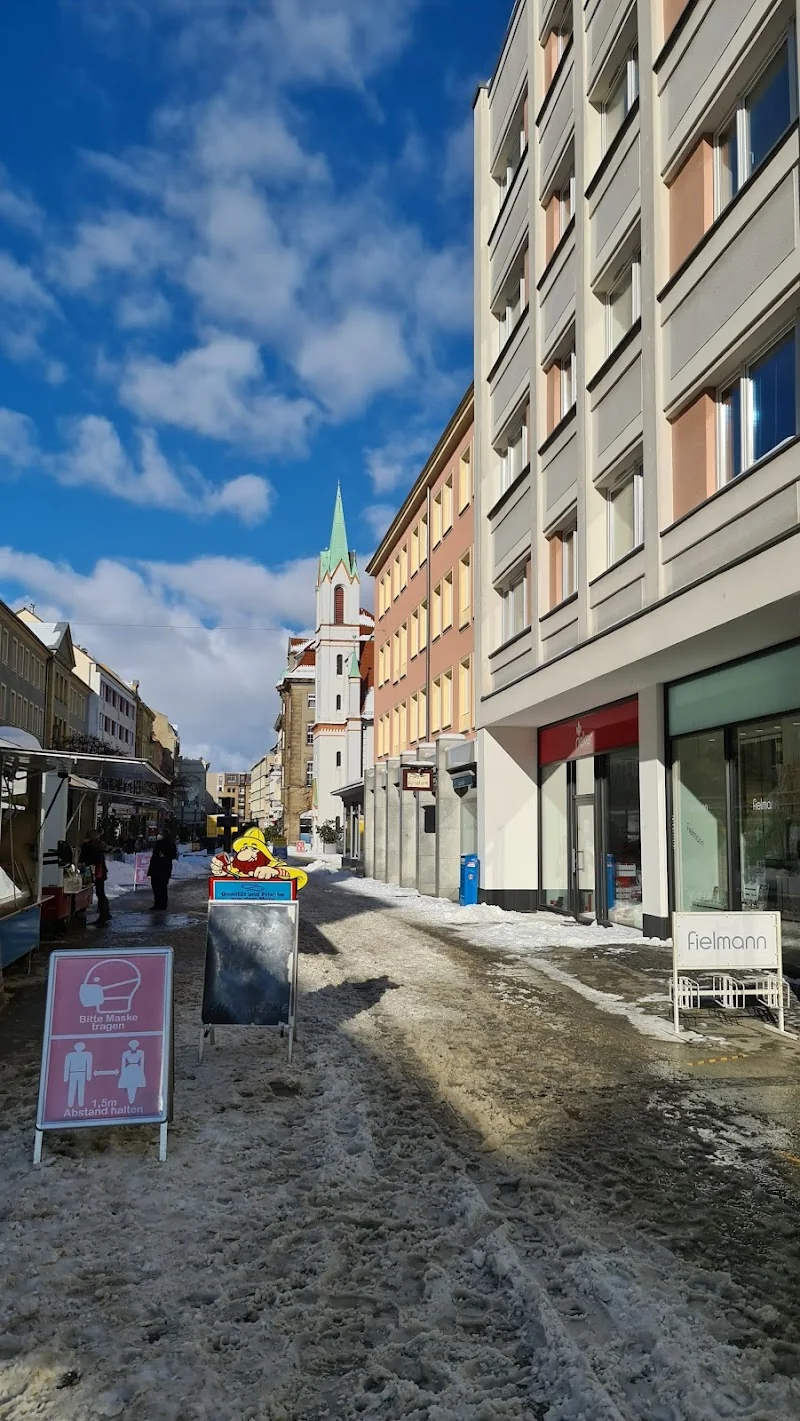
The Spremberger Straße is one of the most well-known addresses in the Cottbus city center and is described by the city's tourism website as a pedestrian zone. Anyone strolling through the historic core of Cottbus will almost automatically end up here, as the street connects the area around the Altmarkt with the Schloßkirchplatz, forming an important part of the inner-city tour. For this reason, it often simply appears in local perception as "Sprem." For visitors, it is less a mere traffic axis and more a vibrant promenade where shopping, gastronomy, weekly markets, and city history come together closely. Cafés, restaurants, shops, and urban meeting points are located in quick succession, while the Sorbenbrunnen, the Spremberger Tower, and the historic facades enrich the walk with cultural highlights. Thus, the street is not just a postal address but a central piece of urban identity. ([cottbus-tourismus.de](https://cottbus-tourismus.de/de/winter/cottbus-entdecken/einkaufen-und-parken/einkaufen/artikel-spremberger-strasse-altmarkt.html))
Location, Character, and Orientation in the Cottbus City Center
Anyone visiting the Spremberger Straße for the first time quickly realizes that it plays a special role in the cityscape of Cottbus. The city explicitly describes the area as a pedestrian zone, and the tourism website classifies it along with the city promenade and the directly adjacent Altmarkt as a place where one can stroll and enjoy excellently. This is important for orientation because the street is not isolated but part of a compact inner-city ensemble. Starting from the Altmarkt, one can reach the Spremberger Straße in just a few steps, and standing on the Schloßkirchplatz places one right in the central path between commerce, meeting points, and the atmosphere of the old town. This is crucial for the perception of the city center: The street is less "a street on the edge" and more the backbone of a walkable urban space that locals and guests alike utilize. ([cottbus-tourismus.de](https://cottbus-tourismus.de/de/winter/cottbus-entdecken/einkaufen-und-parken/einkaufen/artikel-spremberger-strasse-altmarkt.html))
Particularly for keyword-related searches for "Spremberger Straße Cottbus maps" or for a clear location assignment, this description of the location is relevant. The official address is Spremberger Straße, 03046 Cottbus, and the tourism information directly links the location with the themes of shopping, parking, and city visits. This makes it clear: Those searching for the street on the map are often actually looking for an entry point into Cottbus city. The location between the Altmarkt and Schloßkirchplatz makes the street particularly easy to find, as both points are among the most well-known orientation points of the old town. From a visitor's perspective, this is practical because one can use the street very well as a starting or ending point for a tour. Those wishing to combine sights, gastronomy, and shops will find a compact city center area without long distances. ([cottbus-tourismus.de](https://cottbus-tourismus.de/de/winter/cottbus-entdecken/einkaufen-und-parken/einkaufen/artikel-spremberger-strasse-altmarkt.html))
Furthermore, the Spremberger Straße appears in Cottbus' tourist offerings not only as a destination but also as a connecting element. The city's architectural walk presents more than 40 buildings and squares and provides a route suggestion for the old town; within it, the Spremberger Straße is a particularly obvious section for those wishing to discover historical urban spaces on foot. The Sorbenbrunnen is also explicitly mentioned in the tourism information as a water feature in the "Sprem," thus as part of this central pedestrian zone. This gives the street a dual value: It is, on the one hand, a functional urban space, and on the other hand, a place where the images of Cottbus city center concentrate. Anyone wanting to understand the city should start here, as the street beautifully overlays everyday use and the historical readability of the old town. ([cottbus-tourismus.de](https://cottbus-tourismus.de/de/cottbus-entdecken/tourentipps/architekturpfad/seite-30.html?utm_source=openai))
Shops, Cafés, and Strolling on the Sprem
The main search intent behind many inquiries about the Spremberger Straße is the topic of shops. And here, the official tourism site provides a clear answer: In the pedestrian zone of Spremberger Straße, the city promenade, and the directly adjacent Altmarkt, one can stroll and enjoy excellently; shops, cafés, and restaurants invite you to linger. The street thus functions as a classic shopping street in the city center, but not as an interchangeable shopping backdrop, rather as a developed urban space with a commercial mix. For visitors, this means short distances, spontaneous breaks in cafés, and the opportunity to combine shopping with a city walk. Particularly in conjunction with the Altmarkt and the surrounding facades, an urban experience emerges that goes far beyond merely running errands. ([cottbus-tourismus.de](https://cottbus-tourismus.de/de/winter/cottbus-entdecken/einkaufen-und-parken/einkaufen/artikel-spremberger-strasse-altmarkt.html))
The diversity is also reflected in the portrayed shops on site. For example, CottbusTourismus refers to the traditional business Step by step, which is located directly in the Cottbus shopping mile Spremberger Straße and offers a modern, comprehensive range. Similarly, by nature Naturmode in Spremberger Straße is described with sustainable clothing, Fairtrade fashion, and a clear positioning. Such examples are important because they make the street visible not only as a thoroughfare but as an actually utilized shopping address. The mix of traditional specialty shops, fashion, accessories, and other services gives the street a pleasant everyday depth. Therefore, those searching for "Spremberger Straße Cottbus shops" are looking for exactly this connection of city center location, local trade, and an offering that caters to various target groups. ([cottbus-tourismus.de](https://cottbus-tourismus.de/de/sommer/cottbus-entdecken/einkaufen-und-parken/cottbuser-geschenkgutschein/artikel-step-by-step-strumpfwaren-huete-muetzen-shirts.html))
The historical trading tradition of the area fits into this picture. The residential and commercial building Spremberger Straße 5 is described in the city's architectural path as a Art Nouveau building from 1910; at the same time, the building complex points to its long use as a jeweler's location and the storied family history of Sack. The neighboring Schloßkirchplatz 1 complements this impression with an even older layer: The building was erected in 1878/79, later expanded and remodeled, and housed various guest and restaurant businesses on the ground floor for decades. This makes it clear that trade and gastronomy in this area are not a new trend but a historically grown part of the place. Thus, anyone walking through the Spremberger Straße today experiences not only shops and shop windows but an area of the city center where more than a century of urban use can be traced. ([cottbus-tourismus.de](https://cottbus-tourismus.de/de/cottbus-entdecken/tourentipps/architekturpfad/artikel-wohn-und-geschaeftshaus-schlosskirchplatz-1.html?utm_source=openai))
Weekly Market and Events between Altmarkt and City Center
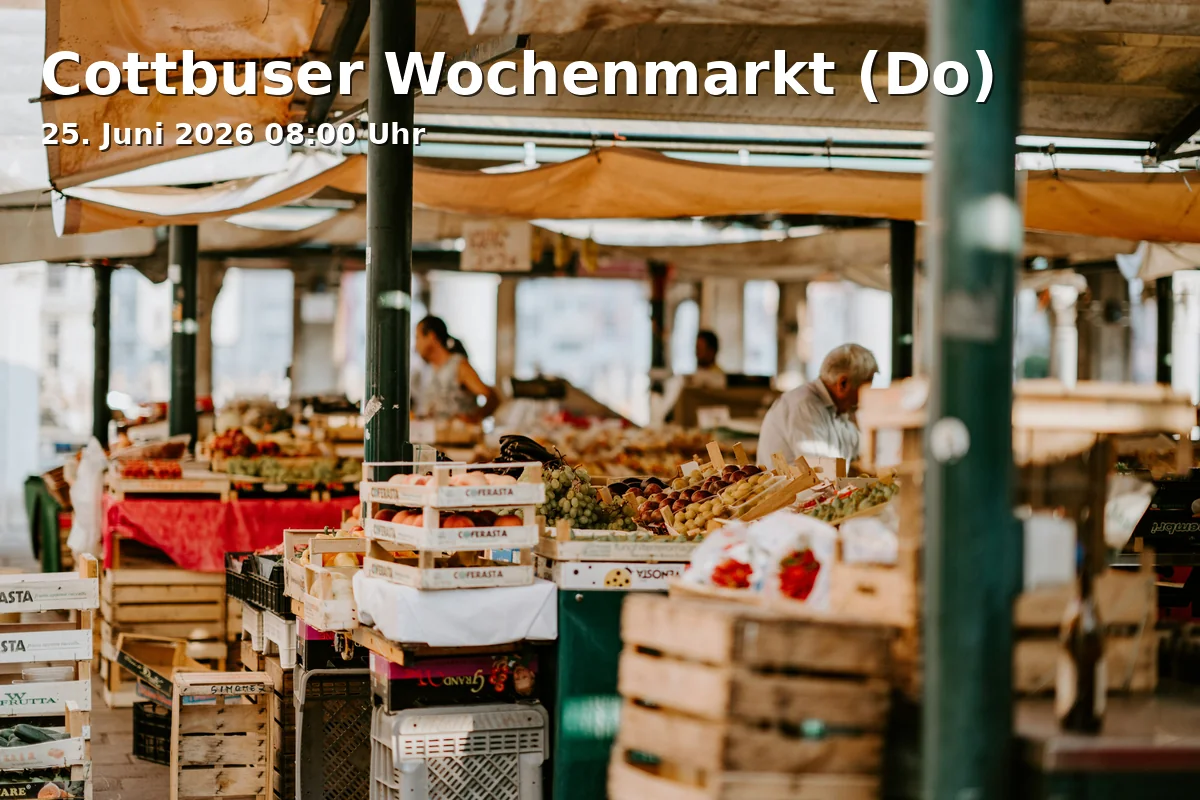
The Spremberger Straße has a particularly strong usage profile on market days. The city of Cottbus hosts the weekly market there as a recurring event, and the tourism site describes it as a market with up to 40 vendors, traditionally held in the middle of the city center. According to the city, the offerings range from fruits and vegetables to flowers and plants, as well as meat, sausage, and cheese, supplemented by other goods for daily needs. The Thursday market runs regularly from 8:00 AM to 5:00 PM. For search intentions around "program," "today," or "market," this is an important orientation: The Spremberger Straße is not only a shopping street but also a permanent marketplace in the urban everyday life of Cottbus. Those who enjoy discovering regional products will find here a city center location with a reliable weekly rhythm. ([cottbus.de](https://cottbus.de/veranstaltungen/wochenmarkt-in-der-spremberger-strasse/?utm_source=openai))
The city also shows that the use of the street flexibly responds to the seasons. For the period from November 20, 2025, to the end of February 2026, the Thursday market has been temporarily relocated to other locations due to the Christmas market in the Spremberger Straße, initially to the Berliner Platz or the Stadthallenvorplatz, and later at the turn of the year to the forecourt of the Spreegalerie. This information is practical for visitors as it clarifies that the street can be repurposed during major events and that the weekly market does not remain fixed in one place. At the same time, the market character is preserved, just at changing city center points. This interplay of everyday life and seasonality makes the Spremberger Straße so lively for Cottbus: At one moment it is a shopping street, at another a market zone or event space. ([cottbus.de](https://cottbus.de/allgemein/aenderungen-bei-der-durchfuehrung-der-wochenmaerkte-ab-20-11-2025/))
Also, in city-wide events, the area plays an important role. The Cottbus city festival unites areas around the Altmarkt, the Stadthallenvorplatz, the Spremberger Straße, the square at the city fountain, the Puschkinpark, the Post parking lot, and the Oberkirche into a three-day program with culture, culinary delights, rides, and sales stands. The Spremberger Straße is also mentioned in connection with the Christmas market of a thousand stars, which traditionally shapes the city center. This makes it clear: The street is relevant not only for regular trade but also as a stage for larger moments in the city center. Therefore, those searching for a vibrant city center will find here not just a shopping strip but a place that can transform from a market to a festival area to a festively lit promenade depending on the season. ([cottbus-tourismus.de](https://cottbus-tourismus.de/de/winter/cottbus-erleben/highlights/artikel-stadtfest_cottbus-1.html?utm_source=openai))
Parking, Access, and Short Distances to the Pedestrian Zone
For many inquiries about the Spremberger Straße, the topic of parking is particularly important. The official page on parking options in Cottbus shows that the city center is equipped with a whole range of parking garages, parking lots, and underground garages. These include, among others, the City parking garage, the parking garage at Neustädter Platz, the Spreegalerie parking garage, the Blechen Carré parking garage, the StadtforumK parking garage, the underground garage at Schloßkirchplatz, the parking lot at Oberkirchplatz, and the parking lot at Berliner Platz. The tourism site explicitly names these as parking garages, parking lots, and underground garages. For visiting the city, this means: The Spremberger Straße does not rely on car-free orientation, but the last section into the pedestrian zone is most pleasantly covered on foot. This makes the street particularly practical for shopping trips, market visits, and short stops in the city center. ([cottbus-tourismus.de](https://cottbus-tourismus.de/de/winter/cottbus-entdecken/einkaufen-und-parken/parkmoeglichkeiten.html))
The numbers on the parking page also show how closely knit the network of city center parking spaces is. The Spreegalerie parking garage offers 630 parking spaces, the Blechen Carré parking garage 465, the parking garage at Neustädter Platz 376, the City parking garage 235, the parking lot at Oberkirchplatz 210, and the underground garage at Schloßkirchplatz 105 parking spaces; additionally, the parking lot at Berliner Platz has 60 parking spaces, along with other locations. This is particularly relevant for visitors with short distances, as shopping, gastronomy, and sights can be connected without a long search for parking. Therefore, those searching for "Spremberger Straße Cottbus maps" or "Spremberger Straße Cottbus parking" mainly need an overview of this central city logic. The official information makes exactly that possible: park, walk a few minutes, then arrive in the middle of the pedestrian zone. ([cottbus-tourismus.de](https://cottbus-tourismus.de/de/winter/cottbus-entdecken/einkaufen-und-parken/parkmoeglichkeiten.html))
It is also practical that the city explicitly lists the pedestrian zones in Spremberger Straße and Altmarkt as areas with additional signs "Delivery traffic allowed" in the mobility concept. This shows that the zone functions as a pedestrian area but is also organized for inner-city everyday life. For visitors, this is a good sign as it underscores the central location and explains why the area remains lively despite being a pedestrian zone. Access does not lead directly into the shopping street but to its edge, where parking garages and underground garages facilitate access. Therefore, those wishing to be relaxed on the go should plan their visit so that the car stays in one of the nearby city center parking garages and the actual city tour begins on foot. This fits ideally with a street that thrives on its walkable atmosphere. ([cottbus.de](https://www.cottbus.de/.files/storage/file/95e866b9-efe2-4f50-b9ec-5d16c5e4cab2/Mobilitaetskonzept_Cottbus.pdf))
Spremberger Tower, Sorbenbrunnen, and Historic Facades
The special aura of the Spremberger Straße is closely linked to its architectural landmarks. The Spremberger Tower, which the city museum describes as the southern gate of the city of Cottbus, is connected to the historic Spremberger Gate and has shaped the image of the area for centuries. With the demolition of the foreland bastion in 1878, the street changed significantly. Later, further renovations were added until the tower was publicly reopened in September 2000 after restoration and reconstruction of the tower crown. Since 2014, it has been accessible daily to visitors according to the city museum; around 16,000 people use this offer each year. This makes the tower not only a monument but also a lively attraction at the edge of the Spremberger Straße. Therefore, those visiting the street can not only see city history but literally climb it. ([stadtmuseum-cottbus.de](https://www.stadtmuseum-cottbus.de/cottbus-lexikon-detail/spremberger-turm.html))
Another focal point is the Sorbenbrunnen in the middle of the street on Schloßkirchplatz. CottbusTourismus describes it as a fountain in the "Sprem," associated with motifs of Sorbian and Wendish culture. The design of the fountain ceramics was done in 1977 by the Dresden sculptor and painter Jürgen von Woyski, and the fountain parts were produced in VEB Zierkeramik Krauschwitz. Four artistically designed basins rest on differently high columns, and the motifs draw on traditional patterns as well as figures like the Kokot and the peace doves. Despite later damages and repairs, the Sorbenbrunnen remains an important symbol of Sorbian/Wendish culture and at the same time a popular meeting point in the middle of the city center. For many guests, it is therefore an ideal place for a short break on the way through the pedestrian zone. ([cottbus-tourismus.de](https://cottbus-tourismus.de/de/sommer/cottbus-besonders/sorben-wenden/artikel-serbska-studnja-sorbenbrunnen.html))
The architecture around the street tells the second great story of this place: the story of bourgeois building, trade, and gastronomic use. The residential and commercial building Spremberger Straße 5 was built in 1910 as a representative Art Nouveau building and refers with the inscription "F.F. Sack – Jeweler" to a long trading history. The building at Schloßkirchplatz 1, originally built in 1878/79, was later upgraded and housed various confectioneries, Viennese cafés, restaurants, and wine bars on the ground floor for decades. These examples show how closely business, living, and representation were connected in the city center and are still connected in part today. Therefore, anyone viewing the Spremberger Straße as merely a shopping address sees only the surface. In reality, the street tells of family businesses, gastronomic history, and the urban development of Cottbus over several generations. ([cottbus-tourismus.de](https://cottbus-tourismus.de/de/cottbus-entdecken/tourentipps/architekturpfad/artikel-wohn-und-geschaeftshaus-schlosskirchplatz-1.html?utm_source=openai))
The city's architectural walk makes these qualities specifically accessible to visitors. CottbusTourismus refers to a flyer with a map, information about more than 40 buildings and squares, and a route suggestion that connects historical and architectural points. The Spremberger Straße fits very well into this route as it forms a particularly dense city center landscape with tower, fountain, shops, and facades. Herein lies the charm of the street: One can shop, have a coffee, visit the weekly market, climb a tower, and simultaneously experience historical architecture. This makes the Spremberger Straße a place where current city life and the past do not disturb each other but rather enhance each other. Anyone wanting to understand Cottbus gets a very compact picture of how the city functions and how it presents itself within just a few meters. ([cottbus-tourismus.de](https://cottbus-tourismus.de/de/cottbus-entdecken/tourentipps/architekturpfad/seite-30.html?utm_source=openai))
Sources:
- Spremberger Straße & Altmarkt – CottbusTourismus ([cottbus-tourismus.de](https://cottbus-tourismus.de/de/winter/cottbus-entdecken/einkaufen-und-parken/einkaufen/artikel-spremberger-strasse-altmarkt.html))
- Parking options in Cottbus – CottbusTourismus ([cottbus-tourismus.de](https://cottbus-tourismus.de/de/winter/cottbus-entdecken/einkaufen-und-parken/parkmoeglichkeiten.html))
- Spremberger Tower – City Museum Cottbus ([stadtmuseum-cottbus.de](https://www.stadtmuseum-cottbus.de/cottbus-lexikon-detail/spremberger-turm.html))
- Sorbenbrunnen – CottbusTourismus ([cottbus-tourismus.de](https://cottbus-tourismus.de/de/sommer/cottbus-besonders/sorben-wenden/artikel-serbska-studnja-sorbenbrunnen.html))
- Weekly market in the Spremberger Straße – City of Cottbus ([cottbus.de](https://cottbus.de/veranstaltungen/wochenmarkt-in-der-spremberger-strasse/?utm_source=openai))
- Architectural path with Spremberger Straße 5 and Schloßkirchplatz 1 – CottbusTourismus ([cottbus-tourismus.de](https://cottbus-tourismus.de/de/cottbus-entdecken/tourentipps/architekturpfad/seite-30.html?utm_source=openai))
Show moreShow less
Spremberger Straße | Shops & Maps
The Spremberger Straße is one of the most well-known addresses in the Cottbus city center and is described by the city's tourism website as a pedestrian zone. Anyone strolling through the historic core of Cottbus will almost automatically end up here, as the street connects the area around the Altmarkt with the Schloßkirchplatz, forming an important part of the inner-city tour. For this reason, it often simply appears in local perception as "Sprem." For visitors, it is less a mere traffic axis and more a vibrant promenade where shopping, gastronomy, weekly markets, and city history come together closely. Cafés, restaurants, shops, and urban meeting points are located in quick succession, while the Sorbenbrunnen, the Spremberger Tower, and the historic facades enrich the walk with cultural highlights. Thus, the street is not just a postal address but a central piece of urban identity. ([cottbus-tourismus.de](https://cottbus-tourismus.de/de/winter/cottbus-entdecken/einkaufen-und-parken/einkaufen/artikel-spremberger-strasse-altmarkt.html))
Location, Character, and Orientation in the Cottbus City Center
Anyone visiting the Spremberger Straße for the first time quickly realizes that it plays a special role in the cityscape of Cottbus. The city explicitly describes the area as a pedestrian zone, and the tourism website classifies it along with the city promenade and the directly adjacent Altmarkt as a place where one can stroll and enjoy excellently. This is important for orientation because the street is not isolated but part of a compact inner-city ensemble. Starting from the Altmarkt, one can reach the Spremberger Straße in just a few steps, and standing on the Schloßkirchplatz places one right in the central path between commerce, meeting points, and the atmosphere of the old town. This is crucial for the perception of the city center: The street is less "a street on the edge" and more the backbone of a walkable urban space that locals and guests alike utilize. ([cottbus-tourismus.de](https://cottbus-tourismus.de/de/winter/cottbus-entdecken/einkaufen-und-parken/einkaufen/artikel-spremberger-strasse-altmarkt.html))
Particularly for keyword-related searches for "Spremberger Straße Cottbus maps" or for a clear location assignment, this description of the location is relevant. The official address is Spremberger Straße, 03046 Cottbus, and the tourism information directly links the location with the themes of shopping, parking, and city visits. This makes it clear: Those searching for the street on the map are often actually looking for an entry point into Cottbus city. The location between the Altmarkt and Schloßkirchplatz makes the street particularly easy to find, as both points are among the most well-known orientation points of the old town. From a visitor's perspective, this is practical because one can use the street very well as a starting or ending point for a tour. Those wishing to combine sights, gastronomy, and shops will find a compact city center area without long distances. ([cottbus-tourismus.de](https://cottbus-tourismus.de/de/winter/cottbus-entdecken/einkaufen-und-parken/einkaufen/artikel-spremberger-strasse-altmarkt.html))
Furthermore, the Spremberger Straße appears in Cottbus' tourist offerings not only as a destination but also as a connecting element. The city's architectural walk presents more than 40 buildings and squares and provides a route suggestion for the old town; within it, the Spremberger Straße is a particularly obvious section for those wishing to discover historical urban spaces on foot. The Sorbenbrunnen is also explicitly mentioned in the tourism information as a water feature in the "Sprem," thus as part of this central pedestrian zone. This gives the street a dual value: It is, on the one hand, a functional urban space, and on the other hand, a place where the images of Cottbus city center concentrate. Anyone wanting to understand the city should start here, as the street beautifully overlays everyday use and the historical readability of the old town. ([cottbus-tourismus.de](https://cottbus-tourismus.de/de/cottbus-entdecken/tourentipps/architekturpfad/seite-30.html?utm_source=openai))
Shops, Cafés, and Strolling on the Sprem
The main search intent behind many inquiries about the Spremberger Straße is the topic of shops. And here, the official tourism site provides a clear answer: In the pedestrian zone of Spremberger Straße, the city promenade, and the directly adjacent Altmarkt, one can stroll and enjoy excellently; shops, cafés, and restaurants invite you to linger. The street thus functions as a classic shopping street in the city center, but not as an interchangeable shopping backdrop, rather as a developed urban space with a commercial mix. For visitors, this means short distances, spontaneous breaks in cafés, and the opportunity to combine shopping with a city walk. Particularly in conjunction with the Altmarkt and the surrounding facades, an urban experience emerges that goes far beyond merely running errands. ([cottbus-tourismus.de](https://cottbus-tourismus.de/de/winter/cottbus-entdecken/einkaufen-und-parken/einkaufen/artikel-spremberger-strasse-altmarkt.html))
The diversity is also reflected in the portrayed shops on site. For example, CottbusTourismus refers to the traditional business Step by step, which is located directly in the Cottbus shopping mile Spremberger Straße and offers a modern, comprehensive range. Similarly, by nature Naturmode in Spremberger Straße is described with sustainable clothing, Fairtrade fashion, and a clear positioning. Such examples are important because they make the street visible not only as a thoroughfare but as an actually utilized shopping address. The mix of traditional specialty shops, fashion, accessories, and other services gives the street a pleasant everyday depth. Therefore, those searching for "Spremberger Straße Cottbus shops" are looking for exactly this connection of city center location, local trade, and an offering that caters to various target groups. ([cottbus-tourismus.de](https://cottbus-tourismus.de/de/sommer/cottbus-entdecken/einkaufen-und-parken/cottbuser-geschenkgutschein/artikel-step-by-step-strumpfwaren-huete-muetzen-shirts.html))
The historical trading tradition of the area fits into this picture. The residential and commercial building Spremberger Straße 5 is described in the city's architectural path as a Art Nouveau building from 1910; at the same time, the building complex points to its long use as a jeweler's location and the storied family history of Sack. The neighboring Schloßkirchplatz 1 complements this impression with an even older layer: The building was erected in 1878/79, later expanded and remodeled, and housed various guest and restaurant businesses on the ground floor for decades. This makes it clear that trade and gastronomy in this area are not a new trend but a historically grown part of the place. Thus, anyone walking through the Spremberger Straße today experiences not only shops and shop windows but an area of the city center where more than a century of urban use can be traced. ([cottbus-tourismus.de](https://cottbus-tourismus.de/de/cottbus-entdecken/tourentipps/architekturpfad/artikel-wohn-und-geschaeftshaus-schlosskirchplatz-1.html?utm_source=openai))
Weekly Market and Events between Altmarkt and City Center
The Spremberger Straße has a particularly strong usage profile on market days. The city of Cottbus hosts the weekly market there as a recurring event, and the tourism site describes it as a market with up to 40 vendors, traditionally held in the middle of the city center. According to the city, the offerings range from fruits and vegetables to flowers and plants, as well as meat, sausage, and cheese, supplemented by other goods for daily needs. The Thursday market runs regularly from 8:00 AM to 5:00 PM. For search intentions around "program," "today," or "market," this is an important orientation: The Spremberger Straße is not only a shopping street but also a permanent marketplace in the urban everyday life of Cottbus. Those who enjoy discovering regional products will find here a city center location with a reliable weekly rhythm. ([cottbus.de](https://cottbus.de/veranstaltungen/wochenmarkt-in-der-spremberger-strasse/?utm_source=openai))
The city also shows that the use of the street flexibly responds to the seasons. For the period from November 20, 2025, to the end of February 2026, the Thursday market has been temporarily relocated to other locations due to the Christmas market in the Spremberger Straße, initially to the Berliner Platz or the Stadthallenvorplatz, and later at the turn of the year to the forecourt of the Spreegalerie. This information is practical for visitors as it clarifies that the street can be repurposed during major events and that the weekly market does not remain fixed in one place. At the same time, the market character is preserved, just at changing city center points. This interplay of everyday life and seasonality makes the Spremberger Straße so lively for Cottbus: At one moment it is a shopping street, at another a market zone or event space. ([cottbus.de](https://cottbus.de/allgemein/aenderungen-bei-der-durchfuehrung-der-wochenmaerkte-ab-20-11-2025/))
Also, in city-wide events, the area plays an important role. The Cottbus city festival unites areas around the Altmarkt, the Stadthallenvorplatz, the Spremberger Straße, the square at the city fountain, the Puschkinpark, the Post parking lot, and the Oberkirche into a three-day program with culture, culinary delights, rides, and sales stands. The Spremberger Straße is also mentioned in connection with the Christmas market of a thousand stars, which traditionally shapes the city center. This makes it clear: The street is relevant not only for regular trade but also as a stage for larger moments in the city center. Therefore, those searching for a vibrant city center will find here not just a shopping strip but a place that can transform from a market to a festival area to a festively lit promenade depending on the season. ([cottbus-tourismus.de](https://cottbus-tourismus.de/de/winter/cottbus-erleben/highlights/artikel-stadtfest_cottbus-1.html?utm_source=openai))
Parking, Access, and Short Distances to the Pedestrian Zone
For many inquiries about the Spremberger Straße, the topic of parking is particularly important. The official page on parking options in Cottbus shows that the city center is equipped with a whole range of parking garages, parking lots, and underground garages. These include, among others, the City parking garage, the parking garage at Neustädter Platz, the Spreegalerie parking garage, the Blechen Carré parking garage, the StadtforumK parking garage, the underground garage at Schloßkirchplatz, the parking lot at Oberkirchplatz, and the parking lot at Berliner Platz. The tourism site explicitly names these as parking garages, parking lots, and underground garages. For visiting the city, this means: The Spremberger Straße does not rely on car-free orientation, but the last section into the pedestrian zone is most pleasantly covered on foot. This makes the street particularly practical for shopping trips, market visits, and short stops in the city center. ([cottbus-tourismus.de](https://cottbus-tourismus.de/de/winter/cottbus-entdecken/einkaufen-und-parken/parkmoeglichkeiten.html))
The numbers on the parking page also show how closely knit the network of city center parking spaces is. The Spreegalerie parking garage offers 630 parking spaces, the Blechen Carré parking garage 465, the parking garage at Neustädter Platz 376, the City parking garage 235, the parking lot at Oberkirchplatz 210, and the underground garage at Schloßkirchplatz 105 parking spaces; additionally, the parking lot at Berliner Platz has 60 parking spaces, along with other locations. This is particularly relevant for visitors with short distances, as shopping, gastronomy, and sights can be connected without a long search for parking. Therefore, those searching for "Spremberger Straße Cottbus maps" or "Spremberger Straße Cottbus parking" mainly need an overview of this central city logic. The official information makes exactly that possible: park, walk a few minutes, then arrive in the middle of the pedestrian zone. ([cottbus-tourismus.de](https://cottbus-tourismus.de/de/winter/cottbus-entdecken/einkaufen-und-parken/parkmoeglichkeiten.html))
It is also practical that the city explicitly lists the pedestrian zones in Spremberger Straße and Altmarkt as areas with additional signs "Delivery traffic allowed" in the mobility concept. This shows that the zone functions as a pedestrian area but is also organized for inner-city everyday life. For visitors, this is a good sign as it underscores the central location and explains why the area remains lively despite being a pedestrian zone. Access does not lead directly into the shopping street but to its edge, where parking garages and underground garages facilitate access. Therefore, those wishing to be relaxed on the go should plan their visit so that the car stays in one of the nearby city center parking garages and the actual city tour begins on foot. This fits ideally with a street that thrives on its walkable atmosphere. ([cottbus.de](https://www.cottbus.de/.files/storage/file/95e866b9-efe2-4f50-b9ec-5d16c5e4cab2/Mobilitaetskonzept_Cottbus.pdf))
Spremberger Tower, Sorbenbrunnen, and Historic Facades
The special aura of the Spremberger Straße is closely linked to its architectural landmarks. The Spremberger Tower, which the city museum describes as the southern gate of the city of Cottbus, is connected to the historic Spremberger Gate and has shaped the image of the area for centuries. With the demolition of the foreland bastion in 1878, the street changed significantly. Later, further renovations were added until the tower was publicly reopened in September 2000 after restoration and reconstruction of the tower crown. Since 2014, it has been accessible daily to visitors according to the city museum; around 16,000 people use this offer each year. This makes the tower not only a monument but also a lively attraction at the edge of the Spremberger Straße. Therefore, those visiting the street can not only see city history but literally climb it. ([stadtmuseum-cottbus.de](https://www.stadtmuseum-cottbus.de/cottbus-lexikon-detail/spremberger-turm.html))
Another focal point is the Sorbenbrunnen in the middle of the street on Schloßkirchplatz. CottbusTourismus describes it as a fountain in the "Sprem," associated with motifs of Sorbian and Wendish culture. The design of the fountain ceramics was done in 1977 by the Dresden sculptor and painter Jürgen von Woyski, and the fountain parts were produced in VEB Zierkeramik Krauschwitz. Four artistically designed basins rest on differently high columns, and the motifs draw on traditional patterns as well as figures like the Kokot and the peace doves. Despite later damages and repairs, the Sorbenbrunnen remains an important symbol of Sorbian/Wendish culture and at the same time a popular meeting point in the middle of the city center. For many guests, it is therefore an ideal place for a short break on the way through the pedestrian zone. ([cottbus-tourismus.de](https://cottbus-tourismus.de/de/sommer/cottbus-besonders/sorben-wenden/artikel-serbska-studnja-sorbenbrunnen.html))
The architecture around the street tells the second great story of this place: the story of bourgeois building, trade, and gastronomic use. The residential and commercial building Spremberger Straße 5 was built in 1910 as a representative Art Nouveau building and refers with the inscription "F.F. Sack – Jeweler" to a long trading history. The building at Schloßkirchplatz 1, originally built in 1878/79, was later upgraded and housed various confectioneries, Viennese cafés, restaurants, and wine bars on the ground floor for decades. These examples show how closely business, living, and representation were connected in the city center and are still connected in part today. Therefore, anyone viewing the Spremberger Straße as merely a shopping address sees only the surface. In reality, the street tells of family businesses, gastronomic history, and the urban development of Cottbus over several generations. ([cottbus-tourismus.de](https://cottbus-tourismus.de/de/cottbus-entdecken/tourentipps/architekturpfad/artikel-wohn-und-geschaeftshaus-schlosskirchplatz-1.html?utm_source=openai))
The city's architectural walk makes these qualities specifically accessible to visitors. CottbusTourismus refers to a flyer with a map, information about more than 40 buildings and squares, and a route suggestion that connects historical and architectural points. The Spremberger Straße fits very well into this route as it forms a particularly dense city center landscape with tower, fountain, shops, and facades. Herein lies the charm of the street: One can shop, have a coffee, visit the weekly market, climb a tower, and simultaneously experience historical architecture. This makes the Spremberger Straße a place where current city life and the past do not disturb each other but rather enhance each other. Anyone wanting to understand Cottbus gets a very compact picture of how the city functions and how it presents itself within just a few meters. ([cottbus-tourismus.de](https://cottbus-tourismus.de/de/cottbus-entdecken/tourentipps/architekturpfad/seite-30.html?utm_source=openai))
Sources:
- Spremberger Straße & Altmarkt – CottbusTourismus ([cottbus-tourismus.de](https://cottbus-tourismus.de/de/winter/cottbus-entdecken/einkaufen-und-parken/einkaufen/artikel-spremberger-strasse-altmarkt.html))
- Parking options in Cottbus – CottbusTourismus ([cottbus-tourismus.de](https://cottbus-tourismus.de/de/winter/cottbus-entdecken/einkaufen-und-parken/parkmoeglichkeiten.html))
- Spremberger Tower – City Museum Cottbus ([stadtmuseum-cottbus.de](https://www.stadtmuseum-cottbus.de/cottbus-lexikon-detail/spremberger-turm.html))
- Sorbenbrunnen – CottbusTourismus ([cottbus-tourismus.de](https://cottbus-tourismus.de/de/sommer/cottbus-besonders/sorben-wenden/artikel-serbska-studnja-sorbenbrunnen.html))
- Weekly market in the Spremberger Straße – City of Cottbus ([cottbus.de](https://cottbus.de/veranstaltungen/wochenmarkt-in-der-spremberger-strasse/?utm_source=openai))
- Architectural path with Spremberger Straße 5 and Schloßkirchplatz 1 – CottbusTourismus ([cottbus-tourismus.de](https://cottbus-tourismus.de/de/cottbus-entdecken/tourentipps/architekturpfad/seite-30.html?utm_source=openai))
Spremberger Straße | Shops & Maps
The Spremberger Straße is one of the most well-known addresses in the Cottbus city center and is described by the city's tourism website as a pedestrian zone. Anyone strolling through the historic core of Cottbus will almost automatically end up here, as the street connects the area around the Altmarkt with the Schloßkirchplatz, forming an important part of the inner-city tour. For this reason, it often simply appears in local perception as "Sprem." For visitors, it is less a mere traffic axis and more a vibrant promenade where shopping, gastronomy, weekly markets, and city history come together closely. Cafés, restaurants, shops, and urban meeting points are located in quick succession, while the Sorbenbrunnen, the Spremberger Tower, and the historic facades enrich the walk with cultural highlights. Thus, the street is not just a postal address but a central piece of urban identity. ([cottbus-tourismus.de](https://cottbus-tourismus.de/de/winter/cottbus-entdecken/einkaufen-und-parken/einkaufen/artikel-spremberger-strasse-altmarkt.html))
Location, Character, and Orientation in the Cottbus City Center
Anyone visiting the Spremberger Straße for the first time quickly realizes that it plays a special role in the cityscape of Cottbus. The city explicitly describes the area as a pedestrian zone, and the tourism website classifies it along with the city promenade and the directly adjacent Altmarkt as a place where one can stroll and enjoy excellently. This is important for orientation because the street is not isolated but part of a compact inner-city ensemble. Starting from the Altmarkt, one can reach the Spremberger Straße in just a few steps, and standing on the Schloßkirchplatz places one right in the central path between commerce, meeting points, and the atmosphere of the old town. This is crucial for the perception of the city center: The street is less "a street on the edge" and more the backbone of a walkable urban space that locals and guests alike utilize. ([cottbus-tourismus.de](https://cottbus-tourismus.de/de/winter/cottbus-entdecken/einkaufen-und-parken/einkaufen/artikel-spremberger-strasse-altmarkt.html))
Particularly for keyword-related searches for "Spremberger Straße Cottbus maps" or for a clear location assignment, this description of the location is relevant. The official address is Spremberger Straße, 03046 Cottbus, and the tourism information directly links the location with the themes of shopping, parking, and city visits. This makes it clear: Those searching for the street on the map are often actually looking for an entry point into Cottbus city. The location between the Altmarkt and Schloßkirchplatz makes the street particularly easy to find, as both points are among the most well-known orientation points of the old town. From a visitor's perspective, this is practical because one can use the street very well as a starting or ending point for a tour. Those wishing to combine sights, gastronomy, and shops will find a compact city center area without long distances. ([cottbus-tourismus.de](https://cottbus-tourismus.de/de/winter/cottbus-entdecken/einkaufen-und-parken/einkaufen/artikel-spremberger-strasse-altmarkt.html))
Furthermore, the Spremberger Straße appears in Cottbus' tourist offerings not only as a destination but also as a connecting element. The city's architectural walk presents more than 40 buildings and squares and provides a route suggestion for the old town; within it, the Spremberger Straße is a particularly obvious section for those wishing to discover historical urban spaces on foot. The Sorbenbrunnen is also explicitly mentioned in the tourism information as a water feature in the "Sprem," thus as part of this central pedestrian zone. This gives the street a dual value: It is, on the one hand, a functional urban space, and on the other hand, a place where the images of Cottbus city center concentrate. Anyone wanting to understand the city should start here, as the street beautifully overlays everyday use and the historical readability of the old town. ([cottbus-tourismus.de](https://cottbus-tourismus.de/de/cottbus-entdecken/tourentipps/architekturpfad/seite-30.html?utm_source=openai))
Shops, Cafés, and Strolling on the Sprem
The main search intent behind many inquiries about the Spremberger Straße is the topic of shops. And here, the official tourism site provides a clear answer: In the pedestrian zone of Spremberger Straße, the city promenade, and the directly adjacent Altmarkt, one can stroll and enjoy excellently; shops, cafés, and restaurants invite you to linger. The street thus functions as a classic shopping street in the city center, but not as an interchangeable shopping backdrop, rather as a developed urban space with a commercial mix. For visitors, this means short distances, spontaneous breaks in cafés, and the opportunity to combine shopping with a city walk. Particularly in conjunction with the Altmarkt and the surrounding facades, an urban experience emerges that goes far beyond merely running errands. ([cottbus-tourismus.de](https://cottbus-tourismus.de/de/winter/cottbus-entdecken/einkaufen-und-parken/einkaufen/artikel-spremberger-strasse-altmarkt.html))
The diversity is also reflected in the portrayed shops on site. For example, CottbusTourismus refers to the traditional business Step by step, which is located directly in the Cottbus shopping mile Spremberger Straße and offers a modern, comprehensive range. Similarly, by nature Naturmode in Spremberger Straße is described with sustainable clothing, Fairtrade fashion, and a clear positioning. Such examples are important because they make the street visible not only as a thoroughfare but as an actually utilized shopping address. The mix of traditional specialty shops, fashion, accessories, and other services gives the street a pleasant everyday depth. Therefore, those searching for "Spremberger Straße Cottbus shops" are looking for exactly this connection of city center location, local trade, and an offering that caters to various target groups. ([cottbus-tourismus.de](https://cottbus-tourismus.de/de/sommer/cottbus-entdecken/einkaufen-und-parken/cottbuser-geschenkgutschein/artikel-step-by-step-strumpfwaren-huete-muetzen-shirts.html))
The historical trading tradition of the area fits into this picture. The residential and commercial building Spremberger Straße 5 is described in the city's architectural path as a Art Nouveau building from 1910; at the same time, the building complex points to its long use as a jeweler's location and the storied family history of Sack. The neighboring Schloßkirchplatz 1 complements this impression with an even older layer: The building was erected in 1878/79, later expanded and remodeled, and housed various guest and restaurant businesses on the ground floor for decades. This makes it clear that trade and gastronomy in this area are not a new trend but a historically grown part of the place. Thus, anyone walking through the Spremberger Straße today experiences not only shops and shop windows but an area of the city center where more than a century of urban use can be traced. ([cottbus-tourismus.de](https://cottbus-tourismus.de/de/cottbus-entdecken/tourentipps/architekturpfad/artikel-wohn-und-geschaeftshaus-schlosskirchplatz-1.html?utm_source=openai))
Weekly Market and Events between Altmarkt and City Center
The Spremberger Straße has a particularly strong usage profile on market days. The city of Cottbus hosts the weekly market there as a recurring event, and the tourism site describes it as a market with up to 40 vendors, traditionally held in the middle of the city center. According to the city, the offerings range from fruits and vegetables to flowers and plants, as well as meat, sausage, and cheese, supplemented by other goods for daily needs. The Thursday market runs regularly from 8:00 AM to 5:00 PM. For search intentions around "program," "today," or "market," this is an important orientation: The Spremberger Straße is not only a shopping street but also a permanent marketplace in the urban everyday life of Cottbus. Those who enjoy discovering regional products will find here a city center location with a reliable weekly rhythm. ([cottbus.de](https://cottbus.de/veranstaltungen/wochenmarkt-in-der-spremberger-strasse/?utm_source=openai))
The city also shows that the use of the street flexibly responds to the seasons. For the period from November 20, 2025, to the end of February 2026, the Thursday market has been temporarily relocated to other locations due to the Christmas market in the Spremberger Straße, initially to the Berliner Platz or the Stadthallenvorplatz, and later at the turn of the year to the forecourt of the Spreegalerie. This information is practical for visitors as it clarifies that the street can be repurposed during major events and that the weekly market does not remain fixed in one place. At the same time, the market character is preserved, just at changing city center points. This interplay of everyday life and seasonality makes the Spremberger Straße so lively for Cottbus: At one moment it is a shopping street, at another a market zone or event space. ([cottbus.de](https://cottbus.de/allgemein/aenderungen-bei-der-durchfuehrung-der-wochenmaerkte-ab-20-11-2025/))
Also, in city-wide events, the area plays an important role. The Cottbus city festival unites areas around the Altmarkt, the Stadthallenvorplatz, the Spremberger Straße, the square at the city fountain, the Puschkinpark, the Post parking lot, and the Oberkirche into a three-day program with culture, culinary delights, rides, and sales stands. The Spremberger Straße is also mentioned in connection with the Christmas market of a thousand stars, which traditionally shapes the city center. This makes it clear: The street is relevant not only for regular trade but also as a stage for larger moments in the city center. Therefore, those searching for a vibrant city center will find here not just a shopping strip but a place that can transform from a market to a festival area to a festively lit promenade depending on the season. ([cottbus-tourismus.de](https://cottbus-tourismus.de/de/winter/cottbus-erleben/highlights/artikel-stadtfest_cottbus-1.html?utm_source=openai))
Parking, Access, and Short Distances to the Pedestrian Zone
For many inquiries about the Spremberger Straße, the topic of parking is particularly important. The official page on parking options in Cottbus shows that the city center is equipped with a whole range of parking garages, parking lots, and underground garages. These include, among others, the City parking garage, the parking garage at Neustädter Platz, the Spreegalerie parking garage, the Blechen Carré parking garage, the StadtforumK parking garage, the underground garage at Schloßkirchplatz, the parking lot at Oberkirchplatz, and the parking lot at Berliner Platz. The tourism site explicitly names these as parking garages, parking lots, and underground garages. For visiting the city, this means: The Spremberger Straße does not rely on car-free orientation, but the last section into the pedestrian zone is most pleasantly covered on foot. This makes the street particularly practical for shopping trips, market visits, and short stops in the city center. ([cottbus-tourismus.de](https://cottbus-tourismus.de/de/winter/cottbus-entdecken/einkaufen-und-parken/parkmoeglichkeiten.html))
The numbers on the parking page also show how closely knit the network of city center parking spaces is. The Spreegalerie parking garage offers 630 parking spaces, the Blechen Carré parking garage 465, the parking garage at Neustädter Platz 376, the City parking garage 235, the parking lot at Oberkirchplatz 210, and the underground garage at Schloßkirchplatz 105 parking spaces; additionally, the parking lot at Berliner Platz has 60 parking spaces, along with other locations. This is particularly relevant for visitors with short distances, as shopping, gastronomy, and sights can be connected without a long search for parking. Therefore, those searching for "Spremberger Straße Cottbus maps" or "Spremberger Straße Cottbus parking" mainly need an overview of this central city logic. The official information makes exactly that possible: park, walk a few minutes, then arrive in the middle of the pedestrian zone. ([cottbus-tourismus.de](https://cottbus-tourismus.de/de/winter/cottbus-entdecken/einkaufen-und-parken/parkmoeglichkeiten.html))
It is also practical that the city explicitly lists the pedestrian zones in Spremberger Straße and Altmarkt as areas with additional signs "Delivery traffic allowed" in the mobility concept. This shows that the zone functions as a pedestrian area but is also organized for inner-city everyday life. For visitors, this is a good sign as it underscores the central location and explains why the area remains lively despite being a pedestrian zone. Access does not lead directly into the shopping street but to its edge, where parking garages and underground garages facilitate access. Therefore, those wishing to be relaxed on the go should plan their visit so that the car stays in one of the nearby city center parking garages and the actual city tour begins on foot. This fits ideally with a street that thrives on its walkable atmosphere. ([cottbus.de](https://www.cottbus.de/.files/storage/file/95e866b9-efe2-4f50-b9ec-5d16c5e4cab2/Mobilitaetskonzept_Cottbus.pdf))
Spremberger Tower, Sorbenbrunnen, and Historic Facades
The special aura of the Spremberger Straße is closely linked to its architectural landmarks. The Spremberger Tower, which the city museum describes as the southern gate of the city of Cottbus, is connected to the historic Spremberger Gate and has shaped the image of the area for centuries. With the demolition of the foreland bastion in 1878, the street changed significantly. Later, further renovations were added until the tower was publicly reopened in September 2000 after restoration and reconstruction of the tower crown. Since 2014, it has been accessible daily to visitors according to the city museum; around 16,000 people use this offer each year. This makes the tower not only a monument but also a lively attraction at the edge of the Spremberger Straße. Therefore, those visiting the street can not only see city history but literally climb it. ([stadtmuseum-cottbus.de](https://www.stadtmuseum-cottbus.de/cottbus-lexikon-detail/spremberger-turm.html))
Another focal point is the Sorbenbrunnen in the middle of the street on Schloßkirchplatz. CottbusTourismus describes it as a fountain in the "Sprem," associated with motifs of Sorbian and Wendish culture. The design of the fountain ceramics was done in 1977 by the Dresden sculptor and painter Jürgen von Woyski, and the fountain parts were produced in VEB Zierkeramik Krauschwitz. Four artistically designed basins rest on differently high columns, and the motifs draw on traditional patterns as well as figures like the Kokot and the peace doves. Despite later damages and repairs, the Sorbenbrunnen remains an important symbol of Sorbian/Wendish culture and at the same time a popular meeting point in the middle of the city center. For many guests, it is therefore an ideal place for a short break on the way through the pedestrian zone. ([cottbus-tourismus.de](https://cottbus-tourismus.de/de/sommer/cottbus-besonders/sorben-wenden/artikel-serbska-studnja-sorbenbrunnen.html))
The architecture around the street tells the second great story of this place: the story of bourgeois building, trade, and gastronomic use. The residential and commercial building Spremberger Straße 5 was built in 1910 as a representative Art Nouveau building and refers with the inscription "F.F. Sack – Jeweler" to a long trading history. The building at Schloßkirchplatz 1, originally built in 1878/79, was later upgraded and housed various confectioneries, Viennese cafés, restaurants, and wine bars on the ground floor for decades. These examples show how closely business, living, and representation were connected in the city center and are still connected in part today. Therefore, anyone viewing the Spremberger Straße as merely a shopping address sees only the surface. In reality, the street tells of family businesses, gastronomic history, and the urban development of Cottbus over several generations. ([cottbus-tourismus.de](https://cottbus-tourismus.de/de/cottbus-entdecken/tourentipps/architekturpfad/artikel-wohn-und-geschaeftshaus-schlosskirchplatz-1.html?utm_source=openai))
The city's architectural walk makes these qualities specifically accessible to visitors. CottbusTourismus refers to a flyer with a map, information about more than 40 buildings and squares, and a route suggestion that connects historical and architectural points. The Spremberger Straße fits very well into this route as it forms a particularly dense city center landscape with tower, fountain, shops, and facades. Herein lies the charm of the street: One can shop, have a coffee, visit the weekly market, climb a tower, and simultaneously experience historical architecture. This makes the Spremberger Straße a place where current city life and the past do not disturb each other but rather enhance each other. Anyone wanting to understand Cottbus gets a very compact picture of how the city functions and how it presents itself within just a few meters. ([cottbus-tourismus.de](https://cottbus-tourismus.de/de/cottbus-entdecken/tourentipps/architekturpfad/seite-30.html?utm_source=openai))
Sources:
- Spremberger Straße & Altmarkt – CottbusTourismus ([cottbus-tourismus.de](https://cottbus-tourismus.de/de/winter/cottbus-entdecken/einkaufen-und-parken/einkaufen/artikel-spremberger-strasse-altmarkt.html))
- Parking options in Cottbus – CottbusTourismus ([cottbus-tourismus.de](https://cottbus-tourismus.de/de/winter/cottbus-entdecken/einkaufen-und-parken/parkmoeglichkeiten.html))
- Spremberger Tower – City Museum Cottbus ([stadtmuseum-cottbus.de](https://www.stadtmuseum-cottbus.de/cottbus-lexikon-detail/spremberger-turm.html))
- Sorbenbrunnen – CottbusTourismus ([cottbus-tourismus.de](https://cottbus-tourismus.de/de/sommer/cottbus-besonders/sorben-wenden/artikel-serbska-studnja-sorbenbrunnen.html))
- Weekly market in the Spremberger Straße – City of Cottbus ([cottbus.de](https://cottbus.de/veranstaltungen/wochenmarkt-in-der-spremberger-strasse/?utm_source=openai))
- Architectural path with Spremberger Straße 5 and Schloßkirchplatz 1 – CottbusTourismus ([cottbus-tourismus.de](https://cottbus-tourismus.de/de/cottbus-entdecken/tourentipps/architekturpfad/seite-30.html?utm_source=openai))
Frequently Asked Questions
Reviews
No reviews found