
Cottbus
Thiemstraße 27, 03050 Cottbus, Deutschland
Luther Church Cottbus | Events & Directions
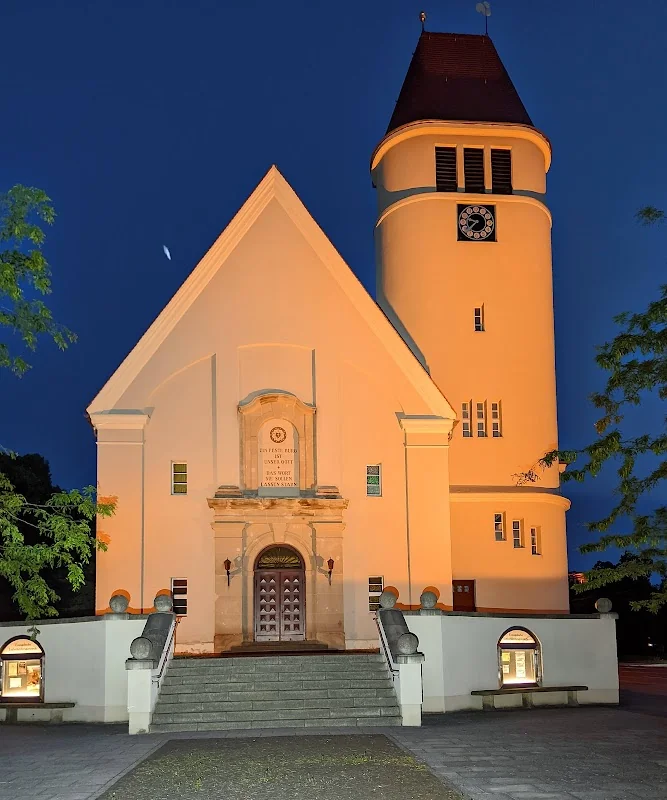
The Luther Church Cottbus is a place where history, urban development, community life, and cultural events meet very directly. Those who enter the church at Thiemstraße 27 not only stand before a Protestant house of worship but also before a building that has visibly accompanied the development of the city in the 20th century. The official city website describes the Luther Church as a Jugendstil church built in 1911, which was almost completely destroyed in 1945, consecrated again in 1951, and gradually restored until 1978. The community page adds that the church is located in the Spremberger suburb, near the main train station, and access is via Lutherstraße. Thus, the Luther Church is at once a spiritual place, an architectural testimony, and a well-accessible address in the middle of Cottbus's urban structure. ([cottbus.de](https://cottbus.de/kultur-und-tourismus/kirchen/lutherkirche/?utm_source=openai))
For seekers asking about events, services, music, or practical visitor information, the Luther Church is particularly interesting because it not only offers historical architecture but is also actively used today. The official event calendar of the city shows recurring services and musical formats, and the community page refers to ongoing dates, family offerings, and the brass choir. The newly designed paradise garden is now also part of the church's appearance and is described by the community as a place of encounter, reflection, and wonder. Therefore, those who know the Luther Church Cottbus experience not just a monument but a vibrant community space with presence and perspective. ([evkirchenkreis-cottbus.de](https://www.evkirchenkreis-cottbus.de/lutherkirche?utm_source=openai))
Events, Services, and Music at the Luther Church Cottbus
The Luther Church is now used not only for traditional services but also for musical and thematic events. On the official pages of the city of Cottbus and the Evangelical Church District, dates in the Luther Church regularly appear, such as services, music services, and concerts. A current example is the concert of the State Youth Choir of Brandenburg on March 29, 2026; the city describes it as a musical event featuring spiritual and secular choral literature, with free admission and donations welcome. Another example is a service in the Luther Church on May 31, 2026, which is explicitly designated as a service for the hearing impaired. This shows that the church is used not only liturgically but also inclusively and culturally. ([cottbus.de](https://cottbus.de/veranstaltungen/musik-in-der-lutherkirche/))
On the community's own page, there are also dates that underline the lively character of the place. Among other things, services with baptismal remembrance, Lego building days for families, closing services of the Alliance Prayer Week, and thematic services are displayed. For January 2026, the community page lists several specific dates, including a service with baptismal remembrance, a closing service of the Alliance Prayer Week, and a thematic service for the start of the year. Additionally, the same page notes a brass choir that rehearses regularly. This mix of liturgy, family work, music, and community practice makes the Luther Church an address that clearly goes beyond the mere church space. ([evkirchenkreis-cottbus.de](https://www.evkirchenkreis-cottbus.de/lutherkirche?utm_source=openai))
For everyone searching for the keyword “program,” it is important to note: The programs in the Luther Church are not organized as rigid schedules like in a concert hall but as a calendar of services, church music, and individual special events. This is precisely what makes the place so accessible for many visitors. One can experience spiritual occasions as well as concerts and musically shaped formats here, and one regularly encounters events that are openly announced and designed to be low-threshold. The combination of free admission, donation hints, and a church atmosphere is typical for the formats that the city and the community publish. ([evkirchenkreis-cottbus.de](https://www.evkirchenkreis-cottbus.de/entdecken/veranstaltungen/kirchenmusik/termindetails/konzert-mit-dem-vokalensemble-lausitz?utm_source=openai))
History and Architecture of the Luther Church in Cottbus
The history of the Luther Church is closely linked to the urban development of Cottbus. The city page describes that the church was built in 1911 in response to the southern expansion of the city, which was related to industrialization. It is a single-nave hall church in the Jugendstil style, designed by the Berlin government architect Leibnitz. The tourism page also mentions the laying of the foundation stone on June 25, 1911, and the consecration on June 30, 1912. These dates already make it clear that the Luther Church is not just any suburban church but a deliberately planned structure for a newly growing urban area. ([cottbus-tourismus.de](https://cottbus-tourismus.de/de/cottbus-entdecken/tourentipps/architekturpfad/artikel-lutherkirche.html))
World War II marked a deep cut. In February 1945, the church was almost completely destroyed during the bombing of the city; community rooms and the rectory were also affected. The city describes that the ruin was initially even intended for demolition, but due to the willingness to donate from the community, it was rebuilt after 1949 and consecrated again in 1951. Efforts to remove external war damage lasted until 1978, during which many Jugendstil elements could only be partially reconstructed. This history continues to shape the impression of the building today: The Luther Church is not only historical but also a symbol of continuity after destruction and reconstruction. ([cottbus-tourismus.de](https://cottbus-tourismus.de/de/cottbus-entdecken/tourentipps/architekturpfad/artikel-lutherkirche.html))
Architecturally, the church is rather simple than magnificent today. The city emphasizes that the interior is kept simple, with the pulpit and altar made of brick masonry. Additionally, since 1983, a Luther monument has stood in close proximity or in the church's surroundings. The combination of Jugendstil origins, war destruction, simplified reconstruction, and later additions makes the Luther Church particularly exciting for architecture enthusiasts. It is not a museum in the classical sense but a used sacred space whose appearance holds visible layers of time. Those who visit the building see not only a church but a condensed piece of urban history. ([cottbus.de](https://cottbus.de/kultur-und-tourismus/kirchen/lutherkirche/?utm_source=openai))
Directions to the Luther Church Cottbus: Location, Access, and Orientation
For directions, the location of the Luther Church is particularly helpful. The church is located at Thiemstraße 27 in 03050 Cottbus, in the Spremberger suburb. The official community page describes the community as an inner-city community in close proximity to Cottbus main station and names Lutherstraße as the access road. The city’s tourism page also mentions the address and locates the church as a building on the architecture path. This means for visitors: The Luther Church is centrally located, historically significant, and easily findable via the inner-city streets. ([evkirchenkreis-cottbus.de](https://www.evkirchenkreis-cottbus.de/lutherkirche?utm_source=openai))
Those arriving by public transport benefit from the proximity to the main train station and the location in the inner city area. The official sources do not mention a separate shuttle or special connection, but the recurring use for services and concerts shows that the church is anchored as an event location in the ongoing city life. Additionally, the city’s event entries offer calendar functions and a Google Maps location, which further facilitates orientation. For visitors, this means: Remember the address, approach via Thiemstraße or Lutherstraße, and check the location via the city’s event page if necessary. ([cottbus.de](https://cottbus.de/veranstaltungen/gottesdienst-in-lutherkirche-13/))
Another practical point is the surroundings. The community names the location in the Spremberger suburb, and the city documents place the church in an area that is urbanistically situated between Brauhausbergstraße, Lutherstraße, and green spaces. This indicates an inner-city location with short distances to other parts of Cottbus. Those who want to combine their visit with a city walk or an appointment in the center will find a sensible starting point here. Therefore, the Luther Church is not only a destination for attending services but also a good reference point in the southern inner city area of Cottbus. ([evkirchenkreis-cottbus.de](https://www.evkirchenkreis-cottbus.de/lutherkirche?utm_source=openai))
Parking at the Luther Church: What Visitors Should Know
When it comes to parking, it is important to distinguish between historical use and current planning. A city framework concept for Brauhausbergstraße and the Luther Church shows that the forecourt in its existing situation was used as a parking lot and that parked cars are documented in front of the church's entrance. At the same time, the same planning explicitly describes the forecourt as an area primarily intended for gathering, lingering, and reflection before and after church events. The planning did not aim to maintain the forecourt permanently as a regular parking lot but to upgrade it urbanistically and functionally. ([cottbus.de](https://www.cottbus.de/.files/storage/file/d81021b8-37e7-48c6-a791-b2d4b183b7d4/ZiS-Rahmenk.pdf))
For visitors, this means: Direct parking immediately in front of the church is not the only and, from a planning perspective, not the desired usage pattern. The city documents rather indicate that the space in front of the church is intended for arrival, orientation, and encounters. Additionally, another planning detail shows that the square in front of the Luther Church is described as an unpaved area, in which numerous supply lines and surface elements are present. These framework conditions explain why the city wanted to organize the area aesthetically. Therefore, those arriving by car should pay attention to the current signage and the local parking situation and not automatically expect an official church parking lot. ([cottbus.de](https://www.cottbus.de/.files/storage/file/d81021b8-37e7-48c6-a791-b2d4b183b7d4/ZiS-Rahmenk.pdf))
Since no fixed parking space list is published in the verified official sources, the safest strategy is to take a quick look at the event page or the local environment around Thiemstraße. This is especially sensible when more visitors are expected for services or concerts. The sources indicate that the Luther Church is located in an inner-city area where public space is used very consciously. For practical purposes, a pragmatic approach is therefore advisable: Check the address carefully, pay attention to access via Lutherstraße, and plan enough time for parking search in the immediate vicinity. ([evkirchenkreis-cottbus.de](https://www.evkirchenkreis-cottbus.de/lutherkirche?utm_source=openai))
Paradise Garden and Community Life Around the Luther Church
A remarkable current aspect of the Luther Church is the newly designed Paradise Garden. The community page reports on a festive opening on June 13, 2025, and describes the garden as a place of encounter, reflection, and wonder. The idea was implemented with many helping hands and donations and is intended to act as a vibrant, green, and blooming space. This is particularly interesting for visitors because the Luther Church thus offers not only a church space but also a designed outdoor area that consciously creates quality of stay. ([evkirchenkreis-cottbus.de](https://www.evkirchenkreis-cottbus.de/lutherkirche?utm_source=openai))
The community also makes it clear that the church is integrated into a broad community life. The community page mentions a parish office, a community office with opening hours, children's work, and a brass choir. The rehearsals of the brass choir take place on Thursdays, and interested parties are warmly welcomed. The Evangelical Kindergarten Lutherrose, visible from the church, is also mentioned, which makes the Luther Church appear as the center of a small church network in the district. This mix of administration, education, music, and social presence is an essential part of the church's identity. ([evkirchenkreis-cottbus.de](https://www.evkirchenkreis-cottbus.de/lutherkirche?utm_source=openai))
For visitor perception, it is important that the Luther Church does not function in isolation. The community communicates dates, invites to services, and actively shapes the outdoor area. This creates a place that works not only for individual events but is used throughout the year. The Paradise Garden, in particular, reinforces this impression because it is intended as a public, quiet, and at the same time lively meeting space. Therefore, those who visit the Luther Church experience not only an architectural monument but a living community whole that is distributed across church, garden, music, and social neighborhood. ([evkirchenkreis-cottbus.de](https://www.evkirchenkreis-cottbus.de/lutherkirche?utm_source=openai))
Seating Plan, Capacity, and Practical Questions Before the Visit
Many inquiries about churches and event venues revolve around seating plans, seats, or capacity. For the Luther Church Cottbus, it is important to know that the verified official sources do not provide a public seating plan or a reliable capacity figure. This does not mean that the church is small or large but merely that the community and city pages primarily provide information about history, location, dates, and usage. Therefore, those with specific seating questions should carefully read the respective event pages, as individual formats may have different seating arrangements or focuses. ([cottbus-tourismus.de](https://cottbus-tourismus.de/de/cottbus-entdecken/tourentipps/architekturpfad/artikel-lutherkirche.html))
Practically visible, however, is that the Luther Church is regularly used for services and concerts. This indicates a flexible room organization that adapts to church events. Some dates are explicitly announced as music events, others as services, and for some dates, special services for the hearing impaired are mentioned. The indication of free admission and donations at certain concerts also shows that the usage is more open and community-oriented than strictly tied to reserved seating. Therefore, for visitors, the question of fixed rows of seats is less decisive than the respective event description. ([cottbus.de](https://cottbus.de/veranstaltungen/gottesdienst-in-lutherkirche-13/))
When planning your visit, it is worthwhile to look at three points: first, the official address and access via Lutherstraße; second, the current date in the event or community calendar; and third, notes on special orientations such as music, family programs, or accessibility-related offers. This way, surprises can be avoided, and the visit will be more relaxed. The Luther Church is not a standardized event hall but a grown church space with history that adapts to its liturgical and cultural purpose. This is exactly what makes it particularly appealing to many visitors. ([evkirchenkreis-cottbus.de](https://www.evkirchenkreis-cottbus.de/lutherkirche?utm_source=openai))
Sources:
Show moreShow less
Luther Church Cottbus | Events & Directions
The Luther Church Cottbus is a place where history, urban development, community life, and cultural events meet very directly. Those who enter the church at Thiemstraße 27 not only stand before a Protestant house of worship but also before a building that has visibly accompanied the development of the city in the 20th century. The official city website describes the Luther Church as a Jugendstil church built in 1911, which was almost completely destroyed in 1945, consecrated again in 1951, and gradually restored until 1978. The community page adds that the church is located in the Spremberger suburb, near the main train station, and access is via Lutherstraße. Thus, the Luther Church is at once a spiritual place, an architectural testimony, and a well-accessible address in the middle of Cottbus's urban structure. ([cottbus.de](https://cottbus.de/kultur-und-tourismus/kirchen/lutherkirche/?utm_source=openai))
For seekers asking about events, services, music, or practical visitor information, the Luther Church is particularly interesting because it not only offers historical architecture but is also actively used today. The official event calendar of the city shows recurring services and musical formats, and the community page refers to ongoing dates, family offerings, and the brass choir. The newly designed paradise garden is now also part of the church's appearance and is described by the community as a place of encounter, reflection, and wonder. Therefore, those who know the Luther Church Cottbus experience not just a monument but a vibrant community space with presence and perspective. ([evkirchenkreis-cottbus.de](https://www.evkirchenkreis-cottbus.de/lutherkirche?utm_source=openai))
Events, Services, and Music at the Luther Church Cottbus
The Luther Church is now used not only for traditional services but also for musical and thematic events. On the official pages of the city of Cottbus and the Evangelical Church District, dates in the Luther Church regularly appear, such as services, music services, and concerts. A current example is the concert of the State Youth Choir of Brandenburg on March 29, 2026; the city describes it as a musical event featuring spiritual and secular choral literature, with free admission and donations welcome. Another example is a service in the Luther Church on May 31, 2026, which is explicitly designated as a service for the hearing impaired. This shows that the church is used not only liturgically but also inclusively and culturally. ([cottbus.de](https://cottbus.de/veranstaltungen/musik-in-der-lutherkirche/))
On the community's own page, there are also dates that underline the lively character of the place. Among other things, services with baptismal remembrance, Lego building days for families, closing services of the Alliance Prayer Week, and thematic services are displayed. For January 2026, the community page lists several specific dates, including a service with baptismal remembrance, a closing service of the Alliance Prayer Week, and a thematic service for the start of the year. Additionally, the same page notes a brass choir that rehearses regularly. This mix of liturgy, family work, music, and community practice makes the Luther Church an address that clearly goes beyond the mere church space. ([evkirchenkreis-cottbus.de](https://www.evkirchenkreis-cottbus.de/lutherkirche?utm_source=openai))
For everyone searching for the keyword “program,” it is important to note: The programs in the Luther Church are not organized as rigid schedules like in a concert hall but as a calendar of services, church music, and individual special events. This is precisely what makes the place so accessible for many visitors. One can experience spiritual occasions as well as concerts and musically shaped formats here, and one regularly encounters events that are openly announced and designed to be low-threshold. The combination of free admission, donation hints, and a church atmosphere is typical for the formats that the city and the community publish. ([evkirchenkreis-cottbus.de](https://www.evkirchenkreis-cottbus.de/entdecken/veranstaltungen/kirchenmusik/termindetails/konzert-mit-dem-vokalensemble-lausitz?utm_source=openai))
History and Architecture of the Luther Church in Cottbus
The history of the Luther Church is closely linked to the urban development of Cottbus. The city page describes that the church was built in 1911 in response to the southern expansion of the city, which was related to industrialization. It is a single-nave hall church in the Jugendstil style, designed by the Berlin government architect Leibnitz. The tourism page also mentions the laying of the foundation stone on June 25, 1911, and the consecration on June 30, 1912. These dates already make it clear that the Luther Church is not just any suburban church but a deliberately planned structure for a newly growing urban area. ([cottbus-tourismus.de](https://cottbus-tourismus.de/de/cottbus-entdecken/tourentipps/architekturpfad/artikel-lutherkirche.html))
World War II marked a deep cut. In February 1945, the church was almost completely destroyed during the bombing of the city; community rooms and the rectory were also affected. The city describes that the ruin was initially even intended for demolition, but due to the willingness to donate from the community, it was rebuilt after 1949 and consecrated again in 1951. Efforts to remove external war damage lasted until 1978, during which many Jugendstil elements could only be partially reconstructed. This history continues to shape the impression of the building today: The Luther Church is not only historical but also a symbol of continuity after destruction and reconstruction. ([cottbus-tourismus.de](https://cottbus-tourismus.de/de/cottbus-entdecken/tourentipps/architekturpfad/artikel-lutherkirche.html))
Architecturally, the church is rather simple than magnificent today. The city emphasizes that the interior is kept simple, with the pulpit and altar made of brick masonry. Additionally, since 1983, a Luther monument has stood in close proximity or in the church's surroundings. The combination of Jugendstil origins, war destruction, simplified reconstruction, and later additions makes the Luther Church particularly exciting for architecture enthusiasts. It is not a museum in the classical sense but a used sacred space whose appearance holds visible layers of time. Those who visit the building see not only a church but a condensed piece of urban history. ([cottbus.de](https://cottbus.de/kultur-und-tourismus/kirchen/lutherkirche/?utm_source=openai))
Directions to the Luther Church Cottbus: Location, Access, and Orientation
For directions, the location of the Luther Church is particularly helpful. The church is located at Thiemstraße 27 in 03050 Cottbus, in the Spremberger suburb. The official community page describes the community as an inner-city community in close proximity to Cottbus main station and names Lutherstraße as the access road. The city’s tourism page also mentions the address and locates the church as a building on the architecture path. This means for visitors: The Luther Church is centrally located, historically significant, and easily findable via the inner-city streets. ([evkirchenkreis-cottbus.de](https://www.evkirchenkreis-cottbus.de/lutherkirche?utm_source=openai))
Those arriving by public transport benefit from the proximity to the main train station and the location in the inner city area. The official sources do not mention a separate shuttle or special connection, but the recurring use for services and concerts shows that the church is anchored as an event location in the ongoing city life. Additionally, the city’s event entries offer calendar functions and a Google Maps location, which further facilitates orientation. For visitors, this means: Remember the address, approach via Thiemstraße or Lutherstraße, and check the location via the city’s event page if necessary. ([cottbus.de](https://cottbus.de/veranstaltungen/gottesdienst-in-lutherkirche-13/))
Another practical point is the surroundings. The community names the location in the Spremberger suburb, and the city documents place the church in an area that is urbanistically situated between Brauhausbergstraße, Lutherstraße, and green spaces. This indicates an inner-city location with short distances to other parts of Cottbus. Those who want to combine their visit with a city walk or an appointment in the center will find a sensible starting point here. Therefore, the Luther Church is not only a destination for attending services but also a good reference point in the southern inner city area of Cottbus. ([evkirchenkreis-cottbus.de](https://www.evkirchenkreis-cottbus.de/lutherkirche?utm_source=openai))
Parking at the Luther Church: What Visitors Should Know
When it comes to parking, it is important to distinguish between historical use and current planning. A city framework concept for Brauhausbergstraße and the Luther Church shows that the forecourt in its existing situation was used as a parking lot and that parked cars are documented in front of the church's entrance. At the same time, the same planning explicitly describes the forecourt as an area primarily intended for gathering, lingering, and reflection before and after church events. The planning did not aim to maintain the forecourt permanently as a regular parking lot but to upgrade it urbanistically and functionally. ([cottbus.de](https://www.cottbus.de/.files/storage/file/d81021b8-37e7-48c6-a791-b2d4b183b7d4/ZiS-Rahmenk.pdf))
For visitors, this means: Direct parking immediately in front of the church is not the only and, from a planning perspective, not the desired usage pattern. The city documents rather indicate that the space in front of the church is intended for arrival, orientation, and encounters. Additionally, another planning detail shows that the square in front of the Luther Church is described as an unpaved area, in which numerous supply lines and surface elements are present. These framework conditions explain why the city wanted to organize the area aesthetically. Therefore, those arriving by car should pay attention to the current signage and the local parking situation and not automatically expect an official church parking lot. ([cottbus.de](https://www.cottbus.de/.files/storage/file/d81021b8-37e7-48c6-a791-b2d4b183b7d4/ZiS-Rahmenk.pdf))
Since no fixed parking space list is published in the verified official sources, the safest strategy is to take a quick look at the event page or the local environment around Thiemstraße. This is especially sensible when more visitors are expected for services or concerts. The sources indicate that the Luther Church is located in an inner-city area where public space is used very consciously. For practical purposes, a pragmatic approach is therefore advisable: Check the address carefully, pay attention to access via Lutherstraße, and plan enough time for parking search in the immediate vicinity. ([evkirchenkreis-cottbus.de](https://www.evkirchenkreis-cottbus.de/lutherkirche?utm_source=openai))
Paradise Garden and Community Life Around the Luther Church
A remarkable current aspect of the Luther Church is the newly designed Paradise Garden. The community page reports on a festive opening on June 13, 2025, and describes the garden as a place of encounter, reflection, and wonder. The idea was implemented with many helping hands and donations and is intended to act as a vibrant, green, and blooming space. This is particularly interesting for visitors because the Luther Church thus offers not only a church space but also a designed outdoor area that consciously creates quality of stay. ([evkirchenkreis-cottbus.de](https://www.evkirchenkreis-cottbus.de/lutherkirche?utm_source=openai))
The community also makes it clear that the church is integrated into a broad community life. The community page mentions a parish office, a community office with opening hours, children's work, and a brass choir. The rehearsals of the brass choir take place on Thursdays, and interested parties are warmly welcomed. The Evangelical Kindergarten Lutherrose, visible from the church, is also mentioned, which makes the Luther Church appear as the center of a small church network in the district. This mix of administration, education, music, and social presence is an essential part of the church's identity. ([evkirchenkreis-cottbus.de](https://www.evkirchenkreis-cottbus.de/lutherkirche?utm_source=openai))
For visitor perception, it is important that the Luther Church does not function in isolation. The community communicates dates, invites to services, and actively shapes the outdoor area. This creates a place that works not only for individual events but is used throughout the year. The Paradise Garden, in particular, reinforces this impression because it is intended as a public, quiet, and at the same time lively meeting space. Therefore, those who visit the Luther Church experience not only an architectural monument but a living community whole that is distributed across church, garden, music, and social neighborhood. ([evkirchenkreis-cottbus.de](https://www.evkirchenkreis-cottbus.de/lutherkirche?utm_source=openai))
Seating Plan, Capacity, and Practical Questions Before the Visit
Many inquiries about churches and event venues revolve around seating plans, seats, or capacity. For the Luther Church Cottbus, it is important to know that the verified official sources do not provide a public seating plan or a reliable capacity figure. This does not mean that the church is small or large but merely that the community and city pages primarily provide information about history, location, dates, and usage. Therefore, those with specific seating questions should carefully read the respective event pages, as individual formats may have different seating arrangements or focuses. ([cottbus-tourismus.de](https://cottbus-tourismus.de/de/cottbus-entdecken/tourentipps/architekturpfad/artikel-lutherkirche.html))
Practically visible, however, is that the Luther Church is regularly used for services and concerts. This indicates a flexible room organization that adapts to church events. Some dates are explicitly announced as music events, others as services, and for some dates, special services for the hearing impaired are mentioned. The indication of free admission and donations at certain concerts also shows that the usage is more open and community-oriented than strictly tied to reserved seating. Therefore, for visitors, the question of fixed rows of seats is less decisive than the respective event description. ([cottbus.de](https://cottbus.de/veranstaltungen/gottesdienst-in-lutherkirche-13/))
When planning your visit, it is worthwhile to look at three points: first, the official address and access via Lutherstraße; second, the current date in the event or community calendar; and third, notes on special orientations such as music, family programs, or accessibility-related offers. This way, surprises can be avoided, and the visit will be more relaxed. The Luther Church is not a standardized event hall but a grown church space with history that adapts to its liturgical and cultural purpose. This is exactly what makes it particularly appealing to many visitors. ([evkirchenkreis-cottbus.de](https://www.evkirchenkreis-cottbus.de/lutherkirche?utm_source=openai))
Sources:
Luther Church Cottbus | Events & Directions
The Luther Church Cottbus is a place where history, urban development, community life, and cultural events meet very directly. Those who enter the church at Thiemstraße 27 not only stand before a Protestant house of worship but also before a building that has visibly accompanied the development of the city in the 20th century. The official city website describes the Luther Church as a Jugendstil church built in 1911, which was almost completely destroyed in 1945, consecrated again in 1951, and gradually restored until 1978. The community page adds that the church is located in the Spremberger suburb, near the main train station, and access is via Lutherstraße. Thus, the Luther Church is at once a spiritual place, an architectural testimony, and a well-accessible address in the middle of Cottbus's urban structure. ([cottbus.de](https://cottbus.de/kultur-und-tourismus/kirchen/lutherkirche/?utm_source=openai))
For seekers asking about events, services, music, or practical visitor information, the Luther Church is particularly interesting because it not only offers historical architecture but is also actively used today. The official event calendar of the city shows recurring services and musical formats, and the community page refers to ongoing dates, family offerings, and the brass choir. The newly designed paradise garden is now also part of the church's appearance and is described by the community as a place of encounter, reflection, and wonder. Therefore, those who know the Luther Church Cottbus experience not just a monument but a vibrant community space with presence and perspective. ([evkirchenkreis-cottbus.de](https://www.evkirchenkreis-cottbus.de/lutherkirche?utm_source=openai))
Events, Services, and Music at the Luther Church Cottbus
The Luther Church is now used not only for traditional services but also for musical and thematic events. On the official pages of the city of Cottbus and the Evangelical Church District, dates in the Luther Church regularly appear, such as services, music services, and concerts. A current example is the concert of the State Youth Choir of Brandenburg on March 29, 2026; the city describes it as a musical event featuring spiritual and secular choral literature, with free admission and donations welcome. Another example is a service in the Luther Church on May 31, 2026, which is explicitly designated as a service for the hearing impaired. This shows that the church is used not only liturgically but also inclusively and culturally. ([cottbus.de](https://cottbus.de/veranstaltungen/musik-in-der-lutherkirche/))
On the community's own page, there are also dates that underline the lively character of the place. Among other things, services with baptismal remembrance, Lego building days for families, closing services of the Alliance Prayer Week, and thematic services are displayed. For January 2026, the community page lists several specific dates, including a service with baptismal remembrance, a closing service of the Alliance Prayer Week, and a thematic service for the start of the year. Additionally, the same page notes a brass choir that rehearses regularly. This mix of liturgy, family work, music, and community practice makes the Luther Church an address that clearly goes beyond the mere church space. ([evkirchenkreis-cottbus.de](https://www.evkirchenkreis-cottbus.de/lutherkirche?utm_source=openai))
For everyone searching for the keyword “program,” it is important to note: The programs in the Luther Church are not organized as rigid schedules like in a concert hall but as a calendar of services, church music, and individual special events. This is precisely what makes the place so accessible for many visitors. One can experience spiritual occasions as well as concerts and musically shaped formats here, and one regularly encounters events that are openly announced and designed to be low-threshold. The combination of free admission, donation hints, and a church atmosphere is typical for the formats that the city and the community publish. ([evkirchenkreis-cottbus.de](https://www.evkirchenkreis-cottbus.de/entdecken/veranstaltungen/kirchenmusik/termindetails/konzert-mit-dem-vokalensemble-lausitz?utm_source=openai))
History and Architecture of the Luther Church in Cottbus
The history of the Luther Church is closely linked to the urban development of Cottbus. The city page describes that the church was built in 1911 in response to the southern expansion of the city, which was related to industrialization. It is a single-nave hall church in the Jugendstil style, designed by the Berlin government architect Leibnitz. The tourism page also mentions the laying of the foundation stone on June 25, 1911, and the consecration on June 30, 1912. These dates already make it clear that the Luther Church is not just any suburban church but a deliberately planned structure for a newly growing urban area. ([cottbus-tourismus.de](https://cottbus-tourismus.de/de/cottbus-entdecken/tourentipps/architekturpfad/artikel-lutherkirche.html))
World War II marked a deep cut. In February 1945, the church was almost completely destroyed during the bombing of the city; community rooms and the rectory were also affected. The city describes that the ruin was initially even intended for demolition, but due to the willingness to donate from the community, it was rebuilt after 1949 and consecrated again in 1951. Efforts to remove external war damage lasted until 1978, during which many Jugendstil elements could only be partially reconstructed. This history continues to shape the impression of the building today: The Luther Church is not only historical but also a symbol of continuity after destruction and reconstruction. ([cottbus-tourismus.de](https://cottbus-tourismus.de/de/cottbus-entdecken/tourentipps/architekturpfad/artikel-lutherkirche.html))
Architecturally, the church is rather simple than magnificent today. The city emphasizes that the interior is kept simple, with the pulpit and altar made of brick masonry. Additionally, since 1983, a Luther monument has stood in close proximity or in the church's surroundings. The combination of Jugendstil origins, war destruction, simplified reconstruction, and later additions makes the Luther Church particularly exciting for architecture enthusiasts. It is not a museum in the classical sense but a used sacred space whose appearance holds visible layers of time. Those who visit the building see not only a church but a condensed piece of urban history. ([cottbus.de](https://cottbus.de/kultur-und-tourismus/kirchen/lutherkirche/?utm_source=openai))
Directions to the Luther Church Cottbus: Location, Access, and Orientation
For directions, the location of the Luther Church is particularly helpful. The church is located at Thiemstraße 27 in 03050 Cottbus, in the Spremberger suburb. The official community page describes the community as an inner-city community in close proximity to Cottbus main station and names Lutherstraße as the access road. The city’s tourism page also mentions the address and locates the church as a building on the architecture path. This means for visitors: The Luther Church is centrally located, historically significant, and easily findable via the inner-city streets. ([evkirchenkreis-cottbus.de](https://www.evkirchenkreis-cottbus.de/lutherkirche?utm_source=openai))
Those arriving by public transport benefit from the proximity to the main train station and the location in the inner city area. The official sources do not mention a separate shuttle or special connection, but the recurring use for services and concerts shows that the church is anchored as an event location in the ongoing city life. Additionally, the city’s event entries offer calendar functions and a Google Maps location, which further facilitates orientation. For visitors, this means: Remember the address, approach via Thiemstraße or Lutherstraße, and check the location via the city’s event page if necessary. ([cottbus.de](https://cottbus.de/veranstaltungen/gottesdienst-in-lutherkirche-13/))
Another practical point is the surroundings. The community names the location in the Spremberger suburb, and the city documents place the church in an area that is urbanistically situated between Brauhausbergstraße, Lutherstraße, and green spaces. This indicates an inner-city location with short distances to other parts of Cottbus. Those who want to combine their visit with a city walk or an appointment in the center will find a sensible starting point here. Therefore, the Luther Church is not only a destination for attending services but also a good reference point in the southern inner city area of Cottbus. ([evkirchenkreis-cottbus.de](https://www.evkirchenkreis-cottbus.de/lutherkirche?utm_source=openai))
Parking at the Luther Church: What Visitors Should Know
When it comes to parking, it is important to distinguish between historical use and current planning. A city framework concept for Brauhausbergstraße and the Luther Church shows that the forecourt in its existing situation was used as a parking lot and that parked cars are documented in front of the church's entrance. At the same time, the same planning explicitly describes the forecourt as an area primarily intended for gathering, lingering, and reflection before and after church events. The planning did not aim to maintain the forecourt permanently as a regular parking lot but to upgrade it urbanistically and functionally. ([cottbus.de](https://www.cottbus.de/.files/storage/file/d81021b8-37e7-48c6-a791-b2d4b183b7d4/ZiS-Rahmenk.pdf))
For visitors, this means: Direct parking immediately in front of the church is not the only and, from a planning perspective, not the desired usage pattern. The city documents rather indicate that the space in front of the church is intended for arrival, orientation, and encounters. Additionally, another planning detail shows that the square in front of the Luther Church is described as an unpaved area, in which numerous supply lines and surface elements are present. These framework conditions explain why the city wanted to organize the area aesthetically. Therefore, those arriving by car should pay attention to the current signage and the local parking situation and not automatically expect an official church parking lot. ([cottbus.de](https://www.cottbus.de/.files/storage/file/d81021b8-37e7-48c6-a791-b2d4b183b7d4/ZiS-Rahmenk.pdf))
Since no fixed parking space list is published in the verified official sources, the safest strategy is to take a quick look at the event page or the local environment around Thiemstraße. This is especially sensible when more visitors are expected for services or concerts. The sources indicate that the Luther Church is located in an inner-city area where public space is used very consciously. For practical purposes, a pragmatic approach is therefore advisable: Check the address carefully, pay attention to access via Lutherstraße, and plan enough time for parking search in the immediate vicinity. ([evkirchenkreis-cottbus.de](https://www.evkirchenkreis-cottbus.de/lutherkirche?utm_source=openai))
Paradise Garden and Community Life Around the Luther Church
A remarkable current aspect of the Luther Church is the newly designed Paradise Garden. The community page reports on a festive opening on June 13, 2025, and describes the garden as a place of encounter, reflection, and wonder. The idea was implemented with many helping hands and donations and is intended to act as a vibrant, green, and blooming space. This is particularly interesting for visitors because the Luther Church thus offers not only a church space but also a designed outdoor area that consciously creates quality of stay. ([evkirchenkreis-cottbus.de](https://www.evkirchenkreis-cottbus.de/lutherkirche?utm_source=openai))
The community also makes it clear that the church is integrated into a broad community life. The community page mentions a parish office, a community office with opening hours, children's work, and a brass choir. The rehearsals of the brass choir take place on Thursdays, and interested parties are warmly welcomed. The Evangelical Kindergarten Lutherrose, visible from the church, is also mentioned, which makes the Luther Church appear as the center of a small church network in the district. This mix of administration, education, music, and social presence is an essential part of the church's identity. ([evkirchenkreis-cottbus.de](https://www.evkirchenkreis-cottbus.de/lutherkirche?utm_source=openai))
For visitor perception, it is important that the Luther Church does not function in isolation. The community communicates dates, invites to services, and actively shapes the outdoor area. This creates a place that works not only for individual events but is used throughout the year. The Paradise Garden, in particular, reinforces this impression because it is intended as a public, quiet, and at the same time lively meeting space. Therefore, those who visit the Luther Church experience not only an architectural monument but a living community whole that is distributed across church, garden, music, and social neighborhood. ([evkirchenkreis-cottbus.de](https://www.evkirchenkreis-cottbus.de/lutherkirche?utm_source=openai))
Seating Plan, Capacity, and Practical Questions Before the Visit
Many inquiries about churches and event venues revolve around seating plans, seats, or capacity. For the Luther Church Cottbus, it is important to know that the verified official sources do not provide a public seating plan or a reliable capacity figure. This does not mean that the church is small or large but merely that the community and city pages primarily provide information about history, location, dates, and usage. Therefore, those with specific seating questions should carefully read the respective event pages, as individual formats may have different seating arrangements or focuses. ([cottbus-tourismus.de](https://cottbus-tourismus.de/de/cottbus-entdecken/tourentipps/architekturpfad/artikel-lutherkirche.html))
Practically visible, however, is that the Luther Church is regularly used for services and concerts. This indicates a flexible room organization that adapts to church events. Some dates are explicitly announced as music events, others as services, and for some dates, special services for the hearing impaired are mentioned. The indication of free admission and donations at certain concerts also shows that the usage is more open and community-oriented than strictly tied to reserved seating. Therefore, for visitors, the question of fixed rows of seats is less decisive than the respective event description. ([cottbus.de](https://cottbus.de/veranstaltungen/gottesdienst-in-lutherkirche-13/))
When planning your visit, it is worthwhile to look at three points: first, the official address and access via Lutherstraße; second, the current date in the event or community calendar; and third, notes on special orientations such as music, family programs, or accessibility-related offers. This way, surprises can be avoided, and the visit will be more relaxed. The Luther Church is not a standardized event hall but a grown church space with history that adapts to its liturgical and cultural purpose. This is exactly what makes it particularly appealing to many visitors. ([evkirchenkreis-cottbus.de](https://www.evkirchenkreis-cottbus.de/lutherkirche?utm_source=openai))
Sources:
Upcoming Events
No events found
Frequently Asked Questions
Reviews
Thomas Ksch
31. December 2025
Super
Dieter Löbens
21. September 2023
Beautiful church, very bright and new.
Marion Hofmann
4. January 2024
I was there for the first time on December 24th, the nativity play was okay, but the sermon... I think there was only one speaker, she was sick, not even dressed festively, just rattled off her text. Then we were asked to donate bread for the world, that was too much.
Sprudelkopf
28. June 2022
The church is extraordinarily simple and elegantly designed. Everyone I've met so far has been friendly and warm to the congregation.
Marie Stellmacher
22. December 2021
It's a very open congregation. Everyone is welcome here. You can really feel God here.