
Cottbus
Döbbricker Dorfstraße 11, 03054 Cottbus, Deutschland
Church Döbbrick | Service & History
The Church Döbbrick in Cottbus is a place where historical substance, religious use, and village identity clearly overlap. Those searching for Church Döbbrick, Village Church Döbbrick, or Service in Döbbrick will not find a large event hall, but rather a church building with a strong local connection and a visible role in community life. The city of Cottbus lists the Protestant Village Church to the Klostergemeinde Döbbrick as an event location at Döbbricker Dorfstraße 11 and currently mentions a service date on May 3, 2026, at 11:00 AM. This is helpful for visitors because the church thus becomes recognizable not only as a monument but also as a place that is actively used. This mix of historical depth, regular use, and clear location makes the Church Döbbrick particularly relevant for inquiries regarding dates, directions, architecture, and community. It is a quiet, well-located place in the north of Cottbus that is interesting for both services and culturally interested visits. ([cottbus.de](https://cottbus.de/veranstaltungsorte/ev-dorfkirche-zur-klostergemeinde-doebbrick/))
Service and Community Life in the Church Döbbrick
The strongest search intention regarding the Church Döbbrick usually concerns the service. This is logical since the city of Cottbus explicitly lists the location as an event venue and provides current dates directly on the city page. The Klosterkirchengemeinde also categorizes the Village Church Döbbrick as one of its church locations and connects it with the ongoing community life in Cottbus. For people wishing to attend a service, this is important: It is not just about architecture, but about a functioning church space where liturgy, church year, and local community come together. The Church Döbbrick is thus particularly relevant for all those looking for a manageable, reliable service location in the district of Döbbrick without having to click through scattered information. Those wishing to come on a holiday, a Sunday afternoon, or for a special community event can find a concrete reference through the official city page and better plan their visit. Especially in the SEO context, search terms like service Döbbrick, service in Döbbrick, dates, and events are strong because they show a clear intention to use. The place is not a static photo object, but a living space where people come together. This connection of information, date reference, and community function makes the village church particularly tangible for visitors and clearly interpretable for search engines. ([cottbus.de](https://cottbus.de/veranstaltungsorte/ev-dorfkirche-zur-klostergemeinde-doebbrick/))
It is also important to have a practical view of the current schedule. The city page works with specific date indications, and this is valuable for a church like Döbbrick because services can change throughout the year. Those planning a visit should therefore always check the current display instead of relying on older information. For families, individual visitors, or community members, this creates a clear orientation: The church is not simply present but visible in the city calendar. This makes it particularly relevant for local search inquiries, as many users want to know exactly whether a service takes place on the desired day, when the next date begins, and how long a celebration lasts. The official communication helps answer these questions concretely rather than abstractly. Thus, the Church Döbbrick is very well suited as a destination for people consciously looking for a quiet, church-shaped event in Cottbus. At the same time, the character of the place remains intact: a village church space with a clear function that stands for service, quiet participation, and community experience, and precisely for this reason has a strong local value. ([cottbus.de](https://cottbus.de/veranstaltungsorte/ev-dorfkirche-zur-klostergemeinde-doebbrick/))
History of the Village Church Döbbrick and its Path to its Own Church
The history of the Church Döbbrick begins well before the construction in 1911. In the villages northeast of Cottbus, the desire for a church of their own grew in the 19th century, and Döbbrick prevailed in the location competition against Skadow and Willmersdorf. The visible village church was built in 1911 in the Neo-Rococo style. CottbusWiki adds that an old Lutheran community was already founded in 1857 and that the new village church later emerged on Dorfstraße. Together, this creates a historical picture in which religious independence, village identity, and architectural development are closely intertwined. The church is therefore not just a later addition but the visible response to a longer desire for a place for worship. Precisely for this reason, the building appears so fitting for Döbbrick today: It stands for a moment of self-assertion of the place and for the decision to anchor church life locally. For visitors, this background is significant because it gives depth to the building. Those who see the church recognize not only a beautiful building but also a result of local history in which a village has created its own center. This is an important point for search terms like history, village church, Neo-Rococo, and Cottbus, as they all refer to the same historical core. The Church Döbbrick is thus a good example of how a church building arises from a concrete community wish and retains its role over many decades. ([klosterkirchengemeinde.de](https://klosterkirchengemeinde.de/kirchen-unserer-gemeinde/))
The decision against Skadow and Willmersdorf further profiles the history. It shows that the church does not stand there by chance, but was created as a conscious choice of location. Especially in the rural environment around Cottbus, the question of having one's own church was more than just a construction decision; it concerned identity, accessibility, and religious self-organization. Therefore, the Church Döbbrick fits so well into the regional history of Lower Lusatia and into the structure of the districts of Cottbus. The construction of 1911 marks a visible endpoint of this path, but also a beginning: Since then, the village church has been a fixed reference point for services and community. For SEO and user intention, this historical perspective is central because it explains why people search specifically for this church and not for just any village church in Brandenburg. Döbbrick stands for a clear, comprehensible development from the founding of the community through the desire for independence to the established church building. Those who understand this history look at the building and its current use differently. The church thus becomes readable not only as a monument but as a result of a long, location-bound process that remains visible in its function to this day. ([klosterkirchengemeinde.de](https://klosterkirchengemeinde.de/kirchen-unserer-gemeinde/))
Architecture in Neo-Rococo Style and the Baroque Interior
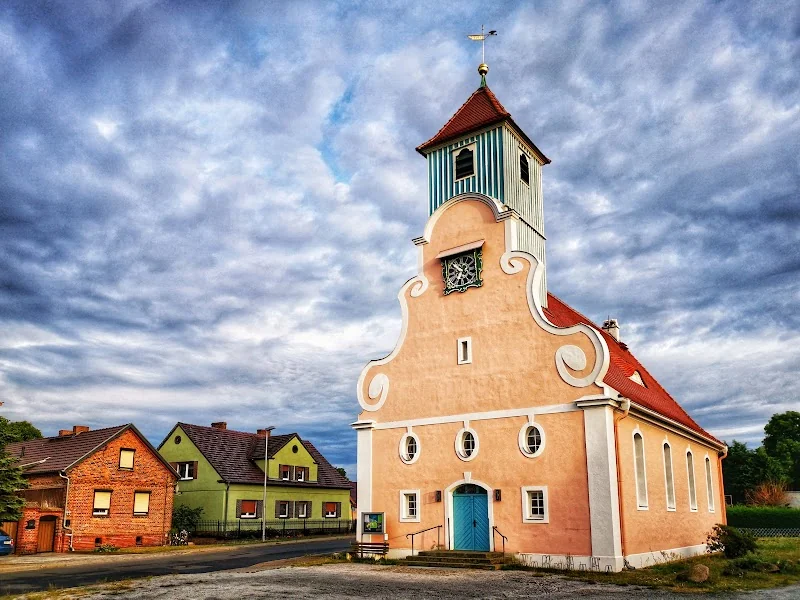
Architecturally, the Church Döbbrick is particularly remarkable for its Neo-Rococo character. The style appears finely structured and deliberately decorative compared to many other village churches, without making the church seem monumental. This is precisely where the charm lies: The building remains local and manageable but possesses a stylistic independence that immediately catches the eye. The Klosterkirchengemeinde describes the interior as baroque, which gives the church additional depth inside. Outside Neo-Rococo, inside baroque effect, along with an original painting featuring a psalm verse in Sorbian language: This combination makes the space particularly interesting from a cultural-historical perspective. For visitors, this means that they are not just entering a church space but an environment where style, language, and religious tradition come together. Especially the preserved Sorbian painting is a strong feature as it connects the church with the regional history of Lusatia. It is therefore not merely decorative embellishment but an identity-forming component of the interior. Those searching for baroque interior design, Neo-Rococo, or Sorbian painting will find a very precise answer in Döbbrick. The church shows how a building from the early 20th century adopts historical forms and fills them with regional content. This makes it as appealing to culturally interested visitors as it is to community members who experience the space regularly. ([klosterkirchengemeinde.de](https://klosterkirchengemeinde.de/kirchen-unserer-gemeinde/))
The church's external appearance has also been maintained. According to the Klosterkirchengemeinde, the roof was renewed in 2017, and the church received a new color scheme based on restoration findings. As a result, the building today not only appears preserved but visibly enhanced. This is crucial for the first impression: The church does not stand as a faded monument in the village but as a well-maintained church building with clear colors and historical radiance. This is a plus point for search inquiries with terms like monument, restoration, or special architecture, as the church does not limit itself to its historical status but also impresses with its appearance. The colored scheme and the baroque effect make the building easily recognizable and photo-friendly without requiring grand promises. The real impression of a well-maintained village church building that does not hide its history is sufficient. Those visiting the Church Döbbrick thus experience a space where the external restoration and the internal painting convey the same message: Here, not only is there remembrance, but it is also actively used. This is valuable for both SEO and users, as the place remains interesting both aesthetically and practically. ([klosterkirchengemeinde.de](https://klosterkirchengemeinde.de/kirchen-unserer-gemeinde/))
Directions, Public Transport, and Parking at the Church Döbbrick
For directions, the official location information from the city of Cottbus is the most important starting point: The Protestant Village Church to the Klostergemeinde Döbbrick is listed at Döbbricker Dorfstraße 11 in the district of Döbbrick. Those arriving by public transport will find the stop Döbbrick Church in the Cottbus daily line network of the VBB. The same plan also marks Döbbricker Dorfstr. and Döbbrick Old Village, making orientation in the district comprehensible. This is particularly helpful for visitors who do not travel daily in Cottbus, as the stop names directly refer to the church and its surroundings. For inquiries regarding directions, stops, and public transport, this information is particularly relevant as it makes the visit not only theoretically but practically planable. The church is located in a village context, and for this reason, public transport connections are an important part of visitor logic. Those coordinating their appointment with the timetable can structure the route well and do not have to search for a suitable stop on-site. The fact that the city of Cottbus lists the church as an event location and that the VBB maps the surrounding area with church references further facilitates planning. ([cottbus.de](https://cottbus.de/veranstaltungsorte/ev-dorfkirche-zur-klostergemeinde-doebbrick/))
Regarding parking, the official pages do not provide a detailed list of parking spaces. This is not a disadvantage for visitors but rather an indication to plan the arrival flexibly. Those arriving by car should therefore consider current maps, navigation systems, or the on-site situation and not rely on fixed parking information that is not prominently displayed publicly. For SEO, this point is important because many users search for parking but primarily need reliable arrival orientation in practice. The place offers exactly that through its named street and the public transport stop recorded. Thus, the church can be easily reached by both car and bus and train without having to take unnecessarily complicated routes. The combination of a clear address, a marked stop, and local street location makes the visit transparent. This is particularly useful for people wishing to attend a service, as every minute before the start often counts. Those who inform themselves in advance save time and arrive more relaxed. The Church Döbbrick is thus a place that can be easily reached, even if the official communication remains deliberately factual and restrained. This fits the character of a village church: reliable, local, and without exaggerated staging. ([cottbus.de](https://cottbus.de/veranstaltungsorte/ev-dorfkirche-zur-klostergemeinde-doebbrick/))
Why the Church Döbbrick is So Important for the Place
The Church Döbbrick is more than a historical building because it makes the district visible as a religious and cultural reference point. The Klosterkirchengemeinde includes it as part of its church landscape, and the city of Cottbus uses it as a clearly designated event location. Thus, the church is present in two areas that support each other: It is both a monument and a community space. For residents of the district, this means a direct connection between everyday life and tradition. For visitors, it means that they do not just see a quiet building here but a place that is still functionally integrated. This is exactly what makes the church so relevant for high-intent search inquiries. Those searching for Church Döbbrick, events, service, or community usually want to know not only that the building exists but also what happens there and how it is used. The public date announcement from the city and the classification by the Klosterkirchengemeinde provide a clear answer to that. The church is a place of prayer, encounter, and local identity. In a city like Cottbus, which consists of different districts and grown village structures, such churches are not merely architectural relics but orientation points in the social and spatial fabric. Döbbrick fulfills this task in a convincing way. ([klosterkirchengemeinde.de](https://klosterkirchengemeinde.de/kirchen-unserer-gemeinde/))
From a visitor's perspective, this is also important because the church thus fulfills a clear expectation: One does not come into an anonymous space but to a place with recognizable character. The historical building, the Neo-Rococo facade, the baroque interior effect, and the Sorbian psalm painting create an atmosphere that goes beyond mere utility. At the same time, the church remains simple and easy to classify, making it attractive for people consciously looking for a quiet, credible church space. The official communication sticks to facts and dates, and this is exactly appropriate for such a place. Visitors receive reliable data on location and events while the historical depth and architectural quality become directly experienceable on-site. This creates a coherent picture: The Church Döbbrick is a local anchor point that connects historical memory, church presence, and practical orientation. This makes it strong in searches over the long term while remaining practical for everyday use. Those visiting the place experience not only a beautiful church building but also a piece of living district history that continues to be used, maintained, and publicly named. This is precisely why the Church Döbbrick remains present in memory and community life. ([klosterkirchengemeinde.de](https://klosterkirchengemeinde.de/kirchen-unserer-gemeinde/))
Visitor Tips for the First Appointment at the Village Church Döbbrick
For a first visit, simple, clear preparation is worthwhile. First, check the current dates on the city page, as the next service with date and time is mentioned there. For now, this is May 3, 2026, at 11:00 AM, but times at church locations can change throughout the year. Those visiting the church for the first time should also keep the address Döbbricker Dorfstraße 11 in mind and choose the route so that there is enough time to arrive. This sounds simple but is particularly important for services because it allows one to be relaxed on-site and consciously perceive the atmosphere of the building. The church is particularly suitable for people who want to experience architecture, regional history, and church life together. The Neo-Rococo style and baroque interior make the building appealing without making it seem distant. At the same time, it remains a functioning community space, which is why respectful behavior is a given. Those wishing to visit the church as a quiet place will find a manageable and friendly environment that impresses with its historical colorfulness and village context. This balance makes the visit pleasant: not overloaded, not arbitrary, but clear and genuine. ([cottbus.de](https://cottbus.de/veranstaltungsorte/ev-dorfkirche-zur-klostergemeinde-doebbrick/))
For users who arrived through search terms like parking, directions, or stop, the location is also easy to read. The VBB marks the stop Döbbrick Church, making the route by bus and train easy to plan. Although there is no publicly advertised parking list on the official pages, the precise street indication and local situation make orientation simple enough to check the concrete parking situation on-site. Those planning a quiet visit should therefore arrive a little earlier and let the surroundings sink in briefly. This also fits the character of a village church: The effect does not arise from size or spectacle but from history, usability, and connection to the place. The Church Döbbrick is precisely why it is a coherent destination for all those seeking an authentic church space with a clear historical imprint in Cottbus. It combines practical information with cultural substance while remaining pleasantly manageable. So, anyone wishing to visit a church with genuine local ties, comprehensible directions, and remarkable interior and exterior effects will find a very good address in Döbbrick. ([cottbus.de](https://cottbus.de/veranstaltungsorte/ev-dorfkirche-zur-klostergemeinde-doebbrick/))
Sources:
- Klosterkirchengemeinde Cottbus - Churches of the Klosterkirchengemeinde ([klosterkirchengemeinde.de](https://klosterkirchengemeinde.de/kirchen-unserer-gemeinde/))
- Klosterkirchengemeinde Cottbus - Homepage ([klosterkirchengemeinde.de](https://klosterkirchengemeinde.de/))
- City Cottbus/Chóśebuz - Ev. Village Church to the Klostergemeinde Döbbrick ([cottbus.de](https://cottbus.de/veranstaltungsorte/ev-dorfkirche-zur-klostergemeinde-doebbrick/))
- VBB - Cottbus Daily Line Network ([vbb.de](https://www.vbb.de/fileadmin/user_upload/VBB/Dokumente/Liniennetze/cottbus-tageslinien-saso.pdf))
Show moreShow less
Church Döbbrick | Service & History
The Church Döbbrick in Cottbus is a place where historical substance, religious use, and village identity clearly overlap. Those searching for Church Döbbrick, Village Church Döbbrick, or Service in Döbbrick will not find a large event hall, but rather a church building with a strong local connection and a visible role in community life. The city of Cottbus lists the Protestant Village Church to the Klostergemeinde Döbbrick as an event location at Döbbricker Dorfstraße 11 and currently mentions a service date on May 3, 2026, at 11:00 AM. This is helpful for visitors because the church thus becomes recognizable not only as a monument but also as a place that is actively used. This mix of historical depth, regular use, and clear location makes the Church Döbbrick particularly relevant for inquiries regarding dates, directions, architecture, and community. It is a quiet, well-located place in the north of Cottbus that is interesting for both services and culturally interested visits. ([cottbus.de](https://cottbus.de/veranstaltungsorte/ev-dorfkirche-zur-klostergemeinde-doebbrick/))
Service and Community Life in the Church Döbbrick
The strongest search intention regarding the Church Döbbrick usually concerns the service. This is logical since the city of Cottbus explicitly lists the location as an event venue and provides current dates directly on the city page. The Klosterkirchengemeinde also categorizes the Village Church Döbbrick as one of its church locations and connects it with the ongoing community life in Cottbus. For people wishing to attend a service, this is important: It is not just about architecture, but about a functioning church space where liturgy, church year, and local community come together. The Church Döbbrick is thus particularly relevant for all those looking for a manageable, reliable service location in the district of Döbbrick without having to click through scattered information. Those wishing to come on a holiday, a Sunday afternoon, or for a special community event can find a concrete reference through the official city page and better plan their visit. Especially in the SEO context, search terms like service Döbbrick, service in Döbbrick, dates, and events are strong because they show a clear intention to use. The place is not a static photo object, but a living space where people come together. This connection of information, date reference, and community function makes the village church particularly tangible for visitors and clearly interpretable for search engines. ([cottbus.de](https://cottbus.de/veranstaltungsorte/ev-dorfkirche-zur-klostergemeinde-doebbrick/))
It is also important to have a practical view of the current schedule. The city page works with specific date indications, and this is valuable for a church like Döbbrick because services can change throughout the year. Those planning a visit should therefore always check the current display instead of relying on older information. For families, individual visitors, or community members, this creates a clear orientation: The church is not simply present but visible in the city calendar. This makes it particularly relevant for local search inquiries, as many users want to know exactly whether a service takes place on the desired day, when the next date begins, and how long a celebration lasts. The official communication helps answer these questions concretely rather than abstractly. Thus, the Church Döbbrick is very well suited as a destination for people consciously looking for a quiet, church-shaped event in Cottbus. At the same time, the character of the place remains intact: a village church space with a clear function that stands for service, quiet participation, and community experience, and precisely for this reason has a strong local value. ([cottbus.de](https://cottbus.de/veranstaltungsorte/ev-dorfkirche-zur-klostergemeinde-doebbrick/))
History of the Village Church Döbbrick and its Path to its Own Church
The history of the Church Döbbrick begins well before the construction in 1911. In the villages northeast of Cottbus, the desire for a church of their own grew in the 19th century, and Döbbrick prevailed in the location competition against Skadow and Willmersdorf. The visible village church was built in 1911 in the Neo-Rococo style. CottbusWiki adds that an old Lutheran community was already founded in 1857 and that the new village church later emerged on Dorfstraße. Together, this creates a historical picture in which religious independence, village identity, and architectural development are closely intertwined. The church is therefore not just a later addition but the visible response to a longer desire for a place for worship. Precisely for this reason, the building appears so fitting for Döbbrick today: It stands for a moment of self-assertion of the place and for the decision to anchor church life locally. For visitors, this background is significant because it gives depth to the building. Those who see the church recognize not only a beautiful building but also a result of local history in which a village has created its own center. This is an important point for search terms like history, village church, Neo-Rococo, and Cottbus, as they all refer to the same historical core. The Church Döbbrick is thus a good example of how a church building arises from a concrete community wish and retains its role over many decades. ([klosterkirchengemeinde.de](https://klosterkirchengemeinde.de/kirchen-unserer-gemeinde/))
The decision against Skadow and Willmersdorf further profiles the history. It shows that the church does not stand there by chance, but was created as a conscious choice of location. Especially in the rural environment around Cottbus, the question of having one's own church was more than just a construction decision; it concerned identity, accessibility, and religious self-organization. Therefore, the Church Döbbrick fits so well into the regional history of Lower Lusatia and into the structure of the districts of Cottbus. The construction of 1911 marks a visible endpoint of this path, but also a beginning: Since then, the village church has been a fixed reference point for services and community. For SEO and user intention, this historical perspective is central because it explains why people search specifically for this church and not for just any village church in Brandenburg. Döbbrick stands for a clear, comprehensible development from the founding of the community through the desire for independence to the established church building. Those who understand this history look at the building and its current use differently. The church thus becomes readable not only as a monument but as a result of a long, location-bound process that remains visible in its function to this day. ([klosterkirchengemeinde.de](https://klosterkirchengemeinde.de/kirchen-unserer-gemeinde/))
Architecture in Neo-Rococo Style and the Baroque Interior
Architecturally, the Church Döbbrick is particularly remarkable for its Neo-Rococo character. The style appears finely structured and deliberately decorative compared to many other village churches, without making the church seem monumental. This is precisely where the charm lies: The building remains local and manageable but possesses a stylistic independence that immediately catches the eye. The Klosterkirchengemeinde describes the interior as baroque, which gives the church additional depth inside. Outside Neo-Rococo, inside baroque effect, along with an original painting featuring a psalm verse in Sorbian language: This combination makes the space particularly interesting from a cultural-historical perspective. For visitors, this means that they are not just entering a church space but an environment where style, language, and religious tradition come together. Especially the preserved Sorbian painting is a strong feature as it connects the church with the regional history of Lusatia. It is therefore not merely decorative embellishment but an identity-forming component of the interior. Those searching for baroque interior design, Neo-Rococo, or Sorbian painting will find a very precise answer in Döbbrick. The church shows how a building from the early 20th century adopts historical forms and fills them with regional content. This makes it as appealing to culturally interested visitors as it is to community members who experience the space regularly. ([klosterkirchengemeinde.de](https://klosterkirchengemeinde.de/kirchen-unserer-gemeinde/))
The church's external appearance has also been maintained. According to the Klosterkirchengemeinde, the roof was renewed in 2017, and the church received a new color scheme based on restoration findings. As a result, the building today not only appears preserved but visibly enhanced. This is crucial for the first impression: The church does not stand as a faded monument in the village but as a well-maintained church building with clear colors and historical radiance. This is a plus point for search inquiries with terms like monument, restoration, or special architecture, as the church does not limit itself to its historical status but also impresses with its appearance. The colored scheme and the baroque effect make the building easily recognizable and photo-friendly without requiring grand promises. The real impression of a well-maintained village church building that does not hide its history is sufficient. Those visiting the Church Döbbrick thus experience a space where the external restoration and the internal painting convey the same message: Here, not only is there remembrance, but it is also actively used. This is valuable for both SEO and users, as the place remains interesting both aesthetically and practically. ([klosterkirchengemeinde.de](https://klosterkirchengemeinde.de/kirchen-unserer-gemeinde/))
Directions, Public Transport, and Parking at the Church Döbbrick
For directions, the official location information from the city of Cottbus is the most important starting point: The Protestant Village Church to the Klostergemeinde Döbbrick is listed at Döbbricker Dorfstraße 11 in the district of Döbbrick. Those arriving by public transport will find the stop Döbbrick Church in the Cottbus daily line network of the VBB. The same plan also marks Döbbricker Dorfstr. and Döbbrick Old Village, making orientation in the district comprehensible. This is particularly helpful for visitors who do not travel daily in Cottbus, as the stop names directly refer to the church and its surroundings. For inquiries regarding directions, stops, and public transport, this information is particularly relevant as it makes the visit not only theoretically but practically planable. The church is located in a village context, and for this reason, public transport connections are an important part of visitor logic. Those coordinating their appointment with the timetable can structure the route well and do not have to search for a suitable stop on-site. The fact that the city of Cottbus lists the church as an event location and that the VBB maps the surrounding area with church references further facilitates planning. ([cottbus.de](https://cottbus.de/veranstaltungsorte/ev-dorfkirche-zur-klostergemeinde-doebbrick/))
Regarding parking, the official pages do not provide a detailed list of parking spaces. This is not a disadvantage for visitors but rather an indication to plan the arrival flexibly. Those arriving by car should therefore consider current maps, navigation systems, or the on-site situation and not rely on fixed parking information that is not prominently displayed publicly. For SEO, this point is important because many users search for parking but primarily need reliable arrival orientation in practice. The place offers exactly that through its named street and the public transport stop recorded. Thus, the church can be easily reached by both car and bus and train without having to take unnecessarily complicated routes. The combination of a clear address, a marked stop, and local street location makes the visit transparent. This is particularly useful for people wishing to attend a service, as every minute before the start often counts. Those who inform themselves in advance save time and arrive more relaxed. The Church Döbbrick is thus a place that can be easily reached, even if the official communication remains deliberately factual and restrained. This fits the character of a village church: reliable, local, and without exaggerated staging. ([cottbus.de](https://cottbus.de/veranstaltungsorte/ev-dorfkirche-zur-klostergemeinde-doebbrick/))
Why the Church Döbbrick is So Important for the Place
The Church Döbbrick is more than a historical building because it makes the district visible as a religious and cultural reference point. The Klosterkirchengemeinde includes it as part of its church landscape, and the city of Cottbus uses it as a clearly designated event location. Thus, the church is present in two areas that support each other: It is both a monument and a community space. For residents of the district, this means a direct connection between everyday life and tradition. For visitors, it means that they do not just see a quiet building here but a place that is still functionally integrated. This is exactly what makes the church so relevant for high-intent search inquiries. Those searching for Church Döbbrick, events, service, or community usually want to know not only that the building exists but also what happens there and how it is used. The public date announcement from the city and the classification by the Klosterkirchengemeinde provide a clear answer to that. The church is a place of prayer, encounter, and local identity. In a city like Cottbus, which consists of different districts and grown village structures, such churches are not merely architectural relics but orientation points in the social and spatial fabric. Döbbrick fulfills this task in a convincing way. ([klosterkirchengemeinde.de](https://klosterkirchengemeinde.de/kirchen-unserer-gemeinde/))
From a visitor's perspective, this is also important because the church thus fulfills a clear expectation: One does not come into an anonymous space but to a place with recognizable character. The historical building, the Neo-Rococo facade, the baroque interior effect, and the Sorbian psalm painting create an atmosphere that goes beyond mere utility. At the same time, the church remains simple and easy to classify, making it attractive for people consciously looking for a quiet, credible church space. The official communication sticks to facts and dates, and this is exactly appropriate for such a place. Visitors receive reliable data on location and events while the historical depth and architectural quality become directly experienceable on-site. This creates a coherent picture: The Church Döbbrick is a local anchor point that connects historical memory, church presence, and practical orientation. This makes it strong in searches over the long term while remaining practical for everyday use. Those visiting the place experience not only a beautiful church building but also a piece of living district history that continues to be used, maintained, and publicly named. This is precisely why the Church Döbbrick remains present in memory and community life. ([klosterkirchengemeinde.de](https://klosterkirchengemeinde.de/kirchen-unserer-gemeinde/))
Visitor Tips for the First Appointment at the Village Church Döbbrick
For a first visit, simple, clear preparation is worthwhile. First, check the current dates on the city page, as the next service with date and time is mentioned there. For now, this is May 3, 2026, at 11:00 AM, but times at church locations can change throughout the year. Those visiting the church for the first time should also keep the address Döbbricker Dorfstraße 11 in mind and choose the route so that there is enough time to arrive. This sounds simple but is particularly important for services because it allows one to be relaxed on-site and consciously perceive the atmosphere of the building. The church is particularly suitable for people who want to experience architecture, regional history, and church life together. The Neo-Rococo style and baroque interior make the building appealing without making it seem distant. At the same time, it remains a functioning community space, which is why respectful behavior is a given. Those wishing to visit the church as a quiet place will find a manageable and friendly environment that impresses with its historical colorfulness and village context. This balance makes the visit pleasant: not overloaded, not arbitrary, but clear and genuine. ([cottbus.de](https://cottbus.de/veranstaltungsorte/ev-dorfkirche-zur-klostergemeinde-doebbrick/))
For users who arrived through search terms like parking, directions, or stop, the location is also easy to read. The VBB marks the stop Döbbrick Church, making the route by bus and train easy to plan. Although there is no publicly advertised parking list on the official pages, the precise street indication and local situation make orientation simple enough to check the concrete parking situation on-site. Those planning a quiet visit should therefore arrive a little earlier and let the surroundings sink in briefly. This also fits the character of a village church: The effect does not arise from size or spectacle but from history, usability, and connection to the place. The Church Döbbrick is precisely why it is a coherent destination for all those seeking an authentic church space with a clear historical imprint in Cottbus. It combines practical information with cultural substance while remaining pleasantly manageable. So, anyone wishing to visit a church with genuine local ties, comprehensible directions, and remarkable interior and exterior effects will find a very good address in Döbbrick. ([cottbus.de](https://cottbus.de/veranstaltungsorte/ev-dorfkirche-zur-klostergemeinde-doebbrick/))
Sources:
- Klosterkirchengemeinde Cottbus - Churches of the Klosterkirchengemeinde ([klosterkirchengemeinde.de](https://klosterkirchengemeinde.de/kirchen-unserer-gemeinde/))
- Klosterkirchengemeinde Cottbus - Homepage ([klosterkirchengemeinde.de](https://klosterkirchengemeinde.de/))
- City Cottbus/Chóśebuz - Ev. Village Church to the Klostergemeinde Döbbrick ([cottbus.de](https://cottbus.de/veranstaltungsorte/ev-dorfkirche-zur-klostergemeinde-doebbrick/))
- VBB - Cottbus Daily Line Network ([vbb.de](https://www.vbb.de/fileadmin/user_upload/VBB/Dokumente/Liniennetze/cottbus-tageslinien-saso.pdf))
Church Döbbrick | Service & History
The Church Döbbrick in Cottbus is a place where historical substance, religious use, and village identity clearly overlap. Those searching for Church Döbbrick, Village Church Döbbrick, or Service in Döbbrick will not find a large event hall, but rather a church building with a strong local connection and a visible role in community life. The city of Cottbus lists the Protestant Village Church to the Klostergemeinde Döbbrick as an event location at Döbbricker Dorfstraße 11 and currently mentions a service date on May 3, 2026, at 11:00 AM. This is helpful for visitors because the church thus becomes recognizable not only as a monument but also as a place that is actively used. This mix of historical depth, regular use, and clear location makes the Church Döbbrick particularly relevant for inquiries regarding dates, directions, architecture, and community. It is a quiet, well-located place in the north of Cottbus that is interesting for both services and culturally interested visits. ([cottbus.de](https://cottbus.de/veranstaltungsorte/ev-dorfkirche-zur-klostergemeinde-doebbrick/))
Service and Community Life in the Church Döbbrick
The strongest search intention regarding the Church Döbbrick usually concerns the service. This is logical since the city of Cottbus explicitly lists the location as an event venue and provides current dates directly on the city page. The Klosterkirchengemeinde also categorizes the Village Church Döbbrick as one of its church locations and connects it with the ongoing community life in Cottbus. For people wishing to attend a service, this is important: It is not just about architecture, but about a functioning church space where liturgy, church year, and local community come together. The Church Döbbrick is thus particularly relevant for all those looking for a manageable, reliable service location in the district of Döbbrick without having to click through scattered information. Those wishing to come on a holiday, a Sunday afternoon, or for a special community event can find a concrete reference through the official city page and better plan their visit. Especially in the SEO context, search terms like service Döbbrick, service in Döbbrick, dates, and events are strong because they show a clear intention to use. The place is not a static photo object, but a living space where people come together. This connection of information, date reference, and community function makes the village church particularly tangible for visitors and clearly interpretable for search engines. ([cottbus.de](https://cottbus.de/veranstaltungsorte/ev-dorfkirche-zur-klostergemeinde-doebbrick/))
It is also important to have a practical view of the current schedule. The city page works with specific date indications, and this is valuable for a church like Döbbrick because services can change throughout the year. Those planning a visit should therefore always check the current display instead of relying on older information. For families, individual visitors, or community members, this creates a clear orientation: The church is not simply present but visible in the city calendar. This makes it particularly relevant for local search inquiries, as many users want to know exactly whether a service takes place on the desired day, when the next date begins, and how long a celebration lasts. The official communication helps answer these questions concretely rather than abstractly. Thus, the Church Döbbrick is very well suited as a destination for people consciously looking for a quiet, church-shaped event in Cottbus. At the same time, the character of the place remains intact: a village church space with a clear function that stands for service, quiet participation, and community experience, and precisely for this reason has a strong local value. ([cottbus.de](https://cottbus.de/veranstaltungsorte/ev-dorfkirche-zur-klostergemeinde-doebbrick/))
History of the Village Church Döbbrick and its Path to its Own Church
The history of the Church Döbbrick begins well before the construction in 1911. In the villages northeast of Cottbus, the desire for a church of their own grew in the 19th century, and Döbbrick prevailed in the location competition against Skadow and Willmersdorf. The visible village church was built in 1911 in the Neo-Rococo style. CottbusWiki adds that an old Lutheran community was already founded in 1857 and that the new village church later emerged on Dorfstraße. Together, this creates a historical picture in which religious independence, village identity, and architectural development are closely intertwined. The church is therefore not just a later addition but the visible response to a longer desire for a place for worship. Precisely for this reason, the building appears so fitting for Döbbrick today: It stands for a moment of self-assertion of the place and for the decision to anchor church life locally. For visitors, this background is significant because it gives depth to the building. Those who see the church recognize not only a beautiful building but also a result of local history in which a village has created its own center. This is an important point for search terms like history, village church, Neo-Rococo, and Cottbus, as they all refer to the same historical core. The Church Döbbrick is thus a good example of how a church building arises from a concrete community wish and retains its role over many decades. ([klosterkirchengemeinde.de](https://klosterkirchengemeinde.de/kirchen-unserer-gemeinde/))
The decision against Skadow and Willmersdorf further profiles the history. It shows that the church does not stand there by chance, but was created as a conscious choice of location. Especially in the rural environment around Cottbus, the question of having one's own church was more than just a construction decision; it concerned identity, accessibility, and religious self-organization. Therefore, the Church Döbbrick fits so well into the regional history of Lower Lusatia and into the structure of the districts of Cottbus. The construction of 1911 marks a visible endpoint of this path, but also a beginning: Since then, the village church has been a fixed reference point for services and community. For SEO and user intention, this historical perspective is central because it explains why people search specifically for this church and not for just any village church in Brandenburg. Döbbrick stands for a clear, comprehensible development from the founding of the community through the desire for independence to the established church building. Those who understand this history look at the building and its current use differently. The church thus becomes readable not only as a monument but as a result of a long, location-bound process that remains visible in its function to this day. ([klosterkirchengemeinde.de](https://klosterkirchengemeinde.de/kirchen-unserer-gemeinde/))
Architecture in Neo-Rococo Style and the Baroque Interior
Architecturally, the Church Döbbrick is particularly remarkable for its Neo-Rococo character. The style appears finely structured and deliberately decorative compared to many other village churches, without making the church seem monumental. This is precisely where the charm lies: The building remains local and manageable but possesses a stylistic independence that immediately catches the eye. The Klosterkirchengemeinde describes the interior as baroque, which gives the church additional depth inside. Outside Neo-Rococo, inside baroque effect, along with an original painting featuring a psalm verse in Sorbian language: This combination makes the space particularly interesting from a cultural-historical perspective. For visitors, this means that they are not just entering a church space but an environment where style, language, and religious tradition come together. Especially the preserved Sorbian painting is a strong feature as it connects the church with the regional history of Lusatia. It is therefore not merely decorative embellishment but an identity-forming component of the interior. Those searching for baroque interior design, Neo-Rococo, or Sorbian painting will find a very precise answer in Döbbrick. The church shows how a building from the early 20th century adopts historical forms and fills them with regional content. This makes it as appealing to culturally interested visitors as it is to community members who experience the space regularly. ([klosterkirchengemeinde.de](https://klosterkirchengemeinde.de/kirchen-unserer-gemeinde/))
The church's external appearance has also been maintained. According to the Klosterkirchengemeinde, the roof was renewed in 2017, and the church received a new color scheme based on restoration findings. As a result, the building today not only appears preserved but visibly enhanced. This is crucial for the first impression: The church does not stand as a faded monument in the village but as a well-maintained church building with clear colors and historical radiance. This is a plus point for search inquiries with terms like monument, restoration, or special architecture, as the church does not limit itself to its historical status but also impresses with its appearance. The colored scheme and the baroque effect make the building easily recognizable and photo-friendly without requiring grand promises. The real impression of a well-maintained village church building that does not hide its history is sufficient. Those visiting the Church Döbbrick thus experience a space where the external restoration and the internal painting convey the same message: Here, not only is there remembrance, but it is also actively used. This is valuable for both SEO and users, as the place remains interesting both aesthetically and practically. ([klosterkirchengemeinde.de](https://klosterkirchengemeinde.de/kirchen-unserer-gemeinde/))
Directions, Public Transport, and Parking at the Church Döbbrick
For directions, the official location information from the city of Cottbus is the most important starting point: The Protestant Village Church to the Klostergemeinde Döbbrick is listed at Döbbricker Dorfstraße 11 in the district of Döbbrick. Those arriving by public transport will find the stop Döbbrick Church in the Cottbus daily line network of the VBB. The same plan also marks Döbbricker Dorfstr. and Döbbrick Old Village, making orientation in the district comprehensible. This is particularly helpful for visitors who do not travel daily in Cottbus, as the stop names directly refer to the church and its surroundings. For inquiries regarding directions, stops, and public transport, this information is particularly relevant as it makes the visit not only theoretically but practically planable. The church is located in a village context, and for this reason, public transport connections are an important part of visitor logic. Those coordinating their appointment with the timetable can structure the route well and do not have to search for a suitable stop on-site. The fact that the city of Cottbus lists the church as an event location and that the VBB maps the surrounding area with church references further facilitates planning. ([cottbus.de](https://cottbus.de/veranstaltungsorte/ev-dorfkirche-zur-klostergemeinde-doebbrick/))
Regarding parking, the official pages do not provide a detailed list of parking spaces. This is not a disadvantage for visitors but rather an indication to plan the arrival flexibly. Those arriving by car should therefore consider current maps, navigation systems, or the on-site situation and not rely on fixed parking information that is not prominently displayed publicly. For SEO, this point is important because many users search for parking but primarily need reliable arrival orientation in practice. The place offers exactly that through its named street and the public transport stop recorded. Thus, the church can be easily reached by both car and bus and train without having to take unnecessarily complicated routes. The combination of a clear address, a marked stop, and local street location makes the visit transparent. This is particularly useful for people wishing to attend a service, as every minute before the start often counts. Those who inform themselves in advance save time and arrive more relaxed. The Church Döbbrick is thus a place that can be easily reached, even if the official communication remains deliberately factual and restrained. This fits the character of a village church: reliable, local, and without exaggerated staging. ([cottbus.de](https://cottbus.de/veranstaltungsorte/ev-dorfkirche-zur-klostergemeinde-doebbrick/))
Why the Church Döbbrick is So Important for the Place
The Church Döbbrick is more than a historical building because it makes the district visible as a religious and cultural reference point. The Klosterkirchengemeinde includes it as part of its church landscape, and the city of Cottbus uses it as a clearly designated event location. Thus, the church is present in two areas that support each other: It is both a monument and a community space. For residents of the district, this means a direct connection between everyday life and tradition. For visitors, it means that they do not just see a quiet building here but a place that is still functionally integrated. This is exactly what makes the church so relevant for high-intent search inquiries. Those searching for Church Döbbrick, events, service, or community usually want to know not only that the building exists but also what happens there and how it is used. The public date announcement from the city and the classification by the Klosterkirchengemeinde provide a clear answer to that. The church is a place of prayer, encounter, and local identity. In a city like Cottbus, which consists of different districts and grown village structures, such churches are not merely architectural relics but orientation points in the social and spatial fabric. Döbbrick fulfills this task in a convincing way. ([klosterkirchengemeinde.de](https://klosterkirchengemeinde.de/kirchen-unserer-gemeinde/))
From a visitor's perspective, this is also important because the church thus fulfills a clear expectation: One does not come into an anonymous space but to a place with recognizable character. The historical building, the Neo-Rococo facade, the baroque interior effect, and the Sorbian psalm painting create an atmosphere that goes beyond mere utility. At the same time, the church remains simple and easy to classify, making it attractive for people consciously looking for a quiet, credible church space. The official communication sticks to facts and dates, and this is exactly appropriate for such a place. Visitors receive reliable data on location and events while the historical depth and architectural quality become directly experienceable on-site. This creates a coherent picture: The Church Döbbrick is a local anchor point that connects historical memory, church presence, and practical orientation. This makes it strong in searches over the long term while remaining practical for everyday use. Those visiting the place experience not only a beautiful church building but also a piece of living district history that continues to be used, maintained, and publicly named. This is precisely why the Church Döbbrick remains present in memory and community life. ([klosterkirchengemeinde.de](https://klosterkirchengemeinde.de/kirchen-unserer-gemeinde/))
Visitor Tips for the First Appointment at the Village Church Döbbrick
For a first visit, simple, clear preparation is worthwhile. First, check the current dates on the city page, as the next service with date and time is mentioned there. For now, this is May 3, 2026, at 11:00 AM, but times at church locations can change throughout the year. Those visiting the church for the first time should also keep the address Döbbricker Dorfstraße 11 in mind and choose the route so that there is enough time to arrive. This sounds simple but is particularly important for services because it allows one to be relaxed on-site and consciously perceive the atmosphere of the building. The church is particularly suitable for people who want to experience architecture, regional history, and church life together. The Neo-Rococo style and baroque interior make the building appealing without making it seem distant. At the same time, it remains a functioning community space, which is why respectful behavior is a given. Those wishing to visit the church as a quiet place will find a manageable and friendly environment that impresses with its historical colorfulness and village context. This balance makes the visit pleasant: not overloaded, not arbitrary, but clear and genuine. ([cottbus.de](https://cottbus.de/veranstaltungsorte/ev-dorfkirche-zur-klostergemeinde-doebbrick/))
For users who arrived through search terms like parking, directions, or stop, the location is also easy to read. The VBB marks the stop Döbbrick Church, making the route by bus and train easy to plan. Although there is no publicly advertised parking list on the official pages, the precise street indication and local situation make orientation simple enough to check the concrete parking situation on-site. Those planning a quiet visit should therefore arrive a little earlier and let the surroundings sink in briefly. This also fits the character of a village church: The effect does not arise from size or spectacle but from history, usability, and connection to the place. The Church Döbbrick is precisely why it is a coherent destination for all those seeking an authentic church space with a clear historical imprint in Cottbus. It combines practical information with cultural substance while remaining pleasantly manageable. So, anyone wishing to visit a church with genuine local ties, comprehensible directions, and remarkable interior and exterior effects will find a very good address in Döbbrick. ([cottbus.de](https://cottbus.de/veranstaltungsorte/ev-dorfkirche-zur-klostergemeinde-doebbrick/))
Sources:
- Klosterkirchengemeinde Cottbus - Churches of the Klosterkirchengemeinde ([klosterkirchengemeinde.de](https://klosterkirchengemeinde.de/kirchen-unserer-gemeinde/))
- Klosterkirchengemeinde Cottbus - Homepage ([klosterkirchengemeinde.de](https://klosterkirchengemeinde.de/))
- City Cottbus/Chóśebuz - Ev. Village Church to the Klostergemeinde Döbbrick ([cottbus.de](https://cottbus.de/veranstaltungsorte/ev-dorfkirche-zur-klostergemeinde-doebbrick/))
- VBB - Cottbus Daily Line Network ([vbb.de](https://www.vbb.de/fileadmin/user_upload/VBB/Dokumente/Liniennetze/cottbus-tageslinien-saso.pdf))
Upcoming Events
No events found
Frequently Asked Questions
Reviews
Frank Bernard
21. February 2019
Beautiful little church, small concerts enrich the program...I've also had the chance to play the organ
Jennifer-Mireille Hejnika
18. March 2021
Simply a beautiful eye-catcher
Kiwi junior
25. August 2023
Beautiful church
WalLuchs
23. August 2018
Great church
Hoffmann Martin
2. July 2025
No comment