
Robinienweg 5 Parkplatz:, Kastanienallee 29, Cottbus
Robinienweg 5 Parkplatz:, Kastanienallee 29, 03042 Cottbus, Germany
Prince Pückler Museum Branitz | Tickets & Opening Hours
The Prince Pückler Museum Park and Castle Branitz is much more than a classic museum. In Branitz near Cottbus, a total work of art was created under Hermann Prince of Pückler-Muskau, consisting of a castle, park, water landscape, garden art, and princely living space. Those looking for opening hours, tickets, directions, or parking usually want to arrive quickly but also plan their visit meaningfully. Branitz is ideal for this: The grounds combine historical architecture with one of the most significant landscape designs of the 19th century, along with guided tours, gondola rides, the visitor center, and other offerings for families, groups, and individual guests. The park is open year-round, the castle is visited seasonally, and around the grounds, gastronomic and practical services complement the outing. This creates a place where culture, nature, and history unfold visibly together rather than side by side. ([pueckler-museum.de](https://www.pueckler-museum.de/park-schloss/))
Branitz is often appreciated for its tranquility, its expansiveness, and its surprising details. This is exactly what makes the location so interesting for visitors: The castle showcases the living world of the prince, the park opens up sight axes, pyramids, and waterways, and the foundation keeps the ensemble alive with care, mediation, and events. Those preparing for the visit will find not only facts for the journey but also information on guided tours, prices, accessible entrances, and current offers. This makes the place suitable for half a day as well as for a full outing, for history enthusiasts as well as for garden lovers, families, or travelers who want to get to know Cottbus through a particularly characterful cultural site. ([pueckler-museum.de](https://www.pueckler-museum.de/schloss-branitz/))
Opening Hours and Tickets for Visit Planning
The current visit planning is clearly organized seasonally in Branitz. The castle is open from April to October 2026, Wednesday to Monday from 10:00 AM to 5:00 PM; it is closed on Tuesdays. The visitor center follows the same weekly structure during this period. The park itself is open year-round, making walks and outdoor visits worthwhile even outside museum hours. For winter, the castle is open on a different schedule, so checking the current season in advance is always worthwhile. Especially for travelers who only have a fixed day in Cottbus, these times are important as they allow for better combinations of castle, park, and possible additional offers such as guided tours. ([pueckler-museum.de](https://www.pueckler-museum.de/oeffnungszeiten/))
The admission structure is also well organized. For the castle and visitor center, the regular admission for adults is 11.00 euros, reduced 8.00 euros; groups of ten or more also pay 8.00 euros per person. Special prices apply for the visitor center, with 4.00 euros for adults and 3.00 euros reduced. The castle admission includes an audio guide, which is particularly useful for visitors who want to explore the rooms at their own pace. Additionally, online tickets are available, making planning easier and reducing waiting times. This makes Branitz equally attractive for individual guests, couples, and small groups, as the visit can be very flexibly adapted to one's daily route. ([pueckler-museum.de](https://www.pueckler-museum.de/preise/))
Understanding the ticket structure allows for more targeted planning of the stay. The visitor center serves as the first stop for orientation, the castle tour offers the historical core of the museum, and the park is the open stage of the entire ensemble. Because the castle and landscape explain each other, the combination of admission, audio guide, and outdoor area is particularly sensible. For families, cultural travelers, and anyone seeking photos, impressions, and background knowledge, this is a clear advantage: One does not just see a single building, but experiences a historically grown ensemble with temporally coordinated visiting options. ([pueckler-museum.de](https://www.pueckler-museum.de/park-schloss/))
Directions, Parking, and Pückler Line
For arriving by car, the destination address is clear: The parking lot is located at Kastanienallee 29 in 03042 Cottbus and offers the shortest direct access to the exhibitions and Castle Branitz. The parking fees are 2.50 euros per started hour for cars, and after ten hours, a day ticket costs 35.00 euros. Payment is made at the machine with Girocard or credit card; cash payment is only possible when purchasing a day ticket at the castle cash desk. For visitors with a disabled parking permit, there are additional designated parking spaces in front of the visitor center as well as further paid spaces in the Kastanienallee parking lot. This makes access practically organized for different visitor groups. ([pueckler-museum.de](https://www.pueckler-museum.de/preise/))
Branitz is also easily accessible by public transport. From Berlin or Dresden, one first travels to Cottbus and then transfers to bus line 10, the Pückler line, which runs in a circular route over Branitz and brings passengers to the Branitz Castle stop. This is especially useful for day visitors who do not use a car or want to combine the visit with a city stroll. Additionally, the museum is very well integrated into regional and urban cycling networks: The Prince Pückler Cycle Path, the Lower Lusatian Mining Tour, and the Spree Cycle Path lead directly to the landscape park. At the Kastanienallee parking lot, there are also five lockable bicycle garages and rental boxes, as well as toilets and picnic areas. ([pueckler-museum.de](https://www.pueckler-museum.de/anreise/))
This connection of car, train, bus, and cycling travel makes the place flexible. Those coming from the region can comfortably arrive by bicycle; those living further away can use long-distance transport to Cottbus and transfer to the Pückler line there. This is also helpful for visitors with a tight schedule, as the routes are clearly described and one does not lose the day with orientation. For inquiries about directions, parking, or parking spaces, this means: Branitz is not a hard-to-reach destination but a well-connected excursion destination with direct visitor guidance. ([pueckler-museum.de](https://www.pueckler-museum.de/anreise/))
Castle Branitz and the Original Living World of the Prince
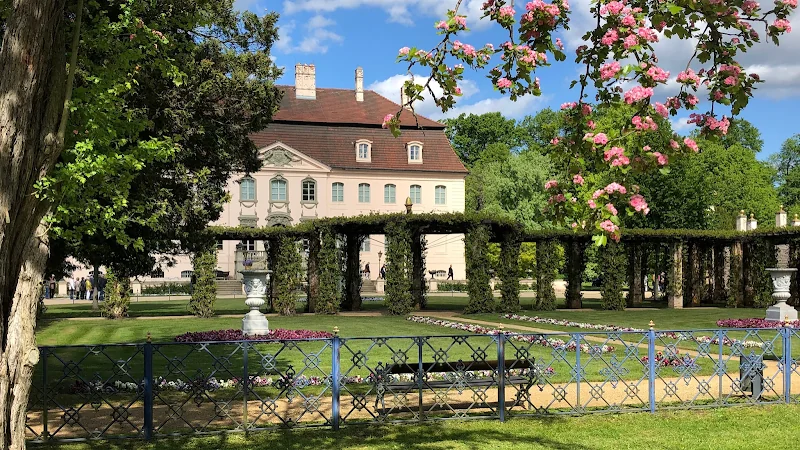
Castle Branitz is the historical heart of the ensemble. The late Baroque building was originally a manor house that Pückler had extensively remodeled starting in 1846. The castle makes the living world of the prince comprehensible, who became known not only as a garden artist but also as a writer, traveler, and social figure of the 19th century. The furnishings tell this biography with rooms, colors, and presentations rather than with dry data. Therefore, the castle is not just an exhibition site but a walkable portrait of Pückler's taste, world reference, and representation culture. The foundation also emphasizes that the museum collections are oriented towards the life stories of Hermann and Lucie von Pückler, and numerous objects, books, artworks, and furniture complement the picture. ([pueckler-museum.de](https://www.pueckler-museum.de/schloss-branitz/))
Particularly striking are the original or faithfully restored living and representative rooms. On the upper floor are the colorful Oriental rooms that capture Pückler's impressions from his travels. In addition, there is the library, the magnificent Green Hall, the dining room, the breakfast room, and other salon rooms that create a very personal image of the house with wallpapers, silk damask, furniture, and lighting. The Green Hall is particularly well-known because it has been preserved from the castle's construction period and is now used for special events; weddings can also be held here. Those interested in the interior will not experience a sterile museum architecture in Branitz but a carefully curated sequence of rooms with a strong historical atmosphere. ([pueckler-museum.de](https://www.pueckler-museum.de/schloss-branitz/))
The castle tour is particularly appealing for visitors because the living culture, taste, and self-presentation of the prince can be read directly in the room. The audio guide supports this experience, and during guided tours, the connections are conveyed even more vividly. Those searching in Branitz for castle tours, exhibitions, or special rooms thus find a place that is not only beautiful but historically argued: Each room tells something about travel culture, international influences, and the social role of the house. This is precisely where the strength of the castle lies as a destination and as an SEO topic for inquiries about history, room planning, and visiting options. ([pueckler-museum.de](https://www.pueckler-museum.de/preise/))
Branitz Park, Pyramids, and Park Buildings
Branitz Park is one of the most impressive works of garden art in Germany. Over 620 hectares, Pückler shaped a landscape park in the English style starting in 1846, turning a sandy, barren environment into an artistic park landscape. The facility follows the zoning principle: Inside are the pleasure ground, the economy, and the horticulture on about 100 hectares, while the outer park as an ornamental farm covers around 600 hectares. Particularly important is the artificially created water system that Pückler established using the high groundwater and the nearby Spree. The excavation created modeled hills, lakes, canals, and curved shorelines. As a result, the park still appears today as a series of carefully composed landscape images. ([pueckler-museum.de](https://www.pueckler-museum.de/park-schloss/))
Among the notable points are the Branitz Pyramids. The tumulus in the lake round area was chosen as the burial site by Pückler himself; in 1871 he found his final resting place there, and later Lucie was also buried there. The land pyramid was created from the excavation of the surrounding lakes and was modeled in the 1860s. Many other park buildings enrich the tour: the Cottbus gatehouse, the cavalry house, the marstall, the park forge, the castle horticulture, the swan house at the Black Lake, the Kugelberg, and the family burial site. This mixture of architecture, gardening, and landscape design makes Branitz so unique, as natural forms and buildings mutually stage each other. ([pueckler-museum.de](https://www.pueckler-museum.de/parkbauten/))
The current maintenance of the park is also an important topic. The city of Cottbus and the foundation have been working since 1995 on the preservation, restoration, and historical development of the facility. This includes the restoration of park paths, the enhancement of entrances, and the careful reconstruction of historical parts. For visitors, this means: Branitz is not a static open-air museum but a living monument space where restoration, research, and tourism come together. Those searching for Branitz Park, park buildings, or pyramids thus find a very rich field of topics between history, landscape architecture, and contemporary use. ([cottbus.de](https://cottbus.de/kultur-und-tourismus/parke/parklandschaften-branitz-und-zatonie/park-branitz/))
Guided Tours, Gondola Rides, and Park Puzzles
For all those who do not want to explore the place alone, Branitz offers a wide range of guided tours. Public tours in the park or castle will resume in April 2026 on Mondays and Thursdays at 10:30 AM, lasting about 60 minutes and costing 14.00 euros per person. The meeting point is the castle cash desk, and a telephone reservation is recommended. Additionally, there are salon tours with Princess Lucie or Prince Pückler, where the biography of the couple and the sequence of rooms in the castle are conveyed particularly vividly. Special castle tours are offered for people with visual impairments and blind visitors, in which objects and stories become perceptible through multiple senses. ([pueckler-museum.de](https://www.pueckler-museum.de/fuehrungen/))
A special strength of Branitz is the gondola rides. From May to September 2026, they take place on Sundays at 11:00, 12:15, 13:30, and 14:45. The ride lasts about 60 minutes, leads over the waterways created by the prince, and brings guests closer to the tumulus and the park landscape from an unusual perspective. Tickets are available directly on the gondola, where only cash payment is possible; tickets can be purchased cashless at the castle cash desk. For families, couples, and groups, this is a very harmonious experience, as the waterways make the design idea of the park immediately visible. The offer is complemented by the park puzzle, a playful format lasting about two hours with iPad, compass, and telescope, aimed at groups aged 14 and over and particularly suitable for team or family outings. ([pueckler-museum.de](https://www.pueckler-museum.de/gondelfahrt/))
This way, Branitz covers very different search intentions: classic castle tour, park tour, special theme tour, gondola ride, group offer, and puzzle format. This is important for visitor planning because the stay can be strongly individualized depending on interest. Those who only want to see the most important historical rooms book a tour; those who want to actively experience the park landscape choose the gondola or the park puzzle; those planning a longer stay combine castle, park, and gastronomic breaks. This variety makes the place particularly relevant for search terms like tours, tickets, program, or experience offerings. ([pueckler-museum.de](https://www.pueckler-museum.de/fuehrungen/))
Service, Accessibility, and Careers at the Foundation
The practical infrastructure around Branitz is an important part of the overall impression for many visitors. The park is wheelchair accessible, and three designated disabled parking spaces are available free of charge for people with a disabled parking permit in front of the visitor center; additional disabled parking spaces are located in the parking lot on Kastanienallee. Accessible toilets are available in the visitor center, in the marstall, in the cavalry house, in the Café Goldene Ananas, and in the large visitor parking lot. Additionally, a wheelchair can be borrowed for the park walk, and a park guide for blind and visually impaired people is available in the museum shop. However, the castle itself is not wheelchair accessible due to steps. ([pueckler-museum.de](https://www.pueckler-museum.de/barrierefreiheit/))
The location is also well equipped gastronomically. The Kleine Cavalier at the visitor center offers coffee, homemade ice cream, cakes, and snacks, while the Cavalier house next to the castle serves as a restaurant, café, and guesthouse. This allows for good combinations of visits, breaks, and longer stays. Those looking for service, food, or a relaxed conclusion to their visit will find several points of contact in Branitz. Additionally, it is particularly valuable that the foundation not only maintains the site but also actively mediates: Currently, there are no job openings listed on the career page, but there are numerous opportunities for volunteering, park seminars, a voluntary year in garden monument preservation, and other forms of collaboration. This is relevant for inquiries about the foundation and careers as well as for visitors who want to understand the preservation of the monument. ([pueckler-museum.de](https://www.pueckler-museum.de/kleiner-cavalier/))
This is where the character of the park and castle Branitz as a vibrant cultural site becomes evident. It is not just about historical backdrop but about preservation, care, mediation, and use. The ensemble is supported by a foundation that brings together visitor guidance, research, restoration, and event practice. Thus, Branitz remains both a monument landscape, a museum site, and an excursion destination. For all those searching for accessible information, gastronomy, foundation, or job offers, the place therefore provides very clear answers and many practical points of contact. ([pueckler-museum.de](https://www.pueckler-museum.de/jobs/))
Sources:
- Opening Hours - Prince Pückler Museum Foundation
- Directions - Prince Pückler Museum Foundation
- Prices - Prince Pückler Museum Foundation
- Castle Branitz - Prince Pückler Museum Foundation
- Branitz Park - Prince Pückler Museum Foundation
- Park Buildings - Prince Pückler Museum Foundation
- Guided Tours - Prince Pückler Museum Foundation
- Gondola Ride - Prince Pückler Museum Foundation
- Accessibility - Prince Pückler Museum Foundation
- Careers - Prince Pückler Museum Foundation
Show moreShow less
Prince Pückler Museum Branitz | Tickets & Opening Hours
The Prince Pückler Museum Park and Castle Branitz is much more than a classic museum. In Branitz near Cottbus, a total work of art was created under Hermann Prince of Pückler-Muskau, consisting of a castle, park, water landscape, garden art, and princely living space. Those looking for opening hours, tickets, directions, or parking usually want to arrive quickly but also plan their visit meaningfully. Branitz is ideal for this: The grounds combine historical architecture with one of the most significant landscape designs of the 19th century, along with guided tours, gondola rides, the visitor center, and other offerings for families, groups, and individual guests. The park is open year-round, the castle is visited seasonally, and around the grounds, gastronomic and practical services complement the outing. This creates a place where culture, nature, and history unfold visibly together rather than side by side. ([pueckler-museum.de](https://www.pueckler-museum.de/park-schloss/))
Branitz is often appreciated for its tranquility, its expansiveness, and its surprising details. This is exactly what makes the location so interesting for visitors: The castle showcases the living world of the prince, the park opens up sight axes, pyramids, and waterways, and the foundation keeps the ensemble alive with care, mediation, and events. Those preparing for the visit will find not only facts for the journey but also information on guided tours, prices, accessible entrances, and current offers. This makes the place suitable for half a day as well as for a full outing, for history enthusiasts as well as for garden lovers, families, or travelers who want to get to know Cottbus through a particularly characterful cultural site. ([pueckler-museum.de](https://www.pueckler-museum.de/schloss-branitz/))
Opening Hours and Tickets for Visit Planning
The current visit planning is clearly organized seasonally in Branitz. The castle is open from April to October 2026, Wednesday to Monday from 10:00 AM to 5:00 PM; it is closed on Tuesdays. The visitor center follows the same weekly structure during this period. The park itself is open year-round, making walks and outdoor visits worthwhile even outside museum hours. For winter, the castle is open on a different schedule, so checking the current season in advance is always worthwhile. Especially for travelers who only have a fixed day in Cottbus, these times are important as they allow for better combinations of castle, park, and possible additional offers such as guided tours. ([pueckler-museum.de](https://www.pueckler-museum.de/oeffnungszeiten/))
The admission structure is also well organized. For the castle and visitor center, the regular admission for adults is 11.00 euros, reduced 8.00 euros; groups of ten or more also pay 8.00 euros per person. Special prices apply for the visitor center, with 4.00 euros for adults and 3.00 euros reduced. The castle admission includes an audio guide, which is particularly useful for visitors who want to explore the rooms at their own pace. Additionally, online tickets are available, making planning easier and reducing waiting times. This makes Branitz equally attractive for individual guests, couples, and small groups, as the visit can be very flexibly adapted to one's daily route. ([pueckler-museum.de](https://www.pueckler-museum.de/preise/))
Understanding the ticket structure allows for more targeted planning of the stay. The visitor center serves as the first stop for orientation, the castle tour offers the historical core of the museum, and the park is the open stage of the entire ensemble. Because the castle and landscape explain each other, the combination of admission, audio guide, and outdoor area is particularly sensible. For families, cultural travelers, and anyone seeking photos, impressions, and background knowledge, this is a clear advantage: One does not just see a single building, but experiences a historically grown ensemble with temporally coordinated visiting options. ([pueckler-museum.de](https://www.pueckler-museum.de/park-schloss/))
Directions, Parking, and Pückler Line
For arriving by car, the destination address is clear: The parking lot is located at Kastanienallee 29 in 03042 Cottbus and offers the shortest direct access to the exhibitions and Castle Branitz. The parking fees are 2.50 euros per started hour for cars, and after ten hours, a day ticket costs 35.00 euros. Payment is made at the machine with Girocard or credit card; cash payment is only possible when purchasing a day ticket at the castle cash desk. For visitors with a disabled parking permit, there are additional designated parking spaces in front of the visitor center as well as further paid spaces in the Kastanienallee parking lot. This makes access practically organized for different visitor groups. ([pueckler-museum.de](https://www.pueckler-museum.de/preise/))
Branitz is also easily accessible by public transport. From Berlin or Dresden, one first travels to Cottbus and then transfers to bus line 10, the Pückler line, which runs in a circular route over Branitz and brings passengers to the Branitz Castle stop. This is especially useful for day visitors who do not use a car or want to combine the visit with a city stroll. Additionally, the museum is very well integrated into regional and urban cycling networks: The Prince Pückler Cycle Path, the Lower Lusatian Mining Tour, and the Spree Cycle Path lead directly to the landscape park. At the Kastanienallee parking lot, there are also five lockable bicycle garages and rental boxes, as well as toilets and picnic areas. ([pueckler-museum.de](https://www.pueckler-museum.de/anreise/))
This connection of car, train, bus, and cycling travel makes the place flexible. Those coming from the region can comfortably arrive by bicycle; those living further away can use long-distance transport to Cottbus and transfer to the Pückler line there. This is also helpful for visitors with a tight schedule, as the routes are clearly described and one does not lose the day with orientation. For inquiries about directions, parking, or parking spaces, this means: Branitz is not a hard-to-reach destination but a well-connected excursion destination with direct visitor guidance. ([pueckler-museum.de](https://www.pueckler-museum.de/anreise/))
Castle Branitz and the Original Living World of the Prince
Castle Branitz is the historical heart of the ensemble. The late Baroque building was originally a manor house that Pückler had extensively remodeled starting in 1846. The castle makes the living world of the prince comprehensible, who became known not only as a garden artist but also as a writer, traveler, and social figure of the 19th century. The furnishings tell this biography with rooms, colors, and presentations rather than with dry data. Therefore, the castle is not just an exhibition site but a walkable portrait of Pückler's taste, world reference, and representation culture. The foundation also emphasizes that the museum collections are oriented towards the life stories of Hermann and Lucie von Pückler, and numerous objects, books, artworks, and furniture complement the picture. ([pueckler-museum.de](https://www.pueckler-museum.de/schloss-branitz/))
Particularly striking are the original or faithfully restored living and representative rooms. On the upper floor are the colorful Oriental rooms that capture Pückler's impressions from his travels. In addition, there is the library, the magnificent Green Hall, the dining room, the breakfast room, and other salon rooms that create a very personal image of the house with wallpapers, silk damask, furniture, and lighting. The Green Hall is particularly well-known because it has been preserved from the castle's construction period and is now used for special events; weddings can also be held here. Those interested in the interior will not experience a sterile museum architecture in Branitz but a carefully curated sequence of rooms with a strong historical atmosphere. ([pueckler-museum.de](https://www.pueckler-museum.de/schloss-branitz/))
The castle tour is particularly appealing for visitors because the living culture, taste, and self-presentation of the prince can be read directly in the room. The audio guide supports this experience, and during guided tours, the connections are conveyed even more vividly. Those searching in Branitz for castle tours, exhibitions, or special rooms thus find a place that is not only beautiful but historically argued: Each room tells something about travel culture, international influences, and the social role of the house. This is precisely where the strength of the castle lies as a destination and as an SEO topic for inquiries about history, room planning, and visiting options. ([pueckler-museum.de](https://www.pueckler-museum.de/preise/))
Branitz Park, Pyramids, and Park Buildings
Branitz Park is one of the most impressive works of garden art in Germany. Over 620 hectares, Pückler shaped a landscape park in the English style starting in 1846, turning a sandy, barren environment into an artistic park landscape. The facility follows the zoning principle: Inside are the pleasure ground, the economy, and the horticulture on about 100 hectares, while the outer park as an ornamental farm covers around 600 hectares. Particularly important is the artificially created water system that Pückler established using the high groundwater and the nearby Spree. The excavation created modeled hills, lakes, canals, and curved shorelines. As a result, the park still appears today as a series of carefully composed landscape images. ([pueckler-museum.de](https://www.pueckler-museum.de/park-schloss/))
Among the notable points are the Branitz Pyramids. The tumulus in the lake round area was chosen as the burial site by Pückler himself; in 1871 he found his final resting place there, and later Lucie was also buried there. The land pyramid was created from the excavation of the surrounding lakes and was modeled in the 1860s. Many other park buildings enrich the tour: the Cottbus gatehouse, the cavalry house, the marstall, the park forge, the castle horticulture, the swan house at the Black Lake, the Kugelberg, and the family burial site. This mixture of architecture, gardening, and landscape design makes Branitz so unique, as natural forms and buildings mutually stage each other. ([pueckler-museum.de](https://www.pueckler-museum.de/parkbauten/))
The current maintenance of the park is also an important topic. The city of Cottbus and the foundation have been working since 1995 on the preservation, restoration, and historical development of the facility. This includes the restoration of park paths, the enhancement of entrances, and the careful reconstruction of historical parts. For visitors, this means: Branitz is not a static open-air museum but a living monument space where restoration, research, and tourism come together. Those searching for Branitz Park, park buildings, or pyramids thus find a very rich field of topics between history, landscape architecture, and contemporary use. ([cottbus.de](https://cottbus.de/kultur-und-tourismus/parke/parklandschaften-branitz-und-zatonie/park-branitz/))
Guided Tours, Gondola Rides, and Park Puzzles
For all those who do not want to explore the place alone, Branitz offers a wide range of guided tours. Public tours in the park or castle will resume in April 2026 on Mondays and Thursdays at 10:30 AM, lasting about 60 minutes and costing 14.00 euros per person. The meeting point is the castle cash desk, and a telephone reservation is recommended. Additionally, there are salon tours with Princess Lucie or Prince Pückler, where the biography of the couple and the sequence of rooms in the castle are conveyed particularly vividly. Special castle tours are offered for people with visual impairments and blind visitors, in which objects and stories become perceptible through multiple senses. ([pueckler-museum.de](https://www.pueckler-museum.de/fuehrungen/))
A special strength of Branitz is the gondola rides. From May to September 2026, they take place on Sundays at 11:00, 12:15, 13:30, and 14:45. The ride lasts about 60 minutes, leads over the waterways created by the prince, and brings guests closer to the tumulus and the park landscape from an unusual perspective. Tickets are available directly on the gondola, where only cash payment is possible; tickets can be purchased cashless at the castle cash desk. For families, couples, and groups, this is a very harmonious experience, as the waterways make the design idea of the park immediately visible. The offer is complemented by the park puzzle, a playful format lasting about two hours with iPad, compass, and telescope, aimed at groups aged 14 and over and particularly suitable for team or family outings. ([pueckler-museum.de](https://www.pueckler-museum.de/gondelfahrt/))
This way, Branitz covers very different search intentions: classic castle tour, park tour, special theme tour, gondola ride, group offer, and puzzle format. This is important for visitor planning because the stay can be strongly individualized depending on interest. Those who only want to see the most important historical rooms book a tour; those who want to actively experience the park landscape choose the gondola or the park puzzle; those planning a longer stay combine castle, park, and gastronomic breaks. This variety makes the place particularly relevant for search terms like tours, tickets, program, or experience offerings. ([pueckler-museum.de](https://www.pueckler-museum.de/fuehrungen/))
Service, Accessibility, and Careers at the Foundation
The practical infrastructure around Branitz is an important part of the overall impression for many visitors. The park is wheelchair accessible, and three designated disabled parking spaces are available free of charge for people with a disabled parking permit in front of the visitor center; additional disabled parking spaces are located in the parking lot on Kastanienallee. Accessible toilets are available in the visitor center, in the marstall, in the cavalry house, in the Café Goldene Ananas, and in the large visitor parking lot. Additionally, a wheelchair can be borrowed for the park walk, and a park guide for blind and visually impaired people is available in the museum shop. However, the castle itself is not wheelchair accessible due to steps. ([pueckler-museum.de](https://www.pueckler-museum.de/barrierefreiheit/))
The location is also well equipped gastronomically. The Kleine Cavalier at the visitor center offers coffee, homemade ice cream, cakes, and snacks, while the Cavalier house next to the castle serves as a restaurant, café, and guesthouse. This allows for good combinations of visits, breaks, and longer stays. Those looking for service, food, or a relaxed conclusion to their visit will find several points of contact in Branitz. Additionally, it is particularly valuable that the foundation not only maintains the site but also actively mediates: Currently, there are no job openings listed on the career page, but there are numerous opportunities for volunteering, park seminars, a voluntary year in garden monument preservation, and other forms of collaboration. This is relevant for inquiries about the foundation and careers as well as for visitors who want to understand the preservation of the monument. ([pueckler-museum.de](https://www.pueckler-museum.de/kleiner-cavalier/))
This is where the character of the park and castle Branitz as a vibrant cultural site becomes evident. It is not just about historical backdrop but about preservation, care, mediation, and use. The ensemble is supported by a foundation that brings together visitor guidance, research, restoration, and event practice. Thus, Branitz remains both a monument landscape, a museum site, and an excursion destination. For all those searching for accessible information, gastronomy, foundation, or job offers, the place therefore provides very clear answers and many practical points of contact. ([pueckler-museum.de](https://www.pueckler-museum.de/jobs/))
Sources:
- Opening Hours - Prince Pückler Museum Foundation
- Directions - Prince Pückler Museum Foundation
- Prices - Prince Pückler Museum Foundation
- Castle Branitz - Prince Pückler Museum Foundation
- Branitz Park - Prince Pückler Museum Foundation
- Park Buildings - Prince Pückler Museum Foundation
- Guided Tours - Prince Pückler Museum Foundation
- Gondola Ride - Prince Pückler Museum Foundation
- Accessibility - Prince Pückler Museum Foundation
- Careers - Prince Pückler Museum Foundation
Prince Pückler Museum Branitz | Tickets & Opening Hours
The Prince Pückler Museum Park and Castle Branitz is much more than a classic museum. In Branitz near Cottbus, a total work of art was created under Hermann Prince of Pückler-Muskau, consisting of a castle, park, water landscape, garden art, and princely living space. Those looking for opening hours, tickets, directions, or parking usually want to arrive quickly but also plan their visit meaningfully. Branitz is ideal for this: The grounds combine historical architecture with one of the most significant landscape designs of the 19th century, along with guided tours, gondola rides, the visitor center, and other offerings for families, groups, and individual guests. The park is open year-round, the castle is visited seasonally, and around the grounds, gastronomic and practical services complement the outing. This creates a place where culture, nature, and history unfold visibly together rather than side by side. ([pueckler-museum.de](https://www.pueckler-museum.de/park-schloss/))
Branitz is often appreciated for its tranquility, its expansiveness, and its surprising details. This is exactly what makes the location so interesting for visitors: The castle showcases the living world of the prince, the park opens up sight axes, pyramids, and waterways, and the foundation keeps the ensemble alive with care, mediation, and events. Those preparing for the visit will find not only facts for the journey but also information on guided tours, prices, accessible entrances, and current offers. This makes the place suitable for half a day as well as for a full outing, for history enthusiasts as well as for garden lovers, families, or travelers who want to get to know Cottbus through a particularly characterful cultural site. ([pueckler-museum.de](https://www.pueckler-museum.de/schloss-branitz/))
Opening Hours and Tickets for Visit Planning
The current visit planning is clearly organized seasonally in Branitz. The castle is open from April to October 2026, Wednesday to Monday from 10:00 AM to 5:00 PM; it is closed on Tuesdays. The visitor center follows the same weekly structure during this period. The park itself is open year-round, making walks and outdoor visits worthwhile even outside museum hours. For winter, the castle is open on a different schedule, so checking the current season in advance is always worthwhile. Especially for travelers who only have a fixed day in Cottbus, these times are important as they allow for better combinations of castle, park, and possible additional offers such as guided tours. ([pueckler-museum.de](https://www.pueckler-museum.de/oeffnungszeiten/))
The admission structure is also well organized. For the castle and visitor center, the regular admission for adults is 11.00 euros, reduced 8.00 euros; groups of ten or more also pay 8.00 euros per person. Special prices apply for the visitor center, with 4.00 euros for adults and 3.00 euros reduced. The castle admission includes an audio guide, which is particularly useful for visitors who want to explore the rooms at their own pace. Additionally, online tickets are available, making planning easier and reducing waiting times. This makes Branitz equally attractive for individual guests, couples, and small groups, as the visit can be very flexibly adapted to one's daily route. ([pueckler-museum.de](https://www.pueckler-museum.de/preise/))
Understanding the ticket structure allows for more targeted planning of the stay. The visitor center serves as the first stop for orientation, the castle tour offers the historical core of the museum, and the park is the open stage of the entire ensemble. Because the castle and landscape explain each other, the combination of admission, audio guide, and outdoor area is particularly sensible. For families, cultural travelers, and anyone seeking photos, impressions, and background knowledge, this is a clear advantage: One does not just see a single building, but experiences a historically grown ensemble with temporally coordinated visiting options. ([pueckler-museum.de](https://www.pueckler-museum.de/park-schloss/))
Directions, Parking, and Pückler Line
For arriving by car, the destination address is clear: The parking lot is located at Kastanienallee 29 in 03042 Cottbus and offers the shortest direct access to the exhibitions and Castle Branitz. The parking fees are 2.50 euros per started hour for cars, and after ten hours, a day ticket costs 35.00 euros. Payment is made at the machine with Girocard or credit card; cash payment is only possible when purchasing a day ticket at the castle cash desk. For visitors with a disabled parking permit, there are additional designated parking spaces in front of the visitor center as well as further paid spaces in the Kastanienallee parking lot. This makes access practically organized for different visitor groups. ([pueckler-museum.de](https://www.pueckler-museum.de/preise/))
Branitz is also easily accessible by public transport. From Berlin or Dresden, one first travels to Cottbus and then transfers to bus line 10, the Pückler line, which runs in a circular route over Branitz and brings passengers to the Branitz Castle stop. This is especially useful for day visitors who do not use a car or want to combine the visit with a city stroll. Additionally, the museum is very well integrated into regional and urban cycling networks: The Prince Pückler Cycle Path, the Lower Lusatian Mining Tour, and the Spree Cycle Path lead directly to the landscape park. At the Kastanienallee parking lot, there are also five lockable bicycle garages and rental boxes, as well as toilets and picnic areas. ([pueckler-museum.de](https://www.pueckler-museum.de/anreise/))
This connection of car, train, bus, and cycling travel makes the place flexible. Those coming from the region can comfortably arrive by bicycle; those living further away can use long-distance transport to Cottbus and transfer to the Pückler line there. This is also helpful for visitors with a tight schedule, as the routes are clearly described and one does not lose the day with orientation. For inquiries about directions, parking, or parking spaces, this means: Branitz is not a hard-to-reach destination but a well-connected excursion destination with direct visitor guidance. ([pueckler-museum.de](https://www.pueckler-museum.de/anreise/))
Castle Branitz and the Original Living World of the Prince
Castle Branitz is the historical heart of the ensemble. The late Baroque building was originally a manor house that Pückler had extensively remodeled starting in 1846. The castle makes the living world of the prince comprehensible, who became known not only as a garden artist but also as a writer, traveler, and social figure of the 19th century. The furnishings tell this biography with rooms, colors, and presentations rather than with dry data. Therefore, the castle is not just an exhibition site but a walkable portrait of Pückler's taste, world reference, and representation culture. The foundation also emphasizes that the museum collections are oriented towards the life stories of Hermann and Lucie von Pückler, and numerous objects, books, artworks, and furniture complement the picture. ([pueckler-museum.de](https://www.pueckler-museum.de/schloss-branitz/))
Particularly striking are the original or faithfully restored living and representative rooms. On the upper floor are the colorful Oriental rooms that capture Pückler's impressions from his travels. In addition, there is the library, the magnificent Green Hall, the dining room, the breakfast room, and other salon rooms that create a very personal image of the house with wallpapers, silk damask, furniture, and lighting. The Green Hall is particularly well-known because it has been preserved from the castle's construction period and is now used for special events; weddings can also be held here. Those interested in the interior will not experience a sterile museum architecture in Branitz but a carefully curated sequence of rooms with a strong historical atmosphere. ([pueckler-museum.de](https://www.pueckler-museum.de/schloss-branitz/))
The castle tour is particularly appealing for visitors because the living culture, taste, and self-presentation of the prince can be read directly in the room. The audio guide supports this experience, and during guided tours, the connections are conveyed even more vividly. Those searching in Branitz for castle tours, exhibitions, or special rooms thus find a place that is not only beautiful but historically argued: Each room tells something about travel culture, international influences, and the social role of the house. This is precisely where the strength of the castle lies as a destination and as an SEO topic for inquiries about history, room planning, and visiting options. ([pueckler-museum.de](https://www.pueckler-museum.de/preise/))
Branitz Park, Pyramids, and Park Buildings
Branitz Park is one of the most impressive works of garden art in Germany. Over 620 hectares, Pückler shaped a landscape park in the English style starting in 1846, turning a sandy, barren environment into an artistic park landscape. The facility follows the zoning principle: Inside are the pleasure ground, the economy, and the horticulture on about 100 hectares, while the outer park as an ornamental farm covers around 600 hectares. Particularly important is the artificially created water system that Pückler established using the high groundwater and the nearby Spree. The excavation created modeled hills, lakes, canals, and curved shorelines. As a result, the park still appears today as a series of carefully composed landscape images. ([pueckler-museum.de](https://www.pueckler-museum.de/park-schloss/))
Among the notable points are the Branitz Pyramids. The tumulus in the lake round area was chosen as the burial site by Pückler himself; in 1871 he found his final resting place there, and later Lucie was also buried there. The land pyramid was created from the excavation of the surrounding lakes and was modeled in the 1860s. Many other park buildings enrich the tour: the Cottbus gatehouse, the cavalry house, the marstall, the park forge, the castle horticulture, the swan house at the Black Lake, the Kugelberg, and the family burial site. This mixture of architecture, gardening, and landscape design makes Branitz so unique, as natural forms and buildings mutually stage each other. ([pueckler-museum.de](https://www.pueckler-museum.de/parkbauten/))
The current maintenance of the park is also an important topic. The city of Cottbus and the foundation have been working since 1995 on the preservation, restoration, and historical development of the facility. This includes the restoration of park paths, the enhancement of entrances, and the careful reconstruction of historical parts. For visitors, this means: Branitz is not a static open-air museum but a living monument space where restoration, research, and tourism come together. Those searching for Branitz Park, park buildings, or pyramids thus find a very rich field of topics between history, landscape architecture, and contemporary use. ([cottbus.de](https://cottbus.de/kultur-und-tourismus/parke/parklandschaften-branitz-und-zatonie/park-branitz/))
Guided Tours, Gondola Rides, and Park Puzzles
For all those who do not want to explore the place alone, Branitz offers a wide range of guided tours. Public tours in the park or castle will resume in April 2026 on Mondays and Thursdays at 10:30 AM, lasting about 60 minutes and costing 14.00 euros per person. The meeting point is the castle cash desk, and a telephone reservation is recommended. Additionally, there are salon tours with Princess Lucie or Prince Pückler, where the biography of the couple and the sequence of rooms in the castle are conveyed particularly vividly. Special castle tours are offered for people with visual impairments and blind visitors, in which objects and stories become perceptible through multiple senses. ([pueckler-museum.de](https://www.pueckler-museum.de/fuehrungen/))
A special strength of Branitz is the gondola rides. From May to September 2026, they take place on Sundays at 11:00, 12:15, 13:30, and 14:45. The ride lasts about 60 minutes, leads over the waterways created by the prince, and brings guests closer to the tumulus and the park landscape from an unusual perspective. Tickets are available directly on the gondola, where only cash payment is possible; tickets can be purchased cashless at the castle cash desk. For families, couples, and groups, this is a very harmonious experience, as the waterways make the design idea of the park immediately visible. The offer is complemented by the park puzzle, a playful format lasting about two hours with iPad, compass, and telescope, aimed at groups aged 14 and over and particularly suitable for team or family outings. ([pueckler-museum.de](https://www.pueckler-museum.de/gondelfahrt/))
This way, Branitz covers very different search intentions: classic castle tour, park tour, special theme tour, gondola ride, group offer, and puzzle format. This is important for visitor planning because the stay can be strongly individualized depending on interest. Those who only want to see the most important historical rooms book a tour; those who want to actively experience the park landscape choose the gondola or the park puzzle; those planning a longer stay combine castle, park, and gastronomic breaks. This variety makes the place particularly relevant for search terms like tours, tickets, program, or experience offerings. ([pueckler-museum.de](https://www.pueckler-museum.de/fuehrungen/))
Service, Accessibility, and Careers at the Foundation
The practical infrastructure around Branitz is an important part of the overall impression for many visitors. The park is wheelchair accessible, and three designated disabled parking spaces are available free of charge for people with a disabled parking permit in front of the visitor center; additional disabled parking spaces are located in the parking lot on Kastanienallee. Accessible toilets are available in the visitor center, in the marstall, in the cavalry house, in the Café Goldene Ananas, and in the large visitor parking lot. Additionally, a wheelchair can be borrowed for the park walk, and a park guide for blind and visually impaired people is available in the museum shop. However, the castle itself is not wheelchair accessible due to steps. ([pueckler-museum.de](https://www.pueckler-museum.de/barrierefreiheit/))
The location is also well equipped gastronomically. The Kleine Cavalier at the visitor center offers coffee, homemade ice cream, cakes, and snacks, while the Cavalier house next to the castle serves as a restaurant, café, and guesthouse. This allows for good combinations of visits, breaks, and longer stays. Those looking for service, food, or a relaxed conclusion to their visit will find several points of contact in Branitz. Additionally, it is particularly valuable that the foundation not only maintains the site but also actively mediates: Currently, there are no job openings listed on the career page, but there are numerous opportunities for volunteering, park seminars, a voluntary year in garden monument preservation, and other forms of collaboration. This is relevant for inquiries about the foundation and careers as well as for visitors who want to understand the preservation of the monument. ([pueckler-museum.de](https://www.pueckler-museum.de/kleiner-cavalier/))
This is where the character of the park and castle Branitz as a vibrant cultural site becomes evident. It is not just about historical backdrop but about preservation, care, mediation, and use. The ensemble is supported by a foundation that brings together visitor guidance, research, restoration, and event practice. Thus, Branitz remains both a monument landscape, a museum site, and an excursion destination. For all those searching for accessible information, gastronomy, foundation, or job offers, the place therefore provides very clear answers and many practical points of contact. ([pueckler-museum.de](https://www.pueckler-museum.de/jobs/))
Sources:
- Opening Hours - Prince Pückler Museum Foundation
- Directions - Prince Pückler Museum Foundation
- Prices - Prince Pückler Museum Foundation
- Castle Branitz - Prince Pückler Museum Foundation
- Branitz Park - Prince Pückler Museum Foundation
- Park Buildings - Prince Pückler Museum Foundation
- Guided Tours - Prince Pückler Museum Foundation
- Gondola Ride - Prince Pückler Museum Foundation
- Accessibility - Prince Pückler Museum Foundation
- Careers - Prince Pückler Museum Foundation
Upcoming Events
No events found
Frequently Asked Questions
Reviews
Lorissa Long
1. September 2020
Place: Cottbus, but you need to take a bus to get there. Cottbus is a small city, so the bus runs once an hour. The ticket price is 6 euros per person. You actually need at least an hour to visit and listen carefully to the audio. But the audio option is only in German. That's a big pity. But I guess most visitors are German. We went there pretty late, at 17:20, so we only had 40 minutes for a rushed tour. There are many interesting things inside the Schloss, it reminds me of those castles in France, but this is the mini one. There are so many objects from Russia, Japan, Egypt, China, I love the swords the most. The view outside the museum is also very beautiful, actually this museum is inside a forest. If you're a nature hiking or biking lover, it's better to plan for half a day, then you can walk through the forest before or after visiting the museum.
Isabel “ITG”
31. May 2022
It’s beautiful but if you have a student ID from the US and it happens that there is no date on it - they won't accept it. Other than that - the castle and the park are so beautiful even in the rain.
Aleksey Romanov
6. July 2023
I don't understand all these delighted reviews. It's just a small building with a dull garden. Absolutely nothing to look at. The most notable thing there are thousands of fences making it impossible to walk through. When visiting the park, I would recommend staying away from the "palace" and the area with cafes etc. around.
R.
24. June 2024
My experience was not great. The rooms are so small and so jammed with tour groups that it's impossible to hear anything with the audioguides. I gave up after half an hour -- and on the way out was warned a REALLY big tour group was coming. Stick to the park and restaurant.
Krzysztof
21. July 2022
Interesting story about the park creator. It's good to visit the park with a guide. You should visit the local museum.