
Erich-Weinert-Straße 2, Cottbus
Erich-Weinert-Straße 2, 03046 Cottbus, Germany
STAGE eight | Program & Directions
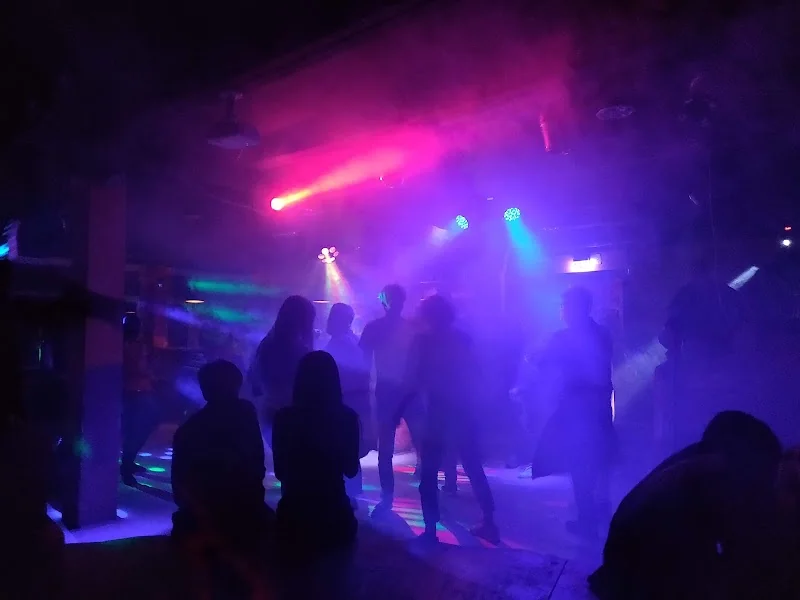
The STAGE eight in Cottbus is a unique cultural venue on the campus of BTU Cottbus-Senftenberg, where student theater, improvisation, workshops, and participation have come together for many years. Officially, the place is described as part of the student culture on campus; at the same time, STAGE eight sees itself as a space for encounters, experimentation, and various forms of art and culture. The address at Erich-Weinert-Straße 2 makes the location easy to find, as it is situated in the middle of the campus environment and is closely connected to student life in Cottbus. The place is particularly known for the improvisational theater Rabota Karoshi, but STAGE eight is much more than a single group: it is an open ensemble and project environment that enables courses, theater performances, and changing formats. Therefore, those searching for STAGE eight Cottbus, Stage 8, program, directions, or workshops will not find a classic event hall here, but a vibrant participatory space that makes culture visible from students for students and all interested parties. ([cottbus.de](https://cottbus.de/kultur-und-tourismus/buehnen-ensemble-und-festivals/buehne-acht/))
For the content orientation, it is important that STAGE eight has grown since 1996 and has developed over the years from a theater course into a versatile cultural project. Today, the official website publishes current dates, including formats from the areas of writing, gaming, play, improv, and collaborative learning. This also shows: those looking for STAGE eight program or STAGE eight events will find a mix of fixed series and open offers. This makes the place feel less like an anonymous performance venue and more like a campus laboratory for ideas, where new people, new perspectives, and new forms of expression are explicitly welcome. This makes STAGE eight particularly relevant for search queries related to student theater Cottbus, BTU Cottbus STAGE eight, and Rabota Karoshi. ([buehne8.de](https://buehne8.de/Programm/))
Current Program and Events at STAGE eight
The current program is one of the most important anchor points for STAGE eight because the official website regularly shows what is actually happening during the ongoing period. The program page lists, among other things, BTU Writers Club, BTU Retro Gaming Club, game night, play space, and Rabota Karoshi. Specific dates, times, and notes such as details, registration, or ticket reservations are also included. This mix is helpful for users who not only want to know the place but also want to know specifically what is happening next. Those searching for STAGE eight program, Stage 8 Cottbus, or events on campus will find a current and reliable source directly from the operator. ([buehne8.de](https://buehne8.de/Programm/))
The program is also broadly positioned in terms of content. The BTU Writers Club addresses writing students, the Retro Gaming Club focuses on exchange around classic computer games, and the game night creates an open meeting point for playing together. The play space, in turn, is aimed at people who want to engage with new formats, projects, and encounters. Rabota Karoshi stands for improvised theater with audience participation and thus represents the artistic peak of the offerings. This diversity explains why STAGE eight often appears in search queries with the terms program, tickets, reserving tickets, workshops, and participation. The location is not just a place to watch but a place where the program is both an invitation and a participatory offer. ([buehne8.de](https://buehne8.de/Programm/))
For SEO research, it is also important that the program logic of STAGE eight does not rely on rigid large events but on recurring formats with campus relevance. This is a clear difference from classic performance venues. Those who look there discover not just a simple schedule but a network of groups, courses, and projects that complement each other. The search terms related to STAGE eight Cottbus, STAGE eight program 2026, Rabota Karoshi, or student theater Cottbus are therefore not only strong in navigation but also meaningful in content. They lead to a location where current events and long-term cultural work converge. ([buehne8.de](https://buehne8.de/Programm/))
Directions and Parking at the BTU Campus in Cottbus
The directions to STAGE eight are closely linked to the BTU main campus in Cottbus. The university describes the route to the main campus via the A13 and A15 highways from Berlin and Dresden, the Cottbus-West exit, and the continuation towards the city center with signage to the university. For public transport, BTU recommends traveling to Cottbus main station and then continuing by bus or tram to the campus. Mentioned are, among others, bus 16 towards Stadthalle with a stop at TU Mensa, bus 15-44 towards Sielow, and bus 47 towards Burg with a stop at Technische Universität, as well as tram 4 towards Neu Schmellwitz with an exit at Zimmerstraße and a subsequent five-minute walk towards the university. ([b-tu.de](https://www.b-tu.de/en/careercenter/job-fair/information-for-employers/arrival))
For parking, the campus map of BTU is particularly helpful, as it marks parking spaces on the main campus and explicitly states that these can be used free of charge. As a navigation address for parking access, the university names Friedlieb-Runge-Straße 3, 03046 Cottbus. However, the postal and visitor address for STAGE eight remains Erich-Weinert-Straße 2. So, for those arriving by car, they should orient themselves at the BTU main campus, use the available parking options, and then walk to the immediate area of STAGE eight. This is important information for users searching for STAGE eight parking, STAGE eight directions, or STAGE eight Cottbus. ([b-tu.de](https://www.b-tu.de/en/careercenter/job-fair/information-for-employers/arrival))
The location on campus also makes STAGE eight easy to plan for people who are already visiting the university. Official BTU pages locate the rehearsal rooms of the student union directly on the central campus and mention the proximity to teaching building 10 and Quasimono. From this campus structure, it can be inferred that STAGE eight is part of a vibrant university environment where various places for exchange, rehearsals, and events are close together. Therefore, those looking for a practical description of the directions do not need a complicated special route but benefit from the existing infrastructure of the BTU campus. This is particularly relevant for search queries regarding STAGE eight parking, STAGE eight address, and BTU Cottbus STAGE eight. ([b-tu.de](https://www.b-tu.de/news/artikel/22280-die-buehne-acht-ist-was-du-daraus-machst?utm_source=openai))
Rabota Karoshi and Improvisational Theater at STAGE eight
Rabota Karoshi is the most well-known artistic figurehead of STAGE eight and shapes the perception of the location far beyond the campus. According to official accounts, the idea originated in 2007 after a student theater festival in Karlsruhe, when founder Ypsi Ciupack was inspired by an improv group and initiated rehearsals together with the then artistic director Mathias Neuber. The first performance as Rabota Karoshi took place in October 2008 at the enrollment ceremony for foreign students of BTU Cottbus. Since then, the group has rehearsed every Monday and showcases its skills at least twice per semester. This information is central for anyone searching for STAGE eight improvisational theater or Rabota Karoshi. ([buehne8.de](https://buehne8.de/buehne8_projekte/rabota-karoshi/?utm_source=openai))
Content-wise, Rabota Karoshi follows the fundamental principles of improvisational theater: the audience's suggestions determine the stories that unfold on stage, and nothing is pre-scripted. According to the official statement, each performance is thus a world premiere that is not repeated. This is what makes the format appealing. At the same time, the group emphasizes the team spirit: success arises not from individual stars but from the interplay, the uptake of offers, and the willingness to work together. For the search world, this is precisely the reason why Rabota Karoshi and STAGE eight Cottbus are often searched together. The audience receives not just a show but an open, risk-taking, and vibrant theater process that emerges directly from the situation. ([buehne8.de](https://www.buehne8.de/rabota_karoshi/wasistimpro.html?utm_source=openai))
Historically, Rabota Karoshi also shows how STAGE eight has evolved from a university project into a recognizable cultural brand. The group comes from the student environment but has long since become an independent part of the offerings. The website even mentions booking inquiries, underscoring the significance of the format. For the SEO analysis, it is therefore clear: those searching for STAGE eight Cottbus, STAGE eight program, improvisational theater Cottbus, or Rabota Karoshi usually want to understand not just a place but a concrete artistic experience. This experience is closely linked to audience proximity, spontaneity, and campus culture at Rabota Karoshi. ([buehne8.de](https://buehne8.de/buehne8_projekte/rabota-karoshi/?utm_source=openai))
Workshops, Courses, and Participation at STAGE eight
A central feature of STAGE eight is the participation principle. The official website describes the place as a space for encounters, art, and culture, which lives from the people who shape it. In addition to theater performances and stage experiments, courses, workshops, and projects are offered that explicitly invite experimentation, reinvention, searching, and finding. This fits excellently with search queries like STAGE eight workshops, STAGE eight participation, or student theater Cottbus. Those who want to be active themselves and not just watch will find a clearly recognizable offer here. It is particularly important that the courses and workshops for students are free of charge thanks to funding from the student union Ost:Brandenburg; for everyone else, the participation fee is 15 euros, with the game night being an exception. ([buehne8.de](https://buehne8.de/buehne-acht-du/?utm_source=openai))
STAGE eight articulates its self-understanding very clearly: it is not about a finished consumer product but about a place that people fill with their ideas. On the current page STAGE eight & You, this thought becomes visible, as it invites participation, whether on or off stage, in technology, or as support for events and in the association. In practice, this means that STAGE eight addresses not only artists but also students interested in organization, technology, writing, or group work. The range of offerings extends from basic acting courses to open formats that culturally enliven the campus. ([buehne8.de](https://buehne8.de/buehne-acht-du/?utm_source=openai))
The current program also underscores this character. The BTU Writers Club shows that writing is understood as a communal practice. The Retro Gaming Club connects exchange and leisure culture. The play space and game night make it clear that community and a spirit of experimentation are just as important here as classical stage art. Thus, STAGE eight answers a typical search intention very well: users want to know whether a location offers only static performances or also space for active participation. At STAGE eight, the answer is clear: participation is not an addition but part of the concept. ([buehne8.de](https://buehne8.de/Programm/))
History and Development since 1996
The history of STAGE eight begins in 1996 with a theater course led by Mathias Neuber. This is the starting point of a project that has significantly expanded over the years. Already in 1998, the association bühne 8 e.V. was founded. This was followed by further milestones such as the founding of the cabaret Die Ehrlichen in 2000, the film group 8 in 2005, and the improvisational theater Rabota Karoshi in 2008. This chronology shows that STAGE eight did not develop spontaneously but has grown over many years with different groups, genres, and ideas. For search queries like STAGE eight history or STAGE eight since when, this is particularly relevant. ([buehne8.de](https://buehne8.de/ueber-uns/?utm_source=openai))
In the following years, additional ensembles and projects were added. In 2009, the crime ensemble Krimi a la Karte was formed, in 2010 the first feature film of the film group 8 was realized with Rootstock, and in 2011 the street theater ensemble Entre vous was founded. In 2014, the crime ensemble was renamed Krimi Delikat, in 2016, the inclusion theater Rampenfieber was created in cooperation with Lebenshilfe, and in the same year, STAGE eight celebrated its 20th anniversary. Since 2018, the artistic direction has been in the hands of Patrick Niegsch and Katharina Riedel. These stages demonstrate that the location is not just an address but a continuously working cultural structure. ([buehne8.de](https://buehne8.de/ueber-uns/?utm_source=openai))
Especially for an SEO page, this historical depth is valuable because it creates trust and distinguishes STAGE eight from short-lived event offerings. Those searching for STAGE eight Cottbus, Stage 8, or student theater usually also want to understand why this place is mentioned so often. The answer lies in the combination of long continuity, student sponsorship, diverse art forms, and the connection to the campus. From history, it can be inferred that STAGE eight is a place that has continually renewed itself without losing its core: collaborative theater-making, cultural openness, and space for new ideas. ([buehne8.de](https://buehne8.de/ueber-uns/?utm_source=openai))
Location, Contact, and What Makes STAGE eight Special
STAGE eight is clearly embedded not only in content but also spatially. The city of Cottbus names it as a place that has enriched student culture at the BTU Cottbus-Senftenberg campus since 1996. The official address is bühne 8 e.V., Erich-Weinert-Straße 2, 03046 Cottbus; the contact address is provided as the email spiel.macher@buehne8.de. The website complements the picture with the note that STAGE eight is a space for art and culture on campus and that it remains vibrant through projects, courses, and workshops. This makes it particularly relevant for search queries regarding STAGE eight contact, address, or Cottbus campus. ([cottbus.de](https://cottbus.de/kultur-und-tourismus/buehnen-ensemble-und-festivals/buehne-acht/))
Also interesting is the immediate campus context. Official BTU materials locate STAGE eight near teaching building 10 and Quasimono, while the city and the university describe the entire main campus as easily accessible and complemented by parking spaces. This creates an environment where culture, study, and everyday life are close together. This connection is important for the impact of the location, as STAGE eight functions as a campus place and a cultural meeting point at the same time. For many users, this is the crucial difference from a classic event venue: here, the proximity to the university is not a side aspect but part of the identity. ([b-tu.de](https://www.b-tu.de/news/artikel/22280-die-buehne-acht-ist-was-du-daraus-machst?utm_source=openai))
What makes STAGE eight special can therefore be summarized as follows: it is not a purely commercial event venue but a developed student cultural space with history, initiative, and open participation. The offerings range from improv theater to writing and gaming formats to workshops, and the structure is supported by people who want to shape things themselves. This creates the positive profile that is visible in reviews and search interest. Those who visit STAGE eight experience not just a program but a piece of vibrant campus culture in Cottbus. This is the strength of this location and the reason why STAGE eight Cottbus and Rabota Karoshi are searched so frequently. ([cottbus.de](https://cottbus.de/kultur-und-tourismus/buehnen-ensemble-und-festivals/buehne-acht/))
Sources:
- City of Cottbus: STAGE eight, Address and Student Culture on Campus ([cottbus.de](https://cottbus.de/kultur-und-tourismus/buehnen-ensemble-und-festivals/buehne-acht/))
- STAGE eight: About Us, History and Projects ([buehne8.de](https://buehne8.de/ueber-uns/?utm_source=openai))
- STAGE eight: Current Program and Event Dates ([buehne8.de](https://buehne8.de/Programm/))
- BTU Cottbus-Senftenberg: Directions, Main Campus, and Free Parking ([b-tu.de](https://www.b-tu.de/en/careercenter/job-fair/information-for-employers/arrival))
- STAGE eight: Rabota Karoshi and Impro Theater Background ([buehne8.de](https://buehne8.de/buehne8_projekte/rabota-karoshi/?utm_source=openai))
- STAGE eight: Contact and Erich-Weinert-Straße 2 in Cottbus ([buehne8.de](https://buehne8.de/kontakt/?utm_source=openai))
Show moreShow less
STAGE eight | Program & Directions
The STAGE eight in Cottbus is a unique cultural venue on the campus of BTU Cottbus-Senftenberg, where student theater, improvisation, workshops, and participation have come together for many years. Officially, the place is described as part of the student culture on campus; at the same time, STAGE eight sees itself as a space for encounters, experimentation, and various forms of art and culture. The address at Erich-Weinert-Straße 2 makes the location easy to find, as it is situated in the middle of the campus environment and is closely connected to student life in Cottbus. The place is particularly known for the improvisational theater Rabota Karoshi, but STAGE eight is much more than a single group: it is an open ensemble and project environment that enables courses, theater performances, and changing formats. Therefore, those searching for STAGE eight Cottbus, Stage 8, program, directions, or workshops will not find a classic event hall here, but a vibrant participatory space that makes culture visible from students for students and all interested parties. ([cottbus.de](https://cottbus.de/kultur-und-tourismus/buehnen-ensemble-und-festivals/buehne-acht/))
For the content orientation, it is important that STAGE eight has grown since 1996 and has developed over the years from a theater course into a versatile cultural project. Today, the official website publishes current dates, including formats from the areas of writing, gaming, play, improv, and collaborative learning. This also shows: those looking for STAGE eight program or STAGE eight events will find a mix of fixed series and open offers. This makes the place feel less like an anonymous performance venue and more like a campus laboratory for ideas, where new people, new perspectives, and new forms of expression are explicitly welcome. This makes STAGE eight particularly relevant for search queries related to student theater Cottbus, BTU Cottbus STAGE eight, and Rabota Karoshi. ([buehne8.de](https://buehne8.de/Programm/))
Current Program and Events at STAGE eight
The current program is one of the most important anchor points for STAGE eight because the official website regularly shows what is actually happening during the ongoing period. The program page lists, among other things, BTU Writers Club, BTU Retro Gaming Club, game night, play space, and Rabota Karoshi. Specific dates, times, and notes such as details, registration, or ticket reservations are also included. This mix is helpful for users who not only want to know the place but also want to know specifically what is happening next. Those searching for STAGE eight program, Stage 8 Cottbus, or events on campus will find a current and reliable source directly from the operator. ([buehne8.de](https://buehne8.de/Programm/))
The program is also broadly positioned in terms of content. The BTU Writers Club addresses writing students, the Retro Gaming Club focuses on exchange around classic computer games, and the game night creates an open meeting point for playing together. The play space, in turn, is aimed at people who want to engage with new formats, projects, and encounters. Rabota Karoshi stands for improvised theater with audience participation and thus represents the artistic peak of the offerings. This diversity explains why STAGE eight often appears in search queries with the terms program, tickets, reserving tickets, workshops, and participation. The location is not just a place to watch but a place where the program is both an invitation and a participatory offer. ([buehne8.de](https://buehne8.de/Programm/))
For SEO research, it is also important that the program logic of STAGE eight does not rely on rigid large events but on recurring formats with campus relevance. This is a clear difference from classic performance venues. Those who look there discover not just a simple schedule but a network of groups, courses, and projects that complement each other. The search terms related to STAGE eight Cottbus, STAGE eight program 2026, Rabota Karoshi, or student theater Cottbus are therefore not only strong in navigation but also meaningful in content. They lead to a location where current events and long-term cultural work converge. ([buehne8.de](https://buehne8.de/Programm/))
Directions and Parking at the BTU Campus in Cottbus
The directions to STAGE eight are closely linked to the BTU main campus in Cottbus. The university describes the route to the main campus via the A13 and A15 highways from Berlin and Dresden, the Cottbus-West exit, and the continuation towards the city center with signage to the university. For public transport, BTU recommends traveling to Cottbus main station and then continuing by bus or tram to the campus. Mentioned are, among others, bus 16 towards Stadthalle with a stop at TU Mensa, bus 15-44 towards Sielow, and bus 47 towards Burg with a stop at Technische Universität, as well as tram 4 towards Neu Schmellwitz with an exit at Zimmerstraße and a subsequent five-minute walk towards the university. ([b-tu.de](https://www.b-tu.de/en/careercenter/job-fair/information-for-employers/arrival))
For parking, the campus map of BTU is particularly helpful, as it marks parking spaces on the main campus and explicitly states that these can be used free of charge. As a navigation address for parking access, the university names Friedlieb-Runge-Straße 3, 03046 Cottbus. However, the postal and visitor address for STAGE eight remains Erich-Weinert-Straße 2. So, for those arriving by car, they should orient themselves at the BTU main campus, use the available parking options, and then walk to the immediate area of STAGE eight. This is important information for users searching for STAGE eight parking, STAGE eight directions, or STAGE eight Cottbus. ([b-tu.de](https://www.b-tu.de/en/careercenter/job-fair/information-for-employers/arrival))
The location on campus also makes STAGE eight easy to plan for people who are already visiting the university. Official BTU pages locate the rehearsal rooms of the student union directly on the central campus and mention the proximity to teaching building 10 and Quasimono. From this campus structure, it can be inferred that STAGE eight is part of a vibrant university environment where various places for exchange, rehearsals, and events are close together. Therefore, those looking for a practical description of the directions do not need a complicated special route but benefit from the existing infrastructure of the BTU campus. This is particularly relevant for search queries regarding STAGE eight parking, STAGE eight address, and BTU Cottbus STAGE eight. ([b-tu.de](https://www.b-tu.de/news/artikel/22280-die-buehne-acht-ist-was-du-daraus-machst?utm_source=openai))
Rabota Karoshi and Improvisational Theater at STAGE eight
Rabota Karoshi is the most well-known artistic figurehead of STAGE eight and shapes the perception of the location far beyond the campus. According to official accounts, the idea originated in 2007 after a student theater festival in Karlsruhe, when founder Ypsi Ciupack was inspired by an improv group and initiated rehearsals together with the then artistic director Mathias Neuber. The first performance as Rabota Karoshi took place in October 2008 at the enrollment ceremony for foreign students of BTU Cottbus. Since then, the group has rehearsed every Monday and showcases its skills at least twice per semester. This information is central for anyone searching for STAGE eight improvisational theater or Rabota Karoshi. ([buehne8.de](https://buehne8.de/buehne8_projekte/rabota-karoshi/?utm_source=openai))
Content-wise, Rabota Karoshi follows the fundamental principles of improvisational theater: the audience's suggestions determine the stories that unfold on stage, and nothing is pre-scripted. According to the official statement, each performance is thus a world premiere that is not repeated. This is what makes the format appealing. At the same time, the group emphasizes the team spirit: success arises not from individual stars but from the interplay, the uptake of offers, and the willingness to work together. For the search world, this is precisely the reason why Rabota Karoshi and STAGE eight Cottbus are often searched together. The audience receives not just a show but an open, risk-taking, and vibrant theater process that emerges directly from the situation. ([buehne8.de](https://www.buehne8.de/rabota_karoshi/wasistimpro.html?utm_source=openai))
Historically, Rabota Karoshi also shows how STAGE eight has evolved from a university project into a recognizable cultural brand. The group comes from the student environment but has long since become an independent part of the offerings. The website even mentions booking inquiries, underscoring the significance of the format. For the SEO analysis, it is therefore clear: those searching for STAGE eight Cottbus, STAGE eight program, improvisational theater Cottbus, or Rabota Karoshi usually want to understand not just a place but a concrete artistic experience. This experience is closely linked to audience proximity, spontaneity, and campus culture at Rabota Karoshi. ([buehne8.de](https://buehne8.de/buehne8_projekte/rabota-karoshi/?utm_source=openai))
Workshops, Courses, and Participation at STAGE eight
A central feature of STAGE eight is the participation principle. The official website describes the place as a space for encounters, art, and culture, which lives from the people who shape it. In addition to theater performances and stage experiments, courses, workshops, and projects are offered that explicitly invite experimentation, reinvention, searching, and finding. This fits excellently with search queries like STAGE eight workshops, STAGE eight participation, or student theater Cottbus. Those who want to be active themselves and not just watch will find a clearly recognizable offer here. It is particularly important that the courses and workshops for students are free of charge thanks to funding from the student union Ost:Brandenburg; for everyone else, the participation fee is 15 euros, with the game night being an exception. ([buehne8.de](https://buehne8.de/buehne-acht-du/?utm_source=openai))
STAGE eight articulates its self-understanding very clearly: it is not about a finished consumer product but about a place that people fill with their ideas. On the current page STAGE eight & You, this thought becomes visible, as it invites participation, whether on or off stage, in technology, or as support for events and in the association. In practice, this means that STAGE eight addresses not only artists but also students interested in organization, technology, writing, or group work. The range of offerings extends from basic acting courses to open formats that culturally enliven the campus. ([buehne8.de](https://buehne8.de/buehne-acht-du/?utm_source=openai))
The current program also underscores this character. The BTU Writers Club shows that writing is understood as a communal practice. The Retro Gaming Club connects exchange and leisure culture. The play space and game night make it clear that community and a spirit of experimentation are just as important here as classical stage art. Thus, STAGE eight answers a typical search intention very well: users want to know whether a location offers only static performances or also space for active participation. At STAGE eight, the answer is clear: participation is not an addition but part of the concept. ([buehne8.de](https://buehne8.de/Programm/))
History and Development since 1996
The history of STAGE eight begins in 1996 with a theater course led by Mathias Neuber. This is the starting point of a project that has significantly expanded over the years. Already in 1998, the association bühne 8 e.V. was founded. This was followed by further milestones such as the founding of the cabaret Die Ehrlichen in 2000, the film group 8 in 2005, and the improvisational theater Rabota Karoshi in 2008. This chronology shows that STAGE eight did not develop spontaneously but has grown over many years with different groups, genres, and ideas. For search queries like STAGE eight history or STAGE eight since when, this is particularly relevant. ([buehne8.de](https://buehne8.de/ueber-uns/?utm_source=openai))
In the following years, additional ensembles and projects were added. In 2009, the crime ensemble Krimi a la Karte was formed, in 2010 the first feature film of the film group 8 was realized with Rootstock, and in 2011 the street theater ensemble Entre vous was founded. In 2014, the crime ensemble was renamed Krimi Delikat, in 2016, the inclusion theater Rampenfieber was created in cooperation with Lebenshilfe, and in the same year, STAGE eight celebrated its 20th anniversary. Since 2018, the artistic direction has been in the hands of Patrick Niegsch and Katharina Riedel. These stages demonstrate that the location is not just an address but a continuously working cultural structure. ([buehne8.de](https://buehne8.de/ueber-uns/?utm_source=openai))
Especially for an SEO page, this historical depth is valuable because it creates trust and distinguishes STAGE eight from short-lived event offerings. Those searching for STAGE eight Cottbus, Stage 8, or student theater usually also want to understand why this place is mentioned so often. The answer lies in the combination of long continuity, student sponsorship, diverse art forms, and the connection to the campus. From history, it can be inferred that STAGE eight is a place that has continually renewed itself without losing its core: collaborative theater-making, cultural openness, and space for new ideas. ([buehne8.de](https://buehne8.de/ueber-uns/?utm_source=openai))
Location, Contact, and What Makes STAGE eight Special
STAGE eight is clearly embedded not only in content but also spatially. The city of Cottbus names it as a place that has enriched student culture at the BTU Cottbus-Senftenberg campus since 1996. The official address is bühne 8 e.V., Erich-Weinert-Straße 2, 03046 Cottbus; the contact address is provided as the email spiel.macher@buehne8.de. The website complements the picture with the note that STAGE eight is a space for art and culture on campus and that it remains vibrant through projects, courses, and workshops. This makes it particularly relevant for search queries regarding STAGE eight contact, address, or Cottbus campus. ([cottbus.de](https://cottbus.de/kultur-und-tourismus/buehnen-ensemble-und-festivals/buehne-acht/))
Also interesting is the immediate campus context. Official BTU materials locate STAGE eight near teaching building 10 and Quasimono, while the city and the university describe the entire main campus as easily accessible and complemented by parking spaces. This creates an environment where culture, study, and everyday life are close together. This connection is important for the impact of the location, as STAGE eight functions as a campus place and a cultural meeting point at the same time. For many users, this is the crucial difference from a classic event venue: here, the proximity to the university is not a side aspect but part of the identity. ([b-tu.de](https://www.b-tu.de/news/artikel/22280-die-buehne-acht-ist-was-du-daraus-machst?utm_source=openai))
What makes STAGE eight special can therefore be summarized as follows: it is not a purely commercial event venue but a developed student cultural space with history, initiative, and open participation. The offerings range from improv theater to writing and gaming formats to workshops, and the structure is supported by people who want to shape things themselves. This creates the positive profile that is visible in reviews and search interest. Those who visit STAGE eight experience not just a program but a piece of vibrant campus culture in Cottbus. This is the strength of this location and the reason why STAGE eight Cottbus and Rabota Karoshi are searched so frequently. ([cottbus.de](https://cottbus.de/kultur-und-tourismus/buehnen-ensemble-und-festivals/buehne-acht/))
Sources:
- City of Cottbus: STAGE eight, Address and Student Culture on Campus ([cottbus.de](https://cottbus.de/kultur-und-tourismus/buehnen-ensemble-und-festivals/buehne-acht/))
- STAGE eight: About Us, History and Projects ([buehne8.de](https://buehne8.de/ueber-uns/?utm_source=openai))
- STAGE eight: Current Program and Event Dates ([buehne8.de](https://buehne8.de/Programm/))
- BTU Cottbus-Senftenberg: Directions, Main Campus, and Free Parking ([b-tu.de](https://www.b-tu.de/en/careercenter/job-fair/information-for-employers/arrival))
- STAGE eight: Rabota Karoshi and Impro Theater Background ([buehne8.de](https://buehne8.de/buehne8_projekte/rabota-karoshi/?utm_source=openai))
- STAGE eight: Contact and Erich-Weinert-Straße 2 in Cottbus ([buehne8.de](https://buehne8.de/kontakt/?utm_source=openai))
STAGE eight | Program & Directions
The STAGE eight in Cottbus is a unique cultural venue on the campus of BTU Cottbus-Senftenberg, where student theater, improvisation, workshops, and participation have come together for many years. Officially, the place is described as part of the student culture on campus; at the same time, STAGE eight sees itself as a space for encounters, experimentation, and various forms of art and culture. The address at Erich-Weinert-Straße 2 makes the location easy to find, as it is situated in the middle of the campus environment and is closely connected to student life in Cottbus. The place is particularly known for the improvisational theater Rabota Karoshi, but STAGE eight is much more than a single group: it is an open ensemble and project environment that enables courses, theater performances, and changing formats. Therefore, those searching for STAGE eight Cottbus, Stage 8, program, directions, or workshops will not find a classic event hall here, but a vibrant participatory space that makes culture visible from students for students and all interested parties. ([cottbus.de](https://cottbus.de/kultur-und-tourismus/buehnen-ensemble-und-festivals/buehne-acht/))
For the content orientation, it is important that STAGE eight has grown since 1996 and has developed over the years from a theater course into a versatile cultural project. Today, the official website publishes current dates, including formats from the areas of writing, gaming, play, improv, and collaborative learning. This also shows: those looking for STAGE eight program or STAGE eight events will find a mix of fixed series and open offers. This makes the place feel less like an anonymous performance venue and more like a campus laboratory for ideas, where new people, new perspectives, and new forms of expression are explicitly welcome. This makes STAGE eight particularly relevant for search queries related to student theater Cottbus, BTU Cottbus STAGE eight, and Rabota Karoshi. ([buehne8.de](https://buehne8.de/Programm/))
Current Program and Events at STAGE eight
The current program is one of the most important anchor points for STAGE eight because the official website regularly shows what is actually happening during the ongoing period. The program page lists, among other things, BTU Writers Club, BTU Retro Gaming Club, game night, play space, and Rabota Karoshi. Specific dates, times, and notes such as details, registration, or ticket reservations are also included. This mix is helpful for users who not only want to know the place but also want to know specifically what is happening next. Those searching for STAGE eight program, Stage 8 Cottbus, or events on campus will find a current and reliable source directly from the operator. ([buehne8.de](https://buehne8.de/Programm/))
The program is also broadly positioned in terms of content. The BTU Writers Club addresses writing students, the Retro Gaming Club focuses on exchange around classic computer games, and the game night creates an open meeting point for playing together. The play space, in turn, is aimed at people who want to engage with new formats, projects, and encounters. Rabota Karoshi stands for improvised theater with audience participation and thus represents the artistic peak of the offerings. This diversity explains why STAGE eight often appears in search queries with the terms program, tickets, reserving tickets, workshops, and participation. The location is not just a place to watch but a place where the program is both an invitation and a participatory offer. ([buehne8.de](https://buehne8.de/Programm/))
For SEO research, it is also important that the program logic of STAGE eight does not rely on rigid large events but on recurring formats with campus relevance. This is a clear difference from classic performance venues. Those who look there discover not just a simple schedule but a network of groups, courses, and projects that complement each other. The search terms related to STAGE eight Cottbus, STAGE eight program 2026, Rabota Karoshi, or student theater Cottbus are therefore not only strong in navigation but also meaningful in content. They lead to a location where current events and long-term cultural work converge. ([buehne8.de](https://buehne8.de/Programm/))
Directions and Parking at the BTU Campus in Cottbus
The directions to STAGE eight are closely linked to the BTU main campus in Cottbus. The university describes the route to the main campus via the A13 and A15 highways from Berlin and Dresden, the Cottbus-West exit, and the continuation towards the city center with signage to the university. For public transport, BTU recommends traveling to Cottbus main station and then continuing by bus or tram to the campus. Mentioned are, among others, bus 16 towards Stadthalle with a stop at TU Mensa, bus 15-44 towards Sielow, and bus 47 towards Burg with a stop at Technische Universität, as well as tram 4 towards Neu Schmellwitz with an exit at Zimmerstraße and a subsequent five-minute walk towards the university. ([b-tu.de](https://www.b-tu.de/en/careercenter/job-fair/information-for-employers/arrival))
For parking, the campus map of BTU is particularly helpful, as it marks parking spaces on the main campus and explicitly states that these can be used free of charge. As a navigation address for parking access, the university names Friedlieb-Runge-Straße 3, 03046 Cottbus. However, the postal and visitor address for STAGE eight remains Erich-Weinert-Straße 2. So, for those arriving by car, they should orient themselves at the BTU main campus, use the available parking options, and then walk to the immediate area of STAGE eight. This is important information for users searching for STAGE eight parking, STAGE eight directions, or STAGE eight Cottbus. ([b-tu.de](https://www.b-tu.de/en/careercenter/job-fair/information-for-employers/arrival))
The location on campus also makes STAGE eight easy to plan for people who are already visiting the university. Official BTU pages locate the rehearsal rooms of the student union directly on the central campus and mention the proximity to teaching building 10 and Quasimono. From this campus structure, it can be inferred that STAGE eight is part of a vibrant university environment where various places for exchange, rehearsals, and events are close together. Therefore, those looking for a practical description of the directions do not need a complicated special route but benefit from the existing infrastructure of the BTU campus. This is particularly relevant for search queries regarding STAGE eight parking, STAGE eight address, and BTU Cottbus STAGE eight. ([b-tu.de](https://www.b-tu.de/news/artikel/22280-die-buehne-acht-ist-was-du-daraus-machst?utm_source=openai))
Rabota Karoshi and Improvisational Theater at STAGE eight
Rabota Karoshi is the most well-known artistic figurehead of STAGE eight and shapes the perception of the location far beyond the campus. According to official accounts, the idea originated in 2007 after a student theater festival in Karlsruhe, when founder Ypsi Ciupack was inspired by an improv group and initiated rehearsals together with the then artistic director Mathias Neuber. The first performance as Rabota Karoshi took place in October 2008 at the enrollment ceremony for foreign students of BTU Cottbus. Since then, the group has rehearsed every Monday and showcases its skills at least twice per semester. This information is central for anyone searching for STAGE eight improvisational theater or Rabota Karoshi. ([buehne8.de](https://buehne8.de/buehne8_projekte/rabota-karoshi/?utm_source=openai))
Content-wise, Rabota Karoshi follows the fundamental principles of improvisational theater: the audience's suggestions determine the stories that unfold on stage, and nothing is pre-scripted. According to the official statement, each performance is thus a world premiere that is not repeated. This is what makes the format appealing. At the same time, the group emphasizes the team spirit: success arises not from individual stars but from the interplay, the uptake of offers, and the willingness to work together. For the search world, this is precisely the reason why Rabota Karoshi and STAGE eight Cottbus are often searched together. The audience receives not just a show but an open, risk-taking, and vibrant theater process that emerges directly from the situation. ([buehne8.de](https://www.buehne8.de/rabota_karoshi/wasistimpro.html?utm_source=openai))
Historically, Rabota Karoshi also shows how STAGE eight has evolved from a university project into a recognizable cultural brand. The group comes from the student environment but has long since become an independent part of the offerings. The website even mentions booking inquiries, underscoring the significance of the format. For the SEO analysis, it is therefore clear: those searching for STAGE eight Cottbus, STAGE eight program, improvisational theater Cottbus, or Rabota Karoshi usually want to understand not just a place but a concrete artistic experience. This experience is closely linked to audience proximity, spontaneity, and campus culture at Rabota Karoshi. ([buehne8.de](https://buehne8.de/buehne8_projekte/rabota-karoshi/?utm_source=openai))
Workshops, Courses, and Participation at STAGE eight
A central feature of STAGE eight is the participation principle. The official website describes the place as a space for encounters, art, and culture, which lives from the people who shape it. In addition to theater performances and stage experiments, courses, workshops, and projects are offered that explicitly invite experimentation, reinvention, searching, and finding. This fits excellently with search queries like STAGE eight workshops, STAGE eight participation, or student theater Cottbus. Those who want to be active themselves and not just watch will find a clearly recognizable offer here. It is particularly important that the courses and workshops for students are free of charge thanks to funding from the student union Ost:Brandenburg; for everyone else, the participation fee is 15 euros, with the game night being an exception. ([buehne8.de](https://buehne8.de/buehne-acht-du/?utm_source=openai))
STAGE eight articulates its self-understanding very clearly: it is not about a finished consumer product but about a place that people fill with their ideas. On the current page STAGE eight & You, this thought becomes visible, as it invites participation, whether on or off stage, in technology, or as support for events and in the association. In practice, this means that STAGE eight addresses not only artists but also students interested in organization, technology, writing, or group work. The range of offerings extends from basic acting courses to open formats that culturally enliven the campus. ([buehne8.de](https://buehne8.de/buehne-acht-du/?utm_source=openai))
The current program also underscores this character. The BTU Writers Club shows that writing is understood as a communal practice. The Retro Gaming Club connects exchange and leisure culture. The play space and game night make it clear that community and a spirit of experimentation are just as important here as classical stage art. Thus, STAGE eight answers a typical search intention very well: users want to know whether a location offers only static performances or also space for active participation. At STAGE eight, the answer is clear: participation is not an addition but part of the concept. ([buehne8.de](https://buehne8.de/Programm/))
History and Development since 1996
The history of STAGE eight begins in 1996 with a theater course led by Mathias Neuber. This is the starting point of a project that has significantly expanded over the years. Already in 1998, the association bühne 8 e.V. was founded. This was followed by further milestones such as the founding of the cabaret Die Ehrlichen in 2000, the film group 8 in 2005, and the improvisational theater Rabota Karoshi in 2008. This chronology shows that STAGE eight did not develop spontaneously but has grown over many years with different groups, genres, and ideas. For search queries like STAGE eight history or STAGE eight since when, this is particularly relevant. ([buehne8.de](https://buehne8.de/ueber-uns/?utm_source=openai))
In the following years, additional ensembles and projects were added. In 2009, the crime ensemble Krimi a la Karte was formed, in 2010 the first feature film of the film group 8 was realized with Rootstock, and in 2011 the street theater ensemble Entre vous was founded. In 2014, the crime ensemble was renamed Krimi Delikat, in 2016, the inclusion theater Rampenfieber was created in cooperation with Lebenshilfe, and in the same year, STAGE eight celebrated its 20th anniversary. Since 2018, the artistic direction has been in the hands of Patrick Niegsch and Katharina Riedel. These stages demonstrate that the location is not just an address but a continuously working cultural structure. ([buehne8.de](https://buehne8.de/ueber-uns/?utm_source=openai))
Especially for an SEO page, this historical depth is valuable because it creates trust and distinguishes STAGE eight from short-lived event offerings. Those searching for STAGE eight Cottbus, Stage 8, or student theater usually also want to understand why this place is mentioned so often. The answer lies in the combination of long continuity, student sponsorship, diverse art forms, and the connection to the campus. From history, it can be inferred that STAGE eight is a place that has continually renewed itself without losing its core: collaborative theater-making, cultural openness, and space for new ideas. ([buehne8.de](https://buehne8.de/ueber-uns/?utm_source=openai))
Location, Contact, and What Makes STAGE eight Special
STAGE eight is clearly embedded not only in content but also spatially. The city of Cottbus names it as a place that has enriched student culture at the BTU Cottbus-Senftenberg campus since 1996. The official address is bühne 8 e.V., Erich-Weinert-Straße 2, 03046 Cottbus; the contact address is provided as the email spiel.macher@buehne8.de. The website complements the picture with the note that STAGE eight is a space for art and culture on campus and that it remains vibrant through projects, courses, and workshops. This makes it particularly relevant for search queries regarding STAGE eight contact, address, or Cottbus campus. ([cottbus.de](https://cottbus.de/kultur-und-tourismus/buehnen-ensemble-und-festivals/buehne-acht/))
Also interesting is the immediate campus context. Official BTU materials locate STAGE eight near teaching building 10 and Quasimono, while the city and the university describe the entire main campus as easily accessible and complemented by parking spaces. This creates an environment where culture, study, and everyday life are close together. This connection is important for the impact of the location, as STAGE eight functions as a campus place and a cultural meeting point at the same time. For many users, this is the crucial difference from a classic event venue: here, the proximity to the university is not a side aspect but part of the identity. ([b-tu.de](https://www.b-tu.de/news/artikel/22280-die-buehne-acht-ist-was-du-daraus-machst?utm_source=openai))
What makes STAGE eight special can therefore be summarized as follows: it is not a purely commercial event venue but a developed student cultural space with history, initiative, and open participation. The offerings range from improv theater to writing and gaming formats to workshops, and the structure is supported by people who want to shape things themselves. This creates the positive profile that is visible in reviews and search interest. Those who visit STAGE eight experience not just a program but a piece of vibrant campus culture in Cottbus. This is the strength of this location and the reason why STAGE eight Cottbus and Rabota Karoshi are searched so frequently. ([cottbus.de](https://cottbus.de/kultur-und-tourismus/buehnen-ensemble-und-festivals/buehne-acht/))
Sources:
- City of Cottbus: STAGE eight, Address and Student Culture on Campus ([cottbus.de](https://cottbus.de/kultur-und-tourismus/buehnen-ensemble-und-festivals/buehne-acht/))
- STAGE eight: About Us, History and Projects ([buehne8.de](https://buehne8.de/ueber-uns/?utm_source=openai))
- STAGE eight: Current Program and Event Dates ([buehne8.de](https://buehne8.de/Programm/))
- BTU Cottbus-Senftenberg: Directions, Main Campus, and Free Parking ([b-tu.de](https://www.b-tu.de/en/careercenter/job-fair/information-for-employers/arrival))
- STAGE eight: Rabota Karoshi and Impro Theater Background ([buehne8.de](https://buehne8.de/buehne8_projekte/rabota-karoshi/?utm_source=openai))
- STAGE eight: Contact and Erich-Weinert-Straße 2 in Cottbus ([buehne8.de](https://buehne8.de/kontakt/?utm_source=openai))
Upcoming Events
No events found
Frequently Asked Questions
Reviews
Peet Da Pen
23. September 2025
Very nice location.
Anna Karenina
16. June 2022
Home is where the Bühne 8 is.
Preetam Yadav
5. March 2017
Nice
Johannes Wawra
2. March 2025
Stage 8 isn't just a theater for watching; it also offers many opportunities to participate. As a student theater, its offerings are primarily aimed at young people, but the stage is open to all ages, as long as there's a willingness to rehearse more intensively during the final stages of productions. Besides exciting plays, many close friendships are formed, making it a particularly good place for newcomers to Cottbus.
Ja Fi
22. July 2022
Bühne8 was, is, and will remain a place of encounters, of theatrical highlights, be it in drama, improvisational theater, or street theater, and a place of learning with its free, family-like courses and workshops. Thank you all. Please never stop.