Education through Work in Cottbus: Persecuted life paths of the GDR made visible
Date and Time
Location
Price
About this Event
Mood
Venue Type
When a state label decides a whole life
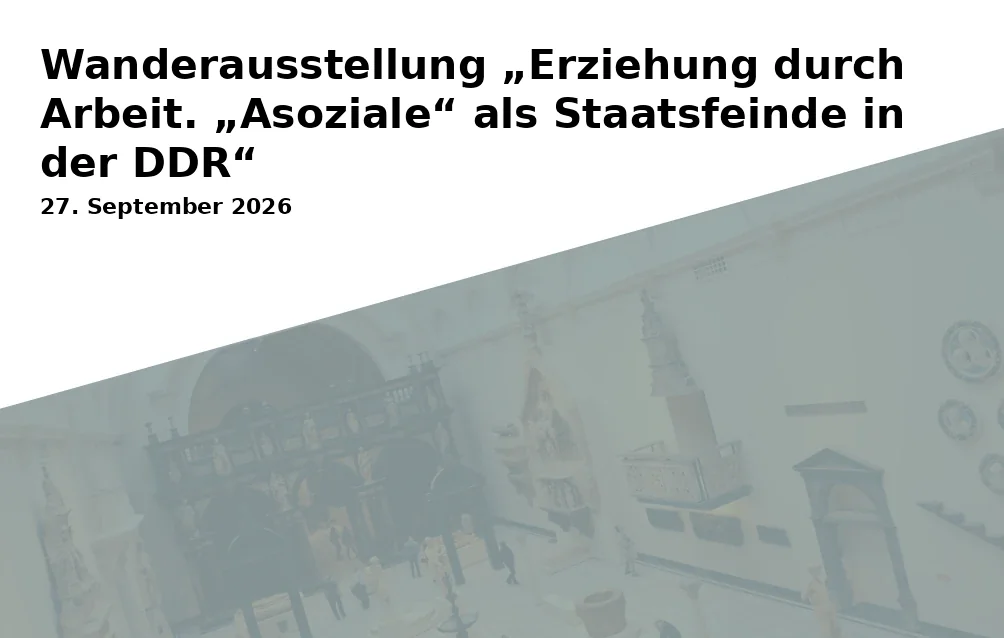
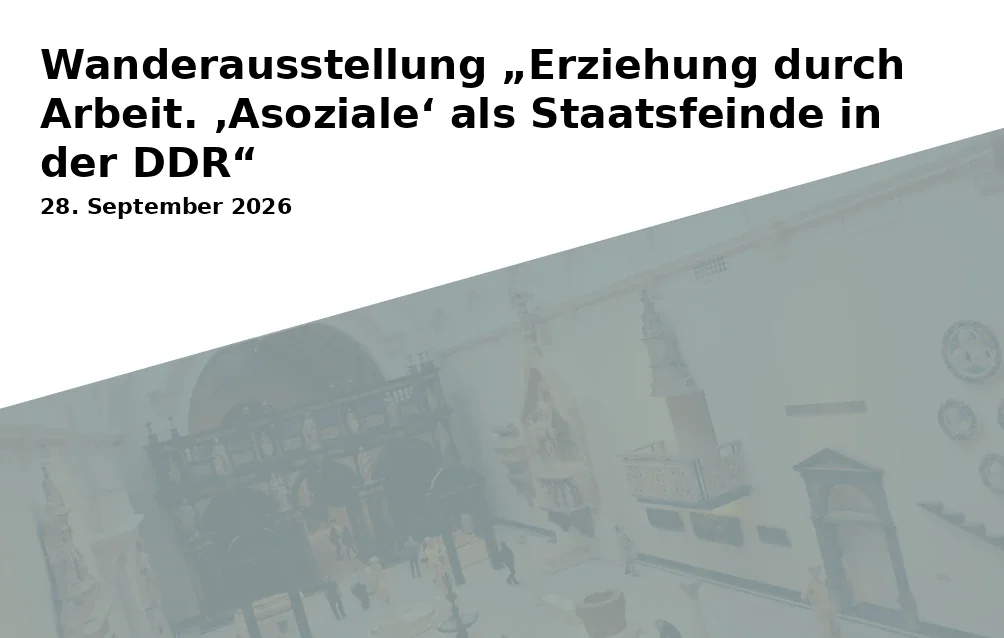
The traveling exhibition "Education through Work. 'Asocials' as Enemies of the State in the GDR" at the Cottbus Human Rights Center addresses a long-suppressed chapter of GDR history. The focus is on people who were persecuted, disciplined, and criminalized under Paragraph 249 of the GDR Penal Code as so-called "asocials".
Fourteen biographies against forgetting
The exhibition tells, based on fourteen selected life stories, how state attributions turned into concrete repression. Those affected included people without regular work, non-conforming youths, punks, prostitutes, applicants for emigration, and political dissidents. Photos, historical documents, and testimonial and expert interviews make visible how authorities and the judiciary used the term "asocial" as a tool of social control.
Paragraph 249 and the logic of exclusion
The exhibition places the persecution in art-historical and cultural memory contexts. It highlights predecessors of Paragraph 249 in the German Empire, during National Socialism, and in early GDR, as well as ideological reference points in Czechoslovakia and the Soviet Union. It also addresses the portrayal of "asocial elements" in propaganda and media, pathways to imprisonment, conditions of detention, and the consequences after release.
Documents, voices, and a compelling exhibition atmosphere
The art review here does not focus on painting or sculpture, but on the documentary power of photographs, documents, and film. In the exhibition atmosphere, historical sources connect with personal experiences. This media installation demands a concentrated aesthetic experience: Faces, files, and memories emerge from anonymous statistics and give the affected individuals back their individuality.
Cultural education and historical responsibility
The exhibition, realized by exhibeo e. V., was created in cooperation with the Union of Victims' Associations of Communist Tyranny. Its curation combines historical research, political education, and personal testimony. Between 1969 and 1989, around 146,000 people were convicted under Paragraph 249; about 125,600 judgments led to imprisonment. The exhibition invites visitors to critically question the mechanisms of stigmatization, pressure to conform, and state arbitrariness.
Conclusion: A necessary artistic experience of remembrance
Visitors can expect a factually grounded, multimedia exhibition with great human impact. The historical art review makes visible how quickly a societal prejudice can lead to state persecution. Anyone interested in GDR history, culture of remembrance, human rights, and political education should definitely experience this important art event live at the Cottbus Human Rights Center.
Official channels of the Cottbus Human Rights Center:
- Instagram: no official profile found
- Facebook: no official profile found
- YouTube: no official profile found
- Website: https://www.menschenrechtszentrum-cottbus.de