Education through Work at the Human Rights Center Cottbus: Understanding GDR Injustice
Date and Time
Location
Price
About this Event
Mood
Venue Type
Education through Work: A repressed chapter of GDR history becomes visible
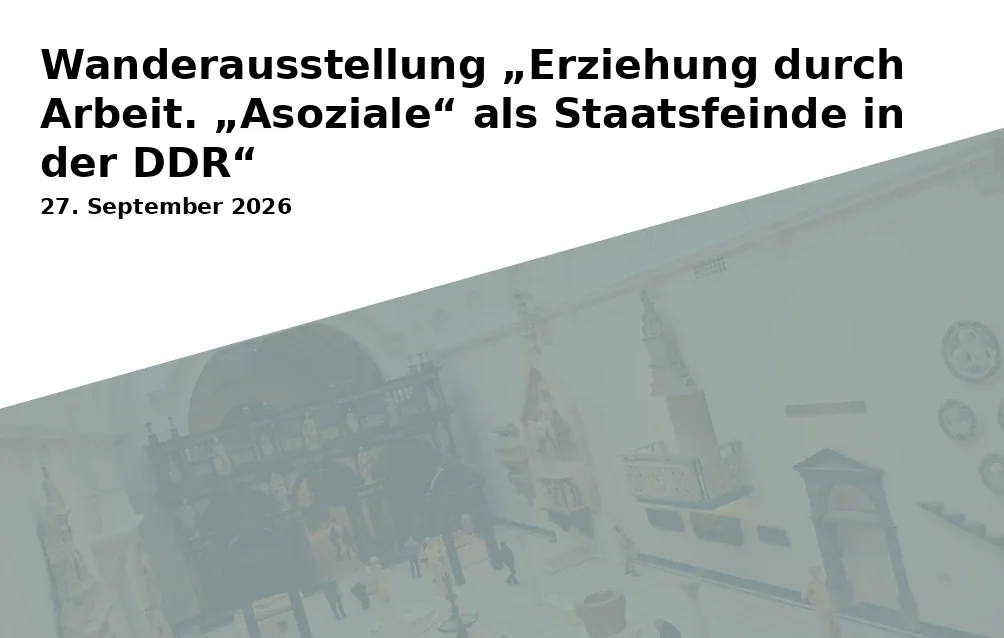
The traveling exhibition “Education through Work. ‘Asocials’ as Enemies of the State in the GDR” sheds light on a long-marginalized chapter of state repression at the Human Rights Center Cottbus. The focus is on the systematic exclusion, discipline, and criminalization of individuals who were stigmatized as “asocial” in the GDR.
When a Label Decided a Life
The exhibition examines the so-called asocial paragraph 249 of the GDR Penal Code. A vague legal definition allowed for the prosecution of perceived idleness, deviant lifestyles, or unwanted political attitudes. Those who did not conform to the ideal image of the socialist person could be declared enemies of the state.
Biographies, Documents, and Eyewitness Accounts
Through fourteen biographies, photographs, historical documents, film footage, and interviews with eyewitnesses and experts, the curated exhibition makes individual fates understandable. The exhibits show pathways to youth work farms, homes, and detention facilities, report on detention conditions, and track the consequences of stigmatization into life after release.
Historical Lines of Exclusion
The work consideration in a broader sense extends beyond the GDR. The presentation addresses precursors to paragraph 249 in the German Empire, during National Socialism, and in early GDR, as well as comparable ideas in Czechoslovakia and the Soviet Union. The portrayal of so-called “asocials” in propaganda and media is also critically contextualized.
Aesthetic Experience at a Place of Remembrance
The exhibition unfolds its impact in the historical environment of the Human Rights Center Cottbus and the Cottbus Prison Memorial. Photographs, files, and moving images create an intense exhibition atmosphere in which political terms are linked to concrete life stories. The artistic experience lies not in decorative staging, but in the compelling connection between visual documentation, historical analysis, and human experience.
Cultural Education and Democratic Remembrance
The presentation by exhibeo e. V. in cooperation with the Union of Victim Associations of Communist Violence Regimes e. V. sees itself as a contribution to historical and political education. It questions the mechanisms of state control, social adaptation, and the treatment of those affected, whose convictions under paragraph 249 have not yet been legally rehabilitated or compensated in every case.
Conclusion: Remembrance Requires Encounter
The exhibition invites visitors to engage in a factual, emotionally compelling confrontation with GDR injustices, stigmatization, and human dignity. Those who wish to understand historical contexts and learn about the perspectives of those affected will experience an important aesthetic encounter with remembrance culture at the Human Rights Center Cottbus. A visit opens new pathways to GDR history and strengthens the awareness of the consequences of state exclusion.
Official Channels of Human Rights Center Cottbus and Exhibition:
- Exhibition Website: https://erziehung-durch-arbeit.de/cottbus-menschenrechtszentrum-ev
- Other official social media profiles: No official profile found