Education through Work at the Human Rights Center Cottbus: Making GDR Injustices Visible
Date and Time
Location
Price
About this Event
Mood
Venue Type
When a State Label Determined a Life
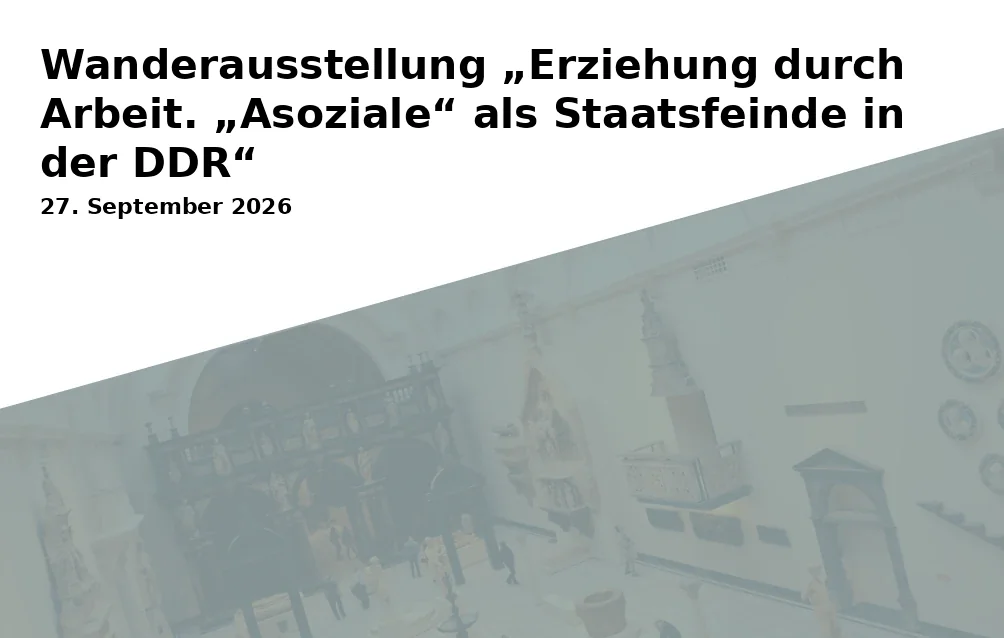
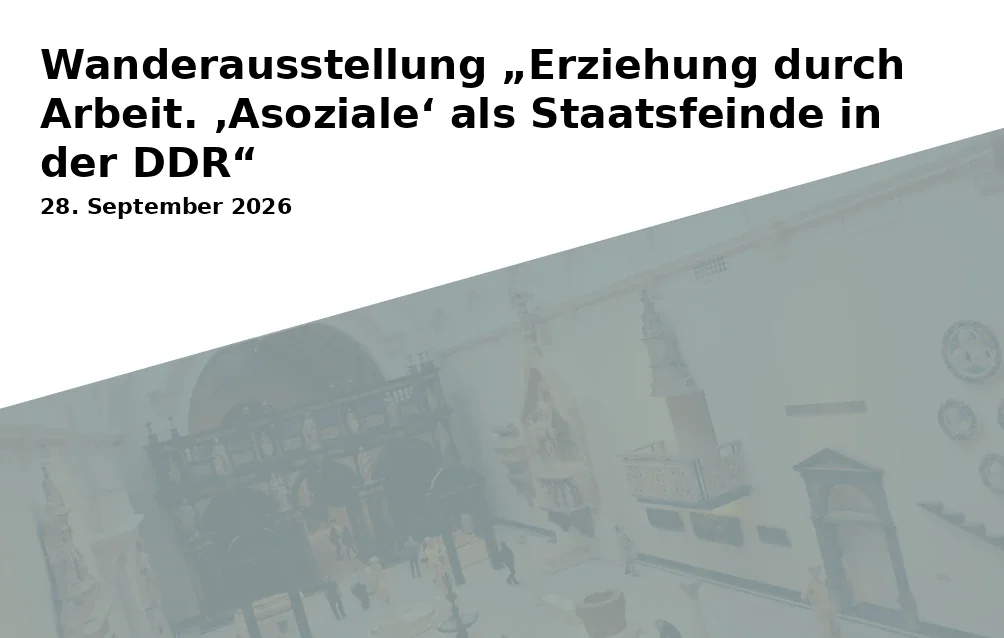
The traveling exhibition Education through Work. 'Asocial' as Enemies of the State in the GDR reveals a long-suppressed chapter of GDR history at the Human Rights Center Cottbus. It focuses on people who were stigmatized, marginalized, disciplined, and criminalized under Paragraph 249 of the GDR Penal Code as so-called 'asocial'.
Fourteen Biographies Against Forgetting
Through fourteen selected life stories, the exhibition showcases individual fates between state control, social normalization, and imprisonment. The people affected included, among others, those without regulated work, individuals with unconventional lifestyles, prostitutes, punks, applicants for exit permits, and people with politically undesirable views.
Photographs, historical documents, film footage, as well as interviews with witnesses and experts give a voice back to those affected. The curated presentation combines historical research with a compelling exploration of works and invites visitors to reflect on the personal consequences of state attributions.
Paragraph 249 and the Logic of Exclusion
The so-called asocial paragraph 249 was broadly and vaguely formulated. The SED dictatorship used it to pursue alleged idleness, a deviant lifestyle, or an undesirable political stance through criminal law. Those who did not conform to the ideal image of a socialist person could be declared enemies of the state.
The exhibition examines pathways into homes, youth labor camps, and prisons, addresses conditions of detention, and traces the consequences of stigmatization into life after release. Historical lines connect to the German Empire, National Socialism, the early GDR, and comparable ideas in the ČSSR and the Soviet Union.
Memory in a Historical Location
In the vicinity of the Cottbus prison memorial, the exhibition creates a unique exhibition atmosphere. The combination of spatial impact, historical documents, and personal life stories allows for a concentrated aesthetic experience where memory culture, political education, and human rights issues converge directly.
The presentation was created by exhibeo e.V. in cooperation with the Union of Victim Associations of Communist Tyranny e.V. and with support from institutions involved in the processing of this history. It makes an important contribution to cultural education and engagement with injustices of the GDR.
Conclusion: Experiencing GDR History from a Personal Perspective
Visitors can expect not an abstract history lesson, but a compelling artistic experience of the documentary exhibition: fourteen biographies, visual sources, and historical testimonies make it visible how language, power, and social norms can marginalize people. A visit enriches both the aesthetic experience and historical judgment and invites respectful and attentive engagement with those affected.
Official Channels of the Human Rights Center Cottbus:
- Instagram: no official profile found
- Facebook: no official profile found
- YouTube: no official profile found
- Website: https://www.menschenrechtszentrum-cottbus.de