Education through Work at the Cottbus Human Rights Centre: Making GDR Injustice Visible
Date and Time
Location
Price
About this Event
Mood
Venue Type
When a label decided a life: GDR injustice at the Cottbus Human Rights Centre
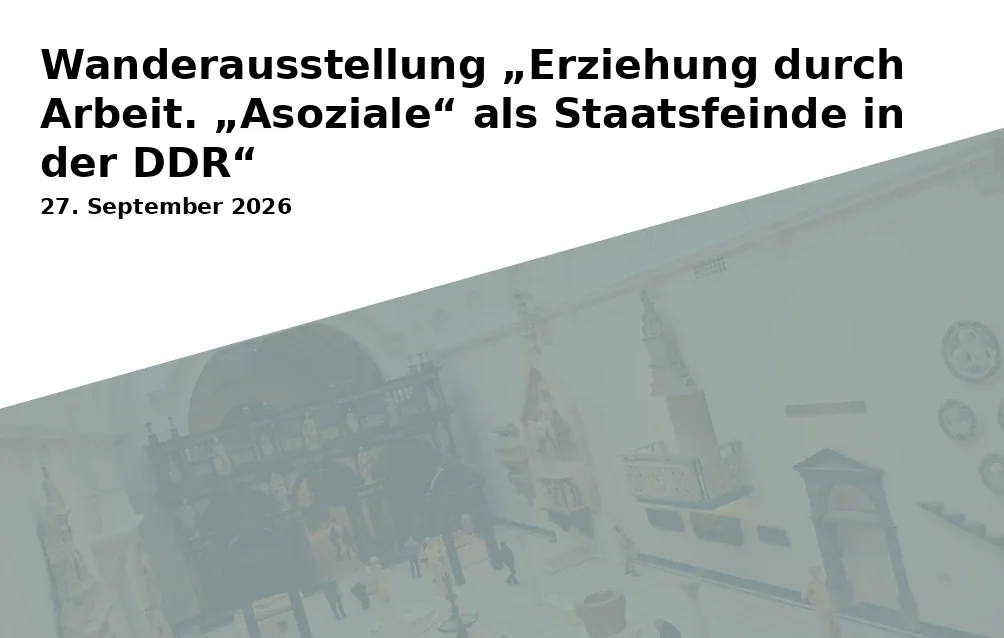
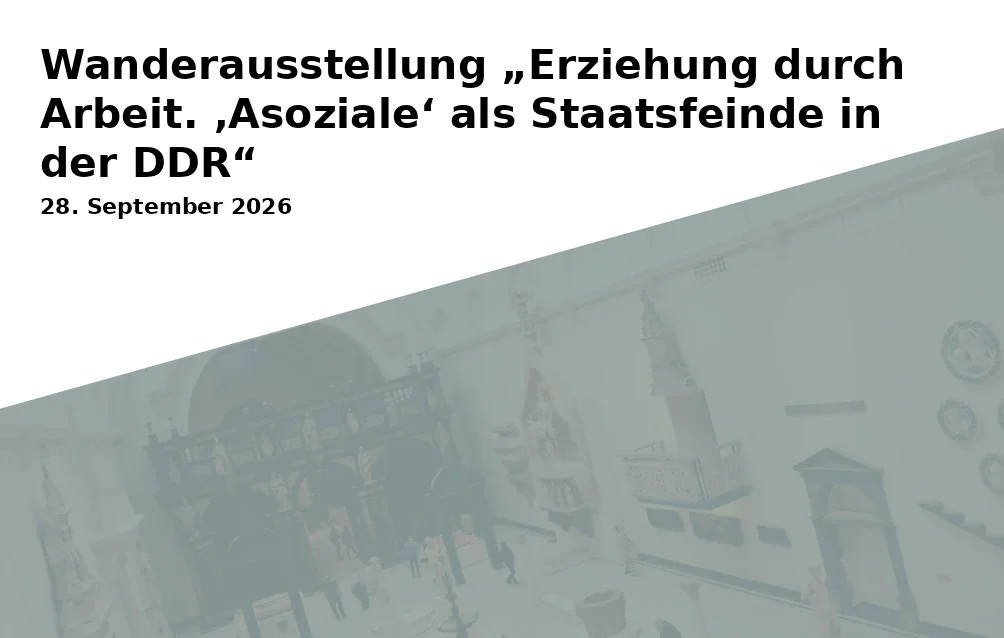
The traveling exhibition Education through Work. "Asocial" as Enemies of the State in the GDR makes a long-suppressed chapter of GDR history visible. At the Cottbus Human Rights Centre, visitors encounter the life paths of individuals who were marginalized, disciplined, and criminalized due to state attributions.
Fourteen life paths against forgetting
The exhibition focuses on fourteen portrayed women and men whose biographies were persecuted by GDR justice under the so-called asocial paragraph. This included, among others, individuals from the punk movement, prostitutes, applicants for emigration, and oppositionists. The exhibition shows how an ideologically shaped view of humanity declared individual life plans as a supposed threat.
The Asocial Paragraph as an Instrument of State Repression
The presentation places the persecution in a historical and political context. The focus is on Paragraph 249 of the GDR Penal Code, whose broadly defined interpretation allowed for a diverse application of so-called asocial behavior in criminal prosecution and social control. According to the Federal Archives, there were around 146,000 convictions under this paragraph from 1969 to 1989, of which 125,600 involved imprisonment.
Documents, Photographs, and Film Testimonies
Documents, photographs, and filmed testimonies and expert interviews connect individual experience with social analysis. The exhibition does not work solely with abstract numbers but leads into concrete biographies. This combination of historical research, visual communication, and personal memory creates a compelling exhibition atmosphere.
An Authentic Place of Memory
The Cottbus Human Rights Centre is located at the memorial site of Cottbus Prison. The historical location enhances the perception of the work and makes the mechanisms of detention, discipline, and exclusion immediately tangible. The curation combines political education with aesthetic experience and opens perspectives on human dignity, the rule of law, and the consequences of state stigmatization.
Cultural Education and Historical Responsibility
The exhibition is aimed at all who want to engage with GDR history, SED dictatorship, political persecution, and memory culture. It encourages critical reflection on how social norms emerge, how language marginalizes individuals, and what effects institutional power has on individual biographies.
This artistic experience is not an easy historical retrospective but a concentrated encounter with destroyed life paths and the question of societal responsibility. Visitors can expect a factually precise, emotionally powerful exhibition at a significant site of memory. Those who want to understand GDR injustice and deepen their aesthetic experience of historical enlightenment should definitely visit this presentation on-site.
Official channels of exhibeo e.V. and the Cottbus Human Rights Centre:
- Instagram: no official profile found
- Facebook: no official profile found
- YouTube: no official profile found
- Website: no official profile found