Cottbus: A Train Station of Remembrance – Experience NS History Intensively
Date and Time
Location
Price
About this Event
Mood
Venue Type
Cottbus as a Train Station of Remembrance: Making NS History Visible
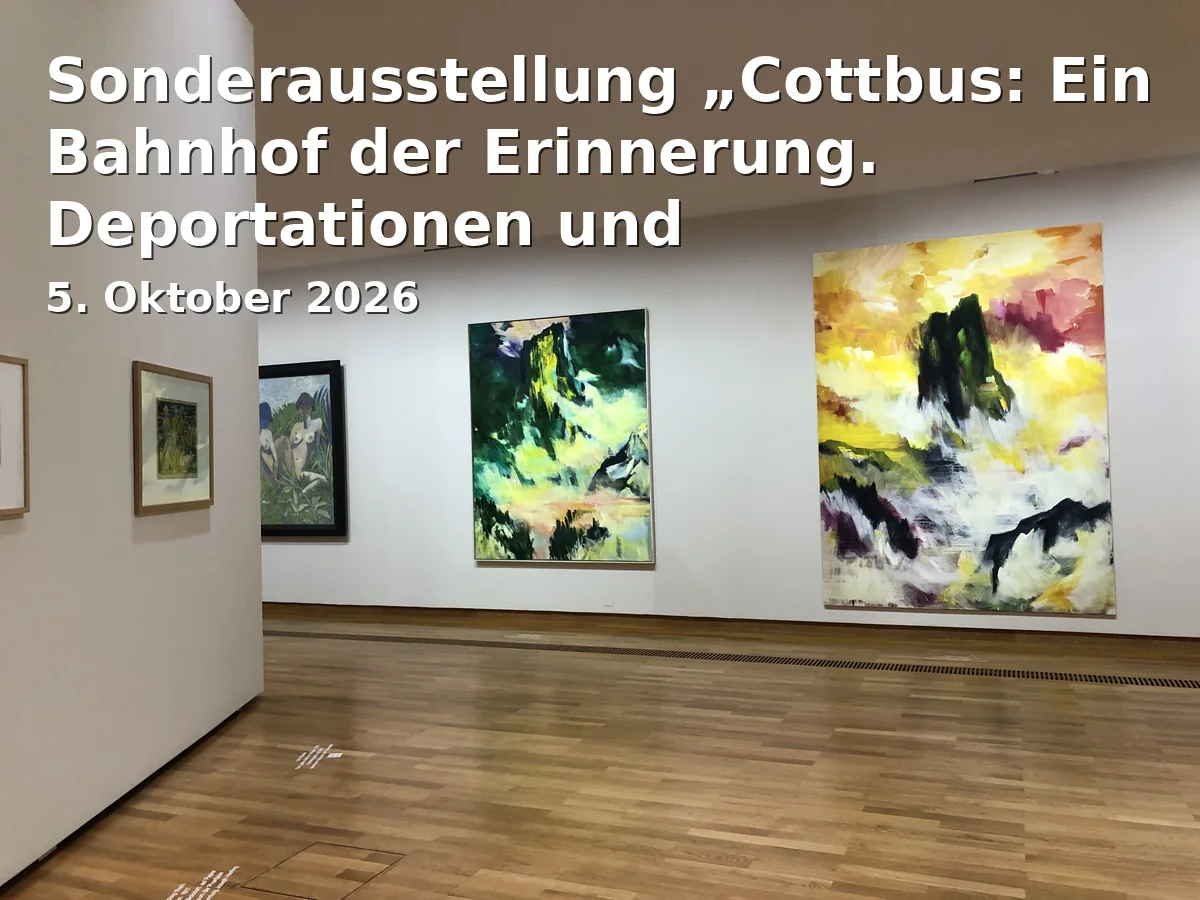
The special exhibition "Cottbus: A Train Station of Remembrance. Deportations and Forced Labor During the National Socialism" leads to a historical site whose significance goes far beyond everyday rail traffic. At the Cottbus Human Rights Center, it becomes visible how closely transportation infrastructure, state persecution, deportation, and forced labor were interconnected during the NS era.
Historical Traces Between Tracks and Memorial Site
The Cottbus train station was not a neutral transport hub during the National Socialism. In 1938, Jewish people with Polish citizenship were expelled from Cottbus and the region to Poland. During World War II, deportation trains passed through the city to ghettos in occupied Poland and to Theresienstadt. Transport from western and southern German cities as well as from occupied countries in Western Europe also passed through the Cottbus tracks.
The exhibition expands this view to include prisoner transports to and from the women's penitentiary in Cottbus. It also documents how thousands of people were brought to industrial enterprises, the Reichsbahn, municipal facilities, and farms to perform forced labor. This creates a precise historical context between logistics, disenfranchisement, captivity, and economic exploitation.
Four Themes of a Provocative Curatorial Approach
The curated presentation connects four intertwined narratives: the exclusion and disenfranchisement of the Jewish population, the deportation trains through Cottbus, the women's penitentiary as a site of political imprisonment, and the everyday life of forced labor in businesses and institutions of the city.
At the center is not a classic art exhibition with painting or sculpture. The installation and documentary presentation make the historical site itself a testimony to an era. Names, paths, places, and biographical references focus the consideration of the works on concrete life stories. The exhibition atmosphere arises from objective clarity, concentrated spatial effects, and the quiet presence of historical responsibility.
Culture of Remembrance and Cultural Education
The project combines historical research, memorial work, curation, and cultural education. It not only focuses on the crimes of the National Socialism but also on the importance of the rule of law, democracy, human rights, and social cohesion in the present.
The aesthetic experience of this exhibition lies in the connection between documentary precision and personal reflection. Visitors encounter a presentation that links local city history with European culture of remembrance and invites conscious engagement with the consequences of state violence.
Conclusion: A Unique Art Experience
The exhibition awaits its audience with an objectively precise and emotionally concentrated examination of deportations, prisoner transports, and forced labor in Cottbus. Anyone interested in NS history, culture of remembrance, city history, and human rights will experience a compelling consideration of the works at the historical site. A visit enriches the perspective on Cottbus and makes history directly tangible.
Official Channels of the Cottbus Human Rights Center e. V.:
- Instagram: no official profile found
- Facebook: no official profile found
- YouTube: no official profile found
- Website: https://www.menschenrechtszentrum-cottbus.de/