Cottbus: A Station of Remembrance at the Human Rights Center
Date and Time
Location
Price
About this Event
Mood
Venue Type
A station becomes a place of remembrance
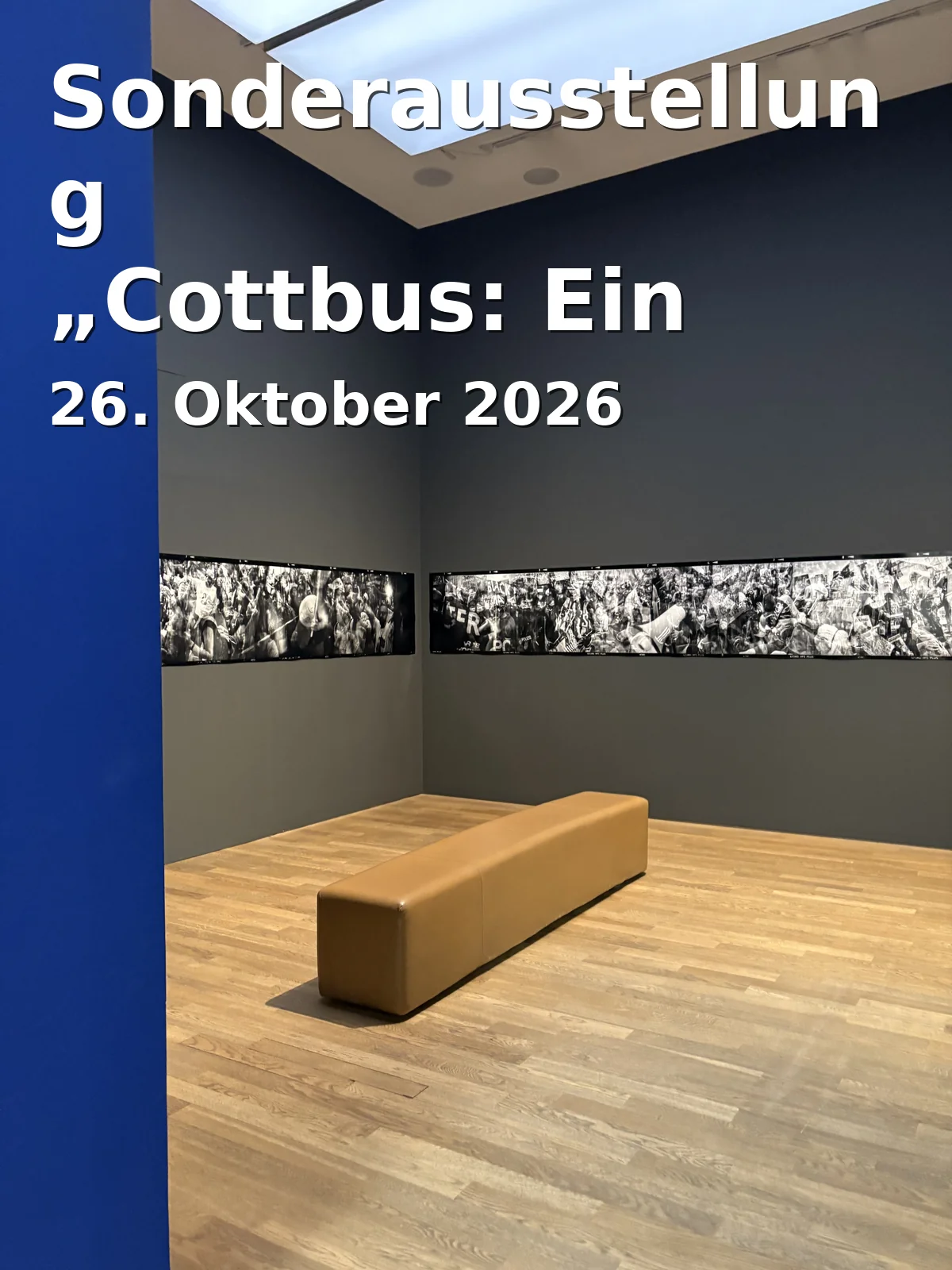
The special exhibition Cottbus: A Station of Remembrance. Deportations and Forced Labor in National Socialism makes visible how closely the Cottbus station was connected to expulsion, deportation, political detention, and forced labor during the Nazi era. At the Cottbus Human Rights Center, historical research is combined with an impressive presentation, a supporting program, and a digital media installation.
Tracks that tell stories of persecution
The Cottbus station is not presented as a neutral backdrop in the exhibition, but as a historic place of action. From here, in 1938, Jewish people with Polish citizenship were expelled from Cottbus and the region to Poland. During World War II, the Deutsche Reichsbahn transported Jews to ghettos in occupied Poland and to Theresienstadt. Moreover, deportation trains from western and southern German cities as well as from the occupied countries of Western Europe ran over the Cottbus tracks.
Four narrative strands, a history of disenfranchisement
The curation organizes the exhibition into four thematic narrative strands: the history of the Jewish community, the deportations from the women's penitentiary Cottbus, the city's function as a transit point for deportation trains, and the realities of life for forced laborers. The role of the Deutsche Reichsbahn and the reactions of the Cottbus population are also critically illuminated.
Names, paths, and fates in the digital space
A central media installation takes up the aesthetics of historical departure boards. Names, former addresses, places of deportation, and transport routes bring individual fates to the forefront. The reduced form language and the factual presence of the information create a concentrated exhibition atmosphere where contemplation of the works and historical reflection intertwine.
Remembrance as cultural education
The project was created as part of the MemoRails program – Stop! Here we remember Nazi history, carried out by the Cottbus Human Rights Center in cooperation with exhibeo e. V., the AG Stolpersteine Cottbus, and the Municipal Collections Cottbus. Students develop peer-to-peer tours. Thus, the exhibition addresses multiple generations and connects historical education with questions of democracy, the rule of law, human rights, and social cohesion.
Conclusion: A necessary artistic experience of remembrance
Visitors can expect not a distant look back, but an intense aesthetic experience at the historical site. The exhibition translates research into a vivid media presentation and leads from regional city history to European remembrance culture. Those who wish to understand how exclusion, violence, and coercion impacted concrete life paths will experience here an intense contemplation of works and cultural enrichment. A visit to the Cottbus Human Rights Center deserves special attention.