
Hugo Harrer
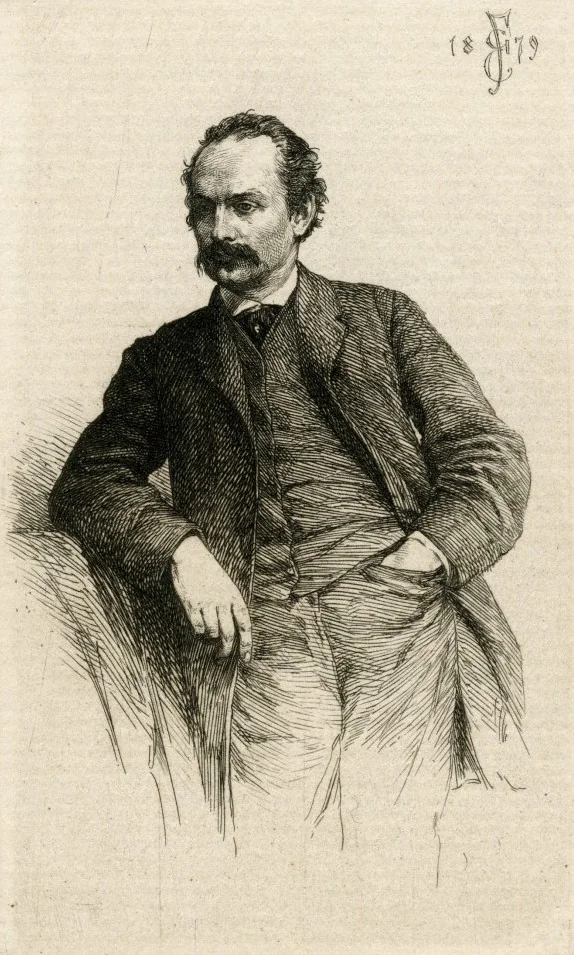
Image from Wikipedia
Image from Wikipedia
Hugo Harrer – the realistic view of Rome and the quiet grandeur of the Düsseldorf School
A painter between architecture studies, nature studies, and Italian light
Hugo Paul Harrer, born on February 6, 1836, in Eberswalde and died on December 10, 1876, in Rome, is among those today lesser-known yet historically significant artists of the 19th century, whose work precisely reflects the development of German landscape and architectural painting. As a representative of the Düsseldorf School, he combined architectural motifs with vibrant street scenes, ruinous city views, and a keen eye for light, atmosphere, and the happenings of figures. His biography is characterized by independent study, changes of location, and a consistent focus on painting that led him from the realm of architecture into the pictorial world of Italy. ([de.wikipedia.org](https://de.wikipedia.org/wiki/Hugo_Harrer?utm_source=openai))
From architecture student to self-taught painter
Harrer began an architectural education but soon turned to painting as a self-taught artist, deepening his studies in the private studios of friends. This early decision profoundly shaped his artistic path: instead of following a classic academic career, he sought knowledge through observation, nature studies, and exchanges with other artists. His first paintings were created in Nuremberg, where the city's buildings inspired him to early attempts at architectural painting, before he moved to Munich to draw inspiration from Carl Theodor von Piloty. ([de.wikipedia.org](https://de.wikipedia.org/wiki/Hugo_Harrer?utm_source=openai))
The sources paint the picture of an artist who relied not on formal institutions but on intense observation. The German Biography describes him as "a thoroughly modern realist," aiming to depict things as accurately as possible. The Stiftung Sammlung Volmer also emphasizes his self-taught development and his early focuses on Nuremberg and Munich, before Rome became his permanent home. This combination of self-study, nature observation, and city experiences makes Harrer's work art-historically interesting. ([deutsche-biographie.de](https://www.deutsche-biographie.de/sfz26126.html?language=de&utm_source=openai))
Rome as artistic home and image laboratory
For health reasons, Harrer moved to Rome in 1861, where he joined Ludwig Passini to make studies from nature. He later returned to Germany once more and studied in 1867/68 in the landscape class of Oswald Achenbach at the Düsseldorf Academy. However, Rome remained the place where his style crystallized: there he gathered references, sketches, and observations for oil paintings that he submitted to German art exhibitions. His Roman motifs depict street scenes, ruins, and coastal landscapes with that blend of precision and atmosphere that characterizes his signature style. ([search.smb.museum](https://search.smb.museum/object/obj-963556?doc_types=Bild&materials=%C3%96l-%2FBrom%C3%B6lumdruck&page=3&utm_source=openai))
The Berlin State Museums describe a work like Theater des Marcellus in Rom in a particularly striking manner, illustrating how Harrer connected the exact, realistic veduta with images of bustling urban life. Merchants, basket weavers, and passersby enliven the ancient ruins; light and shadow structure the scene, adding depth to the motif. This is precisely where the strength of his oeuvre lies: for Harrer, architecture is never mere decoration, but a bearer of history, everyday life, and spatial tension. ([search.smb.museum](https://search.smb.museum/object/obj-963556?doc_types=Bild&materials=%C3%96l-%2FBrom%C3%B6lumdruck&page=3&utm_source=openai))
The style: realistic, rich in figures, and characterized by light dramaturgy
Harrer's style is described in the sources as realistic, carefully observed, and defined by strong light-shadow contrasts. The Stiftung Sammlung Volmer highlights that his architectural images mostly depict close-up snapshots and are populated with numerous figures. This layout creates both intimacy and movement: the gaze does not linger on the façade but glides through spaces, over squares, and into narrative situations. ([stiftung-volmer.de](https://www.stiftung-volmer.de/artist/321?utm_source=openai))
Even in the German Digital Library, Harrer is documented as an artist with many objects and thematic references, indicating a considerable spread of his work. His motifs range from Italian mountain villages to Roman views and coastal and ruin scenes. The work thrives less on spectacular effects than on a quiet sovereignty in arranging perspective, figure composition, and atmospheric space. ([deutsche-digitale-bibliothek.de](https://www.deutsche-digitale-bibliothek.de/person/gnd/133638456?utm_source=openai))
Important works, collections, and museum presence
Among the documented works is Theater des Marcellus in Rom, a painting created in 1876 that was acquired by the Alte Nationalgalerie in Berlin from the Berlin Academy exhibition. The museum description makes clear that the image not only shows ancient architecture but also a vivid cityscape with market activities and regional costumes. Such works demonstrate Harrer's ability to merge historical architecture and contemporary life into a dense, credible view. ([search.smb.museum](https://search.smb.museum/object/obj-963556?doc_types=Bild&materials=%C3%96l-%2FBrom%C3%B6lumdruck&page=3&utm_source=openai))
Further traces of his work can be found in the German Digital Library, in the collections of various museums, as well as in auction and inventory catalogs. The Stiftung Sammlung Volmer refers to several thematically related works and to Harrer's specialization in architectural and landscape painting. That his work has found a place in museum contexts demonstrates his significance within the art of the 19th century, even though his name is not among the most cited of the Düsseldorf School today. ([deutsche-digitale-bibliothek.de](https://www.deutsche-digitale-bibliothek.de/person/gnd/133638456?utm_source=openai))
Historical classification within the Düsseldorf School
Harrer is classified in art historical tradition as a painter of the Düsseldorf School. This classification is important because it explains his exact observation, narrative figure composition, and the connection between landscape, architecture, and figure painting. The Düsseldorf School stood for a painterly form of realism in the 19th century that combined composition, light management, and thematic clarity. Harrer belonged to those artists who implemented this approach not theoretically, but in practical work on city and landscape images. ([de.wikipedia.org](https://de.wikipedia.org/wiki/Liste_von_Malern_der_D%C3%BCsseldorfer_Malerschule?utm_source=openai))
His work is closely associated with other painters who connected the Italian motif, the historical veduta, and everyday scenes into a dense narrative. Particularly the Roman works make clear how strongly Harrer was fascinated by the light of Southern Europe and by architecture as a shaping element. It is precisely at this intersection of topographical accuracy and painterly atmosphere that his true quality unfolds. ([search.smb.museum](https://search.smb.museum/object/obj-963556?doc_types=Bild&materials=%C3%96l-%2FBrom%C3%B6lumdruck&page=3&utm_source=openai))
Reception, collection value, and current attention
The reception of Harrer is today primarily traceable through museums, collections, and auction contexts. The German Biography, the German Digital Library, and museum object texts secure his status as an independent representative of landscape and architectural painting. Additionally, exhibitions and regional cultural historical projects are bringing Harrer back into the spotlight, particularly in Cottbus and Branitz. This shows that his work still possesses scholarly and collectible value. ([deutsche-biographie.de](https://www.deutsche-biographie.de/sfz26126.html?language=de&utm_source=openai))
It is particularly interesting that Harrer appears in some sources with differing information regarding his birthplace and date of death. Wikipedia and the German Biography point to discrepancies between Eberswalde and Hirschberg in Silesia, as well as between December 10 and December 8, 1876. Such discrepancies are not unusual in historical research and underscore the importance of reliable source work in the case of a 19th-century artist. ([de.wikipedia.org](https://de.wikipedia.org/wiki/Hugo_Harrer?utm_source=openai))
Conclusion: A quiet master of observation who saw Rome through the eyes of a realist
Hugo Harrer fascinates with his combination of craftsmanship precision, atmospheric density, and a clear preference for architecture, light, and human life in pictorial space. He was not a loudly celebrated star of his era but a concentrated, independent painter whose works capture the Roman reality of the 19th century with exceptional accuracy. Anyone interested in German art history, the Düsseldorf School, and the poetic realism of Italian city views should definitely discover Harrer. His images invite a closer look, and therein lies their lasting power. ([search.smb.museum](https://search.smb.museum/object/obj-963556?doc_types=Bild&materials=%C3%96l-%2FBrom%C3%B6lumdruck&page=3&utm_source=openai))
There are no live experiences in the classic sense with Hugo Harrer anymore, yet there is the immediate encounter with his works in museums and collections. It is precisely there that his art unfolds the strongest: as quiet, detail-rich, narrative painting with historical depth. Those who see Harrer in the original experience an artist who not only represented architecture but transformed it into vivid pictorial spaces. ([search.smb.museum](https://search.smb.museum/object/obj-963556?doc_types=Bild&materials=%C3%96l-%2FBrom%C3%B6lumdruck&page=3&utm_source=openai))
Official channels of Hugo Harrer:
- Instagram: No official profile found
- Facebook: No official profile found
- YouTube: No official profile found
- Spotify: No official profile found
- TikTok: No official profile found
Sources:
- Wikipedia – Hugo Harrer
- German Biography – Harrer, Hugo
- State Museums of Berlin – Theater des Marcellus in Rom
- German Digital Library – Hugo Paul Harrer
- Foundation Collection Volmer – Harrer, Hugo Paul
- Cottbus News – Hugo Paul Harrer: Between Capri and Rome
- Cottbus Digital – Happy Birthday Carl Blechen
- Wikipedia: Image and text source