
Hugo Harrer
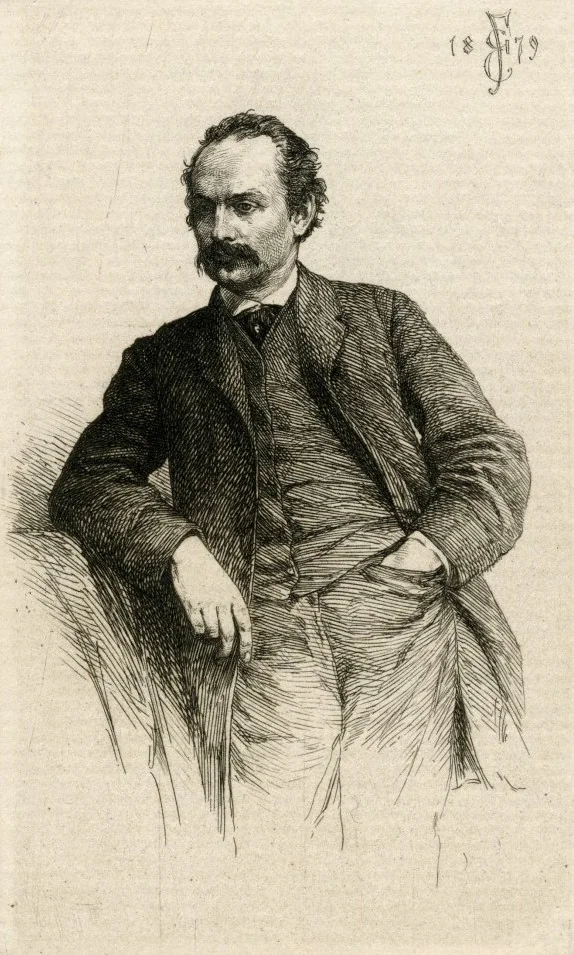
Image from Wikipedia
Image from Wikipedia
Hugo Harrer – Landscape, Architecture and the View of the Modern Realist
A German Painter Between Nature Observation, Architecture and the Düsseldorf School
Hugo Paul Harrer, born on February 6, 1836 in Eberswalde and died on December 10, 1876 in Rome, belongs to that generation of German painters who developed an independent visual language in the 19th century between academic tradition and immediate observation of nature. He is known as a landscape and architectural painter of the Düsseldorf School, meaning he was an artist whose work drew from careful drawing, atmospheric precision and realistic observation. Biographical sources portray him as a self-taught artist who early on deviated from his originally planned career as an architect and devoted himself to painting with great resolve. ([de.wikipedia.org](https://de.wikipedia.org/wiki/Hugo_Harrer?utm_source=openai))
Biographical Origins and Artistic Influence
The accounts regarding Harrer's origins are not entirely clear in all details, yet major reference works cite Eberswalde as his birthplace while pointing to differing information in older biographical sources. What remains crucial is that Harrer grew up in a century in which landscape painting in Germany experienced tremendous growth and architectural painting established itself as a respected genre. His career exemplifies an artist who found his signature style not through the art academy, but through observation, discipline and study in private studios. ([de.wikipedia.org](https://de.wikipedia.org/wiki/Hugo_Harrer?utm_source=openai))
The German Biography describes him as a painter who was "a thoroughly modern realist" and always sought to depict things exactly as he saw them. This characterization is central to understanding his oeuvre: Harrer did not pursue decorative excess but rather a sober, precise and nonetheless evocative visual conception. It is precisely in the combination of realistic representation and sensitive spatial effects that lies the quality that makes his works culturally and historically interesting to this day. ([deutsche-biographie.de](https://www.deutsche-biographie.de/sfz26126.html?utm_source=openai))
From Architectural Studies to Painting
Harrer apparently began an architectural education, but soon turned to painting as a self-taught artist. This turn explains why architecture and pictorial space are so closely intertwined in his work: His depictions of cities, buildings and interiors rely on a gaze that captures both construction and atmosphere simultaneously. The source material also emphasizes that he never worked permanently in a master studio and did not attend an art academy, making his artistic development even more remarkable. ([de.wikipedia.org](https://de.wikipedia.org/wiki/Hugo_Harrer?utm_source=openai))
Intensive nature observation and private study with friends shaped his working methods. This resulted in a painting style that cannot be classified merely as a view or purely romantic landscape, but rather as precisely observed art with architectural clarity. For Harrer, art evidently did not mean gestural self-staging but the patient condensation of perception, light, and form. ([deutsche-biographie.de](https://www.deutsche-biographie.de/sfz26126.html?utm_source=openai))
Landscape Painting with a Realistic Hand
As a landscape painter, Harrer adhered to the tradition of the Düsseldorf School, known in the 19th century for its carefully composed, atmospherically dense, and often narratively charged landscapes. In this context, precise nature observation gained particular weight, and Harrer fits this profile through his realistic attitude and attention to detail. His landscapes likely focused less on spectacular effects and more on credible atmospheres and visual order. ([de.wikipedia.org](https://de.wikipedia.org/wiki/Hugo_Harrer?utm_source=openai))
The connection between landscape and architecture also points to an artistic double competence: Harrer could not think of nature and built space separately. This tension made his painting attractive to a 19th century audience that sought not only views but also cultural orientation in images. The artist thus navigated a field where accuracy, composition, and spatial sense were equally important. ([deutsche-biographie.de](https://www.deutsche-biographie.de/sfz26126.html?utm_source=openai))
Rome, Italy and the Later Phase of Life
Harrer died in 1876 in Rome, a city that was a central attraction for many European artists of the 19th century. His grave in the Protestant Cemetery in Rome highlights the international artistic landscape of the time, where German painters, writers, and intellectuals converged in the Italian capital. That his life ended in Rome underscores the transnational dimension of his biography and connects him with the classic image of Italy held by many generations of German artists. ([de.wikipedia.org](https://de.wikipedia.org/wiki/Hugo_Harrer?utm_source=openai))
The Rome phase symbolizes a generation of artists who found inspiration, material, and motifs in Southern Europe. Although the documented sources on Harrer's work are not extensive, his place of death already indicates that he was part of a cultural network that extended beyond German art centers. This lends his biography a quiet yet clear European contour. ([de.wikipedia.org](https://de.wikipedia.org/wiki/Hugo_Harrer?utm_source=openai))
Works, Motifs and Art Historical Classification
Harrer is primarily remembered as a landscape and architectural painter, representing two genres that were closely linked to the rise of bourgeois artistic taste in the 19th century. Architectural painting demands a firm command of perspective, proportion and attention to detail; landscape painting, in turn, thrives on light management, spatial depth, and atmospheric balance. Harrer's special position lies in the connection of both areas, allowing for a visual world that is both structured and poetic. ([de.wikipedia.org](https://de.wikipedia.org/wiki/Hugo_Harrer?utm_source=openai))
The ascribed label of realism is crucial for his classification. Harrer seemingly did not seek the pathos of historical painting but rather the credible presence of the visible. This attitude makes him an interesting representative of that painting which mediated between idealizing tradition and modern perception in the 19th century. ([deutsche-biographie.de](https://www.deutsche-biographie.de/sfz26126.html?utm_source=openai))
Reception, Market Presence and Contemporary Perception
While biographical standard works treat Harrer rather briefly, auction and collection data show that works attributed to his name are present in the art market. AskART documents attributions and individual auction events, including titles like “The Forum of Augustus, Rome” and “Lady as Flora,” indicating a continued if specialized demand. Such indications do not replace a thorough work monograph but confirm that Harrer's name continues to appear in art historical and market-related contexts to this day. ([askart.com](https://www.askart.com/auction/Cheffins/The_Fine_Art_Sale/98062?utm_source=openai))
For contemporary reception, the art historical context is particularly relevant: Harrer does not represent spectacular avant-garde art but rather solid, finely observed painting with academic closeness and realistic discipline. This is precisely where his value lies for collectors, scholars, and enthusiasts of the Düsseldorf School. Those who view his work encounter an art that focuses on permanence, accuracy, and visual order. ([deutsche-biographie.de](https://www.deutsche-biographie.de/sfz26126.html?utm_source=openai))
Current Projects and Publications
As a historical painter, Hugo Harrer is naturally not the subject of current album releases, tours, or new artistic projects. The researched sources provide no indications of a current activity profile, only historical and art historical information. Hence, there are no recent releases, no re-releases, and no ongoing projects in the contemporary sense. ([de.wikipedia.org](https://de.wikipedia.org/wiki/Hugo_Harrer?utm_source=openai))
Social Media and Official Channels
No clearly official social media channels for Hugo Harrer have been identified. As he is an artist from the 19th century and web searches have yielded no verified official profiles, there is also no section “Voices of Fans.” ([de.wikipedia.org](https://de.wikipedia.org/wiki/Hugo_Harrer?utm_source=openai))
Conclusion: A Quiet Master of Observation
Hugo Harrer is intriguing because his biography encapsulates the essence of a serious artist’s life in the 19th century: self-study rather than academy compulsion, precise observation of nature instead of mere effect painting, and the combination of landscape, architecture, and realistic formality. His restraint makes him interesting, as it points to an art that does not make a loud appearance but convinces through care, discipline, and cultural depth. Those who wish to understand the Düsseldorf School should also pay attention to names like Harrer. ([deutsche-biographie.de](https://www.deutsche-biographie.de/sfz26126.html?utm_source=openai))
A visit to his works in collections, museums, or auction contexts is worthwhile for anyone who appreciates the fine nuances of German painting between Romanticism, Realism, and bourgeois visual culture. Hugo Harrer is not an artist of grand poses but one of precise sight and quiet authority. That is precisely what makes his painting worth seeing to this day. ([askart.com](https://www.askart.com/auction/Cheffins/The_Fine_Art_Sale/98062?utm_source=openai))
Official Channels of Hugo Harrer:
- Instagram: no official profile found
- Facebook: no official profile found
- YouTube: no official profile found
- Spotify: no official profile found
- TikTok: no official profile found