
Hugo Harrer
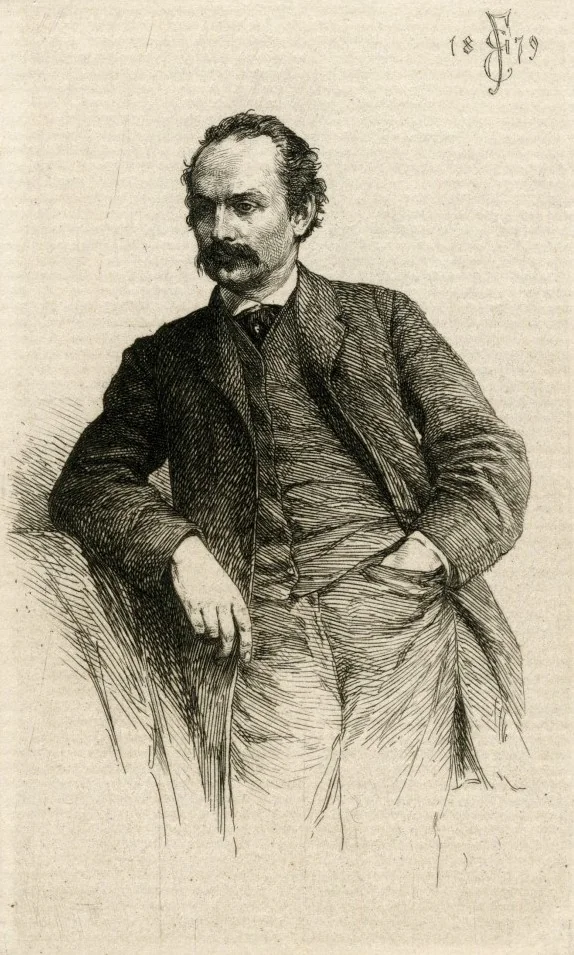
Image from Wikipedia
Image from Wikipedia
Hugo Harrer: The Realistic Landscape and Architectural Painter of the Düsseldorf School
An Artist Between Architecture, Nature Studies, and Italian Pictorial Poetry
Hugo Paul Harrer, born on February 6, 1836, in Eberswalde and died on December 10, 1876, in Rome, belongs to the German landscape and architectural painters of the Düsseldorf School. His art represents a precise, observant view of spaces, ruins, street scenes, and coastal landscapes, which he developed with the perspective of a realist. Although Harrer began an architectural education, he quickly and consistently turned to painting without ever attending an art academy. ([de.wikipedia.org](https://de.wikipedia.org/wiki/Hugo_Harrer))
Early Influences: From Architecture to Painting
The artistic biography of Hugo Harrer is closely linked to a change in perspective: the aspiring architect became a painter who does not construct built spaces but interprets them atmospherically. His path initially led him through private studies and working in friends' studios, thus through a self-taught education based on precise studies of nature. This form of artistic development significantly shaped his style, as Harrer sought not the academic formula but immediate observation. ([de.wikipedia.org](https://de.wikipedia.org/wiki/Hugo_Harrer))
His first paintings were created in Nuremberg, where the picturesque architecture of the city inspired him to early attempts at architectural painting. He then moved to Munich to draw inspiration from the realistic painting style of Carl Theodor von Piloty. Even these early stages demonstrate how Harrer sharpened his gaze: architecture became not only a subject for him but also a trigger for a compositional mindset that brought form, space, and light together. ([de.wikipedia.org](https://de.wikipedia.org/wiki/Hugo_Harrer))
Rome as a Turning Point: Nature Studies and Realistic Accuracy
A chest ailment took Harrer to Rome in 1861 or 1862, where his career gained a new quality. In the Italian capital, he joined Ludwig Passini and worked from nature, which gave his visual language immediate authenticity. Contemporary perception particularly highlighted this fidelity to visible reality, which endowed his studies with an almost documentary precision. ([de.wikipedia.org](https://de.wikipedia.org/wiki/Hugo_Harrer))
For Harrer, Rome meant not only a change of location but also artistic concentration. He collected studies and sketches from which he later developed oil paintings that were regularly exhibited at German art exhibitions. Particularly noteworthy is his interest in street scenes, ruins, and Italian coastal landscapes—motifs where architecture, history, and atmosphere closely intertwine. ([de.wikipedia.org](https://de.wikipedia.org/wiki/Hugo_Harrer))
Düsseldorf and Proximity to the School of Seeing
During 1867/1868, Harrer stayed in Düsseldorf and studied at the Academy of Arts in Oswald Achenbach's landscape class. From 1868 to 1872, he was a member of the Düsseldorf Artists' Association Malkasten, which evidenced his integration into a significant network of 19th-century German art. This phase marks the connection to a school that particularly cultivated seeing, atmospheric light, and the painterly organization of landscapes. ([de.wikipedia.org](https://de.wikipedia.org/wiki/Hugo_Harrer))
It was particularly in the context of Düsseldorf painting that Harrer's work gained definition, as he did not get lost in monumentalized historical paintings but placed the character of the location at the center. His pictorial motifs often appear like carefully composed observations of in-between spaces: a passage, a ruin, a street corner, a coastal section in the evening light. This lends his oeuvre a quiet yet lasting presence within the history of German realism. ([de.wikipedia.org](https://de.wikipedia.org/wiki/Hugo_Harrer))
Works and Motifs: Ruins, Coasts, Street Scenes
Among his surviving works are Old Hanse from 1868, View of the Amalfi Coast at Dusk from 1871, as well as At the Theater of Marcellus in Rome and The Theater of Marcellus in Rome from 1876. These titles clearly show what captured Harrer's artistic interest: places with historical depth, built heritage, coastal light, and the poetic tension between past and present. ([de.wikipedia.org](https://de.wikipedia.org/wiki/Hugo_Harrer))
German Biography emphasizes that Harrer primarily preferred painterly angles in decaying ruins. This is where the fascination of his work lies: not in grand pathos, but in quiet observation; not in a heroic gesture, but in the careful representation of the visible world. Harrer worked with a modern realistic attitude, capturing every object as he saw it, assigning great importance to the painterly execution. ([deutsche-biographie.de](https://www.deutsche-biographie.de/sfz26126.html))
Art Historical Context: Between Realism and the Düsseldorf School
Harrer is an artist of in-between spaces in art history. He belongs to the Düsseldorf School but remains independent because he thought from architecture and developed his motifs with the perspective of a precise observer. The combination of nature studies, architectural sense, and realistic approach makes his work an example of the 19th-century movement where objectivity and poetry are not mutually exclusive. ([de.wikipedia.org](https://de.wikipedia.org/wiki/Hugo_Harrer))
The source material also indicates that his art was already present at German art exhibitions during his lifetime, reaching an audience receptive to atmospheric landscape and architectural painting. His works thrived on accuracy, but also on a finely balanced pictorial mood. In this connection lies Harrer's enduring significance: he made spaces readable without stripping them of their aura. ([de.wikipedia.org](https://de.wikipedia.org/wiki/Hugo_Harrer))
Later Years, Death, and Impact
After returning to Rome, Harrer continued his work with great consistency and remained anchored there until his death in 1876. He was buried in the Protestant Cemetery in Rome, a place that connects many German-speaking artists of the 19th century with the Italian capital. The fact that both Wikipedia and Deutsche Biographie point out differing information on his birthplace and date of death from older sources indicates how carefully art historical research must deal with recorded data. ([de.wikipedia.org](https://de.wikipedia.org/wiki/Hugo_Harrer))
Harrer's impact lies less in broad popular culture and more in his art historical quality. He represents a sober yet sensitive realism that does not merely depict architecture but transforms it into poetic image spaces. For lovers of 19th-century German painting, he remains fascinating precisely because he pursued the connection between built form and landscape mood with great consistency. ([de.wikipedia.org](https://de.wikipedia.org/wiki/Hugo_Harrer))
Conclusion: Why Hugo Harrer Still Inspires Today
Hugo Harrer captivates through the clarity of his gaze, the discipline of his compositions, and the quiet intensity of his motifs. His career tells of self-study, changes of location, Italian experiences, and a consistently realistic painting style that intertwines architecture, landscape, and atmosphere. Anyone interested in the Düsseldorf School, European realism, and the art of seeing will find in Harrer an artist with a distinct profile and lasting elegance. ([de.wikipedia.org](https://de.wikipedia.org/wiki/Hugo_Harrer))
A visit to his works is particularly worthwhile for those who appreciate subtle spatial effects, historical image locations, and the art of precise observation. Hugo Harrer shows how much tension can lie in a quiet street scene, a ruin lit by sunlight, or a coastal view at dusk. This is his enduring attraction: unobtrusive, precise, and art historically noteworthy. ([de.wikipedia.org](https://de.wikipedia.org/wiki/Hugo_Harrer))
Official Channels of Hugo Harrer:
- Instagram: No official profile found
- Facebook: No official profile found
- YouTube: No official profile found
- Spotify: No official profile found
- TikTok: No official profile found