
Hugo Harrer
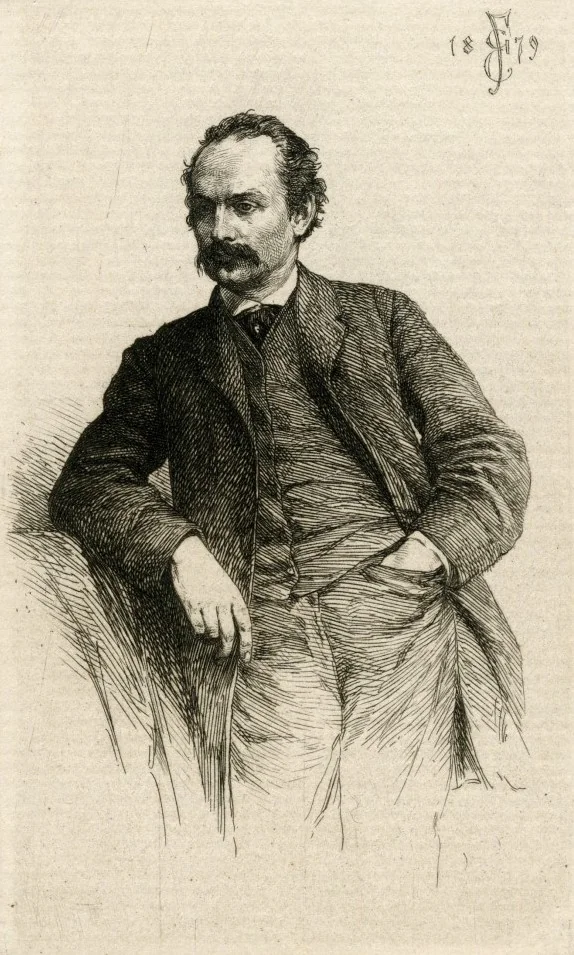
Image from Wikipedia
Image from Wikipedia
Hugo Harrer – the precise gaze on architecture, landscape, and the realistic tone of the Düsseldorf School
A German painter between studies of nature, urban beauty, and realistic discipline
Hugo Paul Harrer, born on February 6, 1836 in Eberswalde and died on December 10, 1876 in Rome, belongs to those 19th-century artists whose work thrives on careful observation, technical skill, and an unwavering eye for atmosphere. As a German landscape and architectural painter of the Düsseldorf School, he combined studies in architecture, nature, and painterly precision to create a distinct profile. His biography tells the tale of an artist who early on liberated himself from the planned career of an architect and made painting the central focus of his artistic development. ([de.wikipedia.org](https://de.wikipedia.org/wiki/Hugo_Harrer))
From architectural training to self-taught painter
Harrer began training in architecture but soon turned to painting as a self-taught artist, immersing himself in private studies in the studios of friends. This decision marks the true beginning of his career: it was not academic convention, but the immediate perception of reality that defined his style. His earliest works were created in Nuremberg, where the picturesque architecture of the city inspired him to early attempts at architectural painting. Here, an artistic interest formed that documented building forms not just as subjects but captured them as visual effects. ([de.wikipedia.org](https://de.wikipedia.org/wiki/Hugo_Harrer))
The journey to Munich placed Harrer in an environment influenced by the then-new realistic painting style of Carl Theodor von Piloty. This encounter with a pictorial language oriented more toward reality and effect refined his eye for composition, light management, and the relationship between architecture and figures. It is precisely in this phase that Harrer's metaphorical music career was never realized, but he certainly established a visual career that consisted of conscious selection and consistent development: he worked not according to academic routine but through observation, experience, and a strong sense of visual structure. ([de.wikipedia.org](https://de.wikipedia.org/wiki/Hugo_Harrer))
Rome as an artistic resonance space
In 1861 or October 1862, Harrer traveled to Rome due to a chest ailment, where he joined Ludwig Passini and painted studies from nature. This Roman phase became a productive center for his artistic development. The works created there garnered attention for their great truthfulness and fidelity to the observation of the seen. Rome provided Harrer not only with subjects but also a dense web of light, stone, ruins, and street views that lent depth and tension to his architectural painting. ([de.wikipedia.org](https://de.wikipedia.org/wiki/Hugo_Harrer))
The Roman motifs are central to Harrer's work because they showcase his ability to translate historical spaces into vibrant picture spaces. He mostly painted architectural images with figures, alongside smaller genre scenes, placing special emphasis on the manner of pictorial representation. This care made him a detail-oriented artist, without his works appearing petty. Instead, a quiet authority of observation arises in Harrer's work, balancing architecture, landscape, and human traces. ([deutsche-biographie.de](https://www.deutsche-biographie.de/sfz26126.html))
Düsseldorf, Malkasten, and the positioning within the Düsseldorf School
In 1867/1868, Harrer spent time in Düsseldorf and studied at the Art Academy in the landscape class of Oswald Achenbach. From 1868 to 1872, he was a member of the Düsseldorf artist association Malkasten. These stages clearly anchor him within the Düsseldorf School, which was one of the defining chapters of German art history in the 19th century due to its international influence. Harrer used Düsseldorf not as a break from his Roman experiences but rather as an extension of his repertoire, integrating his nature studies and architectural observations into an academically reflected context. ([de.wikipedia.org](https://de.wikipedia.org/wiki/Hugo_Harrer))
His affiliation with the Düsseldorf School also explains the character of his works: atmospheric, accurately observed, oriented toward reality yet composed. According to contemporary biographies, Harrer was "thoroughly a modern realist" and endeavored to depict objects as he saw them. This attitude connects him to a painting style that focuses not on effects but on credibility, perspective, and structure. It is precisely this aspect that gives his work cultural-historical significance: he represents an art form that regards the view of city, ruin, and coastal landscape as a matter of perception. ([deutsche-biographie.de](https://www.deutsche-biographie.de/sfz26126.html))
Important works and thematic focuses
Among the preserved works are Alte Hanse (1868), View of the Coast of Amalfi at Sunset (1871), At the Theater of Marcellus in Rome (1876), Theater of Marcellus in Rome (1876), and A Jewish Street Vendor in a Street in Siena. This selection illustrates Harrer's thematic range between northern German memory, Italian architecture, ancient ruins, and everyday street scenes. His pictorial world thrives on local references, precise moods, and an interest in marginal areas, corners, and fragile structures. ([de.wikipedia.org](https://de.wikipedia.org/wiki/Hugo_Harrer))
Remarkably, Harrer had a preference for picturesque angles in decaying ruins. Here, his sensitivity to poetic image architecture is evident: decay appears not as a loss but as an aesthetic form. At the same time, his painting remains sober enough not to slip into sentimentality. The balance between documentary accuracy and atmospheric composition makes his works interesting for collectors, museums, and art historical research even today. ([deutsche-biographie.de](https://www.deutsche-biographie.de/sfz26126.html))
Style, technique, and artistic development
Harrer's style is characterized by observation, fidelity to nature, and careful composition. His education outside a continuous academic path evidently granted him a particular independence, which manifested in the choice of his motifs and their execution. Rather than seeking pathetical staging, he aimed for the credible impression of a place, the quiet dramaturgy of light, stone, street, and coastline. This concentration on the visible renders his painting a precise record of the seen. ([deutsche-biographie.de](https://www.deutsche-biographie.de/sfz26126.html))
Technically, this attitude is reflected in the combination of studies, sketches, and refined oil paintings. Upon his return to Rome, Harrer amassed a large stock of studies and sketches to develop works for German art exhibitions. This working process points to a methodical discipline that is typical of the 19th century but is particularly pronounced in Harrer. He did not collect visual impressions casually but as building blocks for a long-term constructed oeuvre. ([de.wikipedia.org](https://de.wikipedia.org/wiki/Hugo_Harrer))
Cultural influence and art-historical relevance
Hugo Harrer is not a name associated with spectacular art revolutions. Rather, his value lies in the reliability of a carefully developed realism that expands the Düsseldorf School with a strongly localized, detail-oriented, and landscape-sensitive voice. His images convey a vision of European cities and landscapes that is supported by respect for form, attention to atmosphere, and a fine sense for historically grown spaces. Thus, Harrer becomes a chronicler of visibility, not a mouthpiece for effect. ([deutsche-biographie.de](https://www.deutsche-biographie.de/sfz26126.html))
The differing records of his life dates in literature also indicate the distance that exists between Harrer and the present day. Wikipedia cites Eberswalde as his birthplace and December 10, 1876, as his date of death, while the biography in the General German Biography lists Hirschberg in Silesia and December 8, 1876, instead. These discrepancies do not alter his historical classification, but they highlight how important critical source reading remains for a serious artist description. ([de.wikipedia.org](https://de.wikipedia.org/wiki/Hugo_Harrer))
Conclusion: An artist of quiet precision
Hugo Harrer captivates through his quiet consistency: a painter who not only depicted architecture but understood it as an experiential space, and treated landscapes with the same care as ancient ruins or urban scenes. His artistic development leads from Nuremberg through Munich and Düsseldorf to Rome, showcasing a career sustained by observation, travel, and tireless study. Anyone wishing to understand the Düsseldorf School, German realism, and architectural painting of the 19th century will find in Harrer an artist of lasting relevance. A visit to his works is worthwhile because they combine the beauty of the precisely observed place with genuine atmospheric depth. ([de.wikipedia.org](https://de.wikipedia.org/wiki/Hugo_Harrer))
Official channels of Hugo Harrer:
- Instagram: No official profile found
- Facebook: No official profile found
- YouTube: No official profile found
- Spotify: No official profile found
- TikTok: No official profile found