
Hugo Harrer
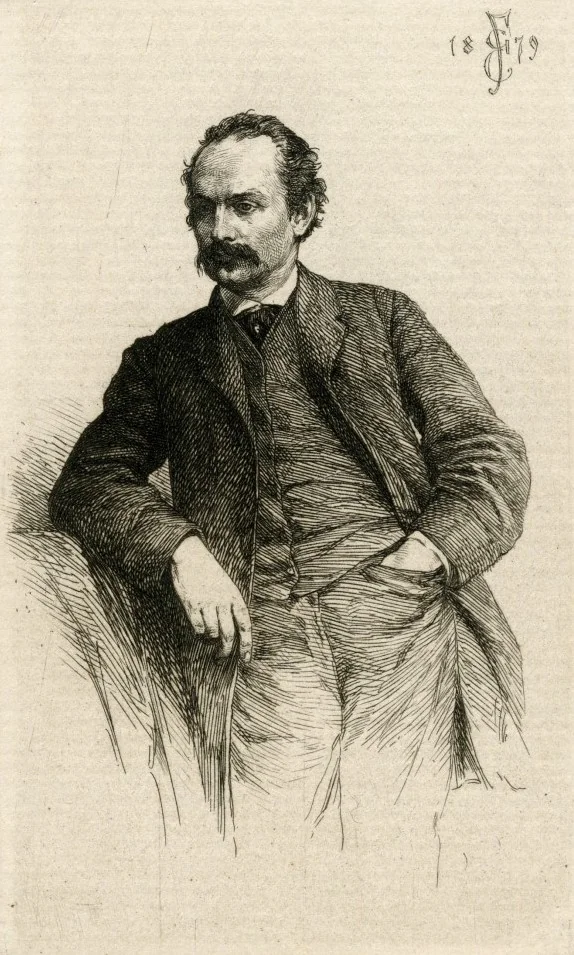
Image from Wikipedia
Image from Wikipedia
Hugo Harrer – the Quiet Realist of the Düsseldorf School between Architecture, Rome, and Landscape
An Artist's Life between Observation, Architecture, and Painterly Precision
Hugo Paul Harrer (February 6, 1836, in Eberswalde; December 10, 1876, in Rome) was a German landscape and architectural painter associated with the Düsseldorf School. He developed a body of work characterized by careful observation of nature, urban themes, and Italian impressions. Even in his early career, he displayed remarkable independence: Harrer began an architectural education but quickly turned to painting, primarily shaping himself as a self-taught artist. He exemplifies those artistic personalities of the 19th century who formed themselves not just through academic routines but through intense observation, study, and practice. ([de.wikipedia.org](https://de.wikipedia.org/wiki/Hugo_Harrer?utm_source=openai))
The biographical core of his work lies in the connection between architecture and landscape. According to the German Biography and Wikipedia, his first works were created in Nuremberg, where the picturesque architecture of the city inspired him to early attempts at architectural painting. Later, he moved to Munich to draw inspiration from Carl Theodor von Piloty before relocating to Rome for health reasons. There, he joined Ludwig Passini, worked from nature, and found the imagery that would significantly shape his career. ([de.wikipedia.org](https://de.wikipedia.org/wiki/Hugo_Harrer?utm_source=openai))
From Education to Self-Study: The Path to Becoming a Painter
Harrer represents a case of artistic self-formation. According to available sources, he did not attend an art academy as a regular student but educated himself through independent study, careful observation of nature, and exchanges in the studios of friends. This form of artistic development lends his work a unique character: no demonstrative virtuosity for its own sake, but a controlled, objective, and atmospherically rich painting style. The German Biography expressly describes him as a “modern realist,” aiming to represent objects as accurately as possible. ([deutsche-biographie.de](https://www.deutsche-biographie.de/sfz26126.html?utm_source=openai))
It is precisely this attitude that makes Harrer interesting for art history. His working method combines discipline and sensitivity: careful observation serves as the foundation, and the image emerges from patient analysis, not from effect. In the language of contemporary art criticism, it could be said that Harrer mediates between documentary accuracy and poetic atmosphere. His paintings gain credibility without losing their painterly impact. ([deutsche-biographie.de](https://www.deutsche-biographie.de/sfz26126.html?utm_source=openai))
Rome, Düsseldorf, and the School of Seeing
A defining chapter of his career took place in Rome. Due to a chest ailment, Harrer went to the Eternal City in 1861 or October 1862 and joined Ludwig Passini there. The city became not only a place of residence but an artistic laboratory for him: he painted studies from nature, collected sketches, and built up a large repertoire of motifs, from which later oil paintings were created. The Roman topography, with its ruins, streets, and coastal landscapes, thus became the central motif space of his oeuvre. ([de.wikipedia.org](https://de.wikipedia.org/wiki/Hugo_Harrer?utm_source=openai))
Between 1867 and 1868, Harrer stayed in Düsseldorf and studied in the landscape painting class of Oswald Achenbach at the art academy. Additionally, from 1868 to 1872, he was a member of the Düsseldorf artists' association Malkasten. This period is particularly important for his classification, as it firmly anchors him within the Düsseldorf School, whose painting is heavily characterized by atmospheric landscapes, precise drawing, and a finely tuned relationship between observation of nature and composition. Harrer consistently transferred this attitude to his architectural and landscape motifs. ([de.wikipedia.org](https://de.wikipedia.org/wiki/Hugo_Harrer?utm_source=openai))
Work and Motif World: Streets, Ruins, and Italian Coasts
The preserved works clearly demonstrate how Harrer sharpened his gaze. Among the mentioned works are Alte Hanse (1868), View of the Amalfi Coast at Sunset (1871), At the Theater of Marcellus in Rome (1876), Theater of Marcellus in Rome (1876), and A Jewish Street Vendor in a Street in Siena. These titles reference an artist who understood urban situations, historical architecture, and Mediterranean lighting not merely as backdrops but as condensed pictorial spaces with narrative potential. ([de.wikipedia.org](https://de.wikipedia.org/wiki/Hugo_Harrer?utm_source=openai))
Harrer seems particularly strong in scenes where architecture does not appear static but is infused with everyday life, movement, and light. Street scenes and ruins connect historical depth with contemporary observation. This is precisely where the quality of his painting lies: he transforms places into atmospheres without losing the substance of what is seen. The result is a visual language that is convincing both art historically and atmospherically. ([de.wikipedia.org](https://de.wikipedia.org/wiki/Hugo_Harrer?utm_source=openai))
Stylistic Signature and Cultural Classification
Harrer's style can be described as a realistic yet sensitive view of architecture and landscape. Sources emphasize his accurate representation of nature and his modern realism. In the tradition of the Düsseldorf painting school, this means that light, space, and motif are not dissolved into romantic idealization but are arranged with control. Harrer's conception of imagery thus appears both sober and poetic, a tension that continues to make his works readable today. ([deutsche-biographie.de](https://www.deutsche-biographie.de/sfz26126.html?utm_source=openai))
Culturally, Harrer is part of that generation of German painters who experienced Italy as a projection space for art, education, and longing. Rome, Siena, and the coastal landscapes provide not only decorative motifs in his work but also form a visual grammar of the 19th century: antiquity, the Middle Ages, the present, and everyday life intertwine in a single image. Thus, Harrer's oeuvre possesses a documentary value that transcends mere beauty. ([de.wikipedia.org](https://de.wikipedia.org/wiki/Hugo_Harrer?utm_source=openai))
Aftermath, Reception, and Art Historical Presence
Although Hugo Harrer is not a major name in the general art market, he remains of art historical interest because his work stands at the intersection of architectural painting, landscape, and realistic city views. The German Digital Library, artnet, and MutualArt list him as an artist with preserved works and auction results, which demonstrates his ongoing presence in the art historical and collecting context. His paintings are thus not only archival pieces but part of a still visible reception history. ([deutsche-digitale-bibliothek.de](https://www.deutsche-digitale-bibliothek.de/person/gnd/133638456?utm_source=openai))
The scholarly classification by the German Biography and Wikipedia also shows how closely Harrer's biography is linked to the centers of German art in the 19th century: Nuremberg, Munich, Rome, and Düsseldorf. These places do not mark a random travel route but an artistic developmental logic. Harrer moved where style, training, and motif world intersected in his time. ([deutsche-biographie.de](https://www.deutsche-biographie.de/sfz26126.html?utm_source=openai))
Current Projects, Discography, and Media Presence
As Hugo Harrer was a painter and not a musician, there are no albums, singles, tours, or discography in the musical sense associated with him. Similarly, no current projects, publications, or social media channels can be verified as official artist accounts. The available sources identify him solely as a visual artist; from this, it follows that a music-related project or release situation does not exist. ([deutsche-biographie.de](https://www.deutsche-biographie.de/sfz26126.html?utm_source=openai))
Social media research also yielded no clearly official profiles on Instagram, Facebook, YouTube, Spotify, or TikTok. While this is expected for a historical artist from the 19th century, it is crucial for this site: no verified channels can be identified as the official presence of the artist. Therefore, a section with "Voices of the Fans" is also omitted. ([de.wikipedia.org](https://de.wikipedia.org/wiki/Hugo_Harrer?utm_source=openai))
Conclusion: Why Hugo Harrer Remains Fascinating
Hugo Harrer fascinates as an independent realist with a keen sensitivity for architecture, urban landscapes, and nature. His path from aspiring architect to self-taught painter exemplifies an artistic development rooted in observation, persistence, and formal clarity. Anyone interested in the Düsseldorf School, the Italian pictorial spaces of the 19th century, and the art of precise seeing will find in Harrer a quiet yet substantial discovery. ([deutsche-biographie.de](https://www.deutsche-biographie.de/sfz26126.html?utm_source=openai))
His works invite closer examination: of light, stone, street, coast, and figure. This is where his enduring strength lies. Hugo Harrer may not be a loud name in art history, but he is an artist with character, presence, and historical depth. Meeting his works in a museum, catalog, or collection reveals a painter who does not glorify the world but makes it visible with attention and precision. ([de.wikipedia.org](https://de.wikipedia.org/wiki/Hugo_Harrer?utm_source=openai))
Official Channels of Hugo Harrer:
- Instagram: no official profile found
- Facebook: no official profile found
- YouTube: no official profile found
- Spotify: no official profile found
- TikTok: no official profile found