
Hugo Harrer
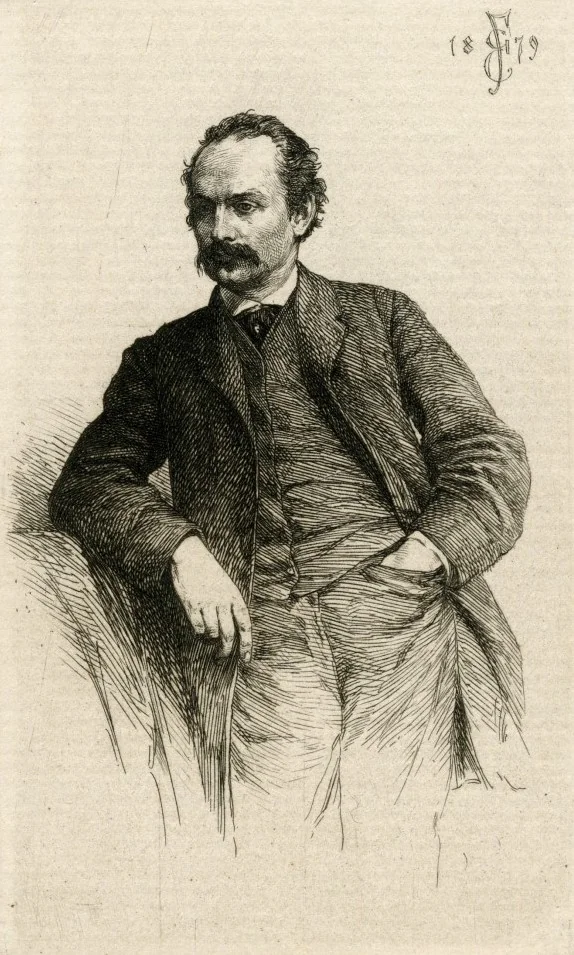
Image from Wikipedia
Image from Wikipedia
Hugo Harrer: The Poetic Realist of the Düsseldorf School between Architecture, Ruin, and Italian Light
A German Landscape and Architectural Painter with a Keen Eye for Atmosphere
Hugo Paul Harrer, born on February 6, 1836, in Eberswalde and died on December 10, 1876, in Rome, is one of those 19th-century artists whose work unfolds a particular tension between the observation of nature, architectural detail, and poetic mood. He is described as a German landscape and architectural painter of the Düsseldorf School and developed into a precise observer of urban spaces, ruins, and Italian landscapes without formal academic training. His artistic career exemplifies a self-taught painter who diligently and keenly carved out his own place in art history. ([de.wikipedia.org](https://de.wikipedia.org/wiki/Hugo_Harrer))
Biographical Beginnings: From Aspiring Architect to Self-Taught Artist
Harrer began an architectural education but soon turned to painting and continued to develop as a self-taught artist. The Deutsche Biographie emphasizes that he neither attended an art academy nor worked permanently in a master's studio; instead, his path was shaped by self-study, careful observation of nature, and exchanges with fellow artists. This independence is not a minor aspect but the core of his artistic personality: Harrer worked with discipline, a unique perspective, and a pronounced sense of fidelity to reality. ([deutsche-biographie.de](https://www.deutsche-biographie.de/sfz26126.html))
His first paintings were created in Nuremberg, where the picturesque architecture of the city greatly inspired him. Even here, a motif emerges that runs throughout his entire career: the connection between architecture, spatial effect, and atmospheric density. It was not the monumental in the sense of grand historical painting that was central, but the quiet, precise, and often melancholic perception of places. It is precisely within this attitude that the uniqueness of his oeuvre lies. ([deutsche-biographie.de](https://www.deutsche-biographie.de/sfz26126.html))
Munich, Düsseldorf, Rome: Stations of a Consistent Artistic Development
After Nuremberg, Harrer moved to Munich, where he was captivated by the then-modern and groundbreaking realistic painting style of Carl Theodor von Piloty. This encounter with a new realism sharpened his eye for composition, materiality, and scenic credibility. Later, he studied at the Düsseldorf Academy of Art in the landscape class of Oswald Achenbach and was a member of the Düsseldorf Artists' Association Malkasten from 1868 to 1872. This placed him within an environment that significantly shaped German landscape painting in the 19th century. ([deutsche-biographie.de](https://www.deutsche-biographie.de/sfz26126.html))
In 1862, Harrer traveled to Rome due to a chest ailment. There, his nature studies attracted attention for their great truthfulness and fidelity. Rome became for him not only a place of residence but a productive workshop in the open air: He joined Ludwig Passini, worked with great diligence, and developed a visual language that combined Italian city views, street scenes, ruins, and coastal landscapes. He later returned to Rome, collected studies and sketches, and regularly sent larger paintings to German art exhibitions. ([deutsche-biographie.de](https://www.deutsche-biographie.de/sfz26126.html))
Style and Signature: Realism with a Sense of Light, Architecture, and Ephemerality
In the biography, Harrer is described as “thoroughly modern realist” who wanted to depict objects as he saw them. This attitude shapes his visual language down to the finest details: The painterly weight lies not on pathos but on accuracy, observation, and the balance between architectural order and atmospheric expansiveness. His works convey a quiet, almost contemplative realism that does not smooth out the visible world but takes its texture seriously. ([deutsche-biographie.de](https://www.deutsche-biographie.de/sfz26126.html))
Harrer preferred to choose motives from crumbling ruins and picturesque corners, that is, places where history becomes visible in the image. This preference connects his architectural painting with a poetic reflection on time and transience. In the Italian views and street images mentioned in the Wikipedia selection, everyday life and memory, city and landscape, tranquility and movement intertwine to create a distinct tone. It is precisely therein that his cultural proximity to the major realistic currents of the 19th century lies. ([deutsche-biographie.de](https://www.deutsche-biographie.de/sfz26126.html))
Works and Bodies of Work: Italian Views, Ruins, and Cityscapes
Among the preserved works are Alte Hanse from 1868, View of the Amalfi Coast at Sunset from 1871, as well as At the Theatre of Marcellus in Rome and Theatre of Marcellus in Rome from 1876. Additionally, A Jewish Street Vendor on a Street in Siena is noteworthy. Even this selection shows a remarkable range: Harrer worked between northern German reminiscence, Italian coastal landscape, Roman antiquity, and vibrant urban scenes. ([de.wikipedia.org](https://de.wikipedia.org/wiki/Hugo_Harrer))
Later, the estate played an important role in the reception of his work. At an exhibition in 2026 at Branitz Castle, it was highlighted that Harrer’s estate forms a significant part of the Carl Blechen collection and that his widow Franziska later married the mayor of Cottbus, Paul Werner, who inherited the collection of more than 200 works and donated it to the city of Cottbus. The exhibition contrasted the different artistic views of Blechen and Harrer on Italy and highlighted light, architecture, and landscape. This shows how strongly Harrer's work is still read today within art historical contexts of 19th-century landscape art. ([niederlausitz-aktuell.de](https://www.niederlausitz-aktuell.de/niederlausitz-aktuell/orte/cottbus/317951/cottbus-feiert-carl-blechen-in-branitz-mit-neuem-gemaelde.html))
Reception, Classification, and Cultural Echo
Harrer died in 1876 in Rome and was buried in the Protestant Cemetery. Contemporary and earlier art historical accounts already describe him as a skilled painter whose works arose from careful observation and intense study of nature. That his works are also carried on in museums and collections underscores the sustained art historical relevance of his oeuvre. Particularly his precise treatment of architecture, space, and light firmly anchors him within the tradition of the Düsseldorf School. ([deutsche-biographie.de](https://www.deutsche-biographie.de/sfz26126.html))
His significance lies less in spectacular biographical turning points than in the consistency of his artistic stance. Harrer embodies the type of self-taught artist who has earned his own voice through patient study and realistic discipline. In an era when German painting stood between academic tradition, poetic realism, and emerging modernity, he occupies a distinctive in-between space. His paintings speak of observation, precision, and a deep interest in places as carriers of history. ([deutsche-biographie.de](https://www.deutsche-biographie.de/sfz26126.html))
Conclusion: Why Hugo Harrer Remains Fascinating Today
Hugo Harrer is compelling because his work combines the calm of observation with the intensity of realistic seeing. He shows how architecture painting, landscape views, and Italian experience create an independent imagery that is both factual and poetic. Anyone interested in the Düsseldorf School, the realism of the 19th century, and the art of keen observation will find in Harrer an artist with a delicate touch and enduring presence. An encounter with his works is worthwhile, especially where they are visible in original form or in a museum context. ([niederlausitz-aktuell.de](https://www.niederlausitz-aktuell.de/niederlausitz-aktuell/orte/cottbus/317951/cottbus-feiert-carl-blechen-in-branitz-mit-neuem-gemaelde.html))
Official Channels of Hugo Harrer:
- Instagram: no official profile found
- Facebook: no official profile found
- YouTube: no official profile found
- Spotify: no official profile found
- TikTok: no official profile found