
Hugo Harrer
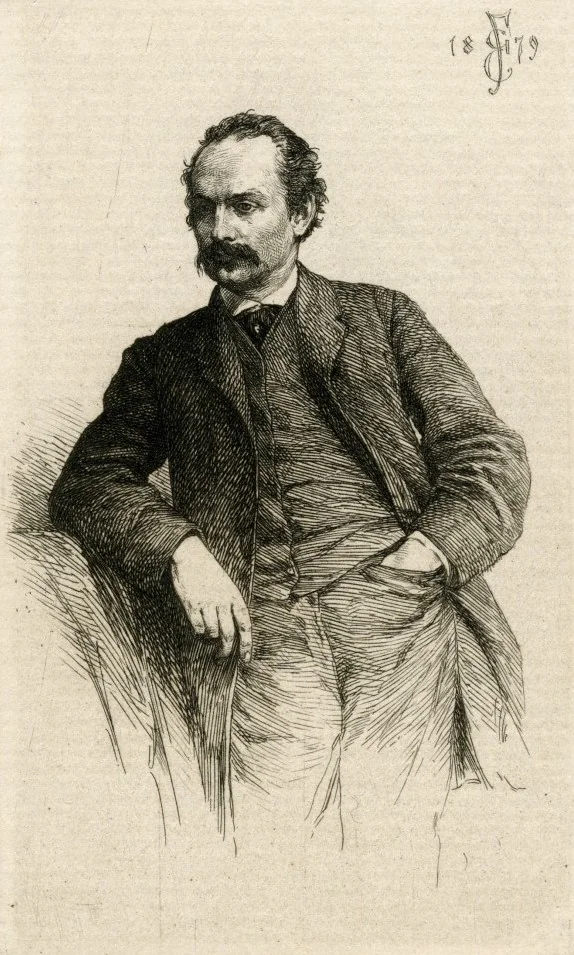
Image from Wikipedia
Image from Wikipedia
Hugo Harrer: The Realistic View of Architecture, Landscape, and the Quiet Drama of the 19th Century
An Artist Between Construction Sites, Nature Study, and the Düsseldorf School
Hugo Paul Harrer (* February 6, 1836 in Eberswalde; † December 10, 1876 in Rome) is among those German painters of the 19th century whose work thrives on precise observation, craftsmanship, and a pronounced sense of atmosphere. He became known as a landscape and architectural painter of the Düsseldorf School and developed a visual language that intertwined reality with compositional clarity. His career took him from early studies in Germany through Munich and Düsseldorf to Rome, where he matured as an artist and concentrated his subjects with particular consistency. (de.wikipedia.org)
Biography: From Aspiring Architect to Painter with a Unique Style
Harrer began an architectural education but soon turned to painting and continued his development as a self-taught artist, supplemented by private studies in the studios of friends. His first paintings were created in Nuremberg, where the architecture inspired early attempts at architectural painting. Here already, an artistic motif can be seen that would shape his work: an interest in constructed space, in lines, perspectives, and the poetic impact of historical urban spaces. (de.wikipedia.org)
The next significant step led him to Munich, where he was influenced by the realistic painting style of Carl Theodor von Piloty. This contact with the Munich art scene sharpened his eye for representation and narrative precision. According to sources from the German Biography and Wikipedia, his move to Rome occurred in 1861 or in October 1862 due to a chest illness. There, Harrer worked from nature, joined Ludwig Passini, and gained a markedly more mature understanding of painting in an environment characterized by ruins, light, and historical depth. (de.wikipedia.org)
Artistic Development: Rome as a Laboratory of Precise Observation
In Rome, Harrer adopted a working attitude based on observation, sketches, and careful preparation. His first nature studies created there received attention for their great truthfulness and fidelity. This resonance shows that Harrer did not rely on effects but rather on the credibility of representation. For him, accuracy was not merely a technical means, but the core of his artistic conviction. (deutsche-biographie.de)
After a two-year stay in Düsseldorf, he returned to Rome and gathered extensive study materials as a basis for oil paintings. The works he sent to German art exhibitions often depict street scenes, ruins, and Italian coastal landscapes. Especially striking is his preference for picturesque corners in crumbling ruins, places where history, light, and architecture create a silent tension. (de.wikipedia.org)
Düsseldorf School and Modern Realism
Harrer's affiliation with the Düsseldorf School explains much of the precision and discipline found in his paintings. He studied at the Düsseldorf Academy of Art in the landscape class of Oswald Achenbach from 1867 to 1868, and was a member of the artist association Malkasten from 1868 to 1872. These stages connect him to a central network of 19th-century German painting, in which landscape, figures, and atmospheric space effects played a special role. (de.wikipedia.org)
The German Biography explicitly describes Harrer as a "thoroughly modern realist" who aimed to portray objects exactly as he saw them. This stance makes his painting historically interesting: it lies between romantic sentiment and sober attachment to the object, between decorative effect and documentary perspective. This tension unfolds with particular strength in views of architecture and urban subjects. (deutsche-biographie.de)
Works and Subjects: Architecture, Ruins, and Italian Coasts
Surviving works include Old Hanse (1868), View of the Amalfi Coast at Sunset (1871), At the Theater of Marcellus in Rome (1876), Theater of Marcellus in Rome (1876), and A Jewish Street Vendor in a Street in Siena. This selection showcases the range of his interests: historical architecture, Italian urban spaces, coastal landscapes, and everyday figurative scenes. His imagery consistently remains anchored in a realistic approach, which does not idealize the visible world but instead organizes it precisely. (de.wikipedia.org)
The motifs mentioned in the sources also refer to an artist who created atmosphere not through pathos, but through composition. For Harrer, ruins do not merely become symbols of decay, but stages of light and perspective. Architecture appears as a living resonating space, where human presence, history, and nature find a quiet balance. (de.wikipedia.org)
Artistic Context and Reception
Harrer regularly submitted his oil paintings prepared in Rome to German art exhibitions. This practice indicates that he was present in the art scene of his time and positioned his works within a regional exhibition context. His painting gained recognition not through spectacular reinvention, but through reliability, observational skills, and a confident handling of architectural structures. (de.wikipedia.org)
Older biographical sources emphasize that his first Roman studies received attention for their truthfulness and fidelity. This is an important indication of Harrer's reputation: he was regarded as an artist who took nature and place seriously and shaped credible images from them. This combination of accuracy and painterly intuition is what makes him relevant in the art history of the Düsseldorf School. (deutsche-biographie.de)
Final Years and Legacy
Harrer died in 1876 in Rome and was buried at the Protestant Cemetery in Rome. This marks the end of a life path that took him early to the centers of German and Italian art and ended in the eternal city, whose architecture and light were so formative for his work. The biographical discrepancies in the accounts of his birthplace and date of death also show how fragmentary the sources remain for many artists of the 19th century. (de.wikipedia.org)
Today, Harrer is primarily regarded as a representative of a nuanced, observational realism. His works reveal how architectural painting in the 19th century navigated between documentation, mood, and artistic construction. This is precisely where his lasting significance lies: he translated built spaces into images of quiet dignity and precision. (de.wikipedia.org)
Conclusion: Why Hugo Harrer Remains Fascinating to This Day
Hugo Harrer is intriguing because his work puts the unspectacular intensity of precise observation at its center. He combines architectural precision with landscape atmosphere, Roman ruins with German exhibition culture, and autobiographical stages with a clear realistic ambition. Those interested in the Düsseldorf School, architectural painting, and the quiet power of realism will find in Harrer an artist of remarkable consistency. Viewing his works in a museum context offers a glimpse into a piece of European art history that continues to persuade with clarity and mood. (de.wikipedia.org)
Official Channels of Hugo Harrer:
- Instagram: no official profile found
- Facebook: no official profile found
- YouTube: no official profile found
- Spotify: no official profile found
- TikTok: no official profile found
Sources:
- Wikipedia – Hugo Harrer
- German Biography – Harrer, Hugo
- artnet – Hugo Paul Harrer, Auction Results
- RKD – Data Sheet on Hugo Paul Harrer
- Wikipedia: Image and Text Source