
Anton Pawlowitsch Tschechow
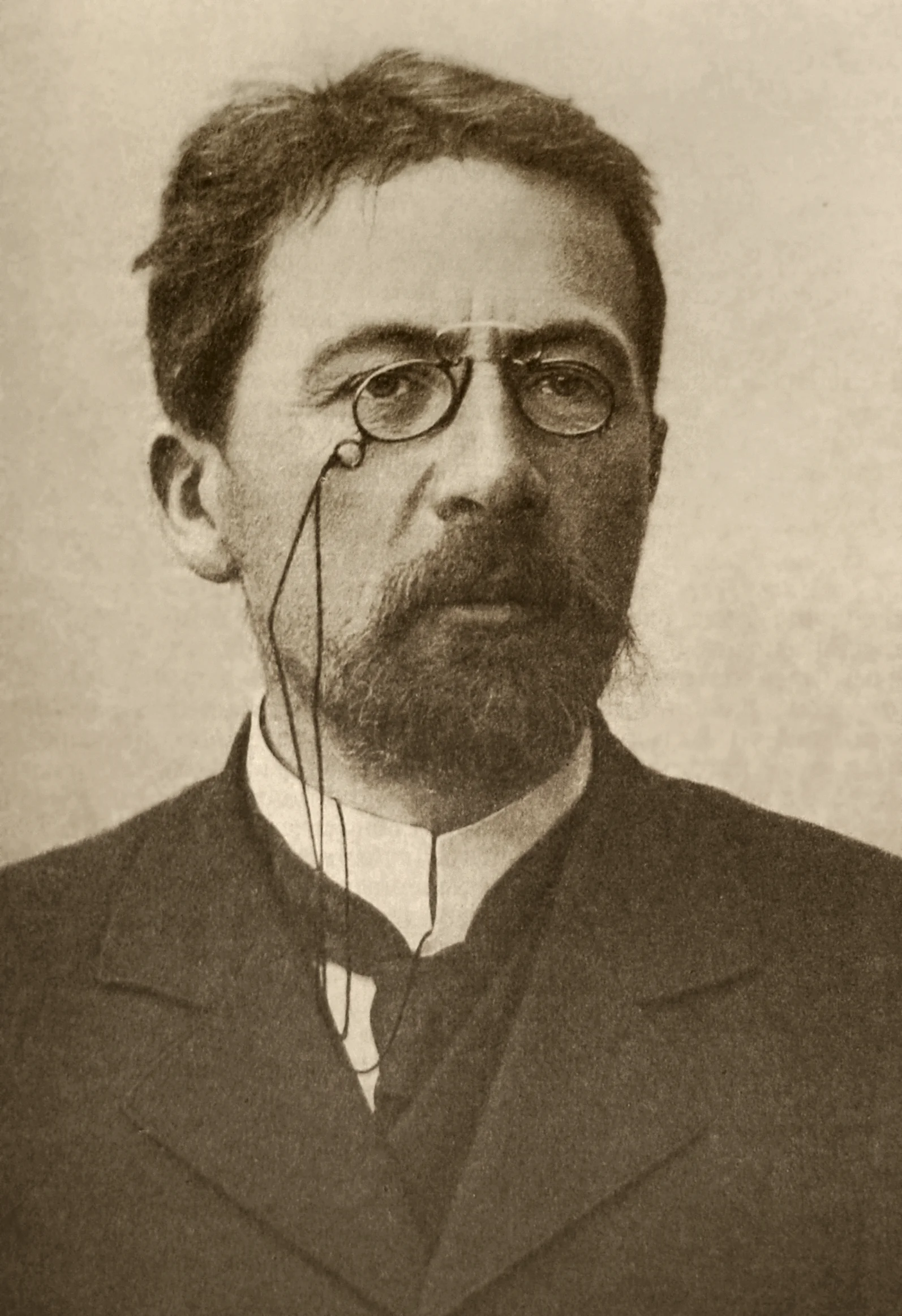
Image from Wikipedia
Image from Wikipedia
Anton Pavlovich Chekhov – the Master of Subtle Nuances and Modern Literature
A Literary Giant Between Medicine, Observational Skills, and World Fame
Anton Pavlovich Chekhov is regarded as one of the defining figures of world literature. The Russian writer, novelist, and playwright was born on January 29, 1860, in Taganrog and died on July 15, 1904, in Badenweiler. His significance extends far beyond Russian literature, as Chekhov shaped a new form of literary realism with his stories and plays, which are still considered stylistically influential today. ([de.wikipedia.org](https://de.wikipedia.org/wiki/Anton_Pawlowitsch_Tschechow?utm_source=openai))
His work combines precise observation, psychological depth, and a restrained, often seemingly unremarkable narrative style. It is precisely this controlled restraint that gives his writing its power: Chekhov does not depict people as heroes but as sensitive, contradictory figures caught in everyday social and emotional tensions. This literary stance made him an author of extraordinary consistency and global impact. ([britannica.com](https://www.britannica.com/question/What-was-Anton-Chekhovs-legacy?utm_source=openai))
Biography: Background, Education, and the Path to Literature
Chekhov came from a lower-middle-class family in southern Russia and grew up under difficult conditions. He studied medicine in Moscow, graduating as a doctor in 1884, but supported his family during his studies through journalistic work and humorous sketches. The early connection between medical training and literary practice profoundly influenced his perspective on humanity: analytical, detached, and yet deeply compassionate. ([de.wikipedia.org](https://de.wikipedia.org/wiki/Anton_Pawlowitsch_Tschechow?utm_source=openai))
As early as the 1880s, he published an enormous volume of texts, reaching over 600 literary works by 1903. In his early years, he primarily wrote for humorous journals, often under pseudonyms. From this productivity gradually developed a literary authority that spanned from comedic feuilletons to serious prose. ([britannica.com](https://www.britannica.com/biography/Anton-Chekhov?utm_source=openai))
The Breakthrough: From Humorous Sketches to Serious Prose
The literary breakthrough did not come from a single spectacular moment but as a gradual intensification. With Steppe in 1888 and the play Ivanov, Chekhov gained wide recognition. His narrative artistry was now perceived as a serious, independent poetics that relied not on dramatic escalation but on inner tensions and precise milieu descriptions. ([britannica.com](https://www.britannica.com/biography/Anton-Chekhov?utm_source=openai))
The medical training was not a side note but a central resonance space for his writing. Chekhov's characters often appear as if viewed under a psychological microscope: exhausted, fragile, marked by self-deception and quiet longing. It is this accuracy that made his prose a turning point in the history of the short story. ([britannica.com](https://www.britannica.com/art/short-story/Russian-writers?utm_source=openai))
The Great Phase in Melikhovo and the Condensation of Masterpieces
The stay in Melikhovo from 1892 to 1898 marked a particularly productive period. During this time, numerous central narratives were created, including The Butterfly, Neighbours, An Anonymous Story, The Black Monk, Murder, and Ariadne. The creative intensity of these years showcases an author at the peak of his observational skills and formal security. ([britannica.com](https://www.britannica.com/biography/Anton-Chekhov/Melikhovo-period-1892-98?utm_source=openai))
Thematically, his writing shifted during this phase. Chekhov's interests increasingly gravitated towards the provinces, stagnation, social exhaustion, and the discrepancy between desire and reality. His texts exert their influence not through grand action but through atmosphere, psychological nuances, and the seemingly trivial details from which an entire life is composed. ([britannica.com](https://www.britannica.com/art/short-story/Russian-writers?utm_source=openai))
Theater: Revolutionizing Drama and the "Theater of Unrest"
Chekhov became internationally famous, especially as a playwright. His key works The Seagull, Uncle Vanya, Three Sisters, and The Cherry Orchard fundamentally changed dramaturgy. They do not feature loud action in the classical sense, but rather a dramatic art of pausing, lingering, and unvoiced conflict. ([britannica.com](https://www.britannica.com/art/Russian-literature/Ivan-Turgenev?utm_source=openai))
The Seagull was initially poorly received but experienced a successful revival in 1899 under Konstantin Stanislavski and the Moscow Arts Theatre. This later recognition is one of the major turning points in theater history. Chekhov's plays were subsequently celebrated internationally and read as tragicomic studies of stagnation, change, and the disintegration of a social order. ([britannica.com](https://www.britannica.com/biography/Anton-Chekhov?utm_source=openai))
Discography? No – Body of Work, Genres, and Literary Mastery
Although Chekhov was not a musician, his oeuvre can be read like a catalog of works: stories, sketches, dramas, one-act plays, and psychological miniatures form a canon of exceptional range. Among his most famous texts are The Steppe, A Boring Story, The Black Monk, The Lady with the Dog, Three Sisters, and The Cherry Orchard. These works demonstrate the maturity of an author who balances form and content with great precision. ([britannica.com](https://www.britannica.com/summary/Anton-Chekhov?utm_source=openai))
His literary achievement also lies in the radical simplification of the classic narrative arc. Much remains open, much occurs beneath the surface of perception. It is this poetic economy that continues to fascinate directors, literary scholars, and readers. ([britannica.com](https://www.britannica.com/question/What-was-Anton-Chekhovs-legacy?utm_source=openai))
Style, Aesthetics, and Cultural Influence
Chekhov's style is considered sober, precise, and simultaneously full of empathy. He works with suggestions, atmospheric density, and a particular sense for the unsaid. His narrative style avoids moral sharpness and instead favors an open, ambiguous perspective on the people of his time. ([britannica.com](https://www.britannica.com/question/What-was-Anton-Chekhovs-legacy?utm_source=openai))
His cultural influence extends deeply into modernity. The Stanislavski system and modern acting methods are closely linked to the interpretation of his plays, while literature and theater worldwide have been shaped by his form of indirect tension. Chekhov's characters exist in a world of upheaval, and therein lies the enduring relevance of his work. ([britannica.com](https://www.britannica.com/art/Stanislavsky-system?utm_source=openai))
Final Years and Legacy
In his final years, Chekhov lived in Crimea, where he wrote his last great plays Three Sisters and The Cherry Orchard. Tuberculosis increasingly dictated his daily life, yet his artistic productivity remained impressive. His last works encapsulate the themes of his oeuvre: transience, social dissolution, inner stagnation, and the quiet tragedy of everyday life. ([britannica.com](https://www.britannica.com/summary/Anton-Chekhov?utm_source=openai))
To this day, Chekhov is considered one of the most significant authors of Russian literature and a master of the modern short story. His texts resemble finely honed compositions of observation, rhythm, and psychological resonance. Anyone who reads Chekhov or experiences his works on stage encounters an author who makes the quiet registers of humanity audible with unparalleled accuracy. ([britannica.com](https://www.britannica.com/question/What-was-Anton-Chekhovs-legacy?utm_source=openai))
Conclusion: Why Anton Pavlovich Chekhov Continues to Captivate Today
Anton Pavlovich Chekhov fascinates because he transforms the mundane into literature of great depth. His stories and plays open spaces for nuances, self-examination, and human vulnerability. It is precisely therein that his lasting greatness lies: he does not explain, he observes; he does not judge, he clarifies. ([britannica.com](https://www.britannica.com/question/What-was-Anton-Chekhovs-legacy?utm_source=openai))
Those who read Chekhov today or experience his plays on stage feel the modernity of an author who has located the drama within the characters. His works remain alive because they do not age, but are continually rediscovered. Chekhov belongs on every list of essential classics. ([britannica.com](https://www.britannica.com/art/tragedy-literature/Tragedy-and-modern-drama?utm_source=openai))
Official Channels of Anton Pavlovich Chekhov:
- Instagram: No official profile found
- Facebook: No official profile found
- YouTube: No official profile found
- Spotify: No official profile found
- TikTok: No official profile found