Denis Galloway at the Sorbian Museum: A Photographic Journey Through Lusatia
Date and Time
Location
Price
About this Event
Mood
Venue Type
Photographic Journey Through the Sorbian History of Lusatia
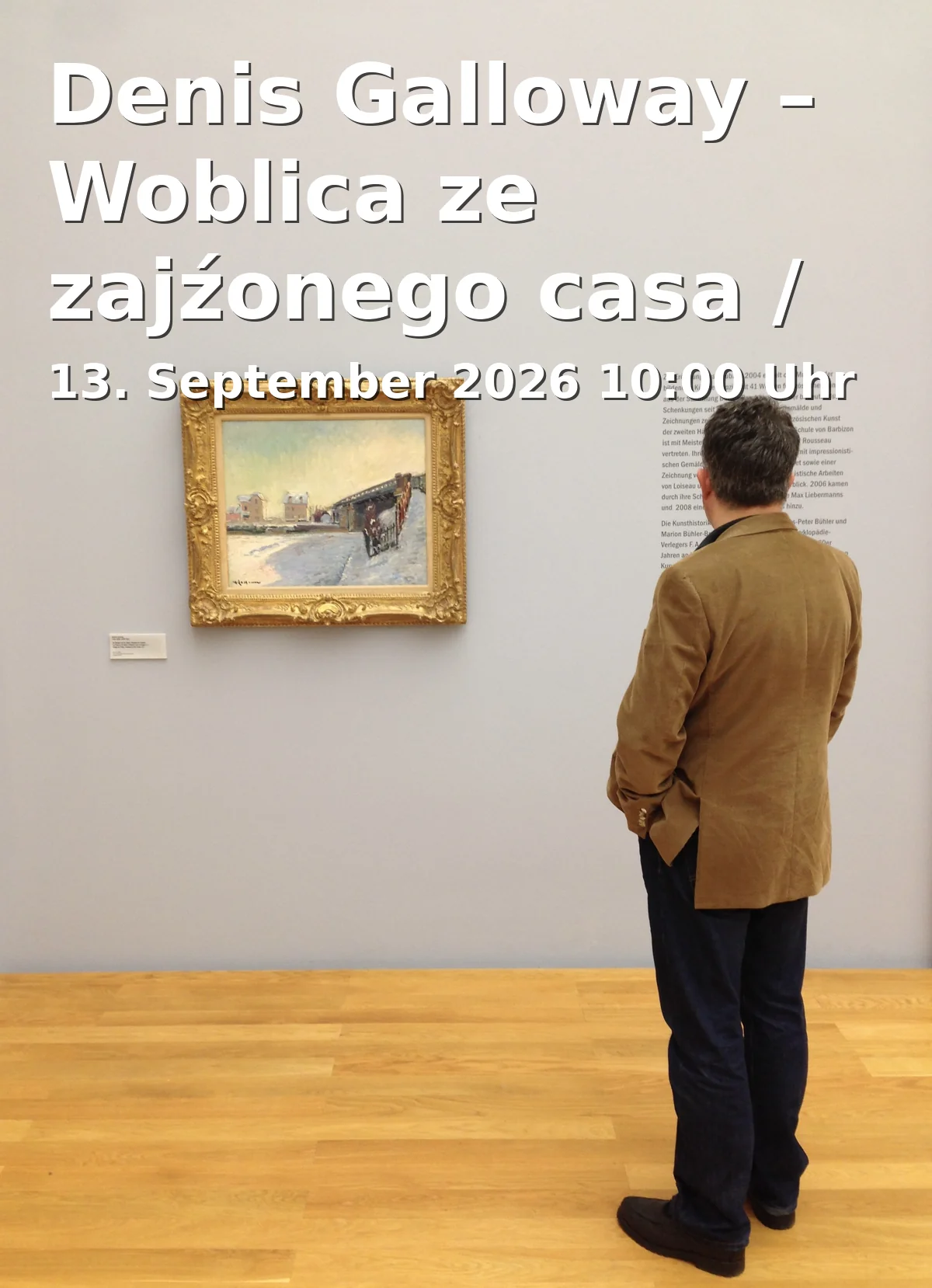
At the Sorbian Museum Cottbus, Denis Galloway – Woblica from a Lost House / Faces of an Era opens up a quiet yet highly precise art experience. The special exhibition showcases a selection of approximately 200 historical glass negatives from the Scottish ethnographer, photographer, and artist Denis Galloway for the first time, focusing on Sorbian and Wendish life in the Spreewald and Lower Lusatia at the beginning of the 20th century. The exhibition unfolds a dense dialogue between cultural history, photography, and memory culture, straddling documentation and aesthetic experience. ([cottbus.de](https://cottbus.de/pressemitteilung/gemeinsam-fuer-das-sorbische-wendische-leben-in-cottbus-chosebuz-staatssekretaerin-zum-arbeitsgespraech-empfangen/?utm_source=openai))
Photography as Cultural Memory
Galloway's photographs document everyday scenes with extraordinary closeness: field work, market activities, portraits of women and children, as well as life events such as weddings. These motifs create a special tension in the examination of the works, as they provide not only historical facts but also make social realities visible. The images open a window onto variations of attire, postures, and faces that are rarely seen in this form today. Thus, photography becomes a visual archive of a region whose identity condenses in language, customs, and communal practices. ([protyka.sorben.com](https://protyka.sorben.com/t/4779430/21.02.2027_denis-galloway-gesichter-einer-zeit?utm_source=openai))
The Sorbian Museum as a Place of Education
The Sorbian Museum is dedicated to the cultural history of the Sorbs/Wends in Lower Lusatia. The permanent exhibition visibly presents faith, religion, language, literature, customs, attire, art, and music, as well as themes of loss of homeland due to lignite mining. Changing exhibitions and mediation formats deepen these perspectives and turn the museum into a lively place of cultural education. For visitors, this creates not just a museum visit but a concentrated art experience with clear historical depth. ([cottbus.de](https://cottbus.de/kultur-und-tourismus/museen-galerien/wendisches-museum/))
Spaces, Atmosphere, and Museum Experience
The exhibition atmosphere thrives on the tension between delicate photographic material and the lasting presence of the motifs. Glass negatives, digital transmission, and printing forms combine to create a presentation that emphasizes the value of the original as well as contemporary accessibility. The Sorbian Museum is located in the old town of Cottbus and is easily accessible; its opening hours provide good conditions for a quiet, unhurried tour. Guided tours and workshops are also part of the museum's profile and are considered an important part of education. ([cottbus.de](https://cottbus.de/kultur-und-tourismus/museen-galerien/wendisches-museum/))
A Look at Denis Galloway
Denis Galloway, born in 1878 in Cardiff and died in 1957 in London, originally trained as an engineer before turning to painting, drawing, photography, and ethnographic observation. Relevant biographical sources indicate that he settled in Westkapelle in 1915 and documented rural life there. For the new exhibition in Cottbus, his role as a sensitive chronicler of Lower Lusatia is especially significant: His visual language combines documentary accuracy with an almost portrait-like dignity of the subjects represented. ([encyclopedievanzeeland.nl](https://www.encyclopedievanzeeland.nl/William_Albert_Dennis_Galloway))
Conclusion
This exhibition invites viewers to experience Sorbian and Wendish culture not abstractly but through concrete faces, garments, and ways of life. Those interested in photography, cultural history, and regional identity will find an exhibition of high aesthetic density and scientific relevance. A visit to the Sorbian Museum is absolutely worthwhile—especially because these images only reveal their full power in direct confrontation. ([cottbus.de](https://cottbus.de/pressemitteilung/gemeinsam-fuer-das-sorbische-wendische-leben-in-cottbus-chosebuz-staatssekretaerin-zum-arbeitsgespraech-empfangen/?utm_source=openai))
Official Channels of Sorbian Museum Cottbus:
- Instagram: no official profile found
- Facebook: no official profile found
- YouTube: no official profile found
- Website: https://wendisches-museum.de/