
Hugo Harrer
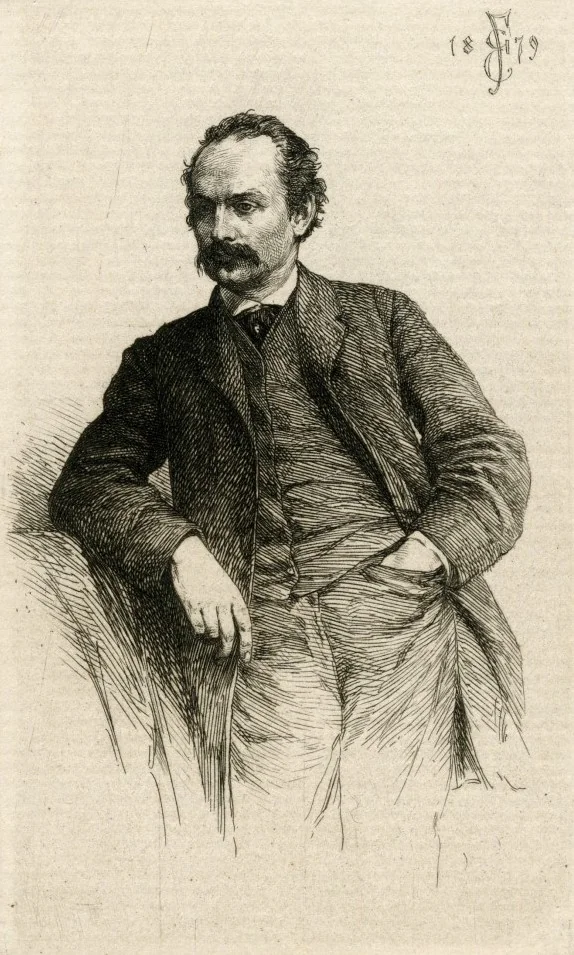
Image from Wikipedia
Image from Wikipedia
Hugo Harrer: The Silent Master of Landscape Between Romanticism, Realism, and the Düsseldorf School
An Artist Between Architecture, Nature Observation, and Painterly Precision
Hugo Paul Harrer was a German landscape and architectural painter, born in 1836 in Eberswalde and died in 1876 in Rome. His name represents a painting style that shaped an independent visual language from careful nature observation, architectural accuracy, and a yearning for Italian light. In art history, he is associated with the Düsseldorf School, an environment that transcended the German realm in the 19th century. ([de.wikipedia.org](https://de.wikipedia.org/wiki/Hugo_Harrer?utm_source=openai))
Biography: From Aspiring Architect to Self-Taught Painter
Harrer initially began an architectural education but soon turned to painting, developing largely autodidactically. The Deutsche Biographie describes him as an artist who never worked permanently at an art academy or in the studio of a master, but shaped himself through self-study, attentive nature observation, and visits to the studios of friends. This constellation influenced his perspective: precise, disciplined, and open to the atmospheric effects of landscape and city views. ([deutsche-biographie.de](https://www.deutsche-biographie.de/sfz26126.html?language=de&utm_source=openai))
In the 1860s, Harrer moved between Nuremberg, Munich, Düsseldorf, and Rome. By 1861, he had settled in Rome, and in 1867/68, he studied in the landscape class of Oswald Achenbach at the Düsseldorf Academy of Fine Arts. These stations indicate an artist who did not work within a fixed academic system but utilized various art centers to sharpen his artistic development. ([stiftung-volmer.de](https://www.stiftung-volmer.de/artist/painting/all/321?utm_source=openai))
Career: Düsseldorf, Rome, and the Search for the Ideal Motif
The years 1867 and 1868 mark an important phase in Harrer's career because he found a connection in Düsseldorf to a painting tradition that closely linked landscape and mood painting. The Wikipedia entry explicitly identifies him as a painter of the Düsseldorf School; the Stiftung Sammlung Volmer confirms his training in the landscape class of O. Achenbach. Thus, Harrer became part of an artistic network that focused on precise composition, atmospheric effect, and the observation of urban as well as natural spaces. ([de.wikipedia.org](https://de.wikipedia.org/wiki/Hugo_Harrer?utm_source=openai))
After his time in Düsseldorf, he returned to Rome. There, he built a large stock of studies and sketches that he used as templates for oil paintings and with which he participated in German art exhibitions. Particularly frequent in the legacy are painterly depictions of street scenes, ruins, and Italian coastal landscapes. Harrer's career was closely tied to the motif of being on the move: collecting, observing, condensing, and finally translating it into an exhibition-ready image. ([de.wikipedia.org](https://de.wikipedia.org/wiki/Hugo_Harrer?utm_source=openai))
Style and Artistic Development: Realism with an Eye for Structure and Atmosphere
The Deutsche Biographie characterizes Harrer as "a thoroughly modern realist" who sought to represent objects as accurately as possible. This is key to his work: He apparently loved no dramatic elevation, but rather the faithful depiction of visible reality, without neglecting the effects of light, space, and architectural order. Particularly in landscape and architectural motifs, this creates the tension that makes his paintings interesting to this day. ([deutsche-biographie.de](https://www.deutsche-biographie.de/sfz26126.html?language=de&utm_source=openai))
The dual nature of his painting is particularly appealing. Architecture provided stability and structure to his compositions, while the landscape ensured atmosphere, depth, and visual movement. This connection explains why Harrer excelled in both city views and nature and coastal motifs: He treated space not just as a backdrop but as a fundamental element of the visual idea. ([de.wikipedia.org](https://de.wikipedia.org/wiki/Hugo_Harrer?utm_source=openai))
Works and Motifs: From Street Scenes to Italian Coastal Landscapes
Among Harrer's documented works are motifs such as Coast near Capri from 1871, which are recorded in collection and auction contexts. Such titles refer to the visual world that was particularly important to him: the southern light of Italy, the tectonics of coast and rock, the tranquility, and at the same time, the drama of views of historical places. His practice of study suggests that he carefully prepared his motifs and developed them from observation. ([session.cottbus.de](https://session.cottbus.de/oparl/bodies/0001/downloadfiles/a/00025287.pdf?utm_source=openai))
The sources also show that Harrer was not a loud star of art history, but a meticulous painter with a solid presence in the exhibition and collection scene. That his works appear today in catalogs, databases, and art historical directories speaks to a persistent, if rather quiet, relevance within the Düsseldorf painting of the 19th century. His oeuvre lives less from spectacular gestures than from compositional accuracy and atmospheric credibility. ([mageda.de](https://mageda.de/datenbank/kuenstlerdetails/14938/harrer-hugo-paul?utm_source=openai))
Critical Reception and Art Historical Placement
The art historical evaluation places Harrer in the tradition of the Düsseldorf School, that school of painters whose influence spread in the 19th century across Europe and beyond. The art context of this school was shaped by landscape studies, Italian travels, and an interest in naturalistic accuracy, which clearly influenced Harrer's working method. His education in Rome, his Düsseldorf phase, and his realistic approach make him a representative of that generation of artists who mediated between academic form and direct nature experience. ([de.wikipedia.org](https://de.wikipedia.org/wiki/D%C3%BCsseldorfer_Malerschule?utm_source=openai))
The ADB legacy emphasizes that Harrer developed his art without the classical academic career path. This independence lends his work a special credibility: no demonstrative school, but a view that draws from practice, repetition, and careful examination of appearance. In retrospect, he becomes a character artist of realistic landscape painting, whose significance derives from quality and attitude, not from fame and pathos. ([deutsche-biographie.de](https://www.deutsche-biographie.de/sfz26126.html?language=de&utm_source=openai))
Cultural Influence: A Quiet Contribution to the Visual Culture of the 19th Century
Harrer's cultural influence lies primarily in the consistent connection of landscape, architecture, and realistic observation. His paintings represent a style that orders the gaze, makes spaces readable, and simultaneously preserves mood. Thus, he fits into a phase of art history where nature, travel, and urban experience became central themes in imagery. ([de.wikipedia.org](https://de.wikipedia.org/wiki/Hugo_Harrer?utm_source=openai))
His work remains particularly engaging for lovers of the Düsseldorf School, Italian vedute, and the 19th century. Harrer demonstrates how strongly artistic identity can develop even beyond large academies and loud manifestations. Those who view his paintings encounter a painter who worked with precise observation, calm composition, and a fine sensitivity for space. ([deutsche-biographie.de](https://www.deutsche-biographie.de/sfz26126.html?language=de&utm_source=openai))
Conclusion: Hugo Harrer captivates as a quiet yet distinctive master between architecture and landscape, between German painting tradition and Italian experience. His art thrives on realism, discipline, and a clear pictorial order that still convinces today. Those interested in the Düsseldorf School, realistic landscape painting, and the quiet trailblazers of the 19th century should discover Harrer and carefully consider his works in museums, catalogs, or collections. ([de.wikipedia.org](https://de.wikipedia.org/wiki/Hugo_Harrer?utm_source=openai))
Official Channels of Hugo Harrer:
- Instagram: No official profile found
- Facebook: No official profile found
- YouTube: No official profile found
- Spotify: No official profile found
- TikTok: No official profile found