
Hugo Harrer
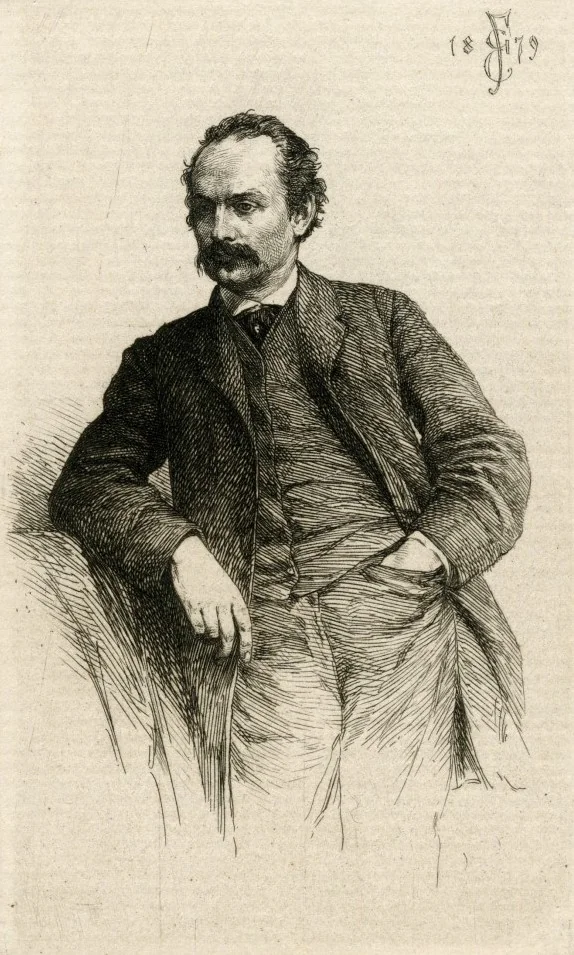
Image from Wikipedia
Image from Wikipedia
Hugo Harrer: The Landscape and Architectural Painter of the Düsseldorf School
An Artist Between Architecture, Nature Observation, and Roman Atmosphere
Hugo Paul Harrer (* February 6, 1836 in Eberswalde; † December 10, 1876 in Rome) is one of those German painters of the 19th century whose work makes the tension between built space and landscape expanse particularly impressive. As a landscape and architectural painter of the Düsseldorf School, he developed a visual language that understood architecture not as a rigid backdrop but as a living carrier of light, mood, and narrative depth. His biography traces a path from an initially planned architectural education through self-directed studies to an artistic career strongly influenced by Nuremberg, Munich, and Rome. ([de.wikipedia.org](https://de.wikipedia.org/wiki/Hugo_Harrer?utm_source=openai))
Biography: From Architectural Studies to Painting
Harrer began with an architectural education but soon turned to painting and continued his education as a self-taught artist. According to sources from the Deutsche Biographie and the Stiftung Sammlung Volmer, he initially worked in Nuremberg, where the painterly quality of the city's architecture inspired his early works. He then moved to Munich to orient himself with the painting of Carl Theodor von Piloty, before settling permanently in Rome in the early 1860s. This path profoundly shaped his artistic development: instead of academic routine, nature observation, private studio contacts, and direct observation were at the center of his work. ([deutsche-biographie.de](https://www.deutsche-biographie.de/sfz26126.html?language=de&utm_source=openai))
Especially noteworthy is that Harrer neither attended an art academy nor worked permanently in a master's studio. This independence gave rise to a quality that contemporary and later sources highlight as a strength: meticulous observation, precise spatial perception, and a keen eye for architectural details. The Deutsche Biographie describes him as a "capable painter," who through self-study became a modern realist seeking to portray things exactly as he saw them. This attitude makes him a characteristic figure of realistic landscape and vedute painting of the 19th century. ([deutsche-biographie.de](https://www.deutsche-biographie.de/sfz26126.html?language=de&utm_source=openai))
Rome, Travel, and the Open Studio of Reality
The move to Rome marked a crucial turning point in Harrer's career. There he joined Ludwig Passini and worked from nature, later also in the landscape class of O. ... in a study context, as the Stiftung Sammlung Volmer summarizes. Rome offered Harrer not only historical material but also an incomparably rich abundance of ruins, street scenes, coastal motifs, and atmospheric views, which found expression in his oil paintings. His works often display picturesque segments with strong light-shadow contrasts and populated pictorial spaces that closely intertwine architecture and everyday life. ([stiftung-volmer.de](https://www.stiftung-volmer.de/artist/321?utm_source=openai))
His health also influenced his life path: due to a chest ailment, Harrer went to Rome, where he ultimately remained until his death. There he compiled a substantial stock of studies and sketches that served as templates for oil paintings and with which he participated in German art exhibitions. This working method illustrates a classic tension of the 19th century: immediate nature perception on one side, carefully composed studio work on the other. It is this connection that gives Harrer's painting its unique density. ([de.wikipedia.org](https://de.wikipedia.org/wiki/Hugo_Harrer?utm_source=openai))
Style and Artistic Development
Harrer's style moves between architectural painting, landscape imagery, and small-format genre scenes. The sources describe him as an artist who mostly created architectural images with figures but also painted small genre scenes. Characteristic are close-up picture segments, vibrant figure groupings, and a clear organization of space, in which buildings are not merely depicted but atmospherically staged. It is this closeness to reality and his precision in handling perspective and light that give his work a quiet but consistent authority. ([deutsche-biographie.de](https://www.deutsche-biographie.de/sfz26126.html?language=de&utm_source=openai))
The art chronicle of 1877 highlights Harrer's artistic individuality in a contemporary perspective and points to his origin from architecture-related seeing. The combination of architectural accuracy and painterly sensitivity still defines his pictorial world today. In the language of art history, Harrer can be described as a realistic observer who did not idealize city and landscape vedute but enriched them with careful composition and atmospheric density. Thus, he stands in a tradition that closely linked narrative and nature-related painting within the Düsseldorf School. ([digi.ub.uni-heidelberg.de](https://digi.ub.uni-heidelberg.de/diglit/kunstchronik1877/0243?utm_source=openai))
Overview of Works and Reception: Exhibitions, Collections, Market Presence
Harrer's works circulated in German art exhibitions during his lifetime; later catalogs and documentation systems confirm the continued presence of his name in the art history of the 19th century. The Stiftung Sammlung Volmer and art historical directories clearly place him within the Düsseldorf School, while auction houses and databases such as Dorotheum, MAGEDA, and artnet document his works and market results. This body of sources proves that although Harrer's work is not among the loudest names of the era, it remains relevant in collection and auction contexts to this day. ([stiftung-volmer.de](https://www.stiftung-volmer.de/artist/321?utm_source=openai))
The reception of his oeuvre repeatedly emphasizes the connection between detail accuracy and painterly impact. His architectural motifs are particularly valued, brought to life through figure groups, light direction, and the painterly capture of urban or Italian scenes. From an art historical perspective, this reveals the quality of an artist who never separated the visibility of the motif from craft skill. Harrer does not deliver spectacular pathos, but rather a concentrated visual language that sharpens the gaze and opens space as an experience form. ([stiftung-volmer.de](https://www.stiftung-volmer.de/artist/321?utm_source=openai))
Classification within the Düsseldorf School
As a representative of the Düsseldorf School, Harrer stands in an environment known in the 19th century for narrative clarity, precise drawing, and a strong connection to nature and everyday observation. His position within this movement is particularly interesting because he intertwines architectural and landscape painting, becoming a specialist in coherent spatial imagery. The list of painters of the Düsseldorf School and relevant art historical documentation correspondingly places him as part of this larger context. ([de.wikipedia.org](https://de.wikipedia.org/wiki/Liste_von_Malern_der_D%C3%BCsseldorfer_Malerschule?utm_source=openai))
In comparison to academically trained painters, Harrer gains profile through his independent biography. The journey from architecture enthusiast to painterly realist, from the German educational space to Rome, is more than a history of places: it describes an artistic self-discovery. The blend of German precision and Italian light atmosphere characterizes his work and explains why his paintings remain present today in art historical documentation, collections, and auctions. ([stiftung-volmer.de](https://www.stiftung-volmer.de/artist/321?utm_source=openai))
Current Projects and Publications
As Hugo Harrer lived in the 19th century, there are no current artistic projects, new publications, or tours in today's sense. The most recent verifiable indications relate more to art historical documentation, collection records, and auction results. Therefore, the most relevant sources for a contemporary perception of his work are museum and database entries, art historical encyclopedias, and the art market. ([stiftung-volmer.de](https://www.stiftung-volmer.de/artist/321?utm_source=openai))
Conclusion: Why Hugo Harrer Remains Interesting Today
Hugo Harrer fascinates as an artist of in-betweens: between architecture and landscape, between German school and Roman way of life, between academic expectation and autodidactic freedom. His painting demonstrates how strongly precise observation, compositional discipline, and atmospheric sensitivity can mutually reinforce each other. Anyone interested in 19th-century art will find in Harrer a quiet but remarkably clear perspective on city, space, and light. A visit to his works in collections, exhibitions, or auction contexts is worthwhile for anyone who appreciates image culture not as a loud event but as a concentrated experience. ([deutsche-biographie.de](https://www.deutsche-biographie.de/sfz26126.html?language=de&utm_source=openai))
Official Channels of Hugo Harrer:
- Instagram: No official profile found
- Facebook: No official profile found
- YouTube: No official profile found
- Spotify: No official profile found
- TikTok: No official profile found
Sources:
- Wikipedia - Hugo Harrer
- Deutsche Biographie - Harrer, Hugo
- Stiftung Sammlung Volmer - Harrer, Hugo Paul
- MAGEDA - Hugo Paul Harrer (1836-1876)
- Dorotheum - Hugo Paul Harrer, 19th Century Paintings and Watercolours
- artnet - Hugo Paul Harrer, Auction Results
- Wikisource - ADB Register H
- Kunstchronik 1877 - Contemporary Classification
- Wikipedia: Image and Text Source