
Hugo Harrer
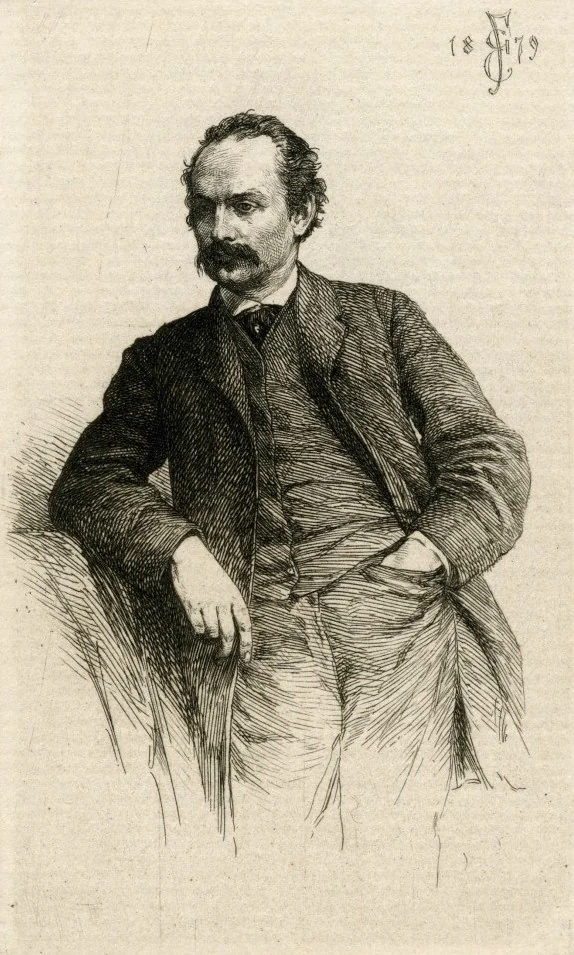
Image from Wikipedia
Image from Wikipedia
Hugo Harrer: A Precise Observer of Landscape, City, and Light
Between Romanticism and Realism: The German Painter Hugo Harrer in Portrait
Hugo Paul Harrer was a German landscape and architectural painter of the Düsseldorf School, born on February 6, 1836, in Eberswalde and died on December 10, 1876, in Rome. His artistic career represents that generation of 19th-century painters who combined nature observation, architectural accuracy, and atmospheric density. It is particularly in the combination of local scenery, ruins, and coastal scenes that Harrer's eye for composition, space, and mood is evident. ([de.wikipedia.org](https://de.wikipedia.org/wiki/Hugo_Harrer?utm_source=openai))
Biographical Roots and Artistic Self-Discovery
Records describe Harrer as a self-taught artist who originally began training in architecture but then turned to painting. According to the German Biography, he did not learn his craft at an art academy or permanently in a master's studio, but through self-study, careful observation of nature, and exchanges with friends. This early independence profoundly influenced his style: Harrer developed without academic routine, but with a clear eye for factual form and visual truth. ([deutsche-biographie.de](https://www.deutsche-biographie.de/sfz26126.html?language=en&utm_source=openai))
The historical sources position him within an environment strongly influenced by the Düsseldorf School of Painting. This school formed a significant cosmos for landscape and genre painting in the 19th century, where the accurate representation of nature, architecture, and atmosphere gained particular importance. Harrer's belonging to this milieu explains why his works radiate both poetic impact and structural discipline. ([de.wikipedia.org](https://de.wikipedia.org/wiki/D%C3%BCsseldorfer_Malerschule?utm_source=openai))
Career Path Between Düsseldorf and Rome
For Harrer's artistic development, his stays in Düsseldorf and Rome are central. Sources mention a stay in Düsseldorf in 1867/1868; thereafter, he returned to Rome, where he amassed a large stock of studies and sketches. From this material, he created oil paintings that he submitted to German art exhibitions. This working method shows him as a careful image constructor who consciously separated observation from later elaboration. ([de.wikipedia.org](https://de.wikipedia.org/wiki/Hugo_Harrer?utm_source=openai))
Rome was not just a residence for Harrer but also an aesthetic resonance space. It was there that the motifs that particularly characterize his work emerged: street scenes, ruins, and Italian coastal landscapes. In these subjects, topographical precision combines with a quiet, almost meditative visual language that balances between romantic idealization and sober realism without tipping into either extreme. ([de.wikipedia.org](https://de.wikipedia.org/wiki/Hugo_Harrer?utm_source=openai))
Style and Visual Language: Observation, Sense of Space, and Modern Sobriety
The German Biography describes Harrer explicitly as a "thoroughly modern realist," who was intent on depicting things as he saw them. This observation is crucial for placing his work: Harrer's painting thrives not on pathos but on accuracy, attention to materiality, perspective, and light management. His visual world has a quiet authority that arises from precision and restraint. ([deutsche-biographie.de](https://www.deutsche-biographie.de/sfz26126.html?utm_source=openai))
Especially in his architectural motifs, his technical understanding of lines, construction, and proportion is evident. As a painter of the Düsseldorf School, Harrer utilized architecture not merely as a backdrop but as an organizing element within the composition. Ruins and streetscapes become carriers of spatial depth and historical atmosphere, while the landscape appears not decorative but as a structured space of experience. ([de.wikipedia.org](https://de.wikipedia.org/wiki/D%C3%BCsseldorfer_Malerschule?utm_source=openai))
Works, Reception, and Art Historical Classification
It is documented that Harrer participated in German art exhibitions with his oil paintings. The sources do not mention a widely documented, canonical group of works, but this points to the situation of many 19th-century artists, whose importance is revealed more through artistic-historical context than through a seamlessly documented exhibition history. Harrer's name remains particularly associated with themes that carry his signature: city, ruin, coast, and nature observation. ([de.wikipedia.org](https://de.wikipedia.org/wiki/Hugo_Harrer?utm_source=openai))
His mention in overviews of the Düsseldorf School confirms Harrer's position within this network of landscape and architectural painters. Even though no comprehensive, popular impact is documented, biographical reference works record his belonging to an important chapter in the history of German painting. His art thus stands for a disciplined, observational approach to painting that held significant cultural value in the 19th century. ([de.wikipedia.org](https://de.wikipedia.org/wiki/Liste_von_Malern_der_D%C3%BCsseldorfer_Malerschule?utm_source=openai))
Cultural Value and Contemporary Interpretation
Hugo Harrer is today particularly interesting as a historical artist, as his work exemplarily demonstrates how self-education outside the academy, nature studies, and the tradition of the Düsseldorf School can be connected. His painting provides a glimpse into the 19th century beyond the great names: at artists who worked with precision, calmness, and technical mastery. This is where Harrer's cultural value lies. ([deutsche-biographie.de](https://www.deutsche-biographie.de/sfz26126.html?language=en&utm_source=openai))
Those viewing Harrer's art encounter not a loud gesture, but a focused, clearly composed visual language. This quiet strength makes him intriguing for all who are interested in landscape painting, architectural representation, and the fine transitions between realism and romanticism. There is no live experience in the true sense for a historical painter; thus, the encounter with his works in museums, archives, and catalogs remains all the more rewarding. ([de.wikipedia.org](https://de.wikipedia.org/wiki/Hugo_Harrer?utm_source=openai))
Conclusion: Why Hugo Harrer Remains Worth Seeing
Hugo Harrer fascinates as an artist of precision. His biography tells of self-study, nature observation, and a painting that confidently brings together architecture and landscape. Those interested in the Düsseldorf School, in German art of the 19th century, and in the language of realistic observation will find in Harrer a remarkable, historically anchored artistic personality. ([deutsche-biographie.de](https://www.deutsche-biographie.de/sfz26126.html?language=en&utm_source=openai))
Official Channels of Hugo Harrer:
- Instagram: No official profile found
- Facebook: No official profile found
- YouTube: No official profile found
- Spotify: No official profile found
- TikTok: No official profile found