
Hugo Harrer
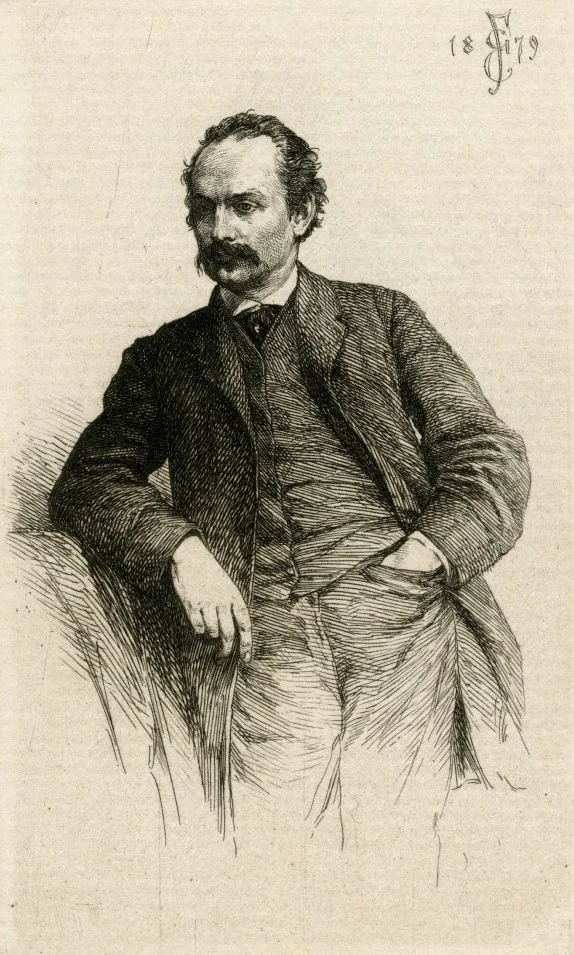
Image from Wikipedia
Image from Wikipedia
Hugo Harrer: The Quiet Realism of a German Landscape and Architectural Painter
An Artist Between Architecture, Nature Observation, and Italian Light
Hugo Paul Harrer, born on February 6, 1836, in Eberswalde and died on December 10, 1876, in Rome, belongs to that generation of German painters who found a path from architectural seeing to free landscape painting. As an artist of the Düsseldorf School, he developed a perception of space, perspective, and atmospheric precision that makes his works instantly recognizable to this day. His biography tells of self-study, relocations, and a consistent commitment to realistic painting. ([de.wikipedia.org](https://de.wikipedia.org/wiki/Hugo_Harrer))
Biographical Beginnings: From Aspiring Architect to Self-Taught Artist
Harrer initially began an architectural education but soon chose painting and continued his education as a self-taught artist. Influential were the private studies in the ateliers of friends and the precise observation of nature, rather than the regular academic routine. This independence shaped his style and gave him remarkable clarity in approaching motifs, proportions, and spatial composition. ([de.wikipedia.org](https://de.wikipedia.org/wiki/Hugo_Harrer))
His first paintings were created in Nuremberg, where the picturesque architecture of the city inspired him to early attempts at architectural painting. He then moved to Munich to be inspired by the realistic painting style of Carl Theodor von Piloty. Even in this phase, Harrer's artistic development is evident as a search for accuracy, structure, and a credible representation of the visible. ([de.wikipedia.org](https://de.wikipedia.org/wiki/Hugo_Harrer))
Rome as a Turning Point: Nature Studies, Ruins, and Italian Coasts
In 1861 or 1862, Harrer traveled to Rome due to a chest ailment, where he joined Ludwig Passini and began nature studies. The city became a crucial resonance space for his work: architecture, ruins, street scenes, and coastal landscapes merged into a treasure trove of motifs that he later used for oil paintings. His Roman studies garnered attention for their truthfulness and strengthened his reputation as a precise observer. ([de.wikipedia.org](https://de.wikipedia.org/wiki/Hugo_Harrer))
In Rome, Harrer worked with great consistency, mainly painting architectural images with figures, alongside smaller genre paintings. He placed particular importance on the effect of the painterly representation itself: not just the motif, but the interplay of light, space, and detailed composition. This attitude closely connects him to the realistic tradition of the 19th century. ([deutsche-biographie.de](https://www.deutsche-biographie.de/sfz26126.html))
Düsseldorf and the School of Seeing
In the years 1867 and 1868, Harrer stayed in Düsseldorf, studying at the local art academy in the landscape painting class of Oswald Achenbach. From 1868 to 1872, he was also a member of the Düsseldorf artists' association Malkasten. These stations firmly anchored him in the art landscape of the time and illustrate how strongly his career oscillated between individual autonomy and institutional recognition. ([de.wikipedia.org](https://de.wikipedia.org/wiki/Hugo_Harrer))
After his return to Rome, he compiled a large collection of studies and sketches, which served as the basis for his oil paintings. With these works, he participated in German art exhibitions and gained attention especially for his painterly representations of street scenes, ruins, and Italian coastal landscapes. The artistic focus always lay on accuracy, mood, and the sovereign organization of the picture space. ([de.wikipedia.org](https://de.wikipedia.org/wiki/Hugo_Harrer))
Works and Motifs: Architectural Painting with Poetic Precision
Among the surviving works are Alte Hanse (1868), View of the Coast of Amalfi at Sunset (1871), At the Theater of Marcellus in Rome (1876), The Theater of Marcellus in Rome (1876), and A Jewish Street Vendor in a Street in Siena. This selection makes it clear that Harrer preferred locations with historical patina and spatial depth. His paintings combine architecture, everyday life, and landscape into a calm, controlled visual language. ([de.wikipedia.org](https://de.wikipedia.org/wiki/Hugo_Harrer))
Harrer has also remained present in the art market with individual paintings. Artnet documents auction results for works such as Pergola in the Cloister Garden at Amalfi, The Forum of Augustus, Rome, and Alte Hanse. These references indicate that his work is perceived not only art historically but also as a collectible. ([artnet.de](https://www.artnet.de/k%C3%BCnstler/hugo-paul-harrer/auktionsresultate))
Style and Artistic Development
The contemporary and later characterization by the Deutsche Biographie describes Harrer as a modern realist who aimed to depict objects as he saw them. This essence lies at the heart of his style: a sober but not cold observation, combined with a refined sensitivity to atmosphere. Ruins, narrow streets, and Italian coastal regions especially provided him with opportunities to connect architecture and nature in concentrated image constructions. ([deutsche-biographie.de](https://www.deutsche-biographie.de/sfz26126.html))
His painting represents an art of slowing down. Instead of dramatic effects, calm accuracy predominates; instead of grand gestures of pathos, there is a dense perception of light, material, and space. This gives Harrer's work a remarkable credibility and a quiet but lasting elegance to this day. ([de.wikipedia.org](https://de.wikipedia.org/wiki/Hugo_Harrer))
Cultural Context and Historical Placement
Harrer was part of the Düsseldorf School, an important network of German-speaking landscape and genre painting in the 19th century. His life stages in Nuremberg, Munich, Düsseldorf, and Rome reflect the European mobility of many artists of this era. Thus, he stands as an exemplar for a generation that shaped its own expression between academic influence, autonomous study, and international experience. ([de.wikipedia.org](https://de.wikipedia.org/wiki/Hugo_Harrer))
His burial in the Protestant cemetery in Rome additionally refers to the close connection between his life and the city that decisively influenced his late work. The differing historical accounts regarding his birth and death places in older biographical sources also show that Harrer's work exists within a complex context of transmission. For contemporary consideration, his realistically influenced perspective on architecture and landscape remains authoritative. ([de.wikipedia.org](https://de.wikipedia.org/wiki/Hugo_Harrer))
Current Reception and Source Situation
Today's reception primarily relies on historical lexicons, Wikipedia, the Deutsche Biographie, and art market-related databases such as Artnet. These sources depict a consistent image of an artist who, without a formal academic career, nonetheless established a clear, independent position in 19th-century German painting. For art history enthusiasts, Harrer thus offers a precise example of realism, site-specificity, and meticulous nature studies. ([de.wikipedia.org](https://de.wikipedia.org/wiki/Hugo_Harrer))
Conclusion: A Realistic Gaze with Quiet Radiance
Hugo Harrer fascinates through the connection of self-study, architectural thinking, and realistic pictorial poetry. His works highlight how strongly observation, discipline, and spatial sensitivity can shape an artistic signature. Those interested in the Düsseldorf School, Italian landscapes, and architectural painting will discover in Harrer a quiet yet remarkably independent master. ([de.wikipedia.org](https://de.wikipedia.org/wiki/Hugo_Harrer))
His art invites viewers to take a closer look: at ruins, facades, coastlines, and the subtle moments between light and space. It is in this precision that his enduring tension lies. Anyone who encounters Harrer's paintings in museums or collections experiences painting as a concentrated form of perception. ([de.wikipedia.org](https://de.wikipedia.org/wiki/Hugo_Harrer))
Official Channels of Hugo Harrer:
- Instagram: No official profile found
- Facebook: No official profile found
- YouTube: No official profile found
- Spotify: No official profile found
- TikTok: No official profile found
Sources:
- Wikipedia – Hugo Harrer
- Deutsche Biographie – Harrer, Hugo
- Artnet – Hugo Paul Harrer, Auction Results
- Wikipedia: Image and text source