
Hugo Harrer
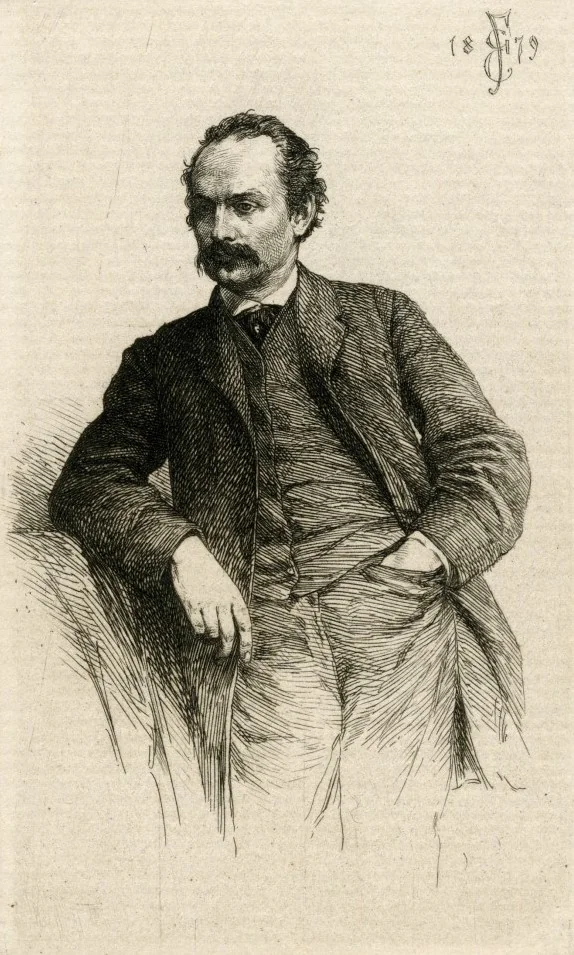
Image from Wikipedia
Image from Wikipedia
Hugo Harrer – Landscapes, Architecture, and the Perspective of a Precise Realist
A Painter Between Nature Studies, Rome, and the Düsseldorf School
Hugo Paul Harrer was a German landscape and architectural painter whose brief life nevertheless left a distinct artistic profile. Born on February 6, 1836, in Eberswalde and died on December 10, 1876, in Rome, he was a member of the Düsseldorf School and navigated the dynamic tensions of the 19th century, a period in which German painting sought new forms between academic tradition, observation of nature, and realistic precision. His work represents an art that does not rely on grand gestures but finds its strength in precise observation. (de.wikipedia.org)
Biography: From Aspiring Architect to Autonomous Artist
Harrer began an architectural education but soon turned to painting, evolving as a self-taught artist. The German Biography describes him as an artist who never attended an art academy and did not work permanently in a master's studio but matured through self-study, careful observation of nature, and exchanges in the studios of his friends. This very roundabout path shapes his profile: not a classical academic but a highly focused observer of the visible world. (deutsche-biographie.de)
The sources provide differing information about his place of birth and date of death; the Wikipedia version cites Eberswalde and December 10, 1876, while the older biographical account in the German Biography refers to Hirschberg in Silesia. Regardless of this discrepancy, a consistent picture emerges: Harrer was an artist who early transitioned from intended architect to painter, with a career unfolding between Germany and Italy. His biography thus also tells the story of a decisive shift from constructive thinking to poetic representation of landscapes and spaces. (de.wikipedia.org)
Career: Düsseldorf, Rome, and the Path to Exhibition Culture
After a two-year stay in Düsseldorf, Harrer moved back to Rome, where he lived and worked from then on. From there, he undertook numerous study trips and sent several larger paintings annually to German art exhibitions. This practice illustrates an artist who did not limit himself to a local scene but consciously fed his work into a broader art context. Thus, he belonged to that generation of painters who shaped their artistic identity between studio, study trip, and salon presence. (deutsche-biographie.de)
Karl Woermann describes Harrer as a painter counted among the "most modern" of his circle and connected in Munich with students of Piloty and in Düsseldorf with Oswald Achenbach. This classification is art-historically significant because it places Harrer within a line of German landscape painting that combined precise observation of nature with decorative effect and atmospheric density. His work was therefore neither merely documentary nor purely idealizing, but aimed at a controlled, realistic visual language. (projekt-gutenberg.org)
Style and Handwriting: Precision, Sense of Space, and Realistic Tone
The German Biography explicitly characterizes Harrer as "thoroughly modern realist," who sought to depict objects as he saw them. This is central to understanding his style: Harrer did not work with romantic exaggeration, but with a sober yet sensitive closeness to reality. His landscapes and architectural views gain their impact from the accuracy of their arrangement, from the balance of space, light, and perspective order. (deutsche-biographie.de)
Especially in the connection of landscape and architecture, his particular strength is evident. Architectural painting requires discipline in composition, while landscape painting demands a sensitivity to atmosphere; Harrer combined both into a type of image in which architectural forms do not appear rigid but are embedded in the landscape. This controlled visual architecture makes his painting interesting even today, as it directs attention to the relationship between nature and culture. (de.wikipedia.org)
Rome as Artistic Resonance Space
For Harrer, Rome was not merely a place of residence but a field of work. From there, he gathered studies, took trips to the surroundings, and processed his impressions into paintings that apparently resonated with German art visitors and collectors. The Italian landscape and the city view of Rome provided him a stage on which he could express his preference for clear lines, historic atmosphere, and atmospherically nuanced spaces. (deutsche-biographie.de)
That he was buried in Rome underscores the close connection between the place of life and death. The Protestant Cemetery in Rome marks a symbolic site of foreignness and simultaneously of kindred spirits with Italy for many German artists of the 19th century. Harrer’s path fits this pattern: a German painter who did not lose his origins in the south but sharpened his artistic language. (de.wikipedia.org)
Work and Discography in the Metaphorical Sense: The Preserved Oeuvre
There is no classical discography for Harrer; his work consists of paintings that remain accessible through auction databases, museum collections, and art historical catalogs. The Gera Art Collection, for example, lists the painting “At the Marcellus Theater in Rome” from 1876, while other catalogs classify Harrer as a landscape and genre painter. Such evidence confirms that his oeuvre exists not only in texts but lives on in concrete artworks. (gera.de)
Moreover, his inclusion in directories related to the Düsseldorf School confirms his art-historical positioning. There, Harrer is not seen as a marginal figure but as part of that broad movement that shaped the reputation of Düsseldorf landscape painting in the 19th century. This integration into a larger network makes him interesting: he was not an isolated loner but a precise craftsman of the image within a significant school. (de.wikipedia.org)
Critical Reception: Recognition by Art History
The early reception shows an artist whose paintings were noticed on the art market and in exhibitions. Woermann’s memoirs suggest that Harrer’s Italian landscapes found buyers, especially among travelers to Rome who recognized the familiar aspects of the south in his works. This represents more than a casual success: it shows that Harrer mastered that finely calibrated blend of recognizability and painterly concentration valued in the 19th century. (projekt-gutenberg.org)
Later art historical references secure his place in the canon of the Düsseldorf School. His mention in biographical databases, museum inventories, and artist directories documents a lasting, albeit rather quiet presence in art history. Thus, Harrer belongs to the painters whose significance lies less in loud mythology than in the durability of their work and the clarity of their style. (deutsche-biographie.de)
Cultural Influence: A Quiet Yet Robust Contribution to German Painting
Hugo Harrer embodies a type of the 19th century that remains essential for understanding German art: the artist navigating between academic tradition, self-study, and international experience. His contribution lies in the fusion of realistic observation and compositional order, of fidelity to nature and architectural discipline. It is precisely therein that his cultural value unfolds, as he adds a quiet, precise voice to the image of the Düsseldorf School. (deutsche-biographie.de)
His work illustrates how painting in the 19th century was also a medium of experiencing the world. Rome, Germany, study trips, and exhibition culture do not merely form the backdrop of Harrer’s life but the structure of his artistic thinking. Those who view his paintings encounter an artist who took the visible world seriously and shaped a clear, concentrated visual language from it. (deutsche-biographie.de)
Conclusion: Why Hugo Harrer Remains Fascinating Today
Hugo Harrer continues to be compelling because he translated the tension between technique, observation, and atmosphere into a calm, controlled painting style. His life journey from aspiring architect to realistic landscape and architectural painter speaks of artistic independence and a consistent commitment to the image. Anyone interested in the Düsseldorf School, German painting of Rome and Italy, or the fine transitions between nature and architecture should rediscover Harrer and consider his works in the context of 19th-century art. (deutsche-biographie.de)
His oeuvre is impactful not through loudness but through accuracy, atmosphere, and artistic mastery. It is precisely for this reason that a look at this painter is worthwhile: he represents that kind of art that deepens with every careful examination. Those who encounter Harrer’s paintings do not experience sensationalism but the quiet intensity of an artist whose language stemmed from observation, discipline, and a sense of space. (deutsche-biographie.de)
Official Channels of Hugo Harrer:
- Instagram: no official profile found
- Facebook: no official profile found
- YouTube: no official profile found
- Spotify: no official profile found
- TikTok: no official profile found