
Hugo Harrer
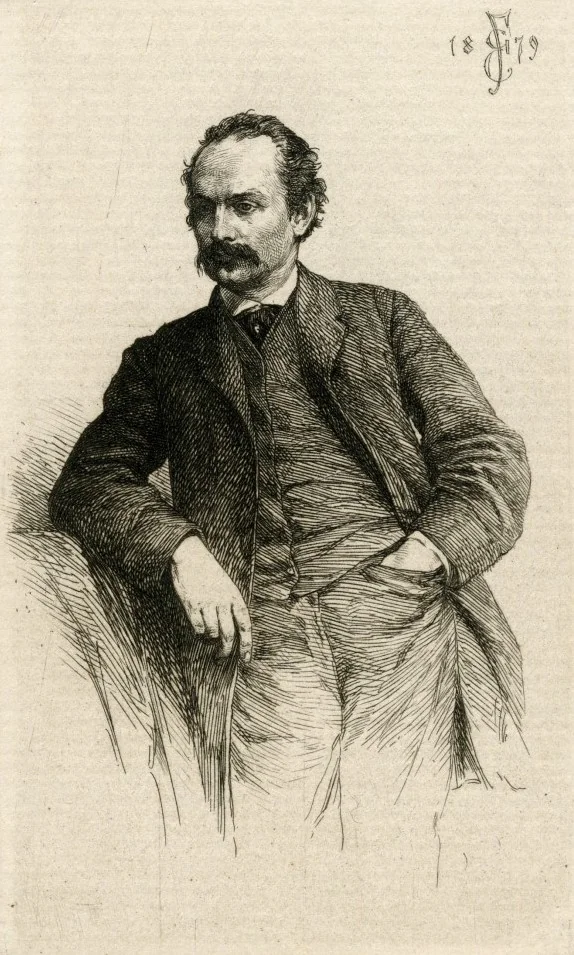
Image from Wikipedia
Image from Wikipedia
Hugo Harrer – the Quiet Realist of the Düsseldorf School
An Artist Between Architecture, Nature Observation, and Rome
Hugo Paul Harrer is part of that generation of German painters in the 19th century who gained their artistic standing not through grand self-presentation but through craftsmanship and intense observation of nature. Born on February 6, 1836, in Eberswalde and died in Rome in 1876, he evolved from an aspiring architect to a landscape and architectural painter of the Düsseldorf School. His biography intertwines his Northern German origins, Italian life experiences, and artistic influence from the Düsseldorf milieu into a distinctive profile that lies between realism, practical studies, and adherence to subjects. ([de.wikipedia.org](https://de.wikipedia.org/wiki/Hugo_Harrer?utm_source=openai))
Early Years: From Architecture to Painting
Harrer initially intended to become an architect but soon turned away from this path and opted for painting instead. Crucial to this decision was not a classical academic career but an autodidactic educational journey: he did not attend an art academy nor did he work permanently in a master's studio; instead, he educated himself through personal study, careful observation of nature, and exchanges in the studios of friends. This form of artistic self-empowerment lends his career a special appeal, as it demonstrates how significantly personal discipline and visual accuracy could contribute to a painter's career in the 19th century. ([deutsche-biographie.de](https://www.deutsche-biographie.de/sfz26126.html?utm_source=openai))
His first paintings were created in Nuremberg, where the buildings of the city inspired him to early endeavors in architectural painting. This initial focus on constructed forms explains why Harrer was later perceived as a painter of architectural views and landscapes: he combined a keen eye for perspective, structure, and surfaces with an interest in atmospheric environments. Even at this stage, one can see an artist who relied not on spectacular effects but on precision, spatial awareness, and a controlled composition. ([de.wikipedia.org](https://de.wikipedia.org/wiki/Hugo_Harrer?utm_source=openai))
Düsseldorf and Rome: Influential Stops in an European Artist's Career
A two-year stay in Düsseldorf became an important phase for Harrer as he entered the environment of the Düsseldorf School of Painting. This school was known for its international influence in the 19th century and evolved from romantically poetic beginnings toward a more realistic approach, which elevated genre painting, landscapes, and everyday scenes. Harrer's sober, observant approach fit excellently within this context, even though his education took place outside a formal academy. ([de.wikipedia.org](https://de.wikipedia.org/wiki/D%C3%BCsseldorfer_Malerschule?utm_source=openai))
After Düsseldorf, Harrer returned to Rome, from where he undertook regular study trips and sent several major paintings to German art exhibitions each year. For many German-speaking artists of the 19th century, Rome was not only a place of ancient and Christian imagery but also an open-air studio where light, architecture, and landscape interacted directly. Harrer's life followed this pattern: he worked not from a distance but from immediate observation, and this practice strengthened his position as a painter who treated architecture and nature with equal seriousness. ([deutsche-biographie.de](https://www.deutsche-biographie.de/sfz26126.html?utm_source=openai))
The Artistic Style: Precision, Realism, and Architectural Painting
Sources explicitly describe Harrer as "a thoroughly modern realist" who was always eager to depict things as he saw them. This statement is central to understanding his art, as it points to a conception of imagery that opposes mere idealization and instead prioritizes visibility, accuracy, and a credible representation of subjects. In his painting, this realism merged with a secure sense of architectural order, giving his works a quiet yet enduring severity. ([deutsche-biographie.de](https://www.deutsche-biographie.de/sfz26126.html?utm_source=openai))
Harrer often painted architectural images featuring figures, as well as smaller genre scenes. This blend of architecture, landscape, and figure representation was a well-trodden field for artists in the 19th century seeking to combine atmospheric accuracy with narrative vitality. However, in Harrer's work, it is not the figures that take center stage but the spaces themselves: buildings, urban spaces, and landscape sections become carriers of a sober, carefully composed visual language. ([deutsche-biographie.de](https://www.deutsche-biographie.de/sfz26126.html?utm_source=openai))
Work, Reception, and Art Historical Classification
Harrer's position within the Düsseldorf School stems from his proximity to its younger, more realistically oriented direction of painting. The Düsseldorf School was not a uniform style block but a network of different subjects and temperaments in which history painting, genre, landscape, and later a more realistic view of the visible world intersected. Harrer embodies this development in a quiet manner: not as an academy professor or programmatic theorist, but as an artist who grasped everyday and constructed reality through patient observation. ([de.wikipedia.org](https://de.wikipedia.org/wiki/D%C3%BCsseldorfer_Malerschule?utm_source=openai))
His art historical legacy is less extensive than that of the great names of the Düsseldorf School, but it is precisely this that makes him interesting. His work is listed in reference works, biographical sources, and auction databases, indicating that he has remained present in art historical documentation. For contemporary viewers, Harrer thus provides a glimpse of a painter whose significance lies less in iconic masterpieces than in the consistent development of a stylistic profile. ([mageda.de](https://mageda.de/datenbank/kuenstlerdetails/14938/harrer-hugo-paul?utm_source=openai))
Final Years and Death in Rome
Harrer died on December 10, 1876, in Rome and was buried in the Protestant cemetery in Rome. His life's end in the Eternal City completes an artistic circle that spanned between the German art scene and Italian contemporaneity. For him, Rome was not just a workplace but also an endpoint where his love for study, architecture, and immediate observation converged. ([de.wikipedia.org](https://de.wikipedia.org/wiki/Hugo_Harrer?utm_source=openai))
The biographical details passed down indicate that there were discrepancies regarding his place of birth and date of death in historical literature. Such differences are not unusual in the 19th century and highlight how cautiously art historical reconstruction must handle sources. Therefore, a serious classification remains crucially dependent on the combination of later reference works, biographical references, and Wikipedia documentation. ([de.wikipedia.org](https://de.wikipedia.org/wiki/Hugo_Harrer?utm_source=openai))
Current Projects, Publications, and Present-Day Visibility
Since Hugo Harrer died in 1876, there are no current music projects, no new albums, no tours, and no contemporary publications in the traditional sense. His present visibility does not stem from ongoing artistic creation, but from art historical research, catalogs, collection and auction records. Those who discover Harrer today encounter a historical painter whose work lives on through archives, lexicons, and art databases. ([mageda.de](https://mageda.de/datenbank/kuenstlerdetails/14938/harrer-hugo-paul?utm_source=openai))
Cultural Influence and Significance for the Düsseldorf School
Harrer's cultural significance lies in his connection between realism, architectural motifs, and landscape observation within one of the most influential German art environments of the 19th century. The Düsseldorf School extended far beyond the Rhine and influenced generations of artists, collectors, and art audiences; within this context, Harrer represents the quieter, precise, and craft-reliable qualities of the school. He is not a painter of loud effects but one of concentrated compositional order and credible observation. ([de.wikipedia.org](https://de.wikipedia.org/wiki/D%C3%BCsseldorfer_Malerschule?utm_source=openai))
This is precisely what appeals to today’s art lovers: Harrer offers access to that layer of art history where not only great names but also diligent specialists shaped the aesthetic profile of an era. His paintings exemplify a vision that does not romanticize architecture, landscape, and reality but condenses them into a clear, calm composition. For those interested in the Düsseldorf School, the history of German realism, and the connection between built space and nature, Harrer presents a rewarding, independent name. ([deutsche-biographie.de](https://www.deutsche-biographie.de/sfz26126.html?utm_source=openai))
Conclusion: Why Hugo Harrer Remains Fascinating to This Day
Hugo Harrer fascinates as an artist with a precise gaze: a painter who developed an independent, realistic visual language from an architectural mindset, thereby enriching the Düsseldorf School with a distinctive position. His career demonstrates how much artistic power lies in discipline, nature study, and observation. Particularly for lovers of historical art, he remains captivating because his works embody the quiet dignity of the 19th century and retain a sensitive feeling for space, form, and atmosphere. ([deutsche-biographie.de](https://www.deutsche-biographie.de/sfz26126.html?utm_source=openai))
Those who observe Harrer today do not encounter a loud myth but the focus of a painter who translated reality into compositional order. This makes him a valuable discovery for anyone wanting to understand the Düsseldorf School not only through its great names but also through its finer, character-driven voices. His art invites a closer look, and therein lies its enduring strength. ([kettererkunst.de](https://www.kettererkunst.de/lexikon/dusseldorfer-malerschule.php?utm_source=openai))
Official Channels of Hugo Harrer:
- Instagram: no official profile found
- Facebook: no official profile found
- YouTube: no official profile found
- Spotify: no official profile found
- TikTok: no official profile found
Sources:
- Wikipedia – Hugo Harrer
- Deutsche Biographie – Harrer, Hugo
- Wikipedia – Düsseldorf School of Painting
- LVR Portal Rhineland History – The Düsseldorf School of Painting in the 19th Century
- Wikipedia – List of Painters of the Düsseldorf School
- MAGEDA – Hugo Paul Harrer
- artnet – Hugo Paul Harrer, Auction Results
- Wikipedia: Image and Text Source