
Hugo Harrer
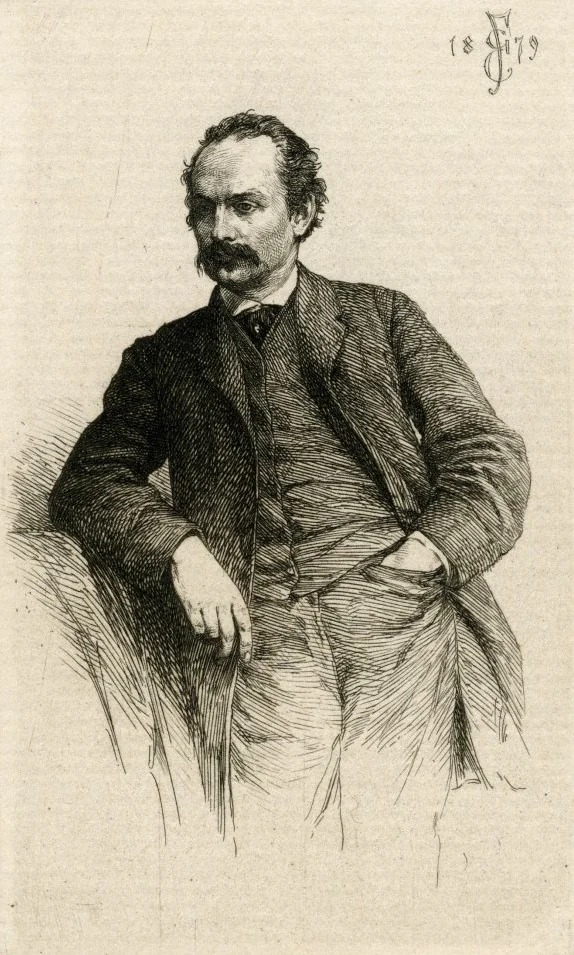
Image from Wikipedia
Image from Wikipedia
Hugo Harrer: The Realistic Perspective on Ruins, Cityscapes, and Italian Light
An Underrated Painter of the Düsseldorf School Bridging Architecture, Landscape, and Precision
Hugo Paul Harrer (* February 6, 1836 in Eberswalde; † December 10, 1876 in Rome) belongs to those 19th-century artists whose work is compelling not through loudness but through accuracy. As a German landscape and architectural painter of the Düsseldorf School, he developed a visual language based on observation, drawing discipline, and realistic vision. His career led him from northern German and southern German beginnings to Rome and Düsseldorf, and back to Rome, where he transformed his studies into oil paintings and regularly presented them at German art exhibitions. ([de.wikipedia.org](https://de.wikipedia.org/wiki/Hugo_Harrer))
Early Years and the Journey from Architecture to Painting
Harrer initially began training as an architect before turning to painting as a self-taught artist. The decisive step did not come through the classical academy, but through personal study, intense observation of nature, and learning in the studios of friends. This biographical constellation profoundly shaped his artistic development: Harrer did not seek academic glory but the reliable truth of what he observed. ([de.wikipedia.org](https://de.wikipedia.org/wiki/Hugo_Harrer))
His first paintings were created in Nuremberg, where the architectural substance inspired him to early attempts at architectural painting. He then moved to Munich, where the realistic painting style of Carl Theodor von Piloty captivated him. Even at this stage, it becomes evident that Harrer worked with open eyes: architecture, urban space, and light were not merely decorative backdrops but integral elements of a precise composition. ([de.wikipedia.org](https://de.wikipedia.org/wiki/Hugo_Harrer))
Rome as an Artistic Center and Laboratory for Nature Study
In 1861 or October 1862, Harrer went to Rome due to a chest ailment. There, he joined Ludwig Passini and painted studies from nature. For his development, Rome was not just a temporary place of stay but an open studio: ancient ruins, street scenes, Italian coastal landscapes, and architectural details provided him with motifs that he systematically collected in studies and sketches. From this material, he later developed the oil paintings he submitted to German art exhibitions. ([de.wikipedia.org](https://de.wikipedia.org/wiki/Hugo_Harrer))
It is during his Roman phase that Harrer's characteristic realism is particularly evident. Sources describe him as "thoroughly modern realist," who strived to present objects as he saw them. This approach is art-historically significant because it diminishes the distance to idealizing history painting and focuses attention on the concrete, observed motif. For Harrer, meaning arises from precision, not embellishment. ([deutsche-biographie.de](https://www.deutsche-biographie.de/sfz26126.html))
Düsseldorf and the Achenbach Circle School
Between 1867 and 1868, Harrer stayed in Düsseldorf and studied at the art academy in the landscape painting class of Oswald Achenbach. Furthermore, he was a member of the Düsseldorf Artists' Association Malkasten from 1868 to 1872. This period anchored him in the milieu of the Düsseldorf School, whose influence extended far beyond the regional scope in the 19th century. Here, Harrer combined the Roman observation of nature with the compositional experience of an academically shaped painting culture. ([de.wikipedia.org](https://de.wikipedia.org/wiki/Hugo_Harrer))
His paintings exhibit a clear preference for picturesque corners in crumbling ruins, street scenes, and Italian coastal landscapes. He thus moved at the intersection of architectural and landscape painting. The buildings, arches, walls, and squares appear in his works not as rigid backdrops but as spatial orders into which light, figures, and atmosphere are embedded. ([deutsche-biographie.de](https://www.deutsche-biographie.de/sfz26126.html))
Significant Works and Thematic Signature
The surviving works include Old Hanse (1868), View of the Amalfi Coast at Sunset (1871), At the Marcellus Theater in Rome (1876), Theater of Marcellus in Rome (1876), as well as A Jewish Street Vendor in a Street in Siena. This selection already demonstrates the range of his motifs: northern city architecture, Mediterranean coastal views, Roman monuments, and Italian everyday scenes. Harrer developed a body of work based on observation, topographical precision, and atmospheric compositional order. ([de.wikipedia.org](https://de.wikipedia.org/wiki/Hugo_Harrer))
Particularly revealing is his treatment of ruins and historical urban fragments. For Harrer, they do not serve merely as romantic backdrops but as testimonials of lived time. The actual strength of his art lies in the connection between architectural structure and atmospheric effect: the image remains objective while simultaneously gaining a quiet, poetic density. ([deutsche-biographie.de](https://www.deutsche-biographie.de/sfz26126.html))
Realism, Composition, and Painterly Discipline
Harrer's style is characterized by a uncompromising proximity to the visible. The German Biography emphasizes his careful observation of nature and his preference for accurate representation; the Wikipedia biography adds that he used his sketch collection as a foundation for oil paintings. This results in a method that mediates between immediate vision and well-considered composition. Harrer did not rely on quick effects but on controlled painterly construction. ([deutsche-biographie.de](https://www.deutsche-biographie.de/sfz26126.html))
In the context of art history, this attitude appears modern. While other 19th-century painters directed their gaze toward monumentality or sentimental enhancement, Harrer focused on the quiet authority of what is seen. His paintings thrive on the fine-tuning between architecture, spatial depth, and light direction. This is precisely where his quality lies: he transforms observation into visual culture. ([deutsche-biographie.de](https://www.deutsche-biographie.de/sfz26126.html))
Exhibitions, Reception, and Role in Art History
Harrer sent several larger paintings from Rome to German art exhibitions every year. In doing so, he was part of that international artist movement circulating between Rome, Munich, Düsseldorf, and other centers of the 19th century. His presence in exhibition contexts demonstrates that he was perceived as a reliable representative of a realistic, architecturally precise painting. ([deutsche-biographie.de](https://www.deutsche-biographie.de/sfz26126.html))
The surviving sources describe him as a diligent painter who never worked permanently in a master studio and yet developed a mature artistic profile. This makes his position particularly interesting: Harrer represents a form of art that arises from independence, a willingness to learn, and consistent practice. For connoisseurs of the Düsseldorf School, he is thus an intriguing name on the outskirts of the canon. ([deutsche-biographie.de](https://www.deutsche-biographie.de/sfz26126.html))
Later Years in Rome and Lasting Legacy
After his stay in Düsseldorf, Harrer returned to Rome and continued working with his collected studies and sketches. He died in 1876 in Rome and was buried in the Protestant Cemetery. The connection between his place of residence and artistic center concludes in a remarkable way: Rome was not only the starting point for many works but also the site of his final chapter. ([de.wikipedia.org](https://de.wikipedia.org/wiki/Hugo_Harrer))
The fact that his biography today primarily appears in specialized lexicons, museum catalogs, and art historical databases does not diminish his significance. On the contrary: Harrer embodies those quiet masters whose work prioritizes the accuracy of seeing over the pathos of fame. His painting appears vibrant precisely because it focuses on the concrete, the observed, and the spatial. ([de.wikipedia.org](https://de.wikipedia.org/wiki/Hugo_Harrer))
Conclusion: Why Hugo Harrer Remains Worth Seeing
Hugo Harrer captivates as an artist bridging architecture and landscape, between northern German origins and Italian imagery, between academic environments and independent practice. His works combine realistic precision with a quiet, atmospheric density that continues to impress today. Those who want to understand the Düsseldorf School will find in Harrer a representative who is as enlightening as he is underrated. Discovering him means uncovering a painter who shaped visual power from observation. ([de.wikipedia.org](https://de.wikipedia.org/wiki/Hugo_Harrer))
A visit to his preserved and documented works is worthwhile for all who appreciate architectural painting, Italian motifs, and the sober-poetic realism of the 19th century. Harrer’s art unfolds its effect quietly but lasting – and therein lies its strength. ([de.wikipedia.org](https://de.wikipedia.org/wiki/Hugo_Harrer))
Official Channels of Hugo Harrer:
- Instagram: no official profile found
- Facebook: no official profile found
- YouTube: no official profile found
- Spotify: no official profile found
- TikTok: no official profile found