
Hugo Harrer
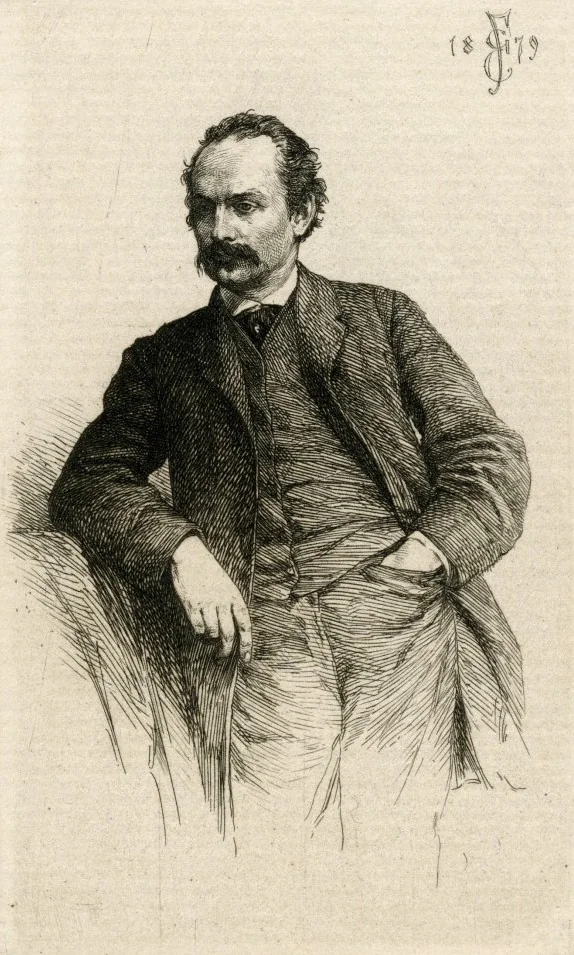
Image from Wikipedia
Image from Wikipedia
Hugo Harrer – Landscape, Architecture and the Silent Poetry of the Düsseldorf School
A Painter Between Rome, Nuremberg, and Düsseldorf
Hugo Paul Harrer (* February 6, 1836 in Eberswalde; † December 10, 1876 in Rome) was among those German artists of the 19th century whose work unfolds between precise nature observation, architectural sensitivity, and a clear connection to the Düsseldorf School. The landscape and architectural painter developed his visual language not as an academic careerist but through self-study, careful observation, and a pronounced interest in painterly situations. In his art, city views, ruins, street scenes, and Italian coastal landscapes combine to create an atmospheric overall picture that continues to convey the charm of the era. ([de.wikipedia.org](https://de.wikipedia.org/wiki/Hugo_Harrer?utm_source=openai))
Biographical Origins and Artistic Influence
According to the currently accepted biographical accounts, Harrer was born in Eberswalde; however, older records sometimes name Hirschberg in Silesia as his birthplace, reflecting the source situation of the 19th century. It is certain that he was originally meant to become an architect, but he turned to painting early on. He did not attend an art academy; instead, he shaped himself through careful nature observation and exchanges with artist friends. This independence gives his career a distinct, almost self-taught character. ([deutsche-biographie.de](https://www.deutsche-biographie.de/sfz26126.html?utm_source=openai))
Nuremberg as a Starting Point for an Artistic Career
His first paintings were created in Nuremberg, where the picturesque architecture of the city particularly inspired him. Already here, a guiding motif of his work is evident: Harrer was interested not only in individual buildings but also in the spatial effect of entire city silhouettes, the relationship between light, stone, and perspective, and the quiet drama of historical places. This approach connects him to a romantically influenced tradition where architectural painting not only documents but also makes mood and memory visible. ([deutsche-biographie.de](https://www.deutsche-biographie.de/sfz26126.html?utm_source=openai))
Düsseldorf and the School of Observed Reality
Between 1867 and 1868, Harrer stayed in Düsseldorf, the most important networking center of German painting at the time. The Düsseldorf School was known for its systematic education, strong emphasis on history, landscape, and genre painting, as well as its international appeal. In this environment, Harrer sharpened his perception of composition, pictorial space, and materiality, although as a self-taught artist he never fell completely into academic dependencies. His position thus appears simultaneously belonging and independent: he is close to the school without being fully subject to it. ([deutsche-biographie.de](https://www.deutsche-biographie.de/sfz26126.html?utm_source=openai))
Rome as a Working Center and Source of Motifs
After his stay in Düsseldorf, Harrer returned to Rome and intensively collected studies and sketches as templates for oil paintings. From these materials, he created several larger works each year, which he submitted to the German art exhibitions. Particularly characteristic are his painterly depictions of street scenes, ruins, and Italian coastal landscapes, where historical Italy does not merely appear as a backdrop but as a vibrant resonance space of light, age, and architectural dignity. ([de.wikipedia.org](https://de.wikipedia.org/wiki/Hugo_Harrer?utm_source=openai))
Style: Architectural Painting with a Sense of Atmosphere
Harrer's artistic development revolves around the connection of structure and mood. As a landscape and architectural painter, he mastered the handling of spatial sequences, perspective, and architectural details without losing himself in mere topographical accuracy. The atmosphere is crucial: the images open up to the patina of places, to the interplay of past and present, to the poetic state of transition. Thus, Harrer stands in a tradition that in the Düsseldorf School combined the observation of the visible world with narrative condensation. ([deutsche-biographie.de](https://www.deutsche-biographie.de/sfz26126.html?utm_source=openai))
Artistic Significance and Cultural Context
Harrer's work gains its value from the combination of artisanal precision and cultural-historical sensitivity. The Düsseldorf School was internationally esteemed in the 19th century and shaped not only landscape and genre painting but also the perception of space, nature, and architectural identity. Harrer adds a specific Italian perspective to this tradition: his motifs from Rome and the coast anchor German painting in a Mediterranean visual memory that oscillates between studiousness and imagination. ([rheinische-geschichte.lvr.de](https://www.rheinische-geschichte.lvr.de/Epochen-und-Themen/Themen/die-duesseldorfer-malerschule-im-19.-jahrhundert/DE-2086/lido/57d1295fefdcc4.18641232?utm_source=openai))
Reception and Legacy
The biographical sources of the 19th century describe Harrer as a skilled painter whose ability stemmed from precise observation and independent learning. That his works were regularly represented at German art exhibitions speaks to his contemporary presence in the art scene. Today, he is less known as a canonized grand master than as a characteristic representative of an art-historically significant current that mediates between academic tradition, romantic memory, and realistic attention to detail. This is where his lasting appeal lies for art lovers and collectors of historical painting. ([deutsche-biographie.de](https://www.deutsche-biographie.de/sfz26126.html?utm_source=openai))
Conclusion: Why Hugo Harrer Continues to Fascinate Today
Hugo Harrer remains intriguing because his work makes seeing itself a theme: architecture becomes a stage for light and time, landscape bears the weight of memory, and the city becomes a poetic space. He exemplifies a painter who has developed a clear artistic voice without an academic career while also nurturing a sensitive appreciation for places, atmosphere, and pictorial rhythm. Anyone who appreciates the fine transitions between Romanticism, Realism, and historical painting should rediscover Harrer's work and allow his images to resonate in the museum or collection with a calm gaze. ([deutsche-biographie.de](https://www.deutsche-biographie.de/sfz26126.html?utm_source=openai))
Official Channels of Hugo Harrer:
- Instagram: no official profile found
- Facebook: no official profile found
- YouTube: no official profile found
- Spotify: no official profile found
- TikTok: no official profile found