
Hugo Harrer
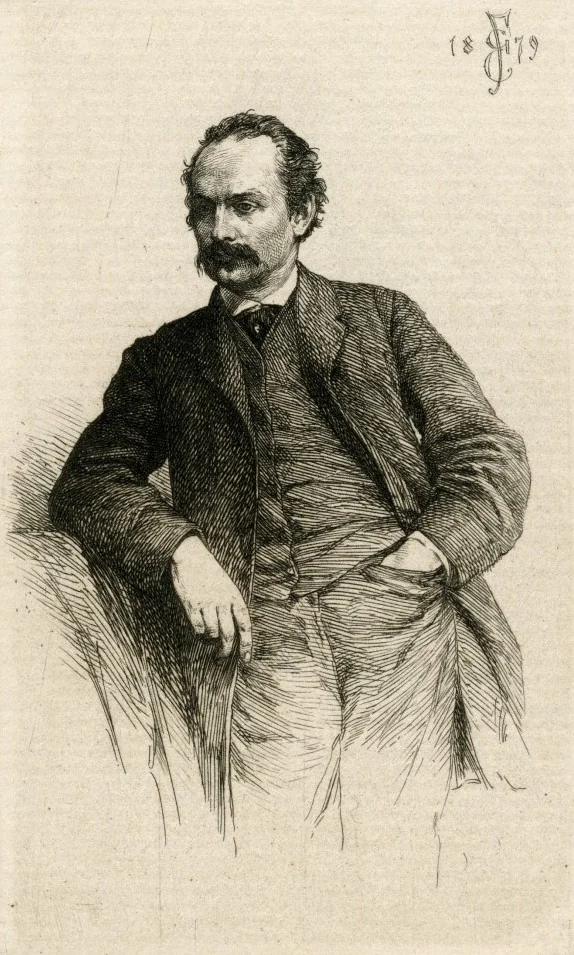
Image from Wikipedia
Image from Wikipedia
Hugo Harrer – Landscape and Architectural Painter of the Düsseldorf School
An Artist between Rome, Nuremberg, and Düsseldorf
Hugo Paul Harrer, born on February 6, 1836, and died on December 10, 1876, in Rome, is among those 19th-century painters whose work impressively combines a close observation of nature, an interest in architecture, and the Italian visual world. He became known as a German landscape and architectural painter of the Düsseldorf School and developed a profile characterized by independent study, precise observation, and a strong preference for picturesque urban spaces. His life took him back and forth between Germany and Italy, with Rome becoming a central place in his artistic development. ([de.wikipedia.org](https://de.wikipedia.org/wiki/Hugo_Harrer?utm_source=openai))
Biographical Background and Early Influences
Sources indicate that Harrer was born in Eberswalde, while earlier biographical records in the German Biography state his birthplace as Hirschberg in Silesia; this discrepancy is one of the known uncertainties regarding his biography. It is certain, however, that Harrer was originally meant to become an architect before turning to painting. Crucial for his artistic career was the fact that he did not attend an art academy and did not work permanently in the studio of a master, but instead educated himself through self-study, careful observation of nature, and interaction with fellow artists. ([deutsche-biographie.de](https://www.deutsche-biographie.de/sfz26126.html?utm_source=openai))
This autodidactic approach gives Harrer's work a distinctive character. His development exemplifies an artist who gained technical proficiency not through institutional training, but through keen observation and consistent practice. Particularly in the 19th century, this was a remarkable artistic stance that is clearly reflected in his preference for architectural motifs and spatially dense landscapes. ([deutsche-biographie.de](https://www.deutsche-biographie.de/sfz26126.html?utm_source=openai))
Nuremberg as the Starting Point of a Visual Language
Harrer's first paintings were created in Nuremberg, whose historical buildings inspired him to early attempts at architectural painting. This early contact with urban architecture had a lasting impact on his perspective and established a focus that repeatedly defined his later work. Not coincidentally, he combined a rural atmosphere with architectural precision in his paintings, causing his works to oscillate between topography, mood, and historical observation. ([deutsche-biographie.de](https://www.deutsche-biographie.de/sfz26126.html?utm_source=openai))
The Nuremberg phase already shows how strongly Harrer reacted to motifs that merge history and form. His art aimed not at pure embellishment, but rather at a pictorial order in which buildings, streets, and ruins became carriers of mood. In this way, he aligns with the tradition of the Düsseldorf School, which closely intertwined nature and narrative details. ([deutsche-biographie.de](https://www.deutsche-biographie.de/sfz26126.html?utm_source=openai))
Düsseldorf, Rome, and the Path through European Art Centers
In 1867/1868, Harrer stayed in Düsseldorf, a central place of German painting in the 19th century. He then returned to Rome, where he accumulated a large stock of studies and sketches and contributed oil paintings to German art exhibitions from there. This Roman work method reveals an artist who not only painted on location but systematically collected and condensed his impressions and later translated them into fully developed compositions. ([de.wikipedia.org](https://de.wikipedia.org/wiki/Hugo_Harrer?utm_source=openai))
Rome became for Harrer not just a place of residence but an artistic reservoir. From there emerged a body of work that often included picturesque street scenes, ruins, and Italian coastal landscapes. The motifs indicate a pronounced sense of atmosphere, light, and space, as well as the appealing connection between cultural memory and immediate perception. ([de.wikipedia.org](https://de.wikipedia.org/wiki/Hugo_Harrer?utm_source=openai))
Style, Composition, and the Düsseldorf School
Harrer is regarded as part of the Düsseldorf School, an art movement that had a significant impact far beyond the Rhine in the 19th century and developed international renown. In this environment, landscape, meticulous observation, and careful composition were central characteristics that Harrer further developed in his personal way, focusing on architecture and urban scenes. His works thus stand at the intersection of landscape painting, vedute, and historicizing architectural views. ([de.wikipedia.org](https://de.wikipedia.org/wiki/Liste_von_Malern_der_D%C3%BCsseldorfer_Malerschule?utm_source=openai))
Particularly interesting is the tension in his oeuvre: on one hand, he seeks the atmospheric, while on the other, the architectural structure remains clearly readable. This duality makes his paintings so appealing for art historical considerations, as they unite precise spatial construction with a poetic perception of the place. In the language of art history, one can speak here of a sensitive balance between topographical accuracy and painterly condensation. ([deutsche-biographie.de](https://www.deutsche-biographie.de/sfz26126.html?utm_source=openai))
Exhibitions, Reception, and Art Historical Classification
Harrer sent several larger paintings to German art exhibitions annually, suggesting a continuous presence in the exhibition scene. This not only attests to his professional ambition but also his desire to assert himself as an independent painter in the German-speaking art scene. Thus, his works were not hidden in the shadow of local workshops, but made visible in a regional art system. ([deutsche-biographie.de](https://www.deutsche-biographie.de/sfz26126.html?utm_source=openai))
Historical records praise him as a “capable painter,” whose skill emerged precisely from self-developed practice. For art historical assessment, this is significant because Harrer was not an academically trained careerist, but an artist who defined himself through observation, travel experiences, and choice of motifs. His position within the Düsseldorf School remains particularly interesting as a distinctive variant focused on architecture and urban spaces. ([deutsche-biographie.de](https://www.deutsche-biographie.de/sfz26126.html?utm_source=openai))
Character of Work and Cultural Value
The cultural value of Harrer's painting lies in its connection of the Italian visual world and the German art tradition. His street scenes, ruins, and coastal landscapes reflect a 19th century in which travel, study stays, and fascination for historical places were central artistic motivations. As a result, his work becomes a document of that era when painting was not only a representation but also a culture of remembrance and appropriation of the world. ([de.wikipedia.org](https://de.wikipedia.org/wiki/Hugo_Harrer?utm_source=openai))
Additionally, there is the rare consistency of his theme: architecture does not merely serve as a decorative element for Harrer, but shapes the very idea of the image itself. This is precisely where his lasting appeal for art historians lies. Anyone wishing to understand the Düsseldorf School will find in Harrer a painter who translates its strengths into the realm of architectural and city images in an independent way. ([de.wikipedia.org](https://de.wikipedia.org/wiki/Liste_von_Malern_der_D%C3%BCsseldorfer_Malerschule?utm_source=openai))
Later Years and Death in Rome
Harrer died in 1876 in Rome and was buried in the Protestant Cemetery in Rome. This closes a life cycle that led him from the German art centers to the southern region, making the Italian capital his final place of activity. His death in Rome underscores how strongly his artistic life was connected to the city and its motifs. ([de.wikipedia.org](https://de.wikipedia.org/wiki/Hugo_Harrer?utm_source=openai))
The sparse records of his final years reinforce the impression of an artist whose work today resonates more significantly through art historical traces than through broad popular recognition. This is precisely why a closer look at Harrer is worthwhile: he represents a serious, meticulously crafted, and thematically independent painting that claims a clear place within the Düsseldorf School. ([deutsche-biographie.de](https://www.deutsche-biographie.de/sfz26126.html?utm_source=openai))
Conclusion: A Quiet Master of Architectural and Landscape Painting
Hugo Harrer is fascinating because as a self-taught artist with a clear eye for architecture, space, and atmosphere, he developed a distinct pictorial language. His career connects Nuremberg, Düsseldorf, and Rome into an artistic biography that thrives on observation, travel, and careful painterly elaboration. Anyone interested in the Düsseldorf School, landscape painting, and historical city views will discover in Harrer a remarkable representative of this tradition. ([deutsche-biographie.de](https://deutsche-biographie.de/sfz26126.html?utm_source=openai))
A live experience with a historical painter is, by nature, not possible, yet his works deserve immediate engagement in museums, catalogs, or art historical collections. It is precisely there that the quiet power of his compositions unfolds best: in the encounter with light, architectural forms, and the poetic condensation of place and time. ([de.wikipedia.org](https://de.wikipedia.org/wiki/Hugo_Harrer?utm_source=openai))
Official Channels of Hugo Harrer:
- Instagram: no official profile found
- Facebook: no official profile found
- YouTube: no official profile found
- Spotify: no official profile found
- TikTok: no official profile found