
Hugo Harrer
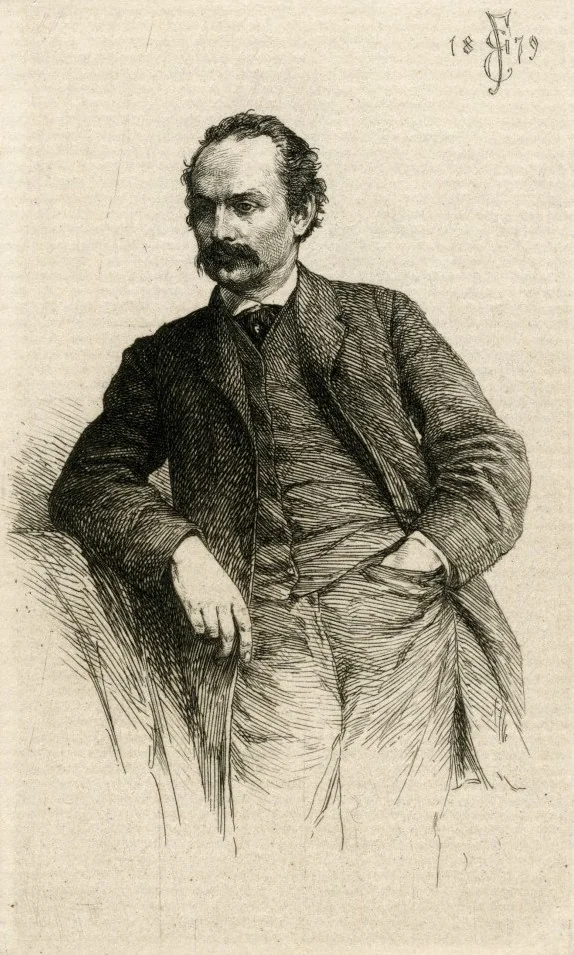
Image from Wikipedia
Image from Wikipedia
Hugo Harrer: Landscape, Architecture, and the Realist's Perspective
An Artist of the Düsseldorf School Between Nature Observation and Precise Form
Hugo Paul Harrer was part of that generation of 19th-century German painters who developed a distinctive visual language between academic tradition and independent nature observation. Born on February 6, 1836, and died on December 10, 1876, in Rome, he worked as a landscape and architecture painter of the Düsseldorf School, thereby shaping a genre that became one of the most important forms of expression in German painting during the 19th century. His work embodies a calm, accurate, and simultaneously atmospheric perspective on landscape and built environment. ([de.wikipedia.org](https://de.wikipedia.org/wiki/Hugo_Harrer?utm_source=openai))
Biographical Beginnings: Between Architectural Training and Painting
Harrer did not start as a free painter, but initially pursued an education in architecture. This very path explains the unique tension in his works: the connection of constructive order and sensitive nature perception. According to the German Biography, he soon turned to painting as a self-taught artist, honing his skills through personal study, careful nature observation, and visits to the studios of friends. This biographical independence is central to his artistic profile. ([deutsche-biographie.de](https://www.deutsche-biographie.de/sfz26126.html?utm_source=openai))
Important for classification is also the source situation: The Wikipedia page refers to differing accounts of the birthplace, as Rudolf Bergau stated that Harrer was born in Hirschberg in Silesia, while the local Wikipedia entry mentions Eberswalde. Such discrepancies are part of historical research and demonstrate how carefully the transmission of artist biographies from the 19th century must be examined. His burial in the Protestant Cemetery in Rome ultimately marks the end of a life profoundly shaped by artistic wandering and European culture. ([de.wikipedia.org](https://de.wikipedia.org/wiki/Hugo_Harrer?utm_source=openai))
The Artistic Breakthrough: Realism as an Attitude
Harrer was described in contemporary classifications as a "capable painter" who never worked permanently at an art academy or in a master's studio. This independence lends authority to his career: it illustrates that quality is defined not only by institutional training but also by observational skill, discipline, and a personal perception of reality. The German Biography characterizes him as a “thoroughly modern realist” who aimed to depict objects as accurately as possible. ([deutsche-biographie.de](https://www.deutsche-biographie.de/sfz26126.html?utm_source=openai))
This realistic fundamental attitude aligns with the Düsseldorf School, whose paintings often thrive on meticulous crafting, strong composition, and a clear visual direction. Harrer's landscapes and architectural views likely reached their impact precisely within this tension: not as mere views but as carefully composed visual spaces. His artistic demand lay in condensing perception and form, in the precise translation of the seen into painterly order. ([deutsche-biographie.de](https://www.deutsche-biographie.de/sfz26126.html?utm_source=openai))
Works and Artistic Development: Landscape and Architecture as Themes
As a landscape and architecture painter, Harrer operated at an intersection that was particularly appealing in the 19th century. The landscape provided mood, light, and atmosphere, while architecture offered structure, perspective, and spatial stability. It is precisely in this dual perspective that lies the particular charm of his oeuvre: nature and architecture do not appear as opposites but as compositional partners. This makes Harrer intriguing for art-historically interested readers even today. ([de.wikipedia.org](https://de.wikipedia.org/wiki/Hugo_Harrer?utm_source=openai))
His development can be described less by spectacular stylistic breaks than by a consistent deepening of his approach. The source material emphasizes above all his accuracy and realistic access, not the desire for effects. This creates the image of a painter who felt wholly committed to seeing, and whose artistic development was marked by observation. In this attitude lies a quiet yet sustainable modernity. ([deutsche-biographie.de](https://www.deutsche-biographie.de/sfz26126.html?utm_source=openai))
Contextualization within the Düsseldorf School
The Düsseldorf School stood for an art in the 19th century that combined drawing precision, narrative clarity, and often also a sense of landscape. Harrer fits into this tradition without appearing merely as an epigone. His profile stems from the connection of architectural thinking and realistic fidelity to nature, thus from a visual conception that intertwines order and observation. This is precisely where the art-historical relevance of his name lies. ([de.wikipedia.org](https://de.wikipedia.org/wiki/Hugo_Harrer?utm_source=openai))
For the reception of such painters, it is often said: they are not always the loudest names in art history, but they embody a style-defining attitude of their time. Harrer belongs in this category. His works represent a serious, craft-based, and intellectually disciplined realism that has shaped 19th-century German painting far beyond the purely anecdotal. ([deutsche-biographie.de](https://www.deutsche-biographie.de/sfz26126.html?utm_source=openai))
Overview of Works Instead of Discography: What is Known of Hugo Harrer
Since Hugo Harrer was a painter and not a musician, there is no discography in the strict sense. Thus, for an art historical artist profile, a work overview is the more sensible approach: what has been preserved mainly includes biographical data, his contextualization within the Düsseldorf School, and references to his auction presence in the art market. Wikipedia also mentions a portal with auction results at artnet, which at least indicates a continued visibility of his name in the art trade. ([de.wikipedia.org](https://de.wikipedia.org/wiki/Hugo_Harrer?utm_source=openai))
This form of transmission is particularly relevant for collectors and art enthusiasts. It shows that Harrer's name remains present not only in reference works but also in the context of provenance, market, and museum research. For a comprehensive appreciation, it is therefore not the quantity of preserved works that is crucial, but the clear artistic identity that can be discerned from the sources. ([de.wikipedia.org](https://de.wikipedia.org/wiki/Hugo_Harrer?utm_source=openai))
Cultural Significance and Lasting Value
Harrer's significance lies in the connection of realistic accuracy, landscape sensitivity, and architectural order. Such artists stabilize the art historical memory because they make an epoch visible not through heroic gestures, but through formal discipline and precise perception. His biography tells of self-study, independence, and the will to establish himself as a painter beyond academic dependence. ([deutsche-biographie.de](https://www.deutsche-biographie.de/sfz26126.html?utm_source=openai))
Those interested in the Düsseldorf School, German realism, and the history of landscape and architecture painting will find in Hugo Harrer an artist with a clear signature. It is precisely his quiet consistency that makes him compelling: not a loud innovator but a precise observer with an assured eye for space, structure, and reality. A visit to collections, archives, or auction catalogs is worthwhile for anyone wishing to discover such fine lines in art history. ([deutsche-biographie.de](https://www.deutsche-biographie.de/sfz26126.html?utm_source=openai))
Conclusion: A Quiet Realist with Lasting Influence
Hugo Harrer fascinates through the consistency of his artistic path. From a planned career in architecture emerged a painter's existence; from the self-taught artist arose a realistic creator of landscapes and architecture. Those who follow his biography recognize an artist who united precision, observation, and a sense of form into an independent stance. For this reason, it is worthwhile to reconsider Hugo Harrer as an important representative of the Düsseldorf School and to discover his works attentively in a museum context. ([deutsche-biographie.de](https://www.deutsche-biographie.de/sfz26126.html?utm_source=openai))
Official Channels of Hugo Harrer:
- Instagram: No official profile found
- Facebook: No official profile found
- YouTube: No official profile found
- Spotify: No official profile found
- TikTok: No official profile found
Sources:
- Wikipedia – Hugo Harrer
- Deutsche Biographie – Harrer, Hugo
- artnet – Hugo Paul Harrer, Auction Results
- Wikipedia: Image and text source