
Hugo Harrer
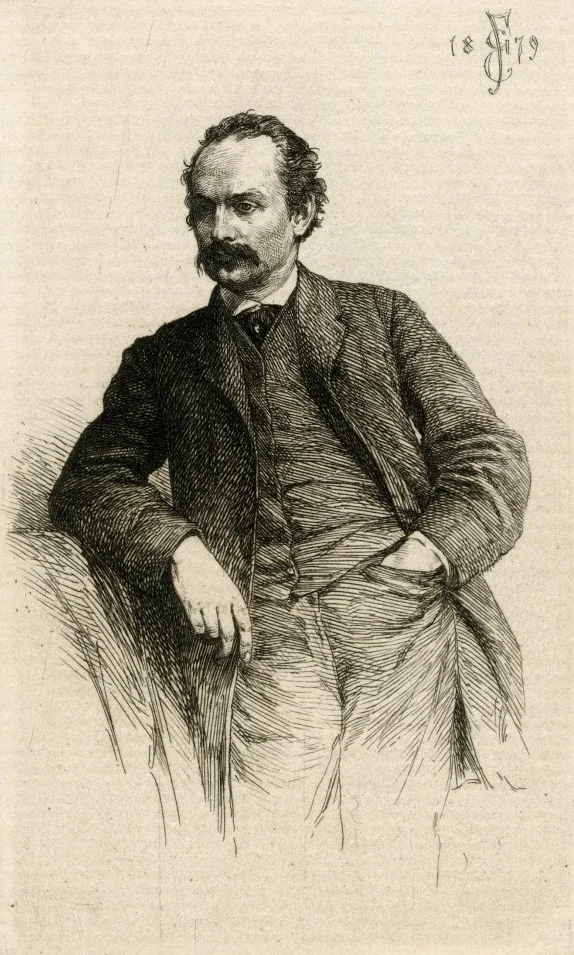
Image from Wikipedia
Image from Wikipedia
Hugo Harrer – The Precise View of Ruins, Coastlines, and the Quiet Drama of the Düsseldorf School
A German Landscape and Architectural Painter Between Nature Study, Italian Longing, and Realistic Precision
Hugo Paul Harrer, born on February 6, 1836, in Eberswalde and died on December 10, 1876, in Rome, is one of those 19th-century artists whose work unfolds between disciplined observation and poetic atmospheric painting. As a landscape and architectural painter of the Düsseldorf School, he developed a visual language that captured architectural motifs, street scenes, ruins, and Italian coastal landscapes with great precision. His artistic development took him from his initial architectural training through autodidactic private study to an independent position in realistic painting. ([de.wikipedia.org](https://de.wikipedia.org/wiki/Hugo_Harrer))
Biographical Beginnings: From Architecture to Painting
Harrer began an architectural education but soon turned to painting and continued his training as an autodidact. The careful study of nature and working in the studios of friends were crucial to him, rather than attending a classical academy. His first paintings were created in Nuremberg, where the picturesque architecture of the city inspired him to early attempts at architectural painting. ([de.wikipedia.org](https://de.wikipedia.org/wiki/Hugo_Harrer))
This early path shapes the understanding of his entire oeuvre: Harrer sought no academic routine but an immediate approach to form, space, and light. The city as a motif, architecture as the subject of his images, and the precise reproduction of surfaces characterized even his earliest works. This laid the foundation for a career driven by observation, craftsmanship, and realistic truthfulness. ([deutsche-biographie.de](https://www.deutsche-biographie.de/sfz26126.html))
Munich, Rome, and Düsseldorf: Stages of Artistic Development
After Nuremberg, Harrer moved to Munich to draw inspiration from the then-new realistic painting style of Carl Theodor von Piloty. In 1862, he went to Rome due to a chest ailment, where he joined Ludwig Passini and painted studies from nature. In Rome, his first nature-based works gained attention for their truthfulness and fidelity; concurrently, he worked mainly on architectural images with figures and smaller genre scenes. ([de.wikipedia.org](https://de.wikipedia.org/wiki/Hugo_Harrer))
In 1867 and 1868, Harrer stayed in Düsseldorf and studied in the landscape painting class of Oswald Achenbach at the Art Academy. From 1868 to 1872, he was a member of the Düsseldorf artists' association Malkasten. This phase visibly anchored him in the environment of the Düsseldorf School, whose international influence significantly shaped landscape and architectural painting in Europe during the 19th century. ([de.wikipedia.org](https://de.wikipedia.org/wiki/Hugo_Harrer))
The Style: Modern Realism with a Love for Picturesque Corners
Contemporary descriptions refer to Harrer as a "thoroughly modern realist." This captures the essence of his art: he did not wish to idealize objects but to represent them as he saw them, placing great emphasis on the manner of painterly representation. He preferred to choose his motifs from crumbling ruins and the winding spaces of historical architecture, making his paintings both documentary and atmospheric. ([deutsche-biographie.de](https://www.deutsche-biographie.de/sfz26126.html))
Especially characteristic is the connection between architecture and landscape. Harrer composed spaces where walls, arches, squares, coastlines, and street scenes do not merely remain as a backdrop but define the very rhythm of the image. The works mentioned in the sources reflect a clear preference for Italian topographies such as Amalfi, Rome, and Siena, whose light and structure left a lasting impression on his work. ([de.wikipedia.org](https://de.wikipedia.org/wiki/Hugo_Harrer))
Key Works and Artistic Profile
Among his surviving works are Alte Hanse (1868), View of the Coast of Amalfi at Sunset (1871), At the Theatre of Marcellus in Rome (1876), Theatre of Marcellus in Rome (1876), and A Jewish Street Vendor in a Street in Siena. This selection shows the range of his interests: from historical architecture to Roman antiquities, and to lively street scenes in Italy. The works clearly illustrate that Harrer did not understand his subjects as mere topographical findings but as composed narratives of place, time, and mood. ([de.wikipedia.org](https://de.wikipedia.org/wiki/Hugo_Harrer))
Harrer's significance is also tangible on an institutional level. The German Digital Library notes a substantial collection related to him in Cottbus and describes him as an important representative of architectural and landscape painting in the second half of the 19th century. Additionally, his mentions in exhibition contexts underscore his ongoing relevance for art historical perception. ([deutsche-digitale-bibliothek.de](https://www.deutsche-digitale-bibliothek.de/item/NQTPR4DJWHA4NZSZQWQWVZHG3AO6OHDF?utm_source=openai))
Career and Exhibitions: Presence in German Art Exhibitions
After his time in Düsseldorf, Harrer returned to Rome, where he compiled a large stock of studies and sketches as a basis for oil paintings. From there, he actively took excursions, collected visual material, and sent several larger paintings to German art exhibitions annually. This continuous presence made him visible in the exhibition context and anchored him in the network of German-language art production of the 19th century. ([de.wikipedia.org](https://de.wikipedia.org/wiki/Hugo_Harrer))
His career, therefore, unfolded less spectacularly and more consistently and laboriously. Harrer represented an artist's existence based on observation, travel, sketches, and careful elaboration. It is precisely this quiet professionalism that makes his standing within the Düsseldorf School understandable. ([deutsche-biographie.de](https://www.deutsche-biographie.de/sfz26126.html))
Cultural Influence: Italy, Realism, and the Düsseldorf School
Harrer's work stands as an exemplar of the 19th-century discourse on fidelity to nature and the pictorial worthiness of the everyday. His Italian views connect the German painting tradition with the southern motif world and draw on the art of travel as an aesthetic program. The Düsseldorf School formed an important resonance space for this, as it combined landscape, architecture, and atmospheric narrative into an internationally comprehensible visual language. ([de.wikipedia.org](https://de.wikipedia.org/wiki/Hugo_Harrer))
The fact that his motifs continue to appear in museums, databases, and exhibition titles speaks to the sustainability of his pictorial world. Harrer's art may not be a loud name in the canon, but it is a precise building block of the realism and reception of Italy in the 19th century. Those who view his paintings see not only places but also the discipline of a painter who could transform reality into composition. ([deutsche-digitale-bibliothek.de](https://www.deutsche-digitale-bibliothek.de/item/NQTPR4DJWHA4NZSZQWQWVZHG3AO6OHDF?utm_source=openai))
Reception and Art Historical Classification
The biographical sources consistently emphasize Harrer's realism, his observation of nature, and his architectural sensitivity. Already in the ADB, he was described as a painter who found his profile through self-study, diligent observation of nature, and connections in artists' studios. The German Biography also highlights that his first Roman studies caused a stir due to their great truthfulness and fidelity. ([deutsche-biographie.de](https://www.deutsche-biographie.de/sfz26126.html))
This results in the image of an artist whose significance arises less from the pathos of self-representation and more from the quality of execution. Harrer remains interesting for collectors, art historians, and lovers of the Düsseldorf School because his works maintain the balance between topographical accuracy and atmospheric effect. This is precisely where his lasting strength lies. ([deutsche-digitale-bibliothek.de](https://www.deutsche-digitale-bibliothek.de/item/NQTPR4DJWHA4NZSZQWQWVZHG3AO6OHDF?utm_source=openai))
Conclusion: An Artist for the Precise Gaze
Hugo Harrer fascinates as a painter of a quiet, concentrated modernity before modernity: as an autodidact, nature observer, traveler to Italy, and master of architectural and landscape painting. His images open a view into the 19th century, where space, light, and historical topography become independent protagonists. Those interested in the Düsseldorf School, realistic painting, and Italian motifs will find in Harrer an artist of remarkable precision and poetic calm. His works deserve to be encountered in person or in exhibitions – it is there that their full atmosphere unfolds. ([de.wikipedia.org](https://de.wikipedia.org/wiki/Hugo_Harrer))
Official Channels of Hugo Harrer:
- Instagram: No official profile found
- Facebook: No official profile found
- YouTube: No official profile found
- Spotify: No official profile found
- TikTok: No official profile found
Sources:
- Wikipedia - Hugo Harrer
- German Biography - Harrer, Hugo
- German Digital Library - High Wall with Vine
- German Digital Library - Small Square in Amalfi
- German Digital Library - Sailing Boats off Amalfi
- German Digital Library - Tower of St. Pietro Ravello
- City Cottbus/Chóśebuz - Exhibition Opening: Between Capri and Rome. Hugo Paul Harrer
- City Cottbus/Chóśebuz - Special Exhibition: Between Capri and Rome. Hugo Paul Harrer
- Wikipedia: Image and Text Source