
Hugo Harrer
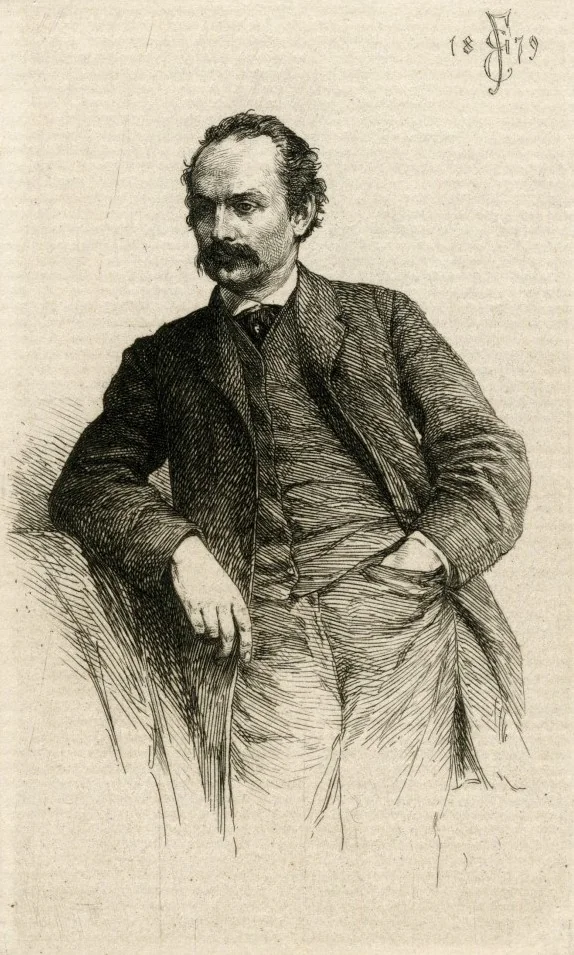
Image from Wikipedia
Image from Wikipedia
Hugo Harrer: A Quiet Master between Landscape, Architecture, and the Düsseldorf School
An Artist between Nature Observation, Cityscapes and the Longing for Precise Form
Hugo Paul Harrer was a German landscape and architectural painter of the 19th century, whose work stands in the tradition of the Düsseldorf School. Born on February 6, 1836, in Eberswalde and died on December 10, 1876, in Rome, he embodies the type of artist who shaped his visual language through careful nature observation, craftsmanship discipline, and a keen sense for painterly structure. His biography intertwines North German origins, Italian impressions, and the academic influence of Düsseldorf into a distinct artistic profile. (de.wikipedia.org)
Harrer belongs to that generation of painters who worked in the 19th century between Romanticism, Realism, and academic landscape art. His career demonstrates a remarkable tension: on one hand, an interest in architecture as a motif, and on the other, an openness to atmospheric landscape representations. It is precisely in this connection that the appeal of his art lies, focusing less on spectacular effects and more on precise observation, spatial impact, and compositional clarity. (de.wikipedia.org)
Biographical Roots: From Aspiring Architect to Painter
According to the available biographical sources, Hugo Harrer was initially meant to become an architect, but he turned to painting early on. The German Biography describes him as an artist who did not attend an art academy but instead developed through self-study, careful nature observation, and exchanges with friends. This self-taught aspect gives his career a special character, explaining the high accuracy of his views and the palpable seriousness of his composition. (deutsche-biographie.de)
His first paintings were created in Nuremberg, where the picturesque architecture of the city particularly inspired him. This early connection to the built environment shows that Harrer understood architecture not just as a backdrop but as an artistically autonomous subject. For a 19th-century painter, this is significant because it brings not only landscape but also cityscape, building form, and historical space to the forefront. (deutsche-biographie.de)
Düsseldorf and Rome: Education, Exchange, and Artistic Maturation
An important chapter in Harrer's career was his stay in Düsseldorf during the years 1867 and 1868. There, he studied at the art academy in the landscape painting class of Oswald Achenbach, one of the formative figures of the Düsseldorf School. This connection anchored Harrer in a tradition known for its pronounced interest in light management, atmospheric effect, and careful composition. (de.wikipedia.org)
After this phase, Harrer returned to Rome, from where he undertook study trips and regularly sent larger paintings to German art exhibitions. The Italian city remained a central source of inspiration for many German artists of the 19th century; for Harrer, this environment was combined with a disciplined, almost documentary approach. This creates the image of a painter who does not collect impressions fleetingly but transforms them into concentrated visual solutions. (deutsche-biographie.de)
The Düsseldorf School as an Aesthetic Framework
Harrer is explicitly regarded in the sources as a representative of the Düsseldorf School. The Kunstpalast Düsseldorf describes this school as a culturally far-reaching phenomenon that impacted not only visual arts but also literature, theater, and music. For Harrer, this affiliation meant being integrated into a network of artists, workshop traditions, and exhibition culture that held great significance in the 19th century. (kunstpalast.de)
The Düsseldorf School was by no means reduced to a rigid uniform style. Instead, a flexible artistic field emerged, where landscape, architecture, genre, and historical themes existed side by side. Harrer's work can be read in this context as a carefully composed connection of space, motif, and mood, oriented both towards academic standards and personal observation. (de.wikipedia.org)
Painting with Architectural Awareness
Particularly characteristic of Harrer is the emphasis on architectural and city motifs. His early paintings from Nuremberg already demonstrate how strongly he was inspired by the built environment. Architecture appears in his works not merely as a background but as an ordered structure of lines, surfaces, and perspectives, providing the painting with support and rhythmic tension. (deutsche-biographie.de)
This inclination towards architectural painting lends his work a quiet authority. While other painters relied on dramatic natural moods, Harrer worked more with structure, proportion, and spatial readability. This is where his quality lies: he does not translate reality into pathos but into visual order. This makes his paintings particularly interesting for art history, as they balance between topographical accuracy and poetic condensation. (deutsche-biographie.de)
Rome as an Artistic Resonance Space
For Harrer, Rome was not just a place of residence but a productive resonance space. The city offered him motifs, historical depth, and a visual culture where architecture and landscape uniquely merge. German Biography highlights that he frequently collected studies from there and sent several larger paintings each year to exhibitions in Germany. This speaks to a continuous, professional working method despite the relatively short lifespan of the artist. (deutsche-biographie.de)
The Italian context likely also intensified his focus on light, atmosphere, and the dialogue between nature and architecture. In such constellations emerge images that are less loud than sustainable: they gain through balance, not through effects. Harrer embodies an art that thrives on observation, maturity, and inner discipline. (deutsche-biographie.de)
Discography? No Music Career, but a Painter's Oeuvre
Since Hugo Harrer was not a musician but a painter, he naturally has no discography, chart hits, or music releases. Nevertheless, it is worthwhile to look at his oeuvre as that of a carefully working artist whose development can be traced through motifs, places, and techniques. His “work history” consists of studies, paintings, and exhibition contributions, not albums or singles. (de.wikipedia.org)
This clarity is important for a serious classification: Harrer belongs to the art history of the 19th century, not to music history. His significance arises from the fusion of landscape painting and an interest in architecture, from his training at the Düsseldorf Academy, and from the independent development of a precise, quiet painting style. When one observes him, one encounters not a loud star, but a serious shaper of vision. (kunstpalast.de)
Critical Reception and Art Historical Classification
The biographical reference works and art historical registers clearly locate Harrer within the tradition of the Düsseldorf School. German Biography emphasizes his path of self-study and nature observation, while the Wikipedia entry and the lists of the Düsseldorf School document his affiliation. This body of sources shows that Harrer remains present in art history, even if his name is not among the most popular of the 19th century. (deutsche-biographie.de)
The relevance of his art lies precisely in this intermediate position: not canonically overshadowed, but historically clearly located. Such artists are indispensable for understanding an era, as they make the breadth and depth of a style visible. Harrer thus stands as a representative of those painters who built the visual memory of their time. (kunstpalast.de)
Cultural Value and Lasting Impact
Harrer's work contributes to the understanding of an art landscape in which landscape painting, architectural motifs, and academic training were closely intertwined. The Düsseldorf School radiated internationally and shaped much more than just individual genres of images. In this web, Harrer becomes an important, albeit understated voice, articulating the relationship between nature, city, and visual order in his own way. (kunstpalast.de)
For today's viewers, the tension of his art lies in the connection between accuracy and mood. His works invite closer examination, taking the architecture of a painting as seriously as the atmosphere of the place. It is precisely this quiet consequence that makes Hugo Harrer an artist whose significance unfolds upon a second look. (deutsche-biographie.de)
Conclusion: A Quiet Master with a Clear Handwriting
Hugo Harrer is intriguing because he shaped an independent position from a narrow, precise artistic trail. He combined landscape and architecture, Rome and Düsseldorf, observation and composition into a body of work that convincingly speaks in a quiet manner. Anyone interested in the Düsseldorf School, 19th-century painting, and the fine transitions between city view and landscape will discover a remarkable name in Harrer. (deutsche-biographie.de)
It is precisely in his calmness that his strength lies: Harrer's art demands no spectacle, but attention. It rewards the gaze for structure, space, and atmosphere, opening access to the visual culture of his time. Those who trace his artistic journey experience a painter whose seriousness still deserves respect today. (deutsche-biographie.de)
Official Channels of Hugo Harrer:
- Instagram: No official profile found
- Facebook: No official profile found
- YouTube: No official profile found
- Spotify: No official profile found
- TikTok: No official profile found