
Hermann von Pückler-Muskau
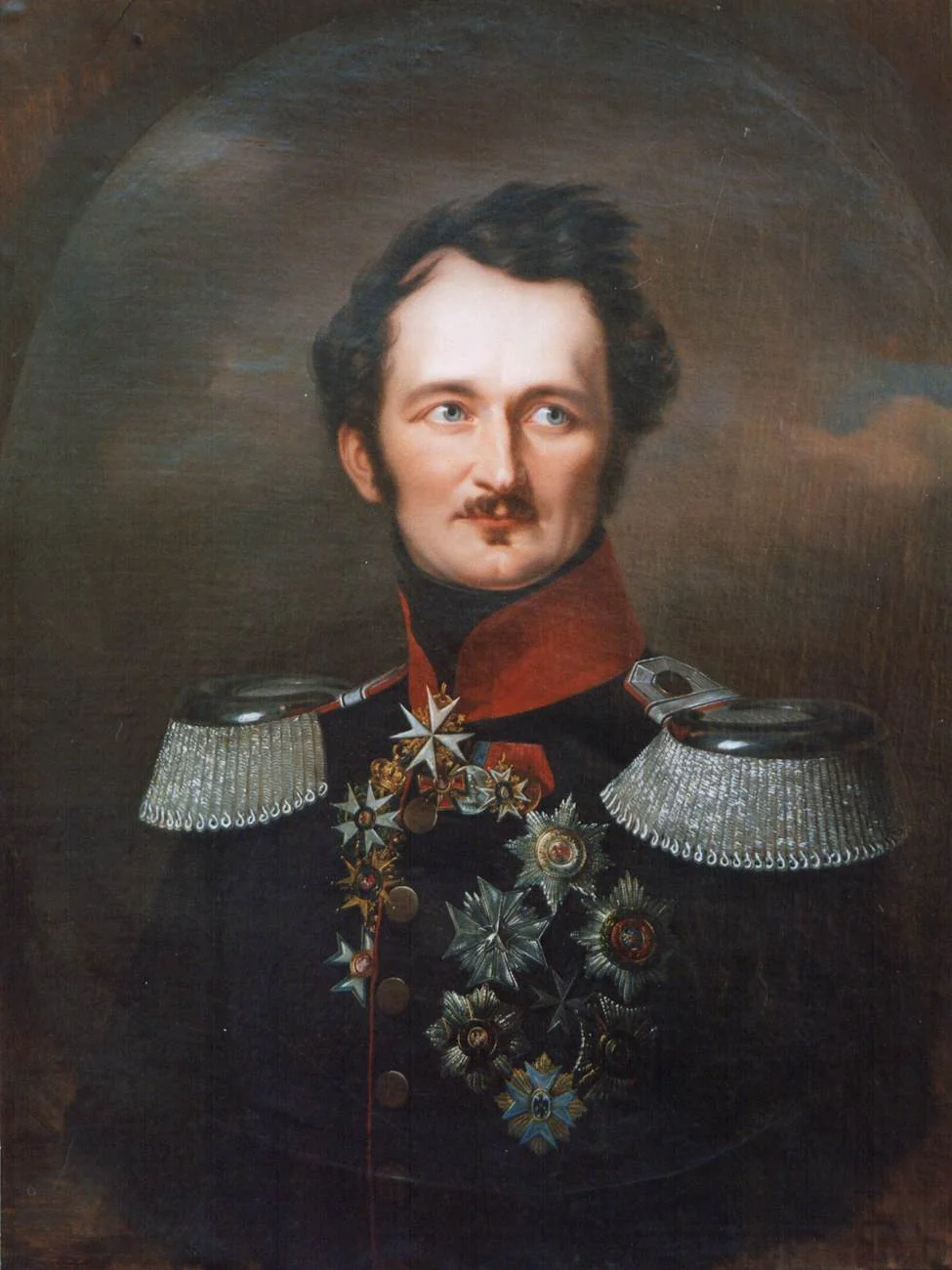
Image from Wikipedia
Image from Wikipedia
Hermann von Pückler-Muskau – The Green Visionary Between World Travel, Garden Art, and Literary Self-Concept
An Extraordinary Spirit of the 19th Century
Hermann Ludwig Heinrich von Pückler-Muskau is one of the most colorful personalities of the 19th century: nobleman, landscape architect, travel writer, and world traveler all in one. Born on October 30, 1785, at Muskau Castle and died on February 4, 1871, at Branitz Castle, he significantly influenced cultural history far beyond the borders of Lusatia. As Count and later, from 1822, Prince of Pückler-Muskau, he combined aristocratic self-presentation with intellectual curiosity, aesthetic ambition, and an unusually modern understanding of landscape as an art form. ([deutsche-biographie.de](https://www.deutsche-biographie.de/gnd118597019.html?utm_source=openai))
His name is still associated with Muskauer Park, a masterpiece of garden art that was added to the UNESCO World Heritage List in 2004. Pückler himself referred to it as "nature painting" and developed a concept of landscape that did not simply reshape the existing but transformed it into a poetic, spatially conceived composition. In doing so, he became a pioneer of modern landscape architecture and a figure who merged art, nature, and social representation into one grand life project. ([whc.unesco.org](https://whc.unesco.org/en/list/1127?utm_source=openai))
Background, Education, and Early Influences
Pückler came from an old Silesian noble family and received a status-appropriate, yet not linear education for his time. After attending the Pedagogium in Halle, he studied law in Leipzig starting in 1801, but dropped out in 1803. This early decision already indicates a character driven less by academic discipline and more by willfulness, restlessness, and a keen aesthetic instinct. ([duesseldorf.de](https://www.duesseldorf.de/heineinstitut/archiv-bibliothek-dokumentation/archiv/gesamtbestand/pueckler-muskau-hermann-von?utm_source=openai))
After his father's death, he took over the lordship of Muskau in 1811, thereby gaining the material and symbolic foundation for his greatest life work. From this position, he developed not just a park but a comprehensive cultural project that changed the landscape, the representation of the house, and the perception of the entire place. This connection of ownership, design, and publication makes his biography so extraordinary. ([muskauer-park.de](https://muskauer-park.de/pueckler?utm_source=openai))
The Breakthrough as a Park Creator
His actual artistic breakthrough began in 1815 with the establishment of the landscape garden in Muskau. The park was developed gradually until 1844 and was later described in a UNESCO text as pioneering for landscape design because it integrated the natural topography, river space, and settlement structure into a cohesive composition. Pückler's approach influenced the development of landscape architecture in Europe and America and set standards for the connection of aesthetics, planning, and public space. ([whc.unesco.org](https://whc.unesco.org/en/list/1127?utm_source=openai))
What is crucial is not only the result but the method: Pückler understood landscape not as a static backdrop but as a "painted" spatial structure. The layout of paths, sight lines, the integration of architecture, and the careful dramaturgy of the terrain followed a compositional logic that can be described using terms from both the fine arts and architecture. This interdisciplinary quality makes his name so significant for experts in garden art to this day. ([whc.unesco.org](https://whc.unesco.org/en/list/1127?utm_source=openai))
Travel, Self-Presentation, and Literary Productivity
Pückler was not only a designer but also a traveler and author. His travels took him through Europe, North Africa, and the Middle East; they shaped his worldview and literary style. Under pseudonyms like "The Deceased" and "Semilasso," he published texts that made him one of the most-read authors of his time. The Deutsche Biographie explicitly categorizes him as a travel writer and garden artist, thereby pointing to the dual role that continues to shape his work today. ([deutsche-biographie.de](https://www.deutsche-biographie.de/gnd118597019.html?utm_source=openai))
Among his most well-known publications is Andeutungen über Landschaftsgärtnerei from 1834, in which he systematically laid out his design principles. At the same time, his travel books and letters serve as important self-portraits of a man who did not shy away from public life but cultivated it. Pückler knew how to stage himself as a cultural event: as a dandy, as an observer, as an ironic commentator of his time, and as living proof that taste can also be an intellectual stance. ([whc.unesco.org](https://whc.unesco.org/en/list/1127?utm_source=openai))
Style, Method, and Cultural Signature
Pückler's style cannot be understood without his demand for aesthetic absoluteness. His landscapes do not appear ornamental in the narrow sense but atmospheric, open, and psychologically considered. He composed spaces where movement, distance, layering, and sight relationships play a central role, distinguishing his work significantly from purely decorative garden fashions. This attitude made him a key figure in European garden art in the 19th century. ([whc.unesco.org](https://whc.unesco.org/en/list/1127?utm_source=openai))
As a personality, he also embodied an aesthetic program. Contemporary and later portrayals describe him as eccentric, self-assured, and brilliantly sociable; the Muskauer Park Museum emphasizes his role as a dandy and bon vivant who played with identities and consciously sought public attention. Pückler was therefore far more than just a park creator: he was an artist of appearance, who understood his way of life as part of his work. ([muskauer-park.de](https://muskauer-park.de/en/exhibitions/puckler-puckler-catch-him-if-you-can?utm_source=openai))
The Break with Muskau and Late Work in Branitz
The financial burden of his ambitious garden projects had its consequences. The sale of Muskau marked a painful turning point, but Pückler continued his work later in Branitz. There he developed another significant Gesamtkunstwerk that further evolved his concept of the landscape garden as a cultural organism. In hindsight, this transition reveals the persistence of his artistic thinking: failure did not lead him to abandon the project, but to transform it. ([verlag-der-pioniere.de](https://www.verlag-der-pioniere.de/programm/pueckler.html?utm_source=openai))
Branitz thus became the late manifestation of a attitude toward life that understood design as a continuous effort involving space, memory, and impact. Pückler remained a man of form into his old age, never giving up the idea of the garden as a spiritual order. His death at Branitz Castle in 1871 concluded a life that reads like a historical novel yet remains measurable in precise cultural achievements. ([deutsche-biographie.de](https://www.deutsche-biographie.de/gnd118597019.html?utm_source=openai))
Discography in the Broader Sense: Works, Publications, and Reception
As Pückler was not a musician but a writer and garden artist, his "discography" can only be understood in a metaphorical sense as an overview of his works. Central published works include Andeutungen über Landschaftsgärtnerei, Briefe eines Verstorbenen, and other travel and observational works under the pseudonyms Semilasso and Der Verstorbene. These texts made him widely known in the 19th century and cemented his reputation as a stylistically proficient author with a keen eye for landscape, society, and culture. ([whc.unesco.org](https://whc.unesco.org/en/list/1127?utm_source=openai))
The critical reception still highlights his role as an innovative landscape architect. UNESCO describes Muskauer Park as a pioneering achievement that influenced new approaches in landscape design and shaped the development of the profession. Cultural-historical contributions and museum offerings also emphasize his impact on the perception of the nobility in the 19th century: not merely as owners but as active producers of culture and space. ([whc.unesco.org](https://whc.unesco.org/en/list/1127?utm_source=openai))
Cultural Influence and Aftermath
Pückler's cultural influence extends far beyond Lusatia. Muskauer Park is described as an outstanding example of a landscape concept that integrates urban, social, and aesthetic dimensions. UNESCO explicitly points out that this form of integrated landscape design influenced the development of landscape architecture in Europe and America, including urban green spaces and later planning models. ([whc.unesco.org](https://whc.unesco.org/en/list/1127?utm_source=openai))
Today's memory culture continues to work with his figure. Exhibitions, museum offerings, and cultural-historical texts present Pückler as the "Green Prince," as a self-stylizer, and as a keen observer of his era. This multifacetedness makes him appealing to historians, landscape architects, and a broad audience alike: he is not a smooth classicist but a figure of friction, contradiction, and enormous charisma. ([muskauer-park.de](https://muskauer-park.de/en/exhibitions/puckler-puckler-catch-him-if-you-can?utm_source=openai))
Conclusion: Why Hermann von Pückler-Muskau Still Fascinates Today
Hermann von Pückler-Muskau fascinates because he was much more than an aristocrat with taste. He combined the art of living, journalistic talent, and landscape architectural vision into a comprehensive work that remains tangible in Muskau and Branitz to this day. His biography tells of ambition, loss, renewal, and an almost uncompromising passion for form and impact. ([deutsche-biographie.de](https://www.deutsche-biographie.de/gnd118597019.html?utm_source=openai))
Those who visit his parks or read his writings encounter a thinker of space, a master of staging, and one of the most original cultural actors of the 19th century. Pückler remains exciting because he not only shaped landscapes but also understood them as a form of thought. This is precisely where his enduring greatness lies – and the strongest reason to engage with his work on-site once again in a direct and immediate way. ([muskauer-park.de](https://muskauer-park.de/en/exhibitions/puckler-puckler-catch-him-if-you-can?utm_source=openai))
Official Channels of Hermann von Pückler-Muskau:
- Instagram: no official profile found
- Facebook: no official profile found
- YouTube: no official profile found
- Spotify: no official profile found
- TikTok: no official profile found
Sources:
- UNESCO World Heritage Centre – Muskauer Park / Park Mużakowski
- Deutsche Biographie – Pückler-Muskau, Hermann Fürst von
- Muskauer Park Mużakowski – Pückler
- Muskauer Park Mużakowski – History
- Muskauer Park Mużakowski – Prince Pückler
- Muskauer Park Mużakowski – Pückler! Pückler? Catch Him If You Can!
- Geschichte Sachsen – Hermann Fürst von Pückler-Muskau
- Wikipedia – Hermann von Pückler-Muskau