
Carl Blechen
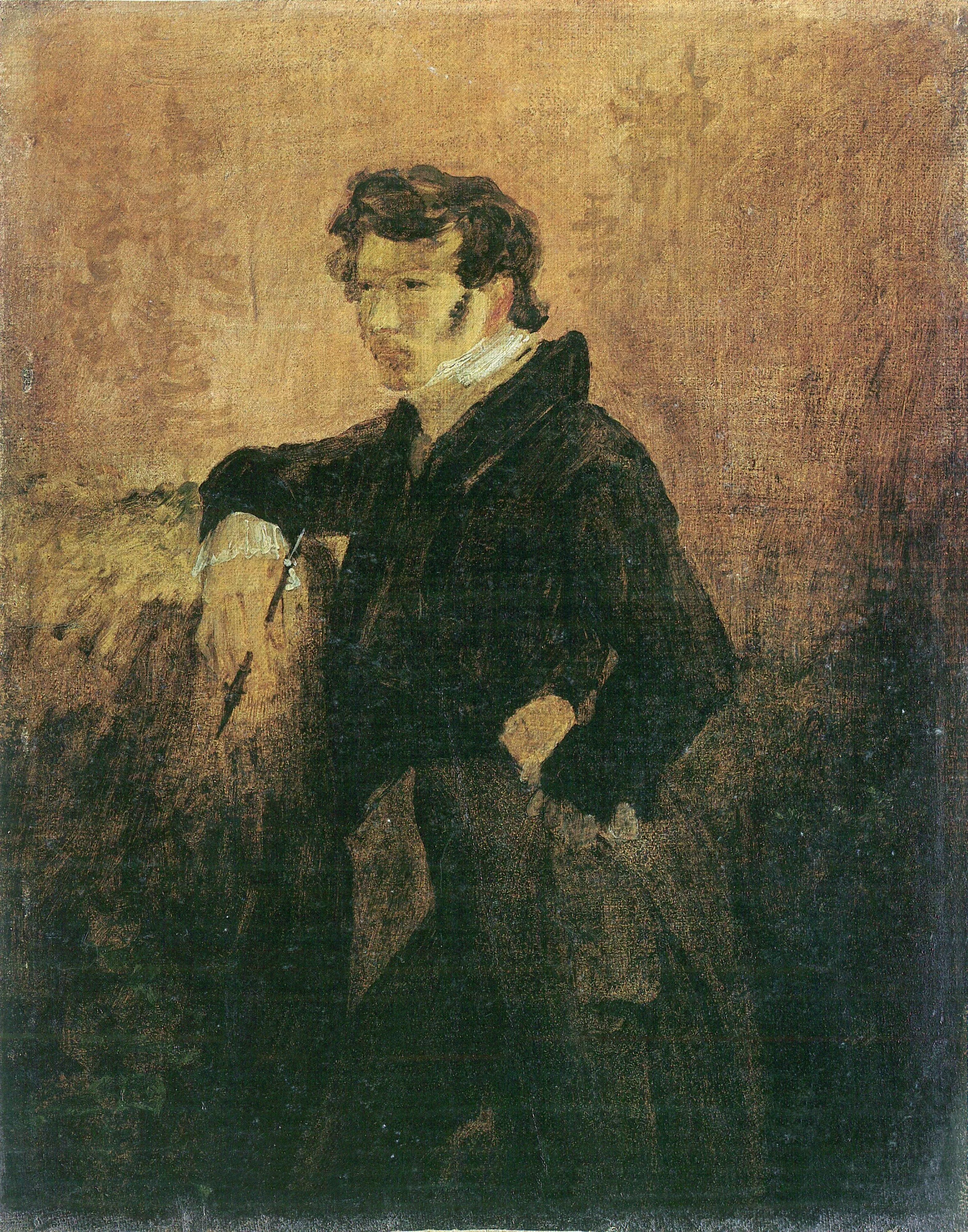
Image from Wikipedia
Image from Wikipedia
Carl Blechen – Light, Landscape, and the Radical Modernity of Romanticism
A German landscape painter between nature observation, stage effect, and emotional intensity
Carl Eduard Ferdinand Blechen, born on July 29, 1798, in Cottbus and died on July 23, 1840, in Berlin, is considered one of the most significant German landscape painters of the 19th century. His artistic biography tells not the story of a musician, but of a painter whose perspective on nature, light, and atmosphere remains exceptionally modern to this day. Particularly because his work renewed the romantic landscape from within, it appears so present, as if it stands beyond its historical moment. ([de.wikipedia.org](https://de.wikipedia.org/wiki/Carl_Blechen?utm_source=openai))
Biography: From Cottbus Lyceum to Berlin Academy of Arts
Blechen grew up in Cottbus, attended the local lyceum, and initially began an apprenticeship in banking, as the family lacked the means for a university education. It was not until 1822 that he made his way to the Berlin Academy of Arts, where he dedicated himself to the landscape class and developed his true artistic language. This transition from a bourgeois profession to art marks a biographical rupture, typical for many great artist careers of the 19th century. ([deutsche-biographie.de](https://www.deutsche-biographie.de/gnd118511645.html?utm_source=openai))
From an early age, Blechen showed a penchant for drawing, and during his time in Berlin, he was influenced by the visual worlds of Romanticism. Art history notes that he did not merely orient himself to role models, but developed an independent view of landscape and light from them. This precisely is the tension in his oeuvre: Blechen adopts the romantic mood but simultaneously dissolves it into precise observation and almost analytical clarity. ([deutsche-biographie.de](https://www.deutsche-biographie.de/gnd118511645.html?utm_source=openai))
The Breakthrough: Stage Sets, Academy Exhibitions, and Public Attention
A pivotal career boost came from Karl Friedrich Schinkel, who secured Blechen a position as a scene painter at the Königstädtisches Theater. Between August 1824 and June 1827, a large number of striking stage sets were created there, sharpening his sense for dramaturgy, spatial effects, and light guidance. This phase is central to understanding his painting because it explains why many of his landscapes appear like carefully staged scenes. ([deutsche-biographie.de](https://www.deutsche-biographie.de/gnd118511645.html?utm_source=openai))
Since 1824, Blechen was regularly acknowledged at the Academy exhibitions; contemporary critics strongly perceived his works. Later, he traveled to Italy from 1828 to 1829, and this journey became a turning point that profoundly changed his perception of nature, color, and Mediterranean light. In retrospect, this Italian experience appears as one of the great artistic catalysts of his work. ([deutsche-biographie.de](https://www.deutsche-biographie.de/gnd118511645.html?utm_source=openai))
Artistic Development Without Music: Why Blechen Still Appears as a Master of Arrangement
Even though Carl Blechen was not a musician, his painting can be described with terms such as composition, arrangement, and rhythm. His images organize sightlines with a precision reminiscent of an orchestrated score: foreground, middleground, and distance interweave, while light acts as a guiding motif throughout the scene. For art lovers, the allure of his work lies precisely here – in a visual language that not only represents atmosphere but constructs it. ([larousse.fr](https://www.larousse.fr/encyclopedie/peinture/Karl_Blechen/151169?utm_source=openai))
The urban and rural motifs, the Italian views, the nocturnal fantasy landscapes, and the depictions from Brandenburg and Berlin illustrate the breadth of Blechen's landscape painting. His works combine nature observation with subjective mood, thereby creating a visual world that transcends mere realism. This connection of seeing and feeling makes him a key painter of German Romanticism. ([stadtmuseum-cottbus.de](https://www.stadtmuseum-cottbus.de/cottbus-lexikon-detail/Blechen-Carl.html?utm_source=openai))
Style and Artistic Signature: Light as the Main Character
Blechen is regarded as one of the most important representatives of a subjectively realistic conception of landscape in Germany. This means: His images are not just idealized views of nature, but condensed experiential spaces where light, structure, and atmosphere acquire a psychological dimension. Art historians emphasize this tension between a sense of reality and poetic elevation as the core of his modernity. ([larousse.fr](https://www.larousse.fr/encyclopedie/peinture/Karl_Blechen/151169?utm_source=openai))
His remarkable handling of light-dark contrasts and the architecture of landscapes is particularly impressive. Roofs, gardens, ruins, coasts, and Italian vegetation become stages of a perception where every form of light carries an emotional function. The fact that later generations viewed Blechen as a precursor to more modern perspectives is explained by this powerful reduction to the essential. ([larousse.fr](https://www.larousse.fr/encyclopedie/peinture/Karl_Blechen/151169?utm_source=openai))
Work and Reception: Between Contemporaneity and Posthumous Fame
During his lifetime, Blechen was recognized, but the true significance of his work became apparent in a broader historical context. Today, he appears as an artist who not only enriched German landscape painting but elevated it to a new level of perception. His paintings and drawings are represented in numerous museums; particularly the Berlin collections and the Cottbus culture of remembrance have solidified his posthumous reputation. ([larousse.fr](https://www.larousse.fr/encyclopedie/peinture/Karl_Blechen/151169?utm_source=openai))
Research repeatedly emphasizes that Blechen played an important role in the development of plein air painting and in the modern conception of natural imagery. A scientific bibliography by the Carl Blechen Society points to the ongoing engagement with his technique, image genesis, and reception. Thus, Blechen belongs to those artists whose work does not rest in the archives, but continues to drive art historical debate to this day. ([carl-blechen-gesellschaft.de](https://www.carl-blechen-gesellschaft.de/images/Literaturliste_Carl-Blechen.pdf?utm_source=openai))
Cultural Influence: Cottbus, Berlin, and the Enduring Radiance of a Landscape Artist
His origins remain culturally significant: The city of Cottbus memorializes its famous son with its Blechen collection and museum historical preservation. This regional anchoring meets with an international art historical significance, which is reflected in relevant reference works and museum presentations. Blechen is thus not only a name of Romanticism but a lasting reference point for the understanding of German landscape art. ([stadtmuseum-cottbus.de](https://www.stadtmuseum-cottbus.de/cottbus-lexikon-detail/Blechen-Carl.html?utm_source=openai))
His life ended early; since 1836, he suffered from a severe mental illness, and in 1840, he died in Berlin at the age of just 42. This brief span enhances the intensity of his oeuvre, as it left a compact and concentrated body of work that appears remarkably cohesive. Therefore, Blechen remains a figure of rare significance: an artist who set a lasting standard for landscape image poetry with light, space, and mood. ([stadtmuseum-cottbus.de](https://www.stadtmuseum-cottbus.de/cottbus-lexikon-detail/Blechen-Carl.html?utm_source=openai))
Conclusion: Why Carl Blechen Continues to Fascinate Today
Carl Blechen fascinates because he not only painted romantic landscapes but rethought them. His images combine technical sovereignty, emotional depth, and an almost modern clarity of composition. Engaging with his work allows one to experience an artist who understands nature not as a backdrop, but as a space of emotional resonance. ([larousse.fr](https://www.larousse.fr/encyclopedie/peinture/Karl_Blechen/151169?utm_source=openai))
Especially in a time when visual impressions often remain fleeting, Blechen possesses a rare depth. His art invites a closer examination, reading light as an event, and understanding landscape as an expression of inner states. Anyone wishing to experience German art history in its most powerful form should certainly encounter Carl Blechen in museums and in the direct contemplation of his works. ([stadtmuseum-cottbus.de](https://www.stadtmuseum-cottbus.de/cottbus-lexikon-detail/Blechen-Carl.html?utm_source=openai))
Official Channels of Carl Blechen:
- Instagram: no official profile found
- Facebook: no official profile found
- YouTube: no official profile found
- Spotify: no official profile found
- TikTok: no official profile found