
Alexander von Zemlinsky
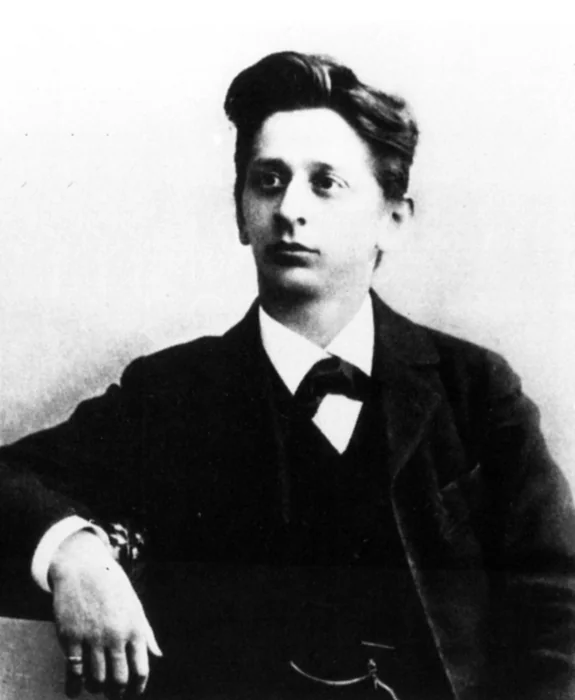
Image from Wikipedia
Image from Wikipedia
Alexander von Zemlinsky – the underestimated master between late romanticism, modernity, and musical psychology
A composer and conductor of great depth, whose work is now being heard with new brilliance
Alexander von Zemlinsky is one of those influential figures in music history who never attained mass recognition yet belongs to the great artists of his time. Born on October 14, 1871, in Vienna and died on March 15, 1942, in Larchmont near New York, he combined composition, conducting, and educational authority into a distinctive profile throughout his musical career. Official documentation describes him as a composer straddling periods and styles, who found a rich, independent musical language in this in-between position. ([zemlinsky.at](https://www.zemlinsky.at/de/biographie?utm_source=openai))
His art is rooted in the Viennese culture of the late 19th century, influenced by the Jewish character of Leopoldstadt as well as by the circles of music lovers and the great tradition of Brahms, Wagner, and the emerging modernity. Zemlinsky's work did not revolutionize music history, but it authenticates the dramatic aesthetic shifts between 1890 and 1940 with high authenticity. This very tension between continuity and change makes him so fascinating for today’s listeners. ([zemlinsky.at](https://www.zemlinsky.at/de/biographie?utm_source=openai))
Viennese childhood, early education, and the shaping of a musical character
Zemlinsky grew up in Leopoldstadt, a district characterized by Jewish life and social diversity. His father, Adolf von Zemlinszky, was a writer and journalist, while his mother, Clara Semo, hailed from Sarajevo; the household combined literary education with strict upbringing and artistic ambition. As a child, he already showed exceptional musical talent, prompting his parents to enroll him at the Conservatory of the Society of Music Friends when he was just under 13 years old. ([zemlinsky.at](https://www.zemlinsky.at/de/biographie/wien-1871-1882?utm_source=openai))
He studied there until 1892 and began writing his first works, which were clearly influenced by his role model, Johannes Brahms. This early closeness to Brahms proved significant both stylistically and biographically: Zemlinsky quickly moved in circles where personal contacts, institutional work, and artistic ambition mutually reinforced each other. Thus, he laid the groundwork early for a career where composition and practical musical work were never separated. ([zemlinsky.at](https://www.zemlinsky.at/de/biographie?utm_source=openai))
Rise in Viennese musical life: teacher, networker, composer
After his studies, Zemlinsky secured a notable position in Vienna's music scene through engagement in institutions and associations. He was not a loud self-promoter but a musician whose impact stemmed from competence, networking, and artistic seriousness. During this phase, he met Arnold Schönberg and Alma Schindler, contacts that profoundly shaped both his life and work on a personal and aesthetic level. ([zemlinsky.at](https://www.zemlinsky.at/de/biographie?utm_source=openai))
The official biography emphasizes that Zemlinsky did not possess a "great" name in the popular sense, yet his works are an authentic testimony to the musical developments of his time. This explains why his status in reception history long lagged behind his actual significance. His music represents less a singular spectacular breakthrough and more a steadily developed artistic evolution. ([zemlinsky.at](https://www.zemlinsky.at/de/biographie?utm_source=openai))
As a conductor with authority: stage, opera, and repertoire
Zemlinsky gained particular significance as a conductor. Between 1900 and 1904, he was the chief conductor at the Carltheater and the Theater an der Wien, where he initially conducted mostly operettas. Later, he earned high acclaim as a conductor in Prague and during guest performances throughout Europe; contemporaries described his stage presence as small in stature but great in authority, sound consciousness, and dramatic penetration. ([zemlinsky.at](https://www.zemlinsky.at/en/biography?utm_source=openai))
The Zemlinsky Fund documentation highlights that he felt particularly at home in the German repertoire, ranging from Mozart through Beethoven and Brahms to Richard Strauss, Mahler, and Schönberg. At the same time, he actively promoted new music in Prague, bringing works by Berg, Bartók, Ravel, Korngold, Krenek, Janáček, Schulhoff, Hindemith, Honegger, Milhaud, and Weill to performance. This blend of repertoire preservation and commitment to progress underscores his standing as a musical mediator. ([zemlinsky.at](https://www.zemlinsky.at/de/schaffen/der-dirigent?utm_source=openai))
Opera as the centerpiece: drama, psychology, and sonic opulence
Opera was the genre where Zemlinsky felt most at home. His oeuvre includes eight completed and nine unfinished opera projects, often stumbling on textual rather than musical issues. Operas such as Eine florentinische Tragödie, Der Zwerg, Der Kreidekreis, and the unfinished König Kandaules, which is considered the focal point of his late work, became particularly important. ([zemlinsky.at](https://www.zemlinsky.at/de/schaffen?utm_source=openai))
The operas are characterized by strong dramatic thinking, finely nuanced psychological contrasts, and an orchestrally dense, richly colored production. Sources describe works like Die Seejungfrau as possessing romantic characteristics, while later pieces exhibit a more concentrated, sharper, and sometimes more painful language. This development reveals Zemlinsky as a composer who combines late romantic expressiveness with modern intensity. ([aso.org](https://www.aso.org/artists/detail/alexander-von-zemlinsky?utm_source=openai))
Discography, reception, and the long rediscovery
Zemlinsky's discography is now well documented and includes major operas, orchestral works, songs, and chamber music. Critical editions and recordings, particularly by Anthony Beaumont, have significantly contributed to making his oeuvre accessible anew. The Guardian reviews speak of a composer whose recognition has grown significantly over the past decades, as new recordings reveal his orchestral substance and dramatic tension. ([theguardian.com](https://www.theguardian.com/music/2003/apr/25/classicalmusicandopera.artsfeatures1?utm_source=openai))
Important reference works in the history of reception include Die Seejungfrau, the Sinfonietta, the Lyrical Symphony, Cymbeline, and Eine florentinische Tragödie. A 2024 recording of Eine florentinische Tragödie was once again recognized in the music press as evidence of Zemlinsky's powerful, colorfully dynamic musical language. Older reviews also repeatedly emphasize how gripping his orchestration, dramatic arc, and sense of psychological intensity are. ([theguardian.com](https://www.theguardian.com/music/article/2024/jun/20/zemlinsky-eine-florentinische-tragodie-album-review-adultery-and-in-renaissance-italy-pentatone?utm_source=openai))
Musical development: between Brahms, Wagner, Mahler, and Viennese modernity
Zemlinsky's style is neither merely late romantic nor definitively modernist. In his early works, the proximity to Brahms remains palpable; later, influences from Wagner, refined harmonies, and darker, expressive colors emerge. The official documentation describes him as a composer who found his unmistakable language in the in-between of styles, making the transitions between epochs audible. ([zemlinsky.at](https://www.zemlinsky.at/de/biographie?utm_source=openai))
His relationships with Schönberg and Alma Schindler also form part of his work history, bringing artistic impulses and emotional tensions. The encounter with Alma Mahler, later wife of Gustav Mahler, profoundly impacted Zemlinsky's view of opera and psychological music theater; sources refer to Die Seejungfrau and Der Traumgörge as works in which these interconnections are indirectly reflected. From today’s perspective, his oeuvre appears as a multifaceted hinge between Viennese late romanticism, musical psychology, and the modernity of the early 20th century. ([aso.org](https://www.aso.org/artists/detail/alexander-von-zemlinsky?utm_source=openai))
Exile, late years, and the end of a European artist's career
With the rise of National Socialism, Zemlinsky's situation became dramatically precarious. In 1933, he left Austria and emigrated to the USA, initially to New York, later to Larchmont. The official biography describes him in his final years as a broken man, writing only a few occasional works in the new world and having to abandon his planned new opera. ([komponisten.at](https://www.komponisten.at/komponisten/241.html?utm_source=openai))
His last years mark a painful break: a significant European musician loses his homeland, sphere of influence, and artistic continuity. Nevertheless, his name remained alive in professional circles, and the rehabilitation of his work later began. Retrospectively, this reveals an artist whose career was interrupted by exile, yet whose work has gained an additional historical depth because of it. ([zemlinsky.at](https://www.zemlinsky.at/de?utm_source=openai))
Current relevance and cultural influence today
Even though Zemlinsky is no longer alive, his music remains present in today's concert and recording landscape. New recordings and performances, such as from 2024 and in the 2024/25 season, show that his operas and orchestral works are still being rediscovered. The response in the music press has been notably positive, as his art offers a blend of sophistication, emotional depth, and historical significance. ([theguardian.com](https://www.theguardian.com/music/article/2024/jun/20/zemlinsky-eine-florentinische-tragodie-album-review-adultery-and-in-renaissance-italy-pentatone?utm_source=openai))
The cultural influence of Zemlinsky today lies primarily in the rediscovery of a composer who for too long unjustly stood in the shadow. His music appeals to listeners who appreciate orchestral luxury colors, psychological opera, motivic substance, and the fine friction between tradition and modernity. This is precisely where his enduring tension lies: Zemlinsky is not a museum-like exception but a highly relevant sound thinker in European music history. ([zemlinsky.at](https://www.zemlinsky.at/de/biographie?utm_source=openai))
Conclusion: A great name of the second tier with first league quality
Alexander von Zemlinsky fascinates because he embodies the Viennese modernity not as a loud upheaval but as a profound, inner transformational process. His compositions connect late romanticism, dramatic intensification, and sonic elegance into an unmistakable musical language. Those who experience Zemlinsky live encounter not only a historical composer but a master of musical psychology, whose works have a remarkably immediate impact in the opera house and concert hall. ([zemlinsky.at](https://www.zemlinsky.at/de/biographie?utm_source=openai))
Official channels of Alexander von Zemlinsky:
- Instagram: No official profile found
- Facebook: No official profile found
- YouTube: No official profile found
- Spotify: No official profile found
- TikTok: No official profile found
Sources:
- Alexander Zemlinsky Fund – Biography
- Alexander Zemlinsky – His Life, His Work
- Alexander Zemlinsky Fund – The Conductor
- Alexander Zemlinsky Fund – Creation
- Alexander Zemlinsky Fund – Childhood in Leopoldstadt
- Alexander Zemlinsky Fund – The Opera Composer III
- Neue Musikzeitung – Review of Kleider machen Leute
- The Guardian – Zemlinsky: Eine Florentinische Tragödie, Album Review, 2024
- MusicWeb International – Zemlinsky: Eine florentinische Tragödie, 2024
- The Guardian – Zemlinsky: Die Seejungfrau Review
- The Guardian – Zemlinsky: Lyric Symphony, Incidental Music to Cymbeline
- Wikipedia – Alexander von Zemlinsky